



What's the Heaviest Mil Tarp You Can Buy?
Industrial vinyl tarps advertised at around 50 mil and above are commercially listed, but there is no single maximum thickness across all tarp materials. The thickest practical cover depends on its reinforcement, fabrication and handling requirements—not the mil number alone. This guide compares real market examples, converts mil to millimeters and helps importers, converters and OEM buyers specify a durable PVC tarp without overbuying thickness.
Technical buying guide · Updated November 14, 2026 · Thickness values are specification references, not DERFLEX stock guarantees.
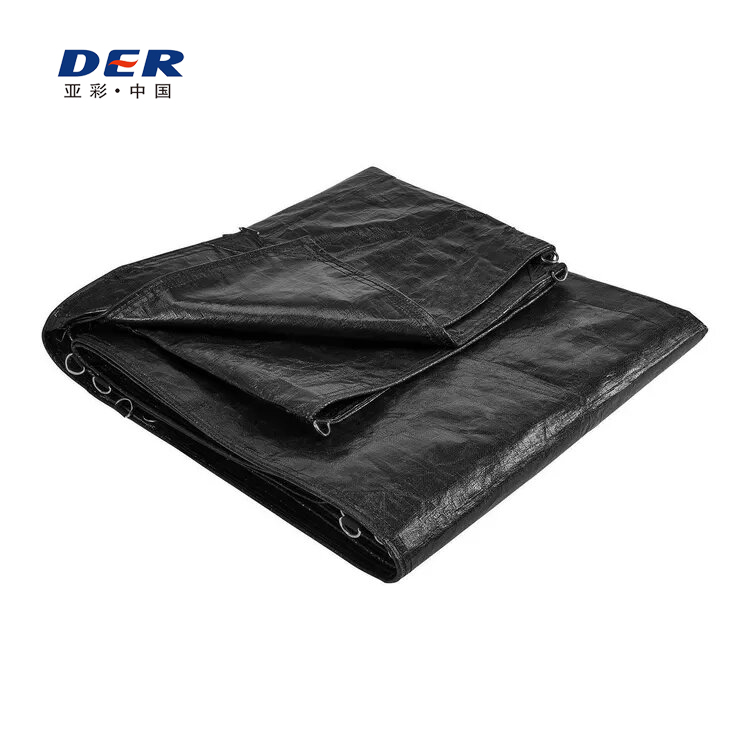
Is 50 mil the thickest tarp available?
No universal upper limit is published for finished tarps.
Some U.S. industrial tarp listings describe 40 oz/yd² coated vinyl covers as approximately 50 mil or more thick. In another finished-tarp category, clear vinyl products commonly listed at 20 and 30 mil prioritize visibility and enclosure flexibility. Beyond those examples, specialized 60–80 mil waterproofing membranes exist, but roofing or liner membranes must not be presented as interchangeable finished tarps. Specify the actual product category and fabrication requirements before asking for the “maximum mil.”
This distinction matters to B2B buyers. A 50 mil heavy vinyl cover may be excellent for severe abrasion but unnecessarily difficult to fold over a large cargo load. A properly reinforced, lighter PVC-coated polyester tarp can be more practical when it is moved every day. For a broader discussion of maximum material weight, see the most heavy-duty tarp buying guide; mil and ounce-weight answer different questions.
Market reference: Tarps America 40 oz vinyl tarp collection describes products above 50 mil. Tarps Plus lists a 30 mil clear finished tarp. These are third-party listings, not DERFLEX product specifications or a complete world-market survey.
Heavy tarp thickness chart: 12 to 80 mil
One mil is one-thousandth of an inch. The metric values below are exact unit conversions rounded to three decimals. Duty labels are broad buying directions, not standardized material classes or a list of DERFLEX stocked models.
| Nominal mil | Thickness (mm) | Common product discussion | Procurement check |
|---|---|---|---|
| 12 mil | 0.305 | General outdoor or entry heavy-duty covers | Verify weave, edges, UV exposure and wind demand. |
| 16 mil | 0.406 | Reinforced commercial tarp direction | Confirm abrasion zones and attachment strength. |
| 20–22 mil | 0.508–0.559 | Many reinforced vinyl and PVC cover listings | Review base scrim, mass, cold flexibility and welds. |
| 30 mil | 0.762 | Thick clear vinyl enclosure tarps and specialty covers | Confirm visibility, rollability and edge reinforcement. |
| 40 mil | 1.016 | Extra-thick specialty vinyl / sheet reference | Check physical weight, stiffness and handling equipment. |
| 50 mil | 1.270 | Severe-duty industrial vinyl tarp listing direction | Verify exact offered model, tolerance and support design. |
| 60–80 mil | 1.524–2.032 | Specialized roofing / liner membranes—not automatically tarps | Confirm product identity and ability to fabricate a cover. |
Thickness at a glance
Schematic bar lengths compare nominal thickness only; they do not indicate strength, availability or suitability.
How to read a heavy-duty tarp label
Mil or mm measures thickness. Oz/yd² or GSM measures fabric mass per unit area. Denier and weave describe reinforcement. No direct GSM-to-mil conversion exists across different constructions.
For instance, a 40 oz/yd² vinyl cover is approximately 1,356 GSM, but it could have different thicknesses depending on its polyester scrim, PVC coating share and surface finish. Use DERFLEX's oz, mil and denier guide to compare quotations fairly.
Which material can deliver the thickest usable tarp?
Poly tarps
Lightweight woven PE tarps are commonly sold by mil and denier. They can be economical for temporary or general covering, but increasing film or laminate thickness alone does not solve grommet tears or UV-related degradation.
PVC-coated polyester
A versatile route for reusable industrial covers. The textile scrim carries tensile demand; the PVC surface supplies weather protection and fabrication options. For many tasks, reinforcement and seams matter more than pursuing the highest possible mil figure.
Clear PVC and membranes
Thicker clear vinyl can offer more body for an enclosure, while specialized construction membranes may be thicker still. Transparency, sheet stiffness, support spacing and jointing are separate design questions; these products are not automatically equivalent to a truck tarp.
For waterproof, weldable, repeat-use industrial cover materials, explore DERFLEX PVC tarpaulin. If a project requires the highest possible abrasion reserve, the selected base fabric and finished reinforcements still need to be confirmed by sample and test method rather than assumed from nominal thickness.
Choose the right heavy mil tarp for the job—not the label
Use these recommendations as application starting points. They are not a universal specification, and they do not promise the listed constructions are stocked by DERFLEX.
| Use case | What matters first | Thickness discussion | Critical confirmation |
|---|---|---|---|
| Outdoor equipment in place | UV, rain run-off, pooling and anchored edges | Compare reinforced 14–22 mil and suitable heavier options | Surface treatment, slope, fasteners and expected exposure. |
| Truck / trailer covers | Repeated folding, flutter, abrasion and D-ring loads | Consider reinforced vinyl rather than simply maximum mil | Scrim, tear tests, seam direction and tie-down map. |
| Heavy industrial abrasion | Wear pads, dragging, concentrated contact and handling weight | Evaluate 30–50+ mil listings where added mass addresses wear | Actual offered construction, installation plan and handling limits. |
| Clear patio / partition panels | Clarity, cold flexibility, roll-up cycle and support spacing | Compare 20 vs 30 mil clear vinyl as real product categories | Wind movement, UV, optical quality and reinforced borders. |
| Containment / roofing membrane | Barrier engineering, chemical / water exposure, approved joints | 60–80 mil specialty membranes may be relevant | Do not treat a membrane specification as a finished tarp claim. |
For finished-cover options, review heavy-duty tarps by application and D-ring tarp connection design. A 50 mil sheet cannot compensate for an incorrectly located tie-down or an unprotected sharp edge.
Six checks before ordering the heaviest tarp
Check reinforcement
Ask for yarn denier, weave density, warp / weft tensile and tear values, coating type and the applicable test methods. Compare equivalent constructions under the same conditions.
Specify nominal mil and tolerance
Confirm how and where thickness was measured, whether embossing changes the reading and whether the claim applies to the full sheet or a nominal model designation.
Review seams
Waterproof PVC material does not by itself guarantee waterproof finished seams. Match the joining method to coating, overlap, geometry and service condition.
Map the load path
Grommets, D-rings, webbing, hem build-up and corner pads should distribute force over appropriate reinforced zones. Position them using the actual anchor geometry.
Calculate finished mass
Estimate fabric-only weight before moving to a higher grade. Add hems, overlaps, patches, metal hardware and packaging when planning transport and installation.
Test the approved sample
Evaluate folding, abrasion contact, cold flexibility, finish and edge construction before repeat production. Require the exact test report if a contract calls for a specific standard.
Handling-weight example
An illustrative 6 m × 8 m sheet at 900 GSM contains 43.2 kg of base material. At 40 oz/yd² (≈1,356 GSM) the same area contains approximately 65.1 kg before extra overlaps, reinforcement, fittings or packaging. These are mathematical comparisons, not DERFLEX material test results or a finished-product weight quote.
Look beyond the thickness number
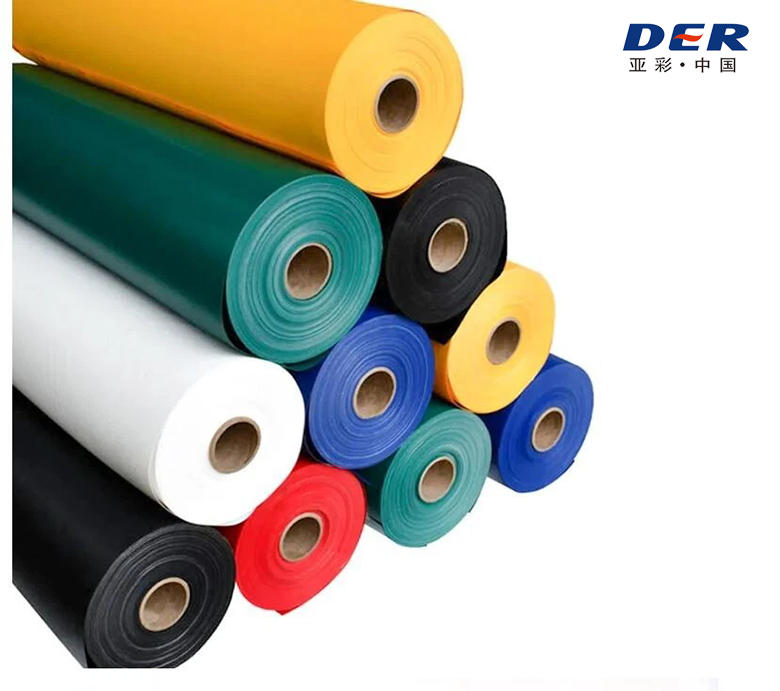
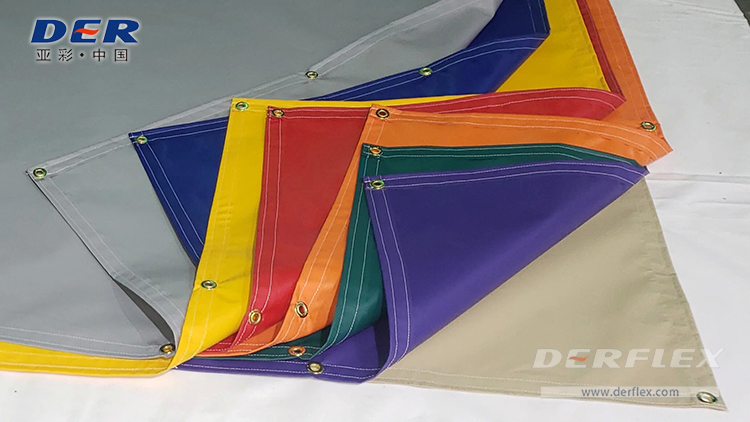
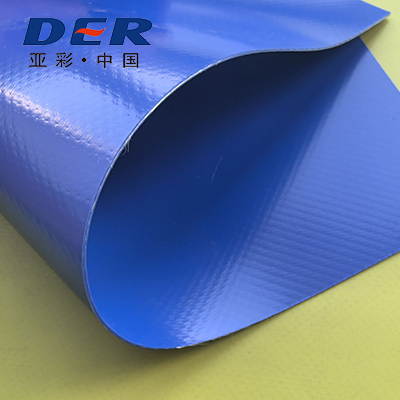
These photos are from existing DERFLEX-hosted image files. They illustrate material rolls, coated faces and finished-cover details—not tested 40 or 50 mil SKUs.
How DERFLEX helps buyers specify thicker industrial PVC tarps
DERFLEX supports discussion of PVC-coated polyester roll material, fabricated panels and custom finished tarps for industrial cover programs. Start with what the product must protect, how the cover is attached and whether it is moved daily, periodically or only during maintenance.
The technical conversation can cover fabric weight, nominal thickness, base scrim, selected weather-performance requirements, width, surface finish, welding, reinforced borders, tie-down components and private-label packaging where applicable. The actual grade, availability, achievable thickness, tolerances, performance reports, quantity and delivery terms must be confirmed in the quotation and approved sample.
Read the heavy-duty tarp supplier overview for practical supply formats and the strongest tarp material comparison for performance trade-offs.
Before you order: send a usable RFQ
- Purpose: cargo, equipment, enclosure or industrial abrasion protection.
- Format: rolls, cut panels or finished cover, plus target dimensions.
- Material: PVC or another family; target mil/mm and GSM if known.
- Environment: sun, wind, cold, repeated folds, abrasion or splash exposure.
- Fabrication: seam layout, overlaps, hems, wear pads and tie-down hardware.
- Commercial: quantity, color, drawings, destination and required documents.
No standard MOQ, stock quantity, 50 mil DERFLEX grade or fixed lead time is implied on this page.
Frequently asked questions about thick tarps
What is the highest mil tarp you can buy?
There is no universal maximum for finished tarps. Commercial examples include 30 mil clear vinyl tarps and industrial 40 oz vinyl tarps advertised at approximately 50 mil or more. Availability depends on the supplier, construction, size and order requirements. Thicker membranes may exist, but they are not necessarily finished tarps.
Is a 50 mil tarp thicker than a 40 mil tarp?
Yes. Fifty mil is 1.270 mm, while 40 mil is 1.016 mm. That is a 25% difference in nominal thickness, but the stronger finished cover depends on reinforcement, seams, fastening and service conditions.
Is 40 oz vinyl the same as 40 mil vinyl?
No. Forty ounces per square yard measures finished fabric mass per area, about 1,356 GSM. Forty mil measures thickness, exactly 1.016 mm. Those quantities cannot be directly converted without construction and density details.
What mil tarp is best for industrial equipment covers?
Many reinforced PVC cover programs begin by comparing approximately 18–22 mil and heavier constructions, but the correct choice depends on abrasion, wind, temperature, handling frequency and the tie-down design. An approved material sample and finished-cover drawing matter more than the highest mil number.
Can I get a waterproof tarp thicker than 50 mil?
Very thick flexible sheets and industrial membranes are sold above 50 mil in some markets. Whether they can be fabricated into a practical waterproof tarp with suitable seams, bending behavior, size and reinforcement must be confirmed for the specific material; do not assume all membrane products are tarps.
What information should I send DERFLEX for a custom heavy-duty tarp?
Share the application, finished dimensions or roll size, target mil or millimeter thickness if known, preferred PVC construction, quantity, service climate, abrasion zones, seam and attachment layout, destination and any required test documents. A photo, drawing or reference sample helps specification review.
Continue your tarp specification research
Related DERFLEX pages separate thickness, strength, material choice and finished-cover fastening into their own practical buying tasks.
Need a thick tarp that works—not just a high mil rating?
Send your sample, working conditions and finished dimensions. DERFLEX can review a practical reinforced PVC tarp direction and the fabrication details to confirm before a custom quotation.