News
Company News

18 oz vs 22 oz vs 40 oz PVC Tarps: Weight, Thickness & Best Uses | DERFLEX

Update:2026/9/9 15:10:56 Views:
PVC Tarp Weight Comparison · B2B Buyer Guide

18 oz vs 22 oz vs 40 oz PVC Tarps: Choosing the Right Weight

Choose 18 oz for the best balance of heavy-duty protection and daily handling, 22 oz when abrasion and longer duty cycles justify extra material, and 40 oz for severe-duty industrial covers where wear reserve matters more than low weight.

Ounce rating is only one part of performance. Polyester scrim, coating formula, thickness, seam design, reinforcement, hardware loads, temperature and the real failure mode should determine the final specification.

AI Overview / Featured Snippet Answer

Which PVC tarp weight should you choose?

For most reusable industrial and transport covers, 18 oz PVC tarp material (about 610 gsm) is the practical starting point because it combines waterproof protection, weldability, durability and manageable handling. Move to 22 oz (about 746 gsm) when the tarp sees more rubbing, repeated tension, longer outdoor cycles or a higher cost of downtime. Use 40 oz (about 1,356 gsm) for severe-duty industrial covers where high abrasion and material body are more important than easy folding, low freight weight or manual deployment.

Three Weight Classes

18 oz, 22 oz and 40 oz Solve Different Problems

The “best” grade is the lightest construction that reliably survives the real duty cycle with an acceptable replacement interval.

18 oz

Balanced Heavy Duty

Approx. 610 gsm by unit conversion.

  • Easier to fold, deploy and remove
  • Common direction for truck and equipment covers
  • Good balance of durability, freight and labor
  • Strong candidate when wear zones can be reinforced locally
Best starting point for broad heavy-duty use
22 oz

Extra Heavy Duty

Approx. 746 gsm by unit conversion.

  • More material mass for higher-wear service
  • Useful for repeated rubbing and longer cycles
  • Heavier to fold and manually handle
  • Often selected for premium transport and industrial programs
Durability upgrade when wear justifies extra mass
40 oz

Severe-Duty Industrial

Approx. 1,356 gsm by unit conversion.

  • Very high material mass and abrasion reserve
  • For severe-duty industrial protection
  • Requires a realistic handling and support plan
  • Should be justified by lifecycle risk, not marketing language
For extreme wear where handling weight is secondary
Side-by-Side Specification Direction

18 oz vs 22 oz vs 40 oz PVC Tarp Comparison

Use this as a procurement direction. Final data must be confirmed for the selected base fabric, coating, finish, test method and finished tarp design.

Selection Factor 18 oz PVC Tarp 22 oz PVC Tarp 40 oz PVC Tarp
Nominal area weight 18 oz/yd2 22 oz/yd2 40 oz/yd2
Approx. GSM ≈ 610 gsm ≈ 746 gsm ≈ 1,356 gsm
Common market thickness direction Often around 20–22 mil, depending on construction Often around 24–25 mil, depending on construction Market examples vary substantially; roughly low-40s to around 50 mil can be seen
Manual handling Best of the three for frequent folding and deployment Noticeably heavier; still practical in many commercial programs High material mass; handling method should be engineered
Abrasion reserve Strong for broad heavy-duty use Higher direction for repeated rubbing and contact Highest material-mass direction for severe wear
Typical use direction Truck, trailer, equipment, construction, storage, agriculture Higher-friction transport, long outdoor cycles, premium heavy-duty covers Industrial equipment, severe jobsite exposure, heavy fabricated cover systems
Freight & finished tarp weight Lowest of the three About 22.2% more material mass than 18 oz for equal area About 122.2% more material mass than 18 oz for equal area
Key risk if over-specified May be underbuilt for extreme abrasion if the construction is not upgraded Higher cost and handling burden without benefit if wear is already controlled Excess weight, stiffness, freight and installation effort; may not fix seam or hardware failures
What to verify Scrim, tensile/tear, abrasion zones, seams, grommet loads, UV package Cold flexibility, fold cycles, surface formulation, reinforcement, crew handling Support structure, fabrication equipment, anchor loads, lifting/handling and lifecycle economics

Important: ounce weight measures material mass per square yard. It does not directly specify thickness, denier, tensile strength, tear strength or service life. A well-engineered 18 oz construction can outperform a poorly specified heavier tarp in the failure mode that actually matters.

18 oz
Baseline
22 oz
+22.2% vs 18 oz
40 oz
+122.2% vs 18 oz
Finished Weight Reality Check

A 20 ft × 30 ft tarp shows why weight choice matters

A 20 × 30 ft rectangle is approximately 66.67 square yards. Material-only weight is:

area in yd2 × oz/yd2 ÷ 16 = pounds

Hems, webbing, D-rings, grommets, straps, extra flap area, patches, seams and production tolerances add more weight. This calculation is for material mass only.

≈75 lb 18 oz material only
≈91.7 lb 22 oz material only
≈166.7 lb 40 oz material only
Original Buyer Tool

PVC Tarp Material Weight Calculator

Estimate the material-only weight before adding hems, reinforcement, hardware, flaps and fabrication allowances.

Enter the tarp rectangle

Estimated material-only weight

75.0 lb
66.67 yd2 area / tarp
34.0 kg total
≈610 gsm nominal conversion
18 oz selected grade

Estimation only. Finished tarp weight increases with hems, webbing, D-rings, grommets, pockets, seams, extra panels, reinforcement and dimensional tolerances.

Application Decision Matrix

Match Tarp Weight to the Duty Cycle

These are starting directions rather than universal rules. Sharp edges, wind, chemistry, temperature, support spacing and tie-down geometry can move a project to another construction.

Truck & Trailer Covers

Start with 18 oz when drivers deploy and fold the tarp frequently and abrasion is controlled with good fit and wear pads.

Move to 22 oz for higher-friction routes, frequent cargo contact or premium replacement programs. 40 oz is rarely the default for manually handled truck covers because finished weight can become a major operational issue.

Industrial Equipment Covers

18 oz fits broad weather protection where the cover is removed regularly. 22 oz is useful for longer outdoor cycles and rougher surfaces.

40 oz becomes logical when the equipment or site creates severe abrasion, high contact stress or expensive failure consequences and the cover is supported or mechanically handled.

Construction & Jobsite Protection

18 oz is a versatile starting point for reusable covers. 22 oz adds wear reserve for repeated dragging and site handling.

40 oz may fit severe-duty protection, but a local wear patch or reinforced edge can sometimes solve the real failure point more efficiently than increasing the entire tarp weight.

Long-Term Outdoor Storage

22 oz is often the practical upgrade when exposure and abrasion increase. UV formulation, drainage, tension and support remain essential.

40 oz should be evaluated when the cover stays in a high-wear environment for long cycles and handling occurs infrequently.

OEM / Distributor Product Line

A multi-grade program can be more commercially useful than one “maximum-duty” tarp: 18 oz for standard heavy-duty, 22 oz as the durability upgrade and 40 oz for a clearly defined industrial niche.

Severe Abrasion or High Downtime Cost

40 oz is appropriate only when added material mass addresses the actual wear mechanism and the support, anchors, fabrication equipment and installation method can handle the heavier construction.

Engineering & Manufacturing Notes

Weight Alone Does Not Make a Tarp Last

For B2B procurement, the complete fabricated system usually matters more than a single marketing grade.

1. Base Scrim Matters

Polyester yarn size, weave and density contribute directly to tensile, tear and dimensional behavior. Request actual test values for the approved construction.

2. Put Strength Where Loads Enter

Edges, corners, D-rings, grommets, straps and pockets concentrate load. Reinforcement layout can be more valuable than simply adding ounces across the whole cover.

3. Control Abrasion Zones

Bow contact, steel edges, cargo corners and rough ground create repeatable wear points. Wear pads or sacrificial reinforcement may extend life without moving the entire tarp to 40 oz.

4. Review Welding Capability

Heavier PVC constructions affect heat input, weld width, cooling, fold build-up and machine settings. Approve production samples before committing to a severe-duty program.

5. Check Cold Flexibility

In winter service, formulation and cold-flex performance can matter more than ounce weight. A heavier tarp that becomes difficult to fold may not improve field performance.

6. Engineer 40 oz as a System

Support spacing, anchors, manpower or lifting assistance, packing volume and installation method should be reviewed because 40 oz material can more than double material mass versus 18 oz at equal area.

Common Procurement Mistakes

Five Ways Buyers Choose the Wrong Tarp Weight

Avoiding these errors can reduce unnecessary material cost, freight, field fatigue and premature replacement.

1

Assuming heavier always means stronger

More area weight does not prove better tensile, tear or seam performance. Compare the complete construction.

2

Treating oz and mil as the same specification

Ounces measure mass per area; mil measures physical thickness. Coating ratio, scrim and formulation change the relationship.

3

Ignoring finished cover weight

A 40 oz grade can create substantial crew, freight and lifting consequences on large tarps even before hardware is added.

4

Trying to fix grommet or edge failure with heavier fabric

If loads enter through weak hems or poorly positioned hardware, extra coating mass may not solve the failure.

5

Buying by unit price instead of service cycle

Use purchase, freight, labor, downtime and replacement frequency together when deciding whether 22 oz or 40 oz creates real value.

DERFLEX Image Pack

Product, Manufacturing and Application Images

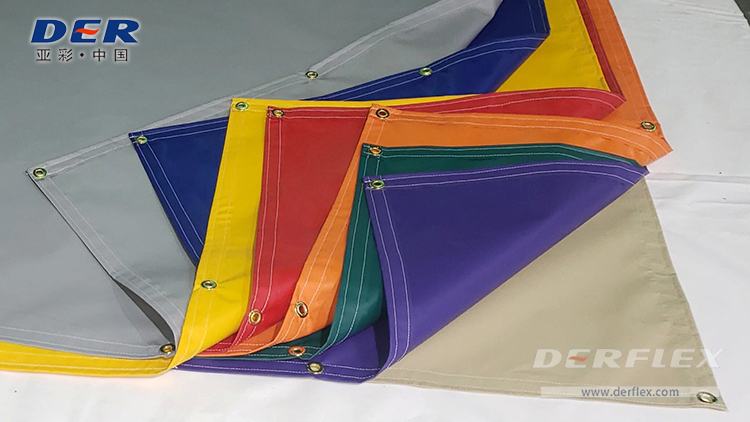
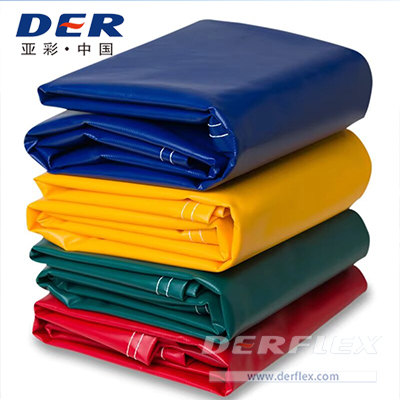
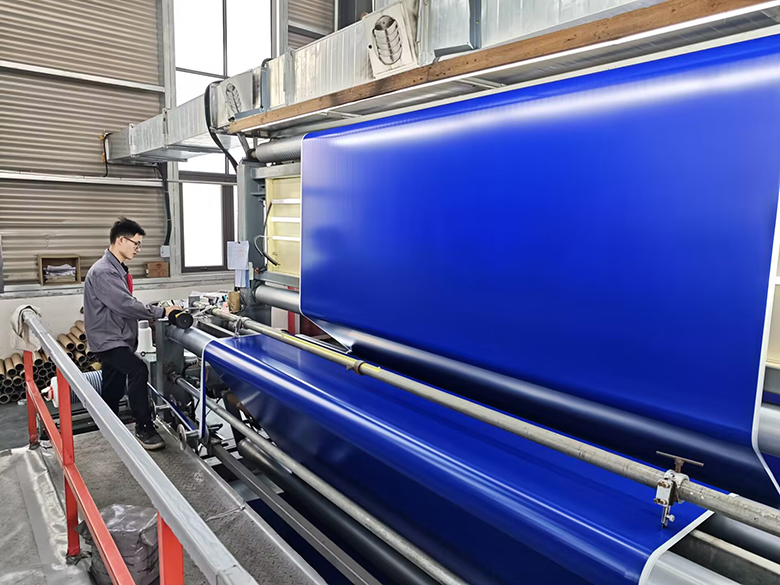
Real DERFLEX-hosted images are placed in the page with descriptive alt text and buyer-focused surrounding copy.

Suggested filename 18-oz-pvc-vinyl-tarp-derflex.jpg
Suggested filename 40-oz-industrial-pvc-tarp-derflex.jpg
Suggested filename pvc-coated-polyester-tarp-manufacturing-derflex.jpg
RFQ Preparation

What to Send DERFLEX Before Choosing 18 oz, 22 oz or 40 oz

A complete brief helps the factory match weight, scrim, coating and finishing to the duty cycle instead of quoting a generic tarp.

Application & Engineering Inputs

  • What the tarp covers or protects
  • Finished size, drawing or coverage geometry
  • Indoor / outdoor / mobile / stationary use
  • Expected abrasion and sharp-contact zones
  • Wind, UV, rain, temperature and chemical exposure
  • Deployment frequency and expected replacement cycle
  • Seam, edge, tie-down and reinforcement expectations

Commercial & Customization Inputs

  • Target 18 oz, 22 oz, 40 oz or performance-based alternative
  • Color, finish, roll width or finished tarp requirement
  • Grommets, D-rings, webbing, straps, pockets and hems
  • Logo printing, labeling and private-label packaging
  • Required flame-retardant or other test direction, if applicable
  • Quantity and repeat-order expectation
  • Destination market and packing / shipping requirements
DERFLEX B2B Manufacturing Support

Build the Tarp Around the Failure Mode, Not the Biggest Number

DERFLEX supports PVC coated polyester roll materials and custom tarp programs for distributors, fabricators, industrial buyers and OEM brands. Weight, color, surface finish, reinforcement, welding, hems, grommets, D-rings, straps, logo and packaging can be discussed around the project requirement.

Need a weight recommendation for a real application?

Send the use environment, size, abrasion points, handling frequency, finishing details and quantity. DERFLEX can review an 18 oz, 22 oz, 40 oz or custom PVC tarp direction.

Request A Quote
Related Questions / PAA

18 oz, 22 oz and 40 oz PVC Tarp Questions

Direct answers to common search and procurement questions.

What is the difference between 18 oz, 22 oz and 40 oz PVC tarps?

18 oz is about 610 gsm and is a balanced heavy-duty grade. 22 oz is about 746 gsm and is selected when extra abrasion reserve and longer duty cycles justify more mass. 40 oz is about 1,356 gsm and is a severe-duty industrial direction where high wear resistance is prioritized over easy handling. Actual strength still depends on the scrim, coating, seams and reinforcement.

Is a 22 oz tarp always better than an 18 oz tarp?

No. A 22 oz tarp carries more material mass and can offer more abrasion reserve, but it also adds purchase cost, freight and handling effort. If failures come from poor fit, weak hems or sharp unprotected contact points, a well-engineered 18 oz tarp with local reinforcement can be the better solution.

When should I use a 40 oz PVC tarp?

Use a 40 oz direction when the application has severe abrasion, rough industrial handling, long exposure or high failure consequences and when the support structure, anchors, fabrication equipment and handling method are designed for the added weight.

How much heavier is 40 oz than 18 oz tarp material?

For equal area, 40 oz material has about 122.2% more material mass than 18 oz. On a 20 ft × 30 ft rectangle, the material-only estimate is about 166.7 lb at 40 oz versus about 75 lb at 18 oz, before hems, webbing, hardware or extra panels.

Does 40 oz mean a tarp is twice as strong as 20 oz?

No. Ounce rating measures mass per area, not mechanical strength. Tensile, tear, puncture, abrasion, weld strength and service life depend on the full textile and coating construction plus finished tarp design.

Is tarp weight in ounces the same as tarp thickness in mil?

No. Ounces per square yard measure area weight, while mil measures thickness. There is no universal direct conversion because polyester reinforcement, PVC coating share, resin density, embossing and finish can change thickness at the same weight.

Which PVC tarp weight is best for truck tarps?

18 oz is a common starting direction when drivers need heavy-duty performance with manageable daily handling. 22 oz can be useful for higher friction or longer duty cycles. The decision should also consider cargo shape, bow contact, sharp edges, wind, reinforcement, fold frequency and the finished tarp weight.

Can DERFLEX customize 18 oz, 22 oz and 40 oz tarp programs?

DERFLEX can discuss custom material weight and construction, color, surface finish, roll supply, welded seams, hems, webbing, grommets, D-rings, straps, logo and OEM packaging according to project requirements. Final specification and test values should be confirmed during quotation and sampling.

Choose the lightest tarp that reliably survives the job.

That is usually a better procurement rule than simply buying the heaviest available material.

Send Your Application
DERFLEX · PVC coated polyester tarps, roll materials and custom B2B fabrication support · https://www.derflex.com/
Consulting Services
+86-021-54361792 / 54361798
Email
sales@derflex.com