Comfortable Hand Feel
Surface softness, flexibility and backing construction should support the intended sitting experience without creating excessive stretch or a loose appearance.



DERFLEX develops PU leather for sofa manufacturers, furniture brands, upholstery distributors and OEM programs that need more than a color card. Surface grain, touch, backing, thickness, roll format and performance direction can be discussed around the actual sofa design and manufacturing process.
“A sofa is not a handbag made at a larger scale. Its upholstery is compressed, stretched, rubbed, cleaned and viewed across a much larger surface.”
This is why sofa PU leather material should be specified from the seating application outward—not chosen by appearance alone.
PU leather for sofa upholstery is a polyurethane-based synthetic leather constructed over a textile, nonwoven or microfiber backing. It is used when furniture manufacturers want a controlled leather-like appearance, flexible color development, practical roll processing and a more predictable material format than natural hides.
The useful question is not simply whether a material is called “PU leather.” A sofa seat, back cushion, armrest, side panel and decorative piping can place different demands on stretch, softness, abrasion, fold behavior and backing strength. A suitable sofa PU leather material therefore starts with the furniture structure, target market, upholstery method and intended use environment.
DERFLEX supports sample-led development for residential sofas, recliners, lounge chairs, hotel seating, reception furniture, headboards and coordinated interior product collections. Final suitability should be confirmed by approved sample, agreed technical data and the buyer’s own product testing.
The visible grain is only one part of the construction. Comfort, processing and long-term appearance also depend on the layers below it.
A deep-cushion sofa may benefit from a softer and more conformable construction. A tailored commercial bench may need firmer body and more controlled stretch. Recliner panels require careful attention to folding and repeated movement. These differences can be addressed through surface formulation, backing choice and overall construction.
These DERFLEX site images show representative synthetic leather roll and surface directions. Final sofa materials are developed according to the approved sample and project specification.
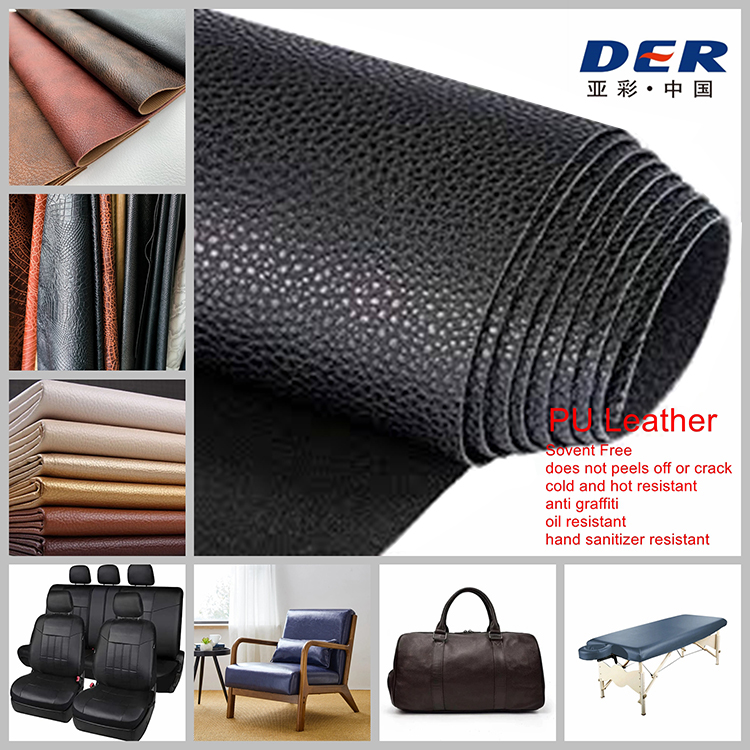
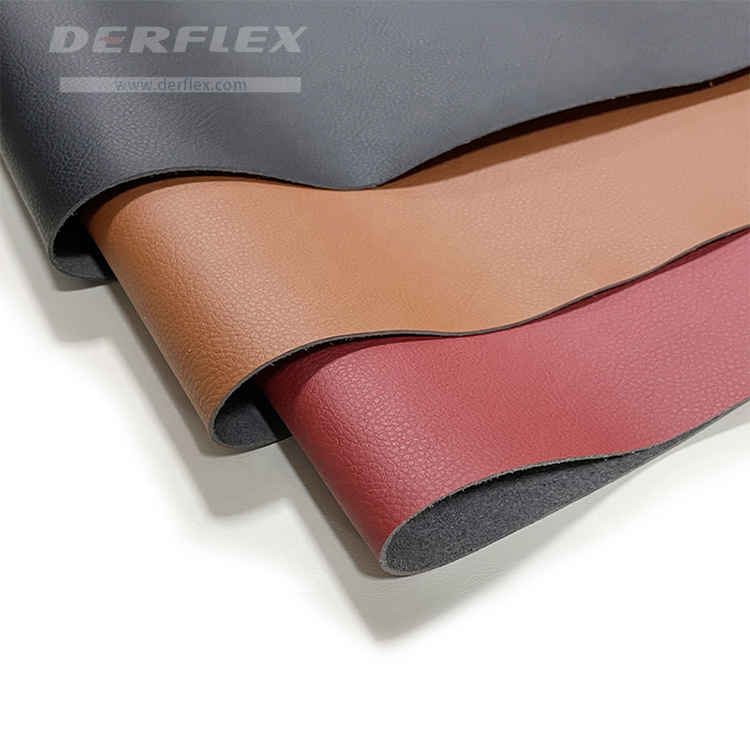
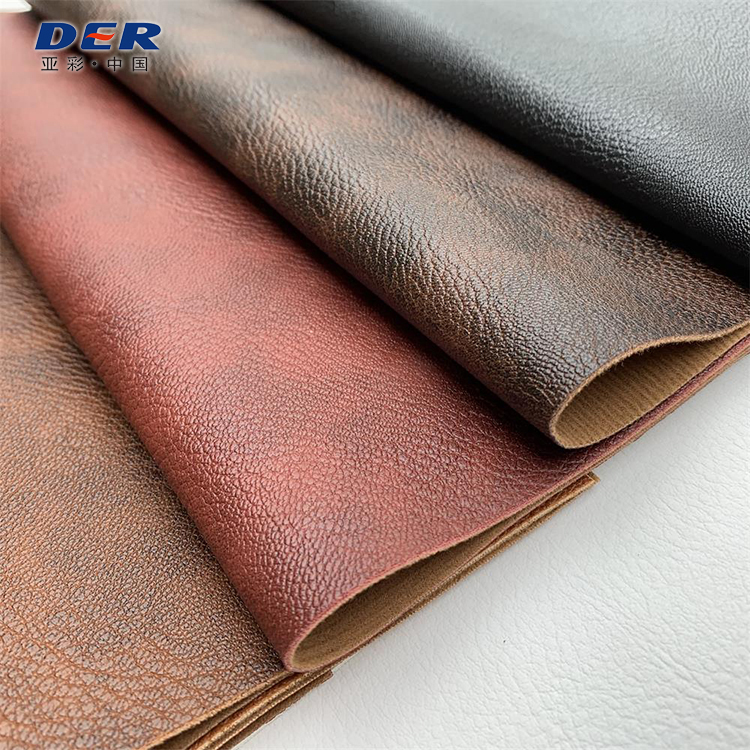
Not every sofa program needs the same test package. The following priorities help define a commercially appropriate material route.
Surface softness, flexibility and backing construction should support the intended sitting experience without creating excessive stretch or a loose appearance.
Seat panels and armrests receive frequent rubbing. Test method and target should be defined according to residential, hospitality or contract use.
Humidity, heat and storage conditions can affect polyurethane systems. The required resistance route should reflect destination climate and expected service environment.
Coating adhesion matters at seams, folds and high-flex zones. The material should be reviewed together with the furniture maker’s cutting and upholstery process.
Large sofa panels make variation more visible. Approved standards and production-lot comparison support coordinated collections and repeat orders.
Cleaning claims depend on the surface system and chemicals used. Care instructions and stain tests should be agreed before market release.
Use this table to prepare an inquiry. Values are development directions rather than guaranteed stock specifications.
| Specification Item | Available Development Direction | Why It Matters for Sofa Production |
|---|---|---|
| Product Type | PU leather for sofa, sofa PU leather material, polyurethane upholstery leather, synthetic leather roll material | Clarifies the end-use grade rather than treating the material as a generic fashion leather. |
| Surface Finish | Matte, semi-matte, low-glare, soft-touch, smooth, pebbled, napa-like, lychee grain or custom embossing | Controls showroom appearance, visual depth, touch and compatibility with the furniture design language. |
| Backing | Knitted fabric, woven fabric, nonwoven, polyester base, microfiber or application-specific backing | Influences stretch, seam stability, cushion conformity, cutting and upholstery handling. |
| Thickness | Common sofa sourcing references are often discussed around approximately 0.8–1.5 mm; other constructions can be reviewed | Must be balanced with softness, seam design, edge folding, furniture geometry and target cost. |
| Width & Roll Length | Project-defined roll width, roll length, core and packaging format | Should suit cutting markers, warehouse handling and line-side production efficiency. |
| Color | Black, grey, beige, cream, tan, brown, blue, green, red and custom color matching | Supports coordinated sofa collections, replenishment and private-label ranges. |
| Performance Route | Abrasion, hydrolysis resistance, scratch direction, easy-clean, anti-mildew, color fastness, cold resistance or flame-retardant route by project | Test methods and target values should be agreed according to market, environment and end use. |
| Processing | Cutting, sewing, quilting, stitching, piping, wrapping, bonding and upholstery assembly review | Reduces the risk of choosing a visually attractive material that is difficult to process in production. |
| OEM Options | Custom grain, color card, labels, roll marks, packaging and private-label presentation | Helps importers, distributors and furniture brands build a repeatable material program. |
| Confirmation | Reference sample, lab sample, approved sample, technical data and pre-production confirmation | Creates a shared standard for bulk production and repeat orders. |
Note: Final construction, performance, dimensions, tolerances, test methods, MOQ and lead time depend on the approved specification, production feasibility and order details. A sample should be evaluated on the buyer’s actual furniture before bulk release.
A buyer can use the same visual family while adjusting construction priorities for different furniture zones and product levels.
Focus on abrasion direction, recovery, surface stability, comfort and resistance to visible bagging.
Prioritize soft hand, drape, visual grain scale and conformity around foam and shaped panels.
Review folding, seam behavior, coating adhesion and resistance to repeated hand contact.
Color consistency, grain direction and efficient cutting may matter more than maximum softness.
This sourcing sequence helps convert a visual concept into a sofa PU leather material that is practical for manufacturing and repeat supply.
Residential sofas, hotel lounges, office reception seating and recliners have different usage intensity, cleaning routines and cost structures.
Choose grain scale, gloss, color depth and surface character that fit the sofa silhouette, stitching style and retail position.
Specify softness, body, stretch and support according to cushion shape, panel size, sewing route and upholstery tension.
Identify relevant abrasion, hydrolysis, cleaning, color, cold, flame or other requirements and name the test method where applicable.
Review the sample under actual lighting and process it on a representative furniture panel before confirming the production standard.
Record color, grain, backing, thickness, touch, roll format, packaging and inspection expectations for production and replenishment.
The right choice depends on the target sitting experience, care routine, budget, production model and market positioning.
DERFLEX can discuss both material design and the commercial details required by factories, distributors and private-label furniture programs.
Match a reference swatch, brand palette or furniture collection with custom tone, grain scale, embossing depth and sheen direction.
Review backing structure, body, softness and stretch according to sofa construction, sewing route and upholstery tension.
Easy-clean, abrasion, anti-mildew, hydrolysis, cold, color or flame-retardant directions can be discussed where relevant.
Discuss usable width, roll length, core, winding, defect marking and packing around the buyer’s cutting and warehouse workflow.
Private labels, roll marks, cartons, color cards and packaging instructions can be aligned with distributor or brand programs.
Approved sample references and clear specification records support later replenishment and product-line continuity.
Inspection should connect the approved sample with the characteristics that furniture factories will see and process.
Compare the production roll with the agreed standard under suitable lighting and confirm the visual direction across the lot.
Review overall thickness, backing identity, touch, body and other agreed construction characteristics.
Inspect for visible marks, embossing inconsistency, coating defects, contamination and other surface issues.
For new constructions, evaluate a sample through representative cutting, stitching, folding, piping or upholstery operations.
Testing should follow the named method, target and sampling plan included in the purchase specification.
Check roll labels, winding, core, protective packing, pallet or carton requirements and shipment marks.
This representative workflow illustrates how a furniture buyer can structure a material request without making unverified performance assumptions.
DERFLEX approaches synthetic leather as a specification and production program, helping buyers connect surface design with processing, quality and supply requirements.
These six internal resources support supplier evaluation, material comparison and application-specific sourcing.
Custom synthetic leather for furniture, seating, wall panels and commercial interiors.
Material pagePU Leather MaterialExplore surface, backing, thickness and roll-supply options for OEM manufacturing.
Supplier pagePU Leather ManufacturerReview custom polyurethane leather manufacturing and commercial supply support.
Broader categorySynthetic Leather FabricCompare PU, PVC and related leather-look fabric directions for multiple applications.
Alternative materialPVC Leather MaterialConsider a practical synthetic leather route for easy-clean and cost-controlled programs.
Buyer guideWhat Is PU Leather?Understand construction, types, advantages, limitations and sourcing questions.
Answers for furniture factories, upholstery distributors, importers and OEM product teams.
Yes, PU leather is widely used for sofas because it can provide a leather-like appearance, flexible color and grain options, a soft touch direction and roll-based manufacturing efficiency. The correct construction should be chosen according to the sofa type, usage level, climate, cleaning routine and required tests.
Industry sofa sourcing references are often discussed around approximately 0.8–1.5 mm, but thickness alone does not determine quality. Surface system, backing, coating adhesion, softness, stretch, abrasion direction and hydrolysis resistance should be evaluated together. Final thickness should be confirmed by sample and product trial.
Color, grain, gloss, hand feel, backing and thickness can be discussed against a physical reference, color target or finished-product direction. Matching accuracy and production feasibility should be confirmed through the approved sample process.
PU leather performance varies by resin system, construction, backing, coating adhesion, heat, humidity, cleaning chemicals, friction and product design. Low-suitability materials can fail earlier. A project should define relevant performance routes and verify the material under realistic use and processing conditions.
The coated face can provide practical resistance to spills, but a finished sofa is not automatically waterproof. Seams, perforations, backing, cushion construction and prolonged exposure all affect the result. “Waterproof” should only be used when a specific material and finished-product test supports the claim.
Please provide the sofa type, target market, reference sample or photo, color, grain, gloss, thickness or hand-feel direction, backing preference, roll width, estimated quantity, processing route, test requirements, packaging needs and destination country.
Share your furniture application, reference surface, color direction, backing, quantity and test requirements. DERFLEX can review a practical material route and prepare the next sampling step.