Agricultural Tent Fabric for Farm Shelters & Storage
Source PVC coated polyester rolls and custom cover panels from DERFLEX for farm storage, equipment shelters and livestock buildings. Match your material to the application.
Fabric rolls and agreed cover panels. Share your application, dimensions and quantity to start a specification discussion.
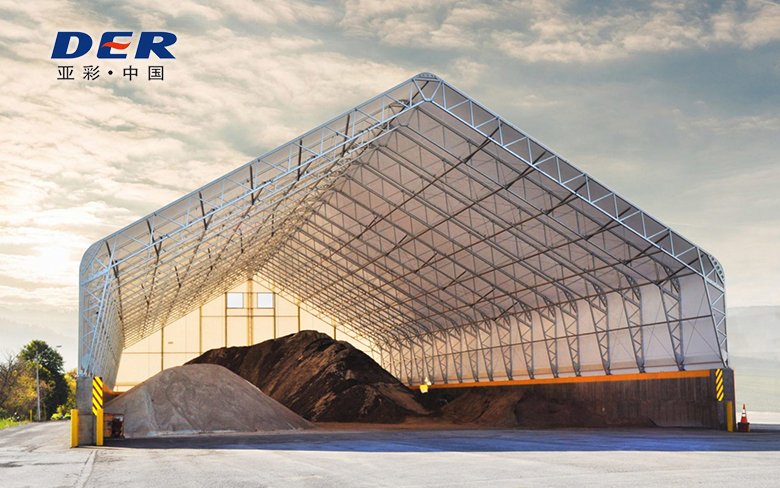
Open-front storage shelter: coordinate the roof covering, end opening and attachment details as one cover design.
Material & panel supplyChoose the scope your production team needs.
Application-led specificationBalance weather protection, light and airflow.
Sample before bulk approvalReview the material with your fabrication process.
01 / Match the farm application
One shelter category. Different material priorities.
A roof over a tractor and a sidewall beside livestock face different conditions. Identify what the cover must protect and how moisture, sunlight and air move through the building before selecting a fabric.
Machinery & equipment shelters
Specify a coated roof material for weather separation, then review panel tension, abrasion at frame contact points and access clearance for tall equipment.
Send: frame profile, roof panel dimensions, door opening and attachment detail.
Hay, feed & dry storage buildings
Plan rain shedding and ground moisture control together with ventilation. A waterproof outer cover alone cannot keep damp stored material dry or prevent condensation.
Coordinate solid weather barriers with designed air openings or separate mesh sections. Review cleaning products, repeated movement and animal contact zones before approving the material.
Develop a repeatable cover specification around an existing frame or product range. Keep roof geometry, seams, edge reinforcements and connection locations on a controlled drawing.
Send: reference cover, dimensioned drawing, color requirement and batch quantity.
Growing crops under cover? Light transmission, diffusion and condensation need a separate assessment. Explore greenhouse and agricultural structure materials when plant growth is the main task.
02 / Define the material
PVC coated polyester, specified beyond GSM.
The polyester reinforcement and PVC coating perform different jobs. The woven base supports mechanical strength; the continuous coating forms the water barrier and provides a surface for compatible welding. Compare the complete construction rather than choosing by fabric weight alone.
On smaller screens, scroll the specification table horizontally.
Specification fields for your agricultural tent fabric inquiry
Selection field
What to specify
What it helps you decide
Fabric construction
PVC coated polyester; identify any alternative laminated construction separately.
Match the proposed material to your welding, handling and cover design.
Weight & thickness
Approved grade, nominal g/m², measured thickness and agreed tolerances.
Control material consistency without treating GSM as a strength rating.
Mechanical properties
Warp and weft tensile / tear results, coating adhesion and the corresponding test methods.
Compare materials using the same units and test conditions.
Width & panel layout
Usable roll width, roll length, seam allowances and reinforcement zones.
Plan cutting yield, weld positions and the number of joined panels.
Color & light control
Opaque, translucent or blackout direction; approve a physical color sample.
Balance the required interior light and visual appearance.
Exposure & finish
Sun exposure, temperature, humidity, cleaning agents and any requested surface treatment.
Select the grade and evidence relevant to the actual farm environment.
Fire performance
Required market standard and report for the selected fabric, when applicable.
Check the documented grade against the project's requirements.
Supply form
Rolls, cut pieces or fabricated panels; define labels, packing and quantity.
Separate material cost from conversion work and delivery scope.
Waterproof fabric is one part of the cover. Roof slope, seam execution, penetrations and perimeter details also determine whether rain enters a finished shelter. Fabric strength does not establish the wind or snow capacity of its frame and anchors.
03 / Material, processing & connections
Look closely at the parts that become your cover.
Review the roll surface, sidewall application, panel processing and reinforced edge details before defining your finished cover. The agreed drawing and approved sample define your order.
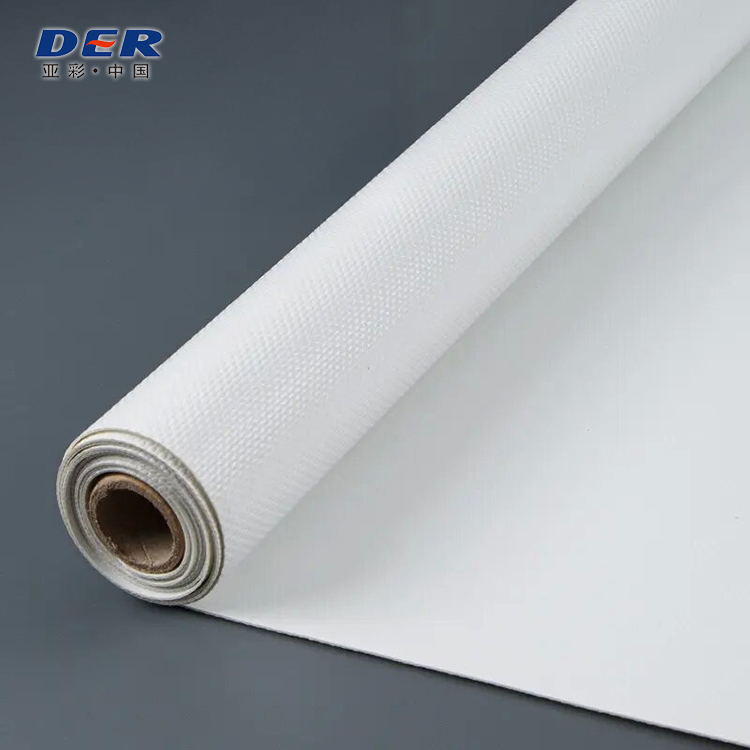
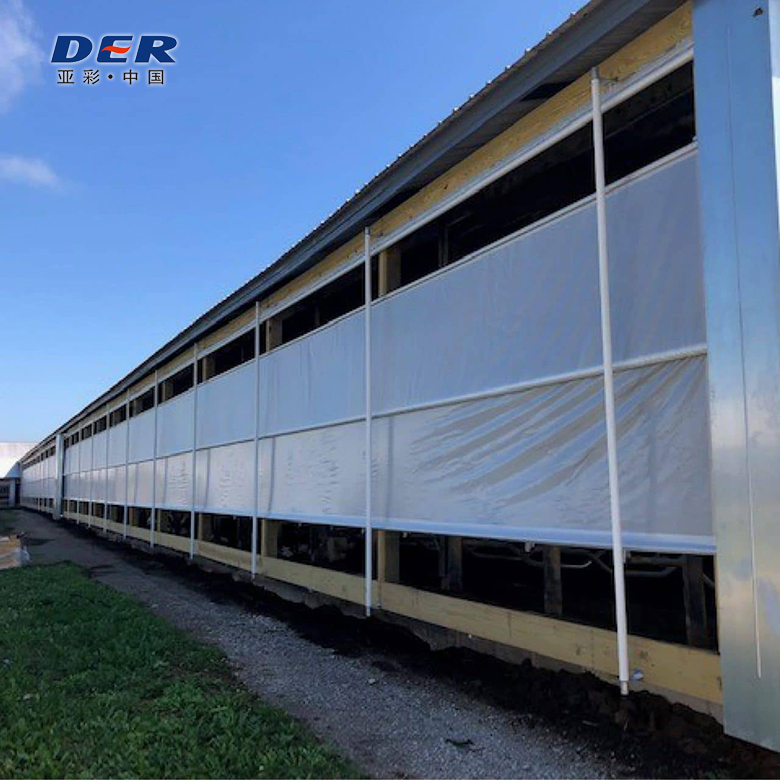
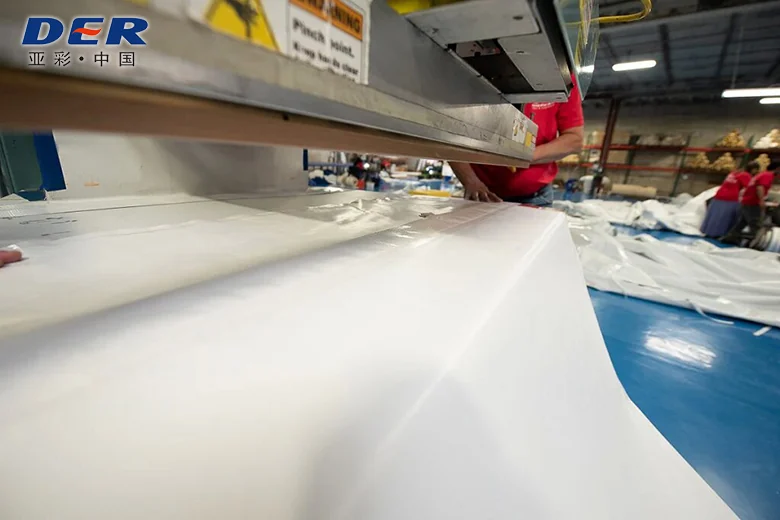
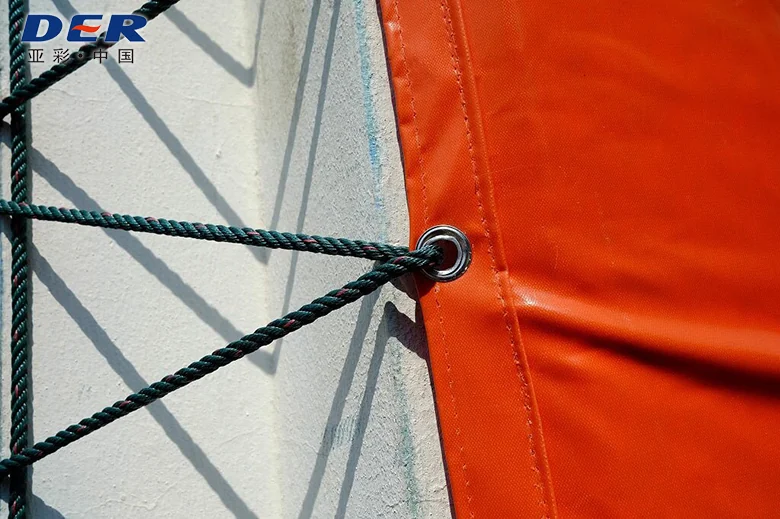
Roll materialCheck the face finish, flexibility, usable width and batch identification before conversion.Agricultural sidewall applicationDefine the opening, curtain movement and edge detail around the building's ventilation design.Panel processingAgree on seam locations and trial welds with the actual material and fabrication equipment.Reinforced edge connectionConnection loads pass through the reinforced edge. Specify its construction together with the attachment spacing.
04 / Build a clear supply scope
Buy the material or define the panel program.
Fabric rolls for local conversion
Use a roll supply program when your team cuts, welds and finishes the covers. Agree the grade, color, face finish, usable width and packing so each shipment can be checked against the same purchase specification.
Ask for a proposed material sample and assess it through your process. A visual swatch helps judge color and handling; a fabrication trial gives a better basis for seam and edge approval.
Drawing-led cover panels
Discuss roof panels, sidewalls, end panels or replacement cover pieces when conversion work is part of your inquiry. Confirm dimensions, seam orientation, openings, reinforced zones and connection interfaces before production approval.
Scope boundary: this inquiry concerns fabric and agreed cover components. Your shelter provider is responsible for structural design, frames, anchors and site installation.
Describe the shelter
Share the use, location, photographs or sketch and order quantity. Identify whether you need rolls or panels.
Agree the material brief
Review light control, exposure, usable width, performance documents and the proposed sample.
Approve fabrication details
For panels, settle the drawing, welds, edge build-up and attachment interfaces. Confirm a trial where the design requires it.
Confirm the purchase specification
Record the approved material, acceptance checks, packaging, commercial terms and delivery plan in the order.
05 / Before you order
Resolve the farm conditions that change the specification.
Moisture & exposure
Rain protection needs a moisture plan.
Separate rain leakage, ground moisture and underside condensation when diagnosing an existing shelter.
Specify deliberate airflow for livestock or damp storage. A solid coated fabric does not replace a ventilation opening.
Identify fertilizer, pesticide, ammonia or cleaning contact. Request compatibility evidence for the exact grade and exposure.
Describe shade, continuous sunlight and the expected installation period. Accelerated weathering hours do not translate directly into outdoor years.
Fit, seams & upkeep
Measure the covering surface.
Use the frame's roof profile or developed panel dimensions; floor area alone does not define fabric quantity.
Keep finished dimensions separate from cutting dimensions and include seam, hem and connection allowances on the drawing.
Check contact points, edges and openings for abrasion. Define reinforcements with the cover designer.
Agree on compatible cleaning, inspection and dry storage instructions. Review leaks, loose connections and damage before reuse.
Request an agricultural tent fabric quote.
Send your application, destination, quantity and roll or panel requirement. Add dimensions or a sketch, color and light preference, connection details and any required documentation. A photo is a useful starting point if a finished drawing is not yet available.
What changes the quote? Material construction, usable width and cutting yield, panel conversion, reinforcements, order size, packing and delivery terms. MOQ, lead time and sample arrangements are confirmed for your project.
Agricultural tent fabric is the flexible covering material used on farm shelters and storage structures. Reinforced PVC coated polyester can form the roof or wall weather barrier, while separate mesh or clear panels may serve airflow or visibility needs. Select the construction around the shelter application and the cover design.
What GSM should I choose for a farm shelter?
There is no single GSM that suits every farm shelter. Compare the proposed fabric construction, directional tensile and tear results, coating adhesion, seam performance and installation conditions. Fabric weight alone does not establish wind capacity, snow capacity or expected outdoor life.
Is PVC tent fabric waterproof and breathable?
A continuous PVC coating provides a water barrier, but it is not an airflow mesh. Finished-cover water resistance also depends on seams, openings, drainage and installation. For livestock or damp storage, include deliberate ventilation instead of assuming air will pass through a solid roof fabric.
Can DERFLEX supply custom agricultural tent covers?
DERFLEX supplies PVC coated tent fabric rolls and supports project-based cover panels. Send the frame profile, panel drawings, attachment details and quantity to discuss the fabrication scope. Frames, structural design, anchors and site installation are handled by your shelter provider.
Can the same fabric be used for a greenhouse?
Do not choose a greenhouse cover only because it looks translucent. Crop growing requires a separate assessment of light transmission, diffusion, UV behavior and condensation. This page focuses on farm shelter and storage covers; describe any crop growing requirement when requesting material advice.
What should I send to request a quote or sample?
Start with the application, destination, quantity and required supply form: fabric rolls, cut pieces or fabricated panels. Add dimensions or a sketch, color and light preference, connection details, exposure conditions and any required test documentation. You can request a proposed sample before approving the bulk specification.