


Biogas Membrane Fabric Manufacturer for Gas Holders, Digesters, and Renewable Energy Storage Systems
DERFLEX supplies biogas membrane fabric for buyers who need more than a standard outdoor coated fabric. We support biogas EPC contractors, anaerobic digester builders, wastewater treatment system integrators, agricultural energy projects, OEM gas holder manufacturers, and distributors looking for gas-tight membrane materials with stable methane retention, chemical resistance, weldability, and commercially dependable factory supply. 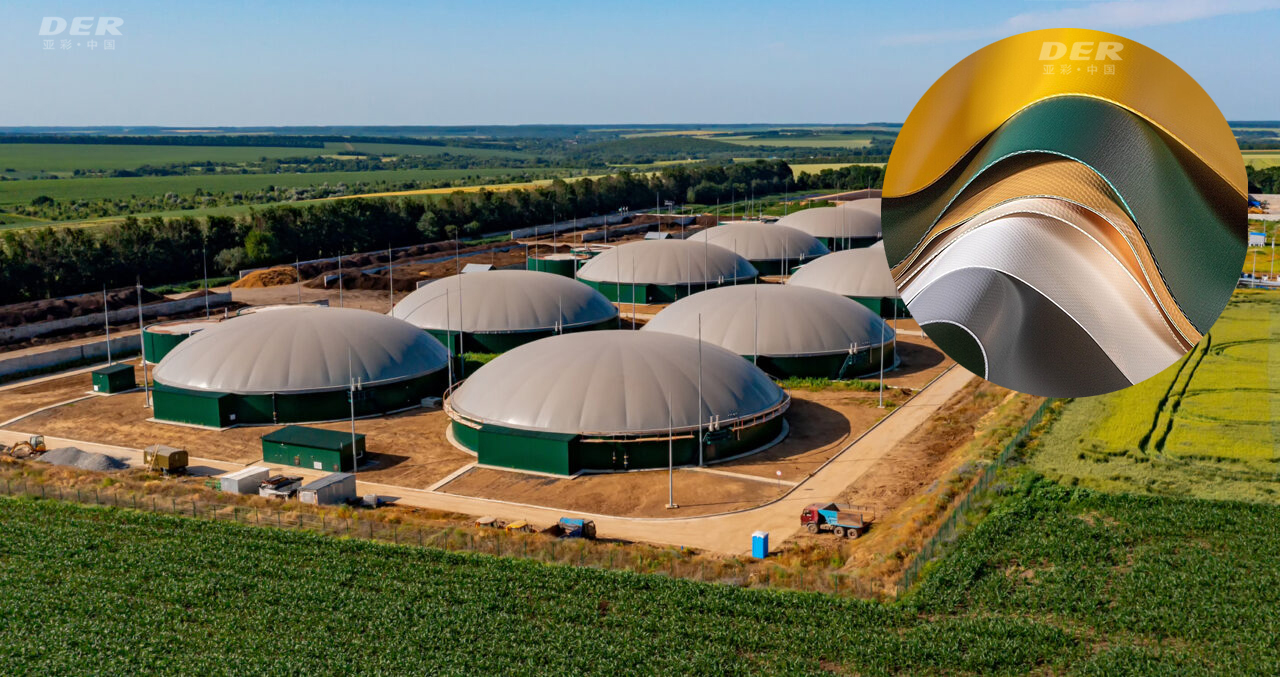
Whether the requirement involves a farm digester cover, a municipal wastewater biogas project, a double membrane gas holder, a gas dome upgrade, or a flexible gas storage system for industrial organic waste treatment, serious buyers usually focus on the same issues: gas permeability, seam strength, resistance to moisture and H2S-related exposure, UV durability, pressure-cycle stability, customization for inner and outer membrane layers, delivery control, and whether the supplier understands real project matching rather than only selling a low-cost sheet material.
What Is Biogas Membrane Fabric?
Biogas membrane fabric is a specialized gas-tight flexible composite used to store, contain, and regulate biogas produced during anaerobic digestion. In practical project use, the membrane is typically installed as the inner gas storage layer, the weather-protection outer layer, or both, depending on whether the system is a digester cover, a double membrane gas holder, a biogas dome, a flexible storage bag, or another renewable energy containment system.
Unlike ordinary PVC fabric or basic tarp material, biogas membrane fabric is selected for a much more demanding performance pathway. The material needs to resist gas loss, tolerate outdoor exposure, remain stable under pressure change, support reliable welding, and perform in environments influenced by moisture, temperature variation, and the chemical character of biogas systems. That is why buyers search terms such as biogas membrane fabric, biogas storage membrane, gas holder membrane material, biogas PVC membrane, double membrane gas holder fabric, and anaerobic digester membrane.
In most serious biogas applications, the membrane is built around a high-strength textile base combined with a gas-barrier coating system such as PVC or TPU depending on the project route. The textile base contributes dimensional stability and tensile strength. The coating system contributes gas tightness, weldability, resistance to chemical contact, weather durability, and service performance over time.
For DERFLEX, this page is positioned as a high-intent product and solution page for renewable energy, wastewater, agricultural digestion, organic waste treatment, and methane storage projects where membrane selection affects both technical performance and commercial risk.
Why Buyers Search for Biogas Membrane Fabric Instead of General Coated Fabric
- You need much lower gas permeability than general outdoor cover materials can usually provide.
- You need stronger seam performance for hot-air or HF welding in gas storage conditions.
- You need a membrane that can remain stable under pressure cycles and weather exposure.
- You need project matching for inner membrane, outer membrane, or complete gas holder logic.
- You need OEM customization around weight, coating, color, and fabrication method.
- You need documentation, quality control, and delivery reliability for engineering projects.
Need Biogas Membrane Fabric for a Gas Holder, Digester, or Storage Dome Project?
Send your gas volume, tank diameter, application scenario, membrane layer requirement, and delivery schedule. DERFLEX can recommend a more suitable biogas membrane fabric direction for quotation and project matching.
Key Features Buyers Expect from Competitive Biogas Membrane Fabric
A strong biogas membrane is evaluated by whether it helps the system work better over time, not only by whether it looks thick or inexpensive on first inspection.
1. Low Gas Permeability
The core task of biogas membrane fabric is retaining gas. Low gas permeability is especially important where methane loss directly affects storage efficiency, project economics, and environmental control. Buyers often start with broad search terms, but the real decision usually comes down to how reliably the membrane limits gas leakage over time.
2. Strong Weldability and Seam Strength
Gas holders and digester covers depend heavily on seam performance. A membrane with acceptable surface properties but weak seam behavior can create serious field issues. That is why fabricators and EPC teams often prioritize weld compatibility and seam integrity alongside the base material itself.
3. Resistance to Moisture, Chemicals, and Harsh Media
Biogas systems often operate in environments involving moisture, organic waste exposure, ammonia-related conditions, and gases that may include hydrogen sulfide. Membrane materials therefore need a more serious resistance pathway than general-purpose outdoor fabrics.
4. Outdoor Durability and UV Stability
Many biogas projects are installed outdoors for long periods. The membrane must resist weathering, sun exposure, temperature changes, and general environmental aging while keeping its handling and sealing properties commercially acceptable.
5. Pressure-Cycle Stability
Gas volume in biogas projects often changes throughout the day and throughout the operating cycle. A competitive gas holder membrane fabric should remain dimensionally and mechanically stable under repeated inflation, deflation, and variable low-pressure working conditions.
6. OEM and Project Customization
Serious buyers frequently need custom membrane weight, width, color, formulation, anti-static option, surface finish, or different inner and outer layer logic. A real biogas membrane manufacturer is expected to support custom matching, not only standard roll supply.
Technical Specifications
Biogas membrane fabric covers multiple technical and commercial routes. The table below is designed as a practical framework for project discussion and quotation rather than a one-model-only datasheet.
| Product Category | Biogas membrane fabric / gas holder membrane material / biogas storage membrane |
|---|---|
| Typical Base Fabric | High-strength polyester reinforcement or project-specific technical textile substrate |
| Typical Coating Routes | PVC, TPU, PVC with protective treatment, or project-specific gas-barrier membrane systems |
| Typical Weight Range | Medium to heavy-duty engineered grades depending on gas holder type, pressure cycle, and service conditions |
| Functional Properties | Gas-tight, UV-resistant, chemical-resistant, weldable, weather-stable, anti-mildew, and low-permeability configurations |
| Membrane Roles | Inner gas storage membrane, outer weather-protection membrane, or integrated biogas cover system component |
| Fabrication Compatibility | Hot-air welding, HF welding where applicable, seam reinforcement, custom forming, and project-based fabrication logic |
| Project Uses | Anaerobic digesters, double membrane gas holders, wastewater biogas tanks, agricultural digesters, landfill gas systems, flexible gas containers |
| Customization | Weight, color, coating direction, barrier requirement, fabrication mode, anti-static option, and project packaging support |
| Commercial Focus | Stable quality, seam performance, project documentation support, repeat-order consistency, and lead-time control |
For a broad but high-intent keyword like biogas membrane fabric, the page performs best when it stays technically useful while still helping buyers move smoothly toward inquiry and project matching.
Need Inner Membrane, Outer Membrane, or Full Gas Holder Material Matching?
If your team already knows tank diameter, gas capacity, pressure conditions, or membrane layer logic, DERFLEX can help you narrow the more suitable biogas membrane fabric route faster.
Applications of Biogas Membrane Fabric
High-intent buyers usually begin with a broad membrane search and then narrow by project type. A strong product page should therefore cover the real use environments where biogas membrane fabric creates value.
Anaerobic Digester Covers
Biogas membrane fabrics are widely used as flexible covers for digesters in agricultural and industrial fermentation systems. The membrane helps retain gas, protect the digestion environment, and support stable renewable energy output.
Double Membrane Gas Holders
In double membrane systems, the inner membrane stores gas while the outer membrane provides protection and structural stability. This is one of the most common and commercially important application directions for gas holder membrane material.
Agricultural Biogas Projects
Livestock farms, manure treatment systems, and agricultural waste digestion programs rely on biogas membrane materials for practical methane capture, energy recovery, and stable outdoor use.
Wastewater Treatment Facilities
Municipal and industrial wastewater projects use biogas storage membranes to capture gas, control odors, and support broader renewable energy and treatment efficiency objectives.
Industrial Organic Waste Treatment
Food waste, organic sludge, brewery waste, and related industrial digestion systems require gas-tight membrane materials that can handle operating pressure changes and outdoor service conditions.
Flexible Gas Storage Containers
Some projects use biogas membrane fabric in flexible storage bags or compact gas holder structures where fast installation, lightweight transport, and lower structural complexity provide a practical advantage.
Why Choose DERFLEX as Your Biogas Membrane Fabric Supplier
Buyers searching for biogas membrane supplier or gas holder membrane manufacturer are usually comparing more than product names. They are comparing project understanding, membrane performance direction, factory reliability, and whether the supplier can support long-term renewable energy projects with less sourcing risk.
Biogas Application Focus
DERFLEX positions this product line around gas storage, digester cover, and renewable energy application logic rather than generic outdoor coating logic. That matters because methane storage requirements are materially different from ordinary cover uses.
OEM and Project Customization
Many biogas projects need custom weight, color, coating route, barrier direction, layer matching, and fabrication format. DERFLEX supports project-oriented customization for EPC contractors, OEM system suppliers, and distributors.
Lead-Time Awareness
Renewable energy and wastewater projects often move around civil works, equipment delivery, and commissioning windows. That is why membrane sourcing must include realistic production planning and delivery coordination, not only technical description.
Quality and Seam Performance
Gas retention depends not only on the membrane surface but also on seam reliability, fabrication behavior, and consistent material performance. Stable quality control matters because replacement and downtime are much more costly than initial material price.
Documentation and Testing Support
Serious biogas projects usually require clearer performance discussion around gas tightness, tensile behavior, UV resistance, and seam strength. DERFLEX supports a more technically informed quotation and project communication process.
Commercially Practical Communication
Strong membrane supply is also about quotation speed, response clarity, project matching, export support, and whether the supplier can communicate well with EPC teams, plant operators, fabricators, and procurement managers.
Biogas Membrane Fabric vs Other Gas Storage and Cover Materials
Buyers often compare biogas membrane fabric with general PVC fabric, light plastic films, and rigid storage solutions. This comparison helps clarify where engineered gas-tight membranes create stronger value.
Biogas Membrane Fabric
- Designed for low gas permeability and methane retention
- Better suited for digesters, gas holders, and renewable energy systems
- Supports weldability, seam strength, and pressure-cycle use
- More appropriate for engineered biogas storage environments
Ordinary PVC Fabric
- Can perform well for general protection and cover applications
- Not always optimized for gas storage or methane containment
- May not provide the same barrier focus or seam requirements
- Better for general cover tasks than serious gas holder projects
PE Film / Light Plastic Sheet
- Can be used in simple low-cost covering scenarios
- Usually weaker in durability, weldability, and long-term gas retention
- Less suitable for demanding renewable energy infrastructure
- Often chosen only where budget is more important than lifespan
Rigid Tanks and Storage Structures
- Useful in many fixed installations
- Typically heavier, less flexible, and more site-dependent
- May involve higher structural complexity and transport constraints
- Flexible membranes can be more practical in many decentralized projects
Representative Case Study
This example reflects how buyers usually evaluate biogas membrane fabric for real project conditions rather than simple one-time material purchase.
Biogas Membrane Fabric Supply for Agricultural Digester and Double Membrane Gas Holder Project
A project team needed gas-tight membrane material for a farm-based anaerobic digestion system that included digester covering and gas storage capacity expansion. The buyer was not only comparing membrane cost by square meter. They needed a material route that could support reliable methane containment, stable seam performance, weather resistance, and a realistic delivery schedule that aligned with equipment installation and site preparation.
The main challenge was determining the correct membrane logic for inner and outer layers while balancing gas retention, mechanical reliability, and project budget. The buyer also needed clearer guidance on whether a standard PVC-based engineered membrane or a higher-spec route would offer the best commercial fit for long-term outdoor service.
Project Review
Tank size, gas volume, site conditions, layer logic, and delivery timing were clarified before material recommendation was finalized.
Membrane Matching
Different membrane directions were compared according to gas-tightness pathway, seam behavior, weather exposure, and commercial practicality.
Customization Alignment
Weight, coating direction, fabrication method, packaging, and project coordination details were aligned with the buyer’s engineering workflow.
Supply Confidence
The outcome was a more dependable sourcing route with clearer specification logic, reduced membrane uncertainty, and stronger confidence in system performance.
Have a Digester, Gas Dome, Wastewater, or Agricultural Biogas Project in Progress?
Share your capacity target, layer requirement, working environment, and delivery window. DERFLEX can help you move from a broad membrane inquiry to a more precise biogas membrane fabric recommendation.
Frequently Asked Questions
These questions help EPC contractors, distributors, plant operators, and procurement teams compare biogas membrane fabric suppliers more efficiently.
What is biogas membrane fabric?
Biogas membrane fabric is a gas-tight flexible composite designed for storing, containing, and regulating biogas in anaerobic digestion and renewable energy systems. It is commonly used in digesters, gas holders, double membrane covers, and flexible storage systems.
What is the difference between biogas membrane fabric and ordinary PVC fabric?
Biogas membrane fabric is engineered for lower gas permeability, stronger seam performance, better chemical resistance, and more reliable long-term behavior in methane-related environments. Ordinary PVC fabric may work in general cover use but is not always optimized for gas storage.
Where is biogas membrane fabric commonly used?
It is commonly used in anaerobic digester covers, double membrane gas holders, agricultural biogas plants, wastewater treatment facilities, organic waste digestion projects, flexible gas containers, and other methane storage systems.
Can DERFLEX provide custom biogas membrane solutions?
Yes. DERFLEX supports OEM and custom projects including inner and outer membrane matching, custom weight and color, coating direction, fabrication format, and project-oriented membrane recommendation.
How do I choose the right gas holder membrane supplier?
Buyers should compare gas-tight performance understanding, project experience, weldability, seam strength, customization capability, quality consistency, delivery coordination, and whether the supplier can support real engineering conditions rather than only general material sales.
What information should I send when requesting a biogas membrane quote?
A stronger quote usually starts with gas volume, tank size, application type, inner or outer layer requirement, working pressure logic, site conditions, quantity estimate, fabrication method, and delivery schedule.
Why are double membrane systems common in biogas storage?
Because the inner membrane stores gas while the outer membrane provides protection and structural stability. This layered system helps improve operational reliability and makes it easier to manage pressure, weather exposure, and long-term service requirements.
Talk to DERFLEX About Your Biogas Membrane Fabric Requirements
From digesters and gas holders to wastewater projects, agricultural biogas systems, and flexible methane storage solutions, DERFLEX supports buyers who need a more dependable gas-tight membrane supply path.