News
Industry News

CIPP Outer Film Manufacturer | UV CIPP Outer Protection Film | DERFLEX

Update:2026/8/26 18:19:20 Views:
DERFLEX logo Trenchless Rehabilitation Film Materials

CIPP Outer Film for UV-CIPP Liner Protection and Manufacturing

DERFLEX supplies customizable CIPP outer film roll goods for UV-CIPP liner factories, prepreg workshops, converters and trenchless system partners that need an outer protection layer engineered around light blocking, resin containment, mechanical handling and stable converting.

Instead of treating the outer film as generic plastic sheet, DERFLEX helps buyers define its exact job in the liner: UV protection before curing, barrier behavior around the resin system, puncture and tear resistance, surface friction, sealing or joining method, roll width and repeat-order quality. Final construction is confirmed through technical discussion and sample validation.

UV Blocking DirectionFor light-sensitive UV-CIPP resin systems
Outer ProtectionHandling, winding, storage and installation preparation
Custom Roll GoodsWidth, thickness, color, surface and packing by project
Sample ValidationConfirm resin, sealing and process behavior before scale-up
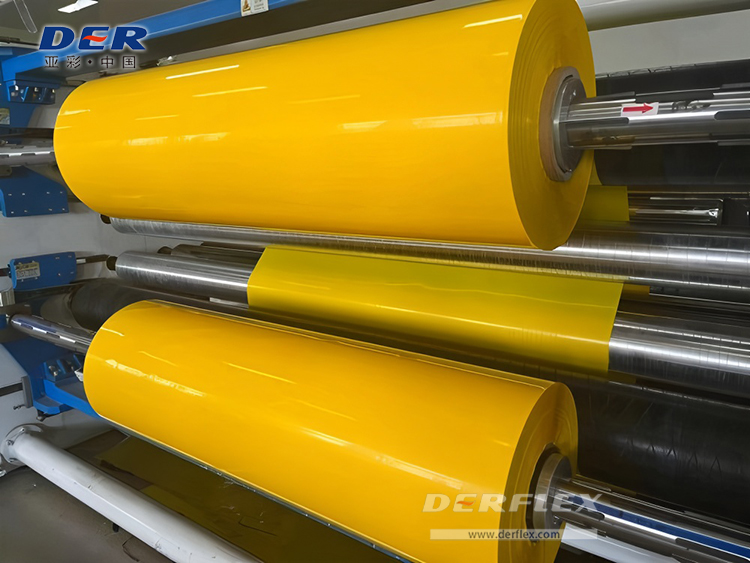
DERFLEX yellow UV CIPP outer film roll production
DERFLEX UV-CIPP film production reference Yellow UV-blocking film direction for professional liner-material development. Final thickness, polymer structure and performance must be confirmed against the buyer's CIPP system.
Quick Answer

What Is CIPP Outer Film?

CIPP outer film is the external functional film layer surrounding a cured-in-place pipe liner before and during installation preparation. In UV-CIPP systems, its most important jobs can include blocking unwanted external light before controlled curing, helping contain resin, protecting the liner from puncture or abrasion, and supporting stable handling through winding, storage, transport and pull-in preparation.

The correct outer film is therefore selected by its function inside the complete liner system—not by color or thickness alone. Buyers should define resin chemistry, curing method, liner architecture, joining route and handling conditions before locking a production specification.

Layer Function Map

Where the Outer Protection Film Sits in a UV-CIPP Liner

Different manufacturers use different layer architectures, but the functional logic remains important: each layer has a separate job and must be qualified as part of the complete liner.

Layer 01

CIPP Outer Film

External UV/light protection, handling protection, barrier support, surface and installation-facing behavior.

Layer 02

Barrier / Process Layer

Optional anti-seepage, release, waterproof or process-specific layer depending on the liner design.

Layer 03

Reinforcement + Resin

Glass-fiber, felt or other carrier structure impregnated with the selected thermosetting resin system.

Layer 04

Inner Film

Calibration and internal process film direction, generally designed around UV transmission and removal/release needs.

Layer sequence and material selection vary by liner manufacturer. Use this diagram as a procurement framework, not as a universal liner specification.

Performance Priorities

Six Questions the Outer Film Must Answer Before It Enters Production

A CIPP outer protection film is process-critical. The right evaluation focuses on failure prevention through the complete converting, storage and installation workflow.

01

Does It Control Unwanted UV Exposure?

For UV-cured liners, the outer layer should be evaluated for the required light-blocking direction so the resin is protected before intentional curing begins.

02

Can It Handle Resin Contact?

Barrier behavior should be checked against the buyer's resin family and storage window, including migration, swelling, softening, permeability and seal integrity where relevant.

03

Will It Survive Pulling and Folding?

Tear and puncture resistance matter during winding, folding, packing, transport, liner movement and contact with workshop or host-pipe surfaces.

04

Is the Surface Right for Conversion?

Surface friction, anti-blocking behavior, smoothness and winding quality can influence machine feeding, folding, tube forming and liner handling.

05

Can the Required Seam Be Built?

If the film is formed into a tube or joined with overlap, the liner producer should test heat sealing, welding, tape, adhesive or another selected joining method on the actual grade.

06

Can the Roll Be Repeated Batch After Batch?

Width, thickness, color tone, surface, edge condition, winding and packaging should become controlled repeat-order criteria after sample approval.

Selection Matrix

Choose UV CIPP Outer Film by Risk, Not by One Specification

This matrix helps procurement and technical teams identify which film properties deserve priority in different liner-manufacturing conditions.

Production / Field RiskFilm PriorityWhat to Validate Before Approval
Ambient light exposure before curingUV blocking / opacityColor and additive system should match the required protection window.Exposure test using the buyer's resin, storage time and factory/jobsite lighting conditions.
Long storage or resin contactBarrier compatibilityPolymer structure should be selected around the actual resin system.Soak/contact behavior, dimensional change, surface condition, seal integrity and resin migration risk.
Rough handling or pull-in preparationPuncture + tear resistanceMechanical protection without making the liner unnecessarily stiff.Folding, dragging, edge contact, puncture and tear tests based on real handling practice.
Automated converting lineFlatness + winding stabilityConsistent roll tension and surface help machine feeding.Unwinding, edge tracking, blocking, curling, roll tension and cutting yield.
Tube forming / seam conversionJoining behaviorSeal or weld window should suit production equipment.Seam method, overlap geometry, temperature/process window and seam strength after resin exposure.
OEM repeat supplySpecification controlApproved sample becomes the reference for repeat orders.Thickness/weight direction, width, color, surface, core, labels, packing and agreed QC checkpoints.
Specification Framework

Practical RFQ Data for CIPP Outer Film

DERFLEX does not present one universal outer-film specification because liner systems, resins and converting methods differ. The table below is designed for quotation and sample-development discussions.

Product DirectionCIPP outer film / UV CIPP outer film / outer protection film roll goods for UV-cured liner manufacturing.
Main FunctionUV/light blocking direction, outer surface protection, resin containment/barrier support, handling protection and converting stability.
Material StructureProject-defined multi-layer polymer film or customized flexible film structure. Final polymer combination should be confirmed after technical review and sample testing.
ThicknessAvailable according to liner design and processing requirements. Confirm target thickness or existing reference sample with DERFLEX.
WidthCustom roll width subject to material structure and production feasibility; select around liner circumference, overlap, cutting yield and converting equipment.
Color / OpacityUV-blocking yellow, green, opaque or project-defined direction can be discussed. Required light-blocking performance should be validated with the buyer's resin system.
SurfaceSmooth, low-friction, anti-blocking, process-oriented or customer-defined finish depending on handling and tube-forming workflow.
Roll FormatRoll length, core, winding direction, label and protective packing can be customized. Flat or formed-film requirements should be confirmed with DERFLEX for feasibility.
Joining / SealingHeat sealing, welding, tape, adhesive or another route should be validated on the selected material with the buyer's actual equipment.
Resin CompatibilityPolyester, vinyl ester, epoxy or other resin systems require buyer-side testing for barrier, contact, storage and curing-process compatibility.
MOQ / Lead TimeConfirm with DERFLEX according to the approved film structure, width, roll format, trial quantity and production schedule.
Important: Industry CIPP outer films are often built as multi-layer polymer structures, and PA/PE constructions are common market references. DERFLEX should confirm the final polymer structure, UV-blocking requirement, resin compatibility and production feasibility for each customer rather than treating one industry reference as a universal standard.
Product & Process View

Outer Film Should Be Developed Around the Liner Workflow

These DERFLEX images show the UV-CIPP film direction and roll-goods context. A buyer should qualify the exact grade through the production sequence that the film will actually experience.

Yellow UV CIPP outer protection film production at DERFLEX
Production-side film handlingReview surface, width, thickness direction, winding, edge quality and roll consistency as part of incoming material control.
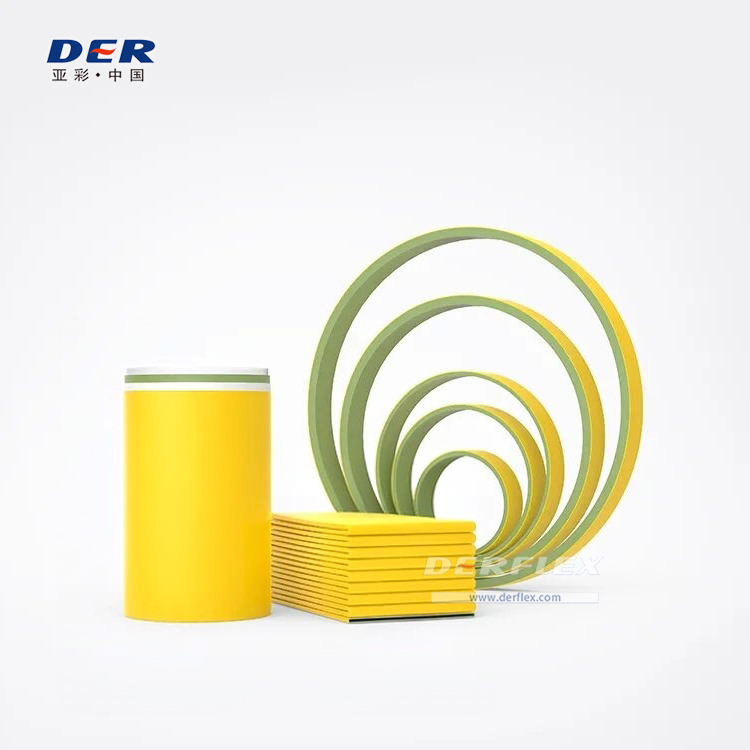
DERFLEX UV CIPP liner film roll and tubular material samples
Liner-component development directionFinal film geometry, polymer structure, color and joining method should follow the buyer's liner architecture and sample approval process.
Engineering Notes

Five Manufacturing Decisions That Matter More Than “Thicker Is Better”

A heavier or thicker film is not automatically the safer choice. The outer film has to balance barrier, mechanical protection and processability.

A

Strength vs. Flexibility

More material can improve handling strength but can also increase stiffness. The liner producer should qualify the film through folding, packing, pull-in preparation and expansion behavior.

B

UV Barrier vs. Visual Control

Color is not a performance certificate. The required UV-blocking level should be verified by test conditions relevant to the resin and exposure window.

C

Barrier vs. Resin Chemistry

Polymer choice should be reviewed against the actual resin, monomers, storage conditions and contact duration instead of assuming one film works for every CIPP chemistry.

D

Low Friction vs. Seamability

A smooth surface can aid handling, while sealing or bonding may need a compatible surface and process window. Both functions should be tested together.

E

Width vs. Yield

Roll width affects seam count, cutting waste, machine fit, pallet dimensions and container efficiency. Procurement should define width around the whole converting plan.

F

Specification vs. Batch Control

Once the film is approved, the reference should include surface, roll format and QC checkpoints—not only a nominal thickness number.

Development Workflow

From Outer Film Requirement to Repeatable Roll Supply

Specialized CIPP film should be approved through the same sequence used in production rather than selected from a generic film catalogue.

Step 01

Define Layer Role

Outer UV barrier, resin barrier, process protection, installation-facing layer or combined function.

Step 02

Define the System

Resin family, reinforcement architecture, curing method, diameter range and manufacturing route.

Step 03

Set Roll Data

Target thickness, width, color, surface, roll length, core, winding and packaging.

Step 04

Run Sample Trials

Test UV protection direction, resin contact, handling, puncture, sealing and converting behavior.

Step 05

Lock Repeat Spec

Confirm approved sample, inspection points, labels, packing and repeat-order communication.

Application Decision Table

Where the Outer Film Requirement Changes

The same buyer may need different outer-film priorities for factory prepreg, transport, jobsite handling or OEM conversion.

Use ScenarioRecommended Evaluation FocusReason
Pre-impregnated UV-CIPP liner productionUV blocking, resin barrier, winding, surface and storage stability.Light-sensitive resin may remain in contact with the film through manufacturing, packing and transport.
Liner tube formingSealing / joining window, overlap design, width yield and edge quality.Reliable tube construction depends on repeatable seam behavior and roll geometry.
International transportPuncture resistance, folding behavior, packaging and batch identification.Damage or mix-ups during long logistics can compromise otherwise qualified material.
Jobsite pull-in preparationTear resistance, friction, surface durability and UV exposure control.The film can encounter rough surfaces, pulling stress and uncontrolled ambient light.
OEM liner-material programColor, roll format, label, packing, QC reference and repeat supply.Private-label and distributor programs need a production standard that can be repeated, not one-off film matching.
Procurement Control

Send Better RFQ Data and Avoid Common Outer-Film Mistakes

A precise RFQ shortens material matching and makes sample comparisons more meaningful.

Buyer Checklist

  • Outer film function inside your liner structure
  • Resin family and approximate contact / storage conditions
  • UV curing system and pre-cure light exposure concerns
  • Target thickness or current reference film sample
  • Required width, roll length, core and winding direction
  • Color / opacity and surface requirement
  • Tube-forming, sealing, welding, tape or adhesive method
  • Expected sample quantity, annual demand and destination
  • Required inspection items, test documents or project standard

Common Procurement Mistakes

  • Buying by thickness alone without defining the film's system role
  • Assuming yellow or green color automatically proves enough UV blocking
  • Approving a film before testing it with the actual resin and storage window
  • Ignoring puncture and folding behavior until field preparation
  • Changing polymer grade without repeating seam or sealing trials
  • Specifying width without considering overlap, cutting yield and machine limits
  • Using one incoming QC standard for inner film, outer film and heavy membrane
  • Ordering bulk production before the approved sample is locked as a reference
Why DERFLEX

A Material-Supplier Approach Built Around Qualification

DERFLEX's value in CIPP outer film is not a claim that one stock film fits every liner. It is the ability to discuss technical roll goods within a broader flexible-material platform and turn the buyer's process into a testable material specification.

01

Film + Membrane Context

Existing DERFLEX UV-CIPP film, technical membrane, composite material and coated-fabric programs help separate which layer should solve which problem.

02

Sample-Driven Development

Specialized outer film can be discussed through reference samples and buyer-side trials before a repeat production standard is approved.

03

Converter-Focused Specification

Width, surface, winding, roll format, joining behavior and packaging are treated as production variables rather than after-sales details.

04

OEM Roll Programs

Label, roll identification, packaging and repeat-order communication can be included for liner factories, distributors and material brands.

05

Cross-Layer Material Discussion

Buyers can discuss outer film together with CIPP coated fabric, UV-blocking membrane and other trenchless composite material directions.

06

International B2B Coordination

Quotation, sample requirements, packaging, documentation and shipment planning can be organized around professional industrial procurement.

FAQ

Questions Buyers Ask About CIPP Outer Film

Direct answers for liner factories, prepreg workshops, trenchless contractors, converters and system integrators.

What is the main function of a UV CIPP outer film?

Its main function is to protect the outside of the uncured liner system before controlled UV curing. Depending on liner design, the film may combine UV/light blocking, resin containment or barrier support, puncture and tear protection, surface control and handling stability.

What is the difference between CIPP outer film and inner film?

The outer film generally faces the host-pipe / installation side and is evaluated for light protection, barrier behavior and mechanical handling. The inner film is usually evaluated for calibration, smoothness, UV transmission during curing and release or removal behavior. Exact functions depend on the liner manufacturer's architecture.

Is PA/PE the standard material for CIPP outer protection film?

PA/PE multilayer film is a common market construction, but it should not be treated as the only valid option or an automatic fit for every liner. The final polymer structure must match resin chemistry, UV-blocking target, sealing method, puncture requirement, storage conditions and the buyer's validated liner system.

How should UV blocking be specified?

Do not specify UV blocking by color alone. Define the resin system, light exposure conditions, required protection window and test method used by your technical team. The film should then be validated with the actual liner and resin before bulk production.

Can DERFLEX customize CIPP outer film width and surface?

DERFLEX can discuss custom width, thickness direction, color, surface, roll length, core, winding, packing and labeling according to production feasibility and the buyer's approved sample. Final values should be confirmed during technical review.

Should the outer film be the thickest possible?

No. Extra thickness can add puncture or tear resistance, but it can also increase stiffness, roll weight and processing difficulty. The useful target is the lowest-risk construction that passes the buyer's handling, barrier, sealing and liner-system tests.

What information should I provide for a quotation?

Send the film's role, current reference material if available, resin family, UV-curing process, target thickness, width, roll length, color/opacity, surface, joining method, sample requirement, order quantity, destination and any required test or acceptance criteria.

Send Your CIPP Outer Film Requirement

For a useful technical recommendation, describe how the outer protection film is used in your liner—not only the film name. DERFLEX can review the requirement for sample development and quotation.

,
  • Film role and liner architecture
  • Resin family and UV curing process
  • Target thickness, width and roll length
  • Color / opacity and surface requirement
  • Joining method and sample size
  • Quantity, destination and required documentation
Consulting Services
+86-021-54361792 / 54361798
Email
sales@derflex.com