| Material structure |
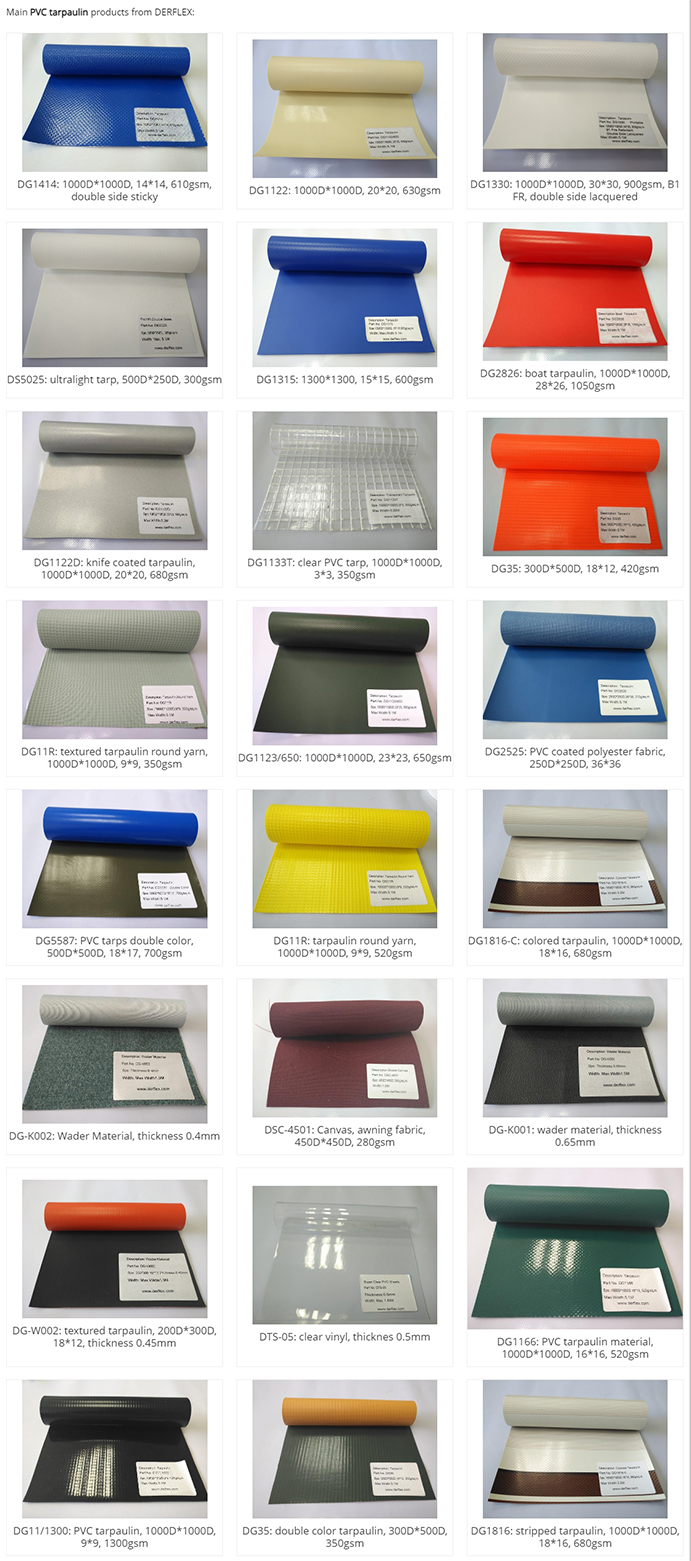
PVC coated polyester, PVC laminated polyester, PE/HDPE woven tarpaulin, mesh and selected specialty constructions |
Determines strength balance, surface behavior, weldability, handling and cost direction. |
| Finished weight |
Approx. 350–1200gsm across available constructions; common commercial PVC grades may include 500, 610, 650, 680, 750, 900 and 1000gsm |
Weight alone does not define durability, but it influences coating volume, handling and duty class. |
| Base fabric |
Selected denier and weave density, including common 500D, 840D, 1000D, 1100D or heavier directions |
The reinforcement controls tensile behavior, tear propagation and dimensional stability. |
| Roll width |
Approx. 1.02–5.10m depending on material and production route; wider sheets made by welding panels |
Width affects seam count, cutting yield, fabrication labor and finished-cover appearance. |
| Surface & color |
Glossy, matte, embossed or other confirmed finishes; standard or matched colors; selected printable surfaces |
Supports cleaning, appearance, branding and market-specific product presentation. |
| Performance treatments |
UV-stabilized, anti-mildew, cold-flexible, flame-retardant or other formulation directions where available |
Must be matched to the actual environment and verified against the required test standard. |
| Fabrication |
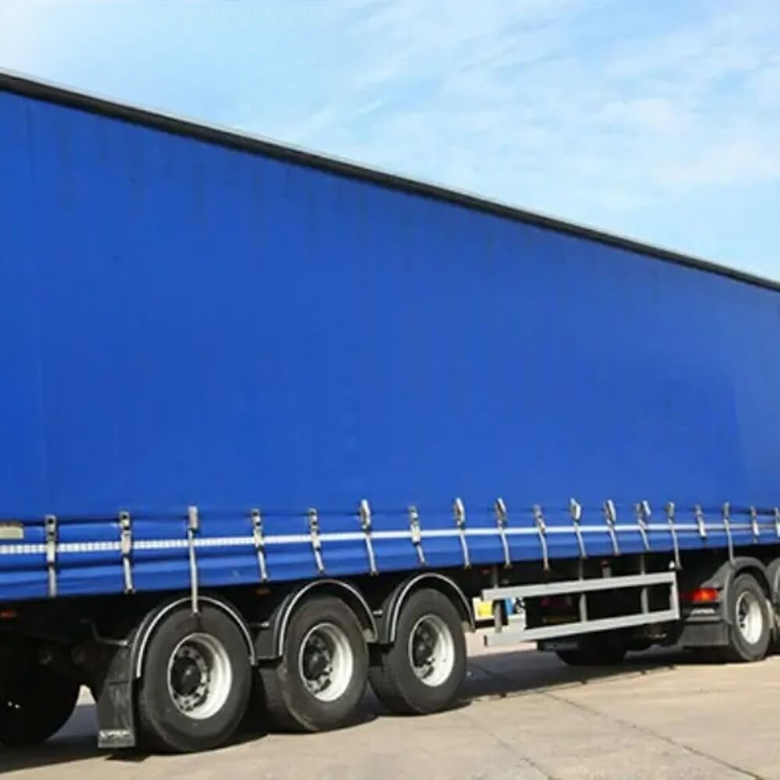
Hot-air welding, high-frequency welding, sewing, cut panels, shaped covers, pockets and sleeves |
Seam type affects waterproofing direction, strength, appearance and production efficiency. |
| Reinforcement & hardware |
Double hems, rope-in-hem, webbing, corner patches, eyelets, D-rings, buckles, straps and custom tie-down spacing |
Attachment points are common failure zones and should be designed around expected tension and load path. |
| Branding & packing |
Logo printing, labels, instruction sheets, individual bags, cartons, bales, pallets or container-optimized packing |
Improves distribution efficiency, product identification and private-label readiness. |