Continuous coating
Specify coating consistency, adhesion and resistance to water penetration. Beading on the surface alone does not prove that fabric will resist water under pressure or after repeated flexing.



Specify a cover that keeps rain out and stands up to repeated handling. DERFLEX supplies reinforced PVC coated polyester tarps for equipment, building materials, agricultural storage and truck cargo.
Choose custom finished covers or fabric rolls, with project-specific weight, color, welded seams and reinforced fixing points. For importers, distributors, contractors and OEM brands, the fabric specification and finished construction should be agreed together.
Send the application, finished dimensions, quantity and destination to start a quotation.
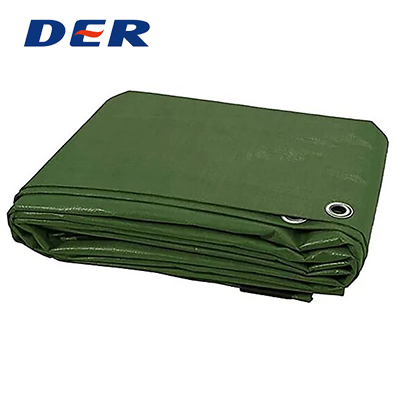
Heavy duty waterproof tarps are reinforced protective covers that combine a water-blocking surface with resistance to tearing and handling damage. PVC coated polyester is a common industrial construction. Finished protection also depends on sealed seams, intact coating, secure edges and a fit that lets water drain away.
The polyester base carries tension; the PVC coating provides the water barrier. Explore DERFLEX PVC tarpaulin fabric and roll options when sourcing material for your own cutting and welding operation.
Specify coating consistency, adhesion and resistance to water penetration. Beading on the surface alone does not prove that fabric will resist water under pressure or after repeated flexing.
Compatible PVC panels can be heat welded. Weld parameters, overlaps and intersections need evaluation on the selected material. Sewing introduces needle holes that may need a separate sealing solution.
Eyelets are openings, and loose edges let wind-driven rain enter. Keep fixing points outside the protected footprint where practical; specify drops, overlaps and supported drainage in the cover drawing.
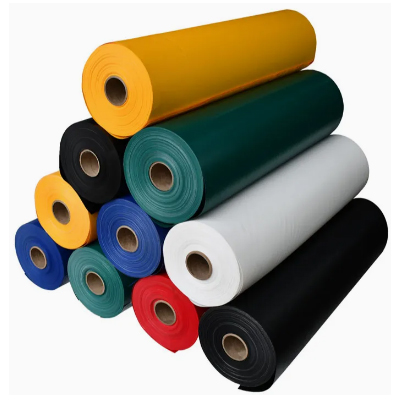
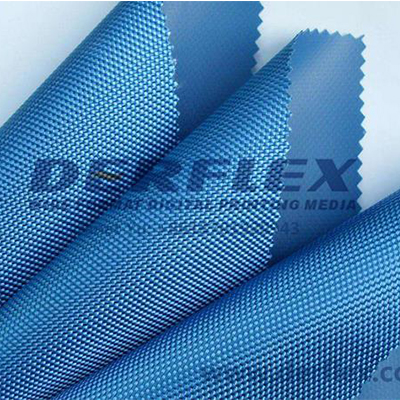
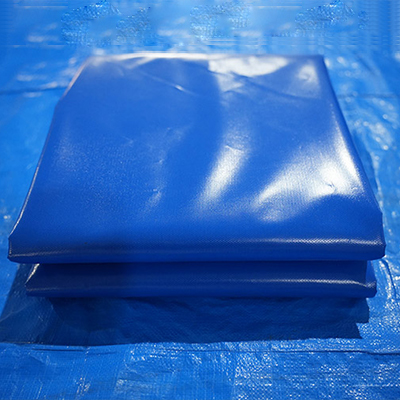
Choose by the way the cover will be used. A heavier fabric increases handling weight; it does not automatically improve seam quality, anchor strength or the cover's fit.
| Application | Prioritize | Confirm before ordering |
|---|---|---|
| Stationary machinery & materials | Sealed panels, abrasion protection, UV formulation and enough side coverage | Sharp contact points, ground clearance, water drainage and condensation management |
| Truck & trailer cargo | Tear resistance, repeated flexing, reinforced attachment zones and an agreed drop | Cargo shape, handling method, tie-down layout and compatibility with the operating system |
| Construction protection | Welded joins, practical panel weights and reinforced edges | Support and anchoring design, exposure duration and any specified fire-performance requirement |
| Agricultural storage | Outdoor exposure requirements, covering geometry and contact protection | Ventilation needs, clean surfaces, edge positioning and the method of removing pooled water |
| Frequent installation & removal | Flex durability, hardware placement, manageable section size and packaging | Working temperature, folding frequency and whether operators can handle the finished weight |
DERFLEX's existing waterproof heavy duty tarp range lists fabric weights of 450–1,300 g/m² and widths of 1.0–3.4 m. These are published range references; confirm the exact construction and availability for your application before production.
| Parameter | Supply / selection direction | What belongs in the purchase specification |
|---|---|---|
| Material | PVC coated polyester fabric | Base-fabric construction, coating system and approved reference sample |
| Fabric weight | Published range: 450–1,300 g/m²; project-specific grade | Nominal GSM, agreed tolerance and the finished handling weight |
| Thickness & strength | Confirm for the nominated material | Thickness method, tensile and tear results in both fabric directions, with units |
| Fabric width | Published range: 1.0–3.4 m; grade availability to be confirmed | Usable width and a panel layout that accounts for weld overlaps |
| Finished dimensions | Custom size and shape by agreed drawing | Finished length, width, drop, corner details and measurement conditions |
| Seams & edges | Welded panels; reinforced hems and corners | Joint locations, seam construction and the reinforcement layout |
| Hardware | Eyelets, grommets and project-specific fittings | Material, position, spacing and compatibility with the tie-down system |
| UV, temperature & fire options | Specify the requirement; confirm the matching grade | Exposure conditions, test method and applicable report; no blanket certification implied |
| Color, branding & packaging | Custom options subject to order confirmation | Color reference, print requirements, fold/roll format and labels |
A 5 m × 8 m panel at 650 g/m² contains approximately 26 kg of fabric. Use the estimator to compare handling implications.
Formula: length × width × GSM ÷ 1,000. Excludes seam overlaps, drops, hems, patches, webbing, hardware and packaging. Input values are examples, not guaranteed available grades.
A flat rectangle and a fitted machinery cover need different drawings. DERFLEX custom heavy duty tarp fabrication lets buyers discuss material, geometry and finishing in the same enquiry.
Provide the maximum equipment or cargo dimensions, desired side drop and installation clearance. Allow for access openings and support a drainage path; a tightly fitted cover without slope can still collect water.
Available roll width affects the number and location of seams. Where practical, avoid joints at sharp folds or concentrated wear zones. Define the welding method and inspect overlaps and multi-layer intersections.
Use an agreed hem and corner design to spread loads around eyelets or other fittings. More grommets alone cannot establish a wind rating. Hardware, reinforcement, anchors and tie-down tension must work together.
Waterproof covers suit many outdoor protection tasks, but a material recommendation needs the actual exposure, geometry and operating routine.
For jobsite enclosures and material protection, review construction tarp applications. Large exposed sheets also need a support and anchoring plan that reflects the site's conditions.
For transport, compare truck tarpaulin and cargo cover requirements. Abrasion zones, rain flaps, side drops and repeated deployment deserve separate attention. A weather cover does not replace cargo restraints.
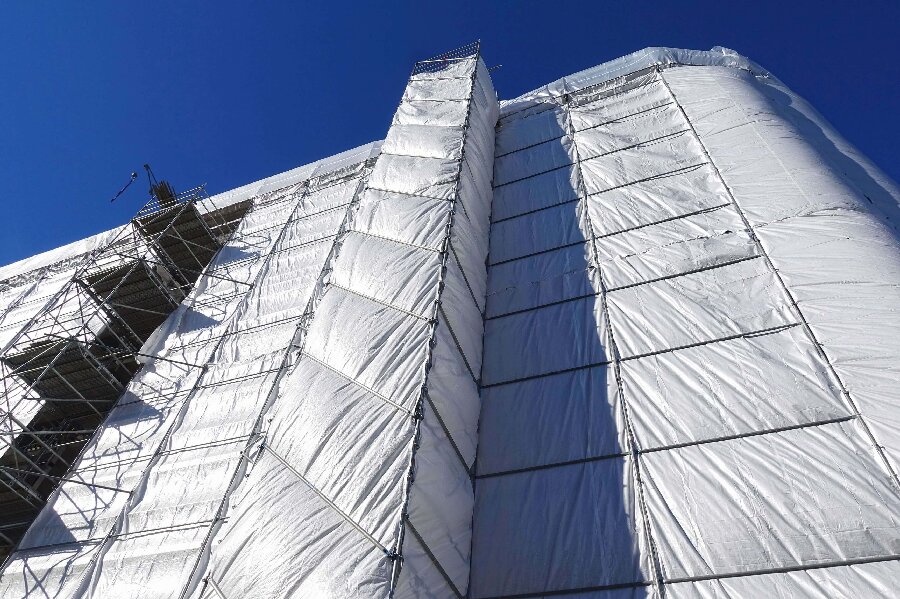
Plan for corners, protrusions and rubbing points. Use compatible padding or abrasion protection where needed, keep the cover clear of hot components and consider ventilation to reduce condensation underneath.
Rain exclusion, moisture management and repeated seasonal handling matter together. A waterproof surface does not establish suitability for food contact, drinking water or permanent liquid containment.
Choose the construction that meets your duty cycle and moisture requirements. The industrial tarpaulin range provides a starting point for discussing PVC and PE cover materials.
| Material | Useful selection direction | Trade-off to examine |
|---|---|---|
| PVC coated polyester / vinyl | Repeated industrial use, welded custom covers and robust attachment zones | Handling weight, coating formulation, cold flexibility and seam workmanship |
| Polyethylene / poly tarp | Weight-sensitive or temporary covering; compare reinforced grades | Scrim and laminate quality, UV exposure, fold wear and fixing details |
| Canvas or treated textile | Applications where textile feel or a particular ventilation requirement matters | Water performance depends on treatment; verify waterproof versus water-resistant claims and maintenance needs |
Check the material and the fabricated cover separately. Agree the tests, sample conditioning, acceptance limits and documents before committing to a bulk order.
A hydrostatic pressure test evaluates fabric resistance to water penetration. ISO 811 describes this type of fabric test; ASTM D751 includes coated-fabric hydrostatic resistance, adhesion, tear and seam-strength methods.
Identify the method, procedure, units, sample conditions and acceptance criteria in the order. Results obtained by different procedures may not be directly comparable. These standards are test references, not a claim that every DERFLEX grade is certified or already tested to them.
DERFLEX's coating and laminating capability supports material selection and custom cover sourcing. Agree the applicable construction, inspection records and finished-product checks for your order.
| Observed problem | Check first | Procurement / design response |
|---|---|---|
| Leak along a joint | Unsealed needle holes, incomplete weld or damaged overlap | Specify sealed panel joins and inspect representative fabricated seams |
| Wet edges or corners | Rain entry through eyelets, short drops or lifted edges | Review cover dimensions, fitting position and water-shedding overlaps |
| Moisture under an intact cover | Condensation, ground moisture or uncovered openings | Assess ventilation, storage layout and the complete protection envelope |
| Leaks after repeated use | Wear at sharp corners, fold lines, welds or rubbing points | Evaluate flexing conditions, contact protection and a suitable repair method |
DERFLEX supports fabric-roll sourcing and custom finished covers, so distributors and fabricators can discuss the appropriate supply format. OEM buyers can also request color, branding and packaging options, subject to order confirmation.
The nominated fabric, usable width, panel count, reinforcement, hardware, printing, quantity and test requirements all affect the quotation. Ask for material, fabrication and packing details on the same basis when comparing wholesale waterproof tarp suppliers.
MOQ, sample arrangements and production timing depend on the specification and order. Confirm them with DERFLEX; a made-to-order tarp should not be assigned an assumed stock-product delivery date.
The intact PVC coated fabric body can block water penetration under the conditions established for the selected grade. The complete cover also needs sound seams, suitable edge details and drainage. Eyelets, tears and open overlaps remain possible entry points. See the DERFLEX waterproof tarp guide for the distinction between material performance and installed protection.
Start with exposure, abrasion, handling frequency, temperature and finished size. Then compare the nominated fabric's weight, thickness, tensile and tear results, and seam construction. GSM is mass per area; thickness is a separate measurement. Increasing weight without checking the rest of the cover can add handling difficulty without solving the actual failure point.
DERFLEX offers custom sizes, welded panels and reinforced edges with eyelets or grommets. Send a drawing showing finished dimensions, required drops and fixing positions. Large covers may require joined panels; confirm the usable fabric width, seam layout and handling weight before approving the order.
A correctly made weld can join compatible PVC panels without needle holes. Sewing may be appropriate for certain hardware or reinforcement details, but holes in the water barrier need an agreed sealing approach. Choose the construction by the actual joint and check representative samples rather than assuming the seam method alone guarantees a dry cover.
A waterproof tarp blocks outside water through the intact barrier; it does not remove moisture already underneath. Temperature changes, damp goods and ground moisture can cause condensation. Review ventilation, ground separation, storage conditions and cover fit when moisture-sensitive equipment or materials are involved.
Send the application, finished size or roll dimensions, desired fabric weight, color, quantity and destination. Add seam and reinforcement details, hardware positions, branding, packaging and any UV, low-temperature or fire-test requirements. Ask DERFLEX to confirm the grade, sample process, MOQ and production lead time against that specification.
Share your operating conditions and drawing with DERFLEX. Discuss material rolls, custom finished tarps or a repeat-order OEM program with a clear specification.
Have a drawing ready? Email sales@derflex.com.