
Poly / PE Tarps
Lightweight polyethylene tarps are commonly used for short-term rain protection, temporary covering and budget-sensitive general use. They are easy to handle but may not be the preferred choice for demanding industrial service.



New to tarps? This guide explains what a tarp is, how tarp materials differ, how to choose size and weight, and when a standard cover should be upgraded to a custom PVC tarp, truck tarp, industrial cover or OEM tarpaulin program.
DERFLEX supports distributors, converters, equipment cover makers, construction buyers, agriculture suppliers, logistics fleets and outdoor product brands with PVC coated polyester tarp material, finished tarps and project-based customization.
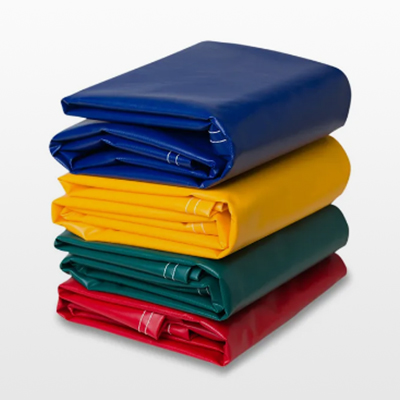
A tarp, also called a tarpaulin, is a flexible sheet used to cover, protect, shelter, divide, contain or temporarily enclose goods and working areas. For everyday users it may be a simple rain cover. For business buyers, it is often a performance material that must match weather exposure, tear resistance, welding method, storage conditions, installation tension and repeat supply requirements.
The correct tarp is not selected by color alone. A beginner should first ask where the tarp will be used, how long it will stay outdoors, whether it needs to be waterproof or breathable, how it will be fixed, and whether the edges, grommets, ropes, webbing or pockets need reinforcement.
Application + exposure + material + size + reinforcement + fabrication method = a tarp specification that is easier to quote and easier to use.
Each material has a different balance of price, durability, waterproofing, breathability, flexibility and fabrication performance. The best starting point is the real use environment.
Lightweight polyethylene tarps are commonly used for short-term rain protection, temporary covering and budget-sensitive general use. They are easy to handle but may not be the preferred choice for demanding industrial service.
PVC coated polyester tarps are selected when buyers need a stronger waterproof surface, weldability, outdoor durability, tear resistance and custom finishing for trucks, equipment, agriculture and industrial covers.
Canvas tarps are used when breathability matters. They can help reduce condensation under certain storage conditions, but water resistance, weight and cleaning requirements should be reviewed before purchasing.
Mesh tarps allow airflow and visibility while helping provide shade or load control. They are often used for debris, shade, dump trucks and applications where wind pass-through is useful.
| Material Type | Good For | Buyer Notes |
|---|---|---|
| PE / Poly tarp | Temporary covers, light outdoor jobs, low-cost storage protection | Check weave, thickness, UV treatment and actual finished size before bulk purchase. |
| PVC coated polyester tarp | Industrial tarps, truck covers, machinery covers, hay tarps, custom welded covers | Confirm GSM, base fabric strength, coating, lacquer, weldability and reinforcement design. |
| Canvas tarp | Breathable covers, equipment protection, certain storage environments | Review water resistance, mildew control, shrinkage, cleaning method and long-term moisture exposure. |
| Mesh tarp | Shade, airflow, debris control, dump truck loads and wind-sensitive uses | Open area, yarn strength, coating and edge reinforcement should match the load and fixing method. |
Beginners often search for one tarp that can do everything. In real procurement, a tarp should be selected by application because each use has different stress, exposure and fabrication requirements.
Temporary roof covers, scaffold sheeting, ground protection, equipment storage and material protection against weather and dust.
Trailer covers, side curtains, cargo tarps, dump truck tarps and logistics protection where movement, tension and road exposure matter.
Hay covers, feed storage, grain protection, farm equipment covers and seasonal outdoor storage for agricultural suppliers.
Machinery covers, warehouse partitions, dust covers, weather shields and custom protective covers for production and maintenance teams.
Rain shelters, ground sheets, canopy covers, outdoor brand OEM products and recreational waterproof cover programs.
Replacement canopy covers, commercial shade roofs, temporary event covers and reinforced outdoor shelter structures.
Roll materials for cutting, welding, sewing, grommeting and local conversion into finished tarpaulin products.
Private-label tarp lines, custom packaging, color matching, brand logo compatibility and repeat container supply.
Size and weight are the two points beginners ask first, but reinforcement and installation method often decide how well the tarp performs in daily use.
Measure length, width and height. Add side drop, overlap, hems and fastening space. For machinery or irregular objects, photos or drawings help avoid short covers.
Lightweight tarps are easier to handle. Heavier PVC tarps can offer stronger outdoor protection but require suitable handling and fixing points.
Corners, grommets, D-rings, webbing, seams, pockets and tie-down zones should be planned around how the tarp will be installed, removed and tensioned.
| Buying Factor | Beginner Question | DERFLEX Recommendation |
|---|---|---|
| GSM / weight | How heavy should my tarp be? | Start from application. A hand-carried cover, truck tarp and industrial machine cover usually need different weights and structures. |
| Thickness | Is thicker always better? | Not always. Thickness should be balanced with flexibility, folding, welding, handling and expected service environment. |
| Finished size | Why is my tarp smaller than expected? | Confirm whether the dimension is cut size or finished size. Hems, welding and sewing may reduce final visible dimensions. |
| Grommet spacing | How many fixing points do I need? | Spacing should be selected according to wind load, tarp size, installation method and expected tension direction. |
| Surface finish | Should I choose matte, glossy or embossed? | Consider cleaning, appearance, printing, anti-slip handling, welding and brand positioning before selecting the surface. |
| Packaging | Can tarps be supplied for resale? | For OEM programs, confirm folding method, label, carton, roll length, barcode, packing quantity and private-label requirements early. |
A retail tarp can be convenient for simple temporary use. A custom PVC tarp becomes more suitable when the project involves repeated outdoor exposure, large size, welding, color matching, printed branding, reinforced hardware, precise fit, roll material supply or bulk OEM purchasing.
Application, finished size, quantity, color, weight range, expected outdoor exposure, edge reinforcement, grommet spacing, printing need, welding method, packaging requirement and destination market.
Use this checklist before ordering tarp rolls, finished covers or OEM tarpaulin products.
Truck cover, farm storage, equipment cover, construction sheet and camping tarp have different requirements.
Waterproof PVC tarps and breathable canvas or mesh tarps solve different problems.
Sunlight, rain, low temperature, abrasion and cleaning frequency can affect material selection.
Finished size, cut size and tolerance should be clear before production.
Corners, hems, ropes, webbing and grommets should match installation tension.
Hot-air welding, high-frequency welding and sewing may require different material structures.
Check flexibility, surface, weldability, color and strength before bulk purchasing.
Labels, cartons, folding, roll length, color cards and repeat quality should be defined for private-label programs.
These internal pages help buyers move from basic learning to product selection, material comparison and quotation.
For a beginner, both retail tarps and manufacturer-supported custom tarps can be useful. The difference is whether the project needs repeatable specification control.
A practical process reduces misunderstanding and helps buyers choose a material that fits their real production or application needs.
Confirm application, climate, size, quantity, packing and target performance.
Select PVC coated fabric structure, weight, surface and coating direction.
Review color, hand feel, weldability, surface, strength and finishing behavior.
Arrange roll material, panels or finished tarp production after specification confirmation.
Support repeat orders, export packaging and OEM supply planning for long-term buyers.
Answers designed for first-time buyers, purchasing teams and product developers comparing tarp materials.
Tarp is the shorter everyday word for tarpaulin. Both usually refer to a flexible protective sheet used for covering, sheltering or protecting objects, equipment, cargo or working areas.
For many heavy-duty outdoor and industrial uses, PVC coated polyester tarps are selected because they can combine waterproofing, flexibility, weldability, tear resistance and custom reinforcement options. The final choice should still match the application and climate.
Not always. Weight is important, but base fabric strength, coating quality, tearing performance, flexibility, reinforcement design and fabrication method also influence how the tarp performs.
Measure the covered object and add margin for side drop, overlap, hems, fastening and water runoff. For custom covers, a drawing or product photo can help confirm finished size and reinforcement points.
Yes. DERFLEX can support PVC coated fabric rolls, cut panels and project-based finished tarp fabrication depending on the buyer’s production process and order requirements.
Send application, finished size, quantity, target GSM or thickness, color, surface finish, reinforcement details, grommet spacing, printing requirement, packaging method and destination. Existing samples or photos are also helpful.
Share your application, size, quantity, expected environment and processing method. DERFLEX can help recommend suitable PVC coated tarp material, roll supply or custom finished tarp options for your project.