Choose the reinforcement
Polyester is often used when dimensional stability and practical roll conversion matter. Nylon is often evaluated when a softer, highly flexible textile with strong tear performance is preferred.




DERFLEX supplies custom TPU textile roll goods for manufacturers, converters, brands and industrial buyers who need a practical balance of waterproofing, airtight sealing, flexibility, abrasion resistance and weldable processing. Rather than treating TPU textile as one standard fabric, we help match the substrate, TPU chemistry, coating or lamination structure, surface and roll format to the finished product.
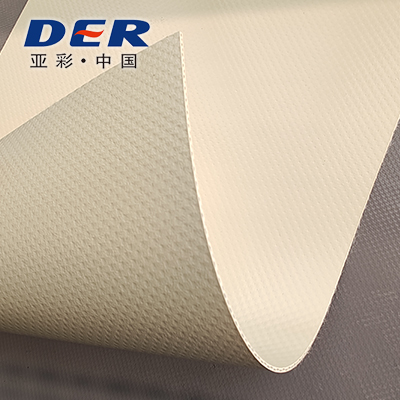
A useful TPU textile specification begins with what the finished product must survive. Will it hold air under pressure? Will the surface be dragged over abrasive ground? Will it sit in humid or water-contact conditions? Is dimensional stability more important than soft folding? Does the seam need high-frequency welding, hot-air welding, ultrasonic welding or a heat-seal process?
Search results for TPU textiles frequently emphasize durability, haptics, waterproof barriers, film chemistry and broad application range. DERFLEX turns those ideas into a B2B purchasing framework: substrate + TPU chemistry + construction + processing + validation. The objective is not to sell the heaviest or thickest material, but to identify a repeatable structure that fits the manufacturing process and service environment.
A coated structure applies TPU as a functional surface layer to a textile substrate. A laminated structure bonds TPU film to the textile. Either route may be appropriate depending on target weight, hand feel, barrier requirements, visual finish, peel strength and processing method. For high-consequence air or liquid holding products, sample testing of the final seam and construction should be part of material approval.
These variables interact. Changing one can alter weight, welding behavior, flexibility, tear performance, cost and the way the material feels in the finished product.
Polyester is often used when dimensional stability and practical roll conversion matter. Nylon is often evaluated when a softer, highly flexible textile with strong tear performance is preferred.
Polyether TPU is commonly considered for humidity, hydrolysis and repeated water-contact conditions. Polyester TPU is often evaluated for abrasion, oil resistance and mechanical performance.
Single-side constructions can reduce weight and preserve more textile feel. Double-side TPU is often used when both faces need sealing, cleanability or air/liquid barrier performance.
Confirm welding equipment, seam geometry, target seal width, printing or bonding needs, roll width and downstream handling before locking the textile specification.
The following examples show the selection priorities buyers can use when discussing a custom TPU technical textile with DERFLEX.
Priorities: soft folding, waterproof seam conversion, abrasion resistance, color/finish and a useful weight-to-strength balance.
A lighter nylon or polyester TPU textile may be preferable to a heavy industrial structure when packing volume and hand feel matter.
Priorities: air retention, seam reliability, tear strength, puncture resistance and repeat flexing.
Double-side TPU and higher-denier reinforcements are commonly evaluated, with final approval based on pressure and welded seam testing.
Priorities: cleanable surface, flexible air chambers, controlled sealing and application-specific compliance requirements.
Material chemistry and additives should be reviewed against the buyer's market, cleaning process and validation plan.
Priorities: liquid compatibility, seam strength, puncture resistance, dimensional stability and low-leakage construction.
The contained medium must be disclosed during material selection because water-contact and oil-contact conditions can favor different TPU directions.
Priorities: wet-environment flexibility, abrasion, folding cycles, seam integrity and relevant project testing.
Saltwater exposure, storage temperature and inflation pressure should be included in sample qualification rather than assumed from a generic fabric data sheet.
Priorities: abrasion, dimensional stability, surface durability, chemical contact and efficient roll conversion.
Polyester-based TPU textile can be a practical direction when soft drape is less important than repeatable industrial handling.
These are general selection directions, not guaranteed values for every grade. Final data should be confirmed on the approved sample and production specification.
| Parameter | Available Direction | What the Buyer Should Decide |
|---|---|---|
| Textile substrate | Polyester / Nylon / project-specific woven construction | Prioritize dimensional stability, flexibility, tear behavior and downstream processing. |
| Common denier direction | 210D, 420D, 600D, 840D, 1000D, 1680D and custom | Do not select denier alone; compare total construction, coating weight and required finished-product strength. |
| TPU chemistry | Polyether TPU / Polyester TPU | State whether the textile will face water, humidity, hydrolysis, oil, chemicals, abrasion or repeated flexing. |
| Functional structure | Single-side / Double-side / Film-laminated composite | Confirm whether one or both surfaces must be sealed, cleaned, welded or exposed. |
| Total weight | Approx. 150–1500 gsm project direction | Set a performance window rather than assuming heavier automatically means better for the product. |
| TPU layer | Approx. 0.03–1.0 mm direction, depending on structure | Thickness affects barrier performance, hand feel, welding behavior, weight and cost. |
| Roll width | Approx. 1.0–3.2 m direction by grade and production route | Use product nesting and seam layout to determine the width that reduces waste and welded joints. |
| Surface | Matte / Glossy / Smooth / Embossed / Textured | Consider appearance, blocking, cleanability, friction and brand positioning. |
| Color | Standard colors and custom color matching by project | Confirm color tolerance, order quantity and whether the surface will be printed or branded. |
| Converting | HF welding / Hot-air welding / Heat sealing / selected ultrasonic processes | Provide machine type and test the real seam settings before mass production. |
| Functional options | UV, hydrolysis, antimicrobial, flame-retardant, oil/chemical resistance directions by project | Request only functions that are relevant and define the test method or market requirement where applicable. |
Note: performance options depend on formulation, substrate and final construction. Regulatory or certification claims should be confirmed for the exact supplied grade and target market.
A technical textile should be approved against the finished-product risk. DERFLEX can discuss sample structures and test priorities before the bulk specification is fixed.
For custom projects, the fastest route is a controlled sequence of requirement review, material matching, sample conversion and specification confirmation.
Product size, pressure, liquid/air contact, climate, folding, abrasion and service life expectations.
Substrate, denier, TPU chemistry, coating/lamination structure, weight, surface and width.
Weld, heat-seal, cut, print or laminate with the buyer's actual process whenever possible.
Confirm seam behavior, barrier, appearance and the product-specific tests that matter.
Approve color, width, weight, roll length, packaging, labels and repeat-order control points.
Material selection is application-specific. Each family can be appropriate when its performance and processing profile match the product.
| Material Direction | Typical Strengths | Common Fit | Buyer Checkpoint |
|---|---|---|---|
| TPU Textile | Flexible, weldable, abrasion resistant, capable of waterproof/airtight structures | Inflatables, dry bags, medical air systems, flexible bladders, premium outdoor products | Best assessed when seam integrity, soft folding, air/liquid barrier or low-temperature flexibility matter. |
| PVC Coated Fabric | Broad industrial availability, robust waterproofing, economical heavy-duty construction | Truck covers, tents, large tarps, industrial curtains, general heavy-duty covers | Often practical where scale, heavy-duty outdoor use and cost efficiency are primary. |
| PU Coated Fabric | Lightweight coating options, soft textile feel, apparel/bag suitability | Garments, soft bags, covers and lightweight waterproof textile products | Confirm hydrolysis, abrasion and seam processing if the product faces demanding use. |
Sending only “TPU textile, 1000 meters” forces suppliers to guess. A short technical brief reduces unnecessary sampling and helps the quotation reflect the product you are actually building.
Specify the product performance window before chasing the lowest gsm or lowest unit price.
A TPU textile that is lighter but converts cleanly, uses a more efficient roll width, reduces seam count or passes the actual air-retention test can be more useful than a heavier construction that looks stronger on a data sheet but does not fit the production line.
For critical inflatable, medical, marine or liquid-containment uses, prototype conversion and application testing should be included in the approval process.
DERFLEX combines coated-textile manufacturing experience with application-led specification work for OEM roll-goods projects and repeat production.
Discuss coated, film-laminated, single-side and double-side TPU structures instead of forcing one material architecture onto every application.
Selection can account for pressure, water/humidity, abrasion, liquid contact, folding, welding method and target product weight.
Width, color, finish, roll length, packaging and selected functional directions can be developed around the buyer's manufacturing program.
Use sample conversion and performance confirmation to define the approved production specification and reduce ambiguity on repeat orders.
These related pages cover specific TPU structures and end-use directions. They are placed here to help buyers move from a broad TPU textile search to the right technical product family.
In the context of DERFLEX roll goods, TPU textile generally combines a textile reinforcement such as polyester or nylon with thermoplastic polyurethane by coating or film lamination. The textile contributes strength and dimensional support; the TPU layer provides the functional surface or barrier.
It can be engineered for waterproof and airtight constructions, but the result depends on coating/film continuity, textile structure, seam design and converting process. Inflatable products should be validated using the finished seam and target pressure.
Polyether TPU is commonly evaluated for hydrolysis resistance, humidity and water-contact use. Polyester TPU is often considered when abrasion, oil resistance and mechanical strength are strong priorities. The suitable choice depends on the service environment and the exact formulation.
Selected TPU textile constructions can be compatible with HF welding, hot-air welding, heat sealing and some ultrasonic processes. Because equipment power, dwell time, pressure, coating thickness and seam geometry vary, the buyer should confirm settings with a production-representative sample.
Custom width, color, matte/gloss appearance, texture, roll length, packaging and selected functional directions can be discussed according to specification, quantity and production arrangement.
Share the finished product, base fabric or denier if known, target weight, width, color, coating side, welding method, air/liquid contact, working temperature, tests and estimated quantity. DERFLEX can use this information to recommend a more relevant sample direction.
Tell DERFLEX what you are manufacturing, how the seams are made, what the material must resist and your target roll size. We can discuss a practical TPU textile direction for sample evaluation and bulk quotation.