


Canvas Drop Cloths for Painting, Bulk & OEM Supply
A canvas drop cloth is a woven textile sheet used to protect floors, furniture and work areas while painting. For wholesale buyers, the specification should go beyond a nominal “8 oz canvas”: confirm fiber content, weave, absorbency, cut versus finished size, seams, wash care and packaging. DERFLEX can discuss canvas drop cloth sourcing alongside its established coated-textile and canvas-tarp programs. Product availability, the precise manufacturing route and any cotton-canvas conversion capability are confirmed against your order brief and approved sample.
- Finished-sheet inquiry
- Fabric-roll inquiry
- OEM packing review
- Sample-led specification
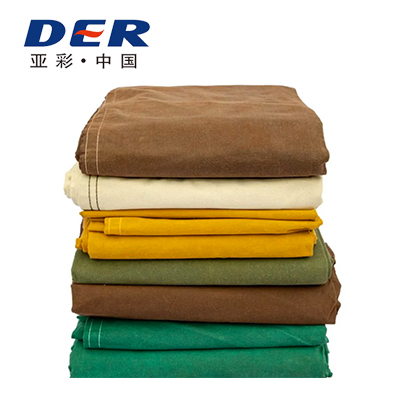
What Is a Painter's Canvas Drop Cloth?
A painter's canvas drop cloth (also written canvas dropcloth) is typically a woven cotton or cotton-blend protective sheet. A tightly woven cotton duck construction provides a familiar textile feel, absorbs many small splashes and can be folded and reused when the material and care instructions allow. It is not the same as a PVC-coated waterproof tarp.
Why painters choose canvas
Canvas can remain draped over furniture, settle around irregular shapes and absorb incidental paint drips before they are tracked across the work area. Actual performance depends on the fabric construction, underside condition and whether spills are left to accumulate.
For alternative protection systems, compare DERFLEX's industrial coated paint drop cloth material, which is designed around barrier behavior rather than absorbency.
What canvas does not guarantee
Unbacked canvas is not automatically waterproof, leakproof or slip-resistant. Large or prolonged wet spills can soak through. Dust, wrinkles and a loose edge can also create hazards, especially on smooth flooring. Evaluate the actual canvas, floor and paint together.
See floor protection tarp selection when a coated liquid barrier is the main objective.
Specify the Real Canvas, Not Just the Word “Heavy Duty”
Material identity matters. A natural uncoated cotton canvas drop cloth is chosen for a different reason from a treated truck canvas or a reinforced PVC-coated fabric. Ask for the actual fiber composition, fabric construction and a representative sample before describing any product as 100% cotton.
Three construction directions buyers compare
- Uncoated cotton duck: woven absorbent fabric for conventional interior painting; permeability depends on weight, weave and saturation.
- Cotton-blend canvas: combines fibers to modify handling, shrinkage, texture or cost; request verified composition and behavior.
- Canvas with separate barrier: fabric face plus backing or independent underlay to manage liquid-through risk; the assembled protection system requires compatibility checks.
Do not assume an outdoor canvas tarp treatment is appropriate for indoor decorating. Coatings, waxes and finishes can change absorbency, residue transfer, odor and washability. For an industrial-cover comparison, see canvas versus vinyl tarp materials.
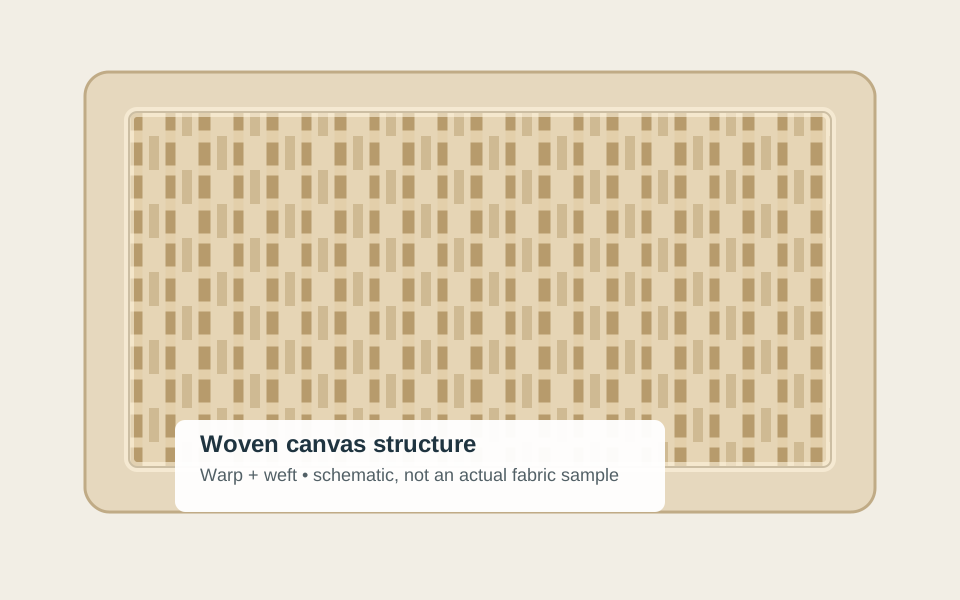
Finished Drop Cloths, Cut Lengths or Canvas Fabric Rolls
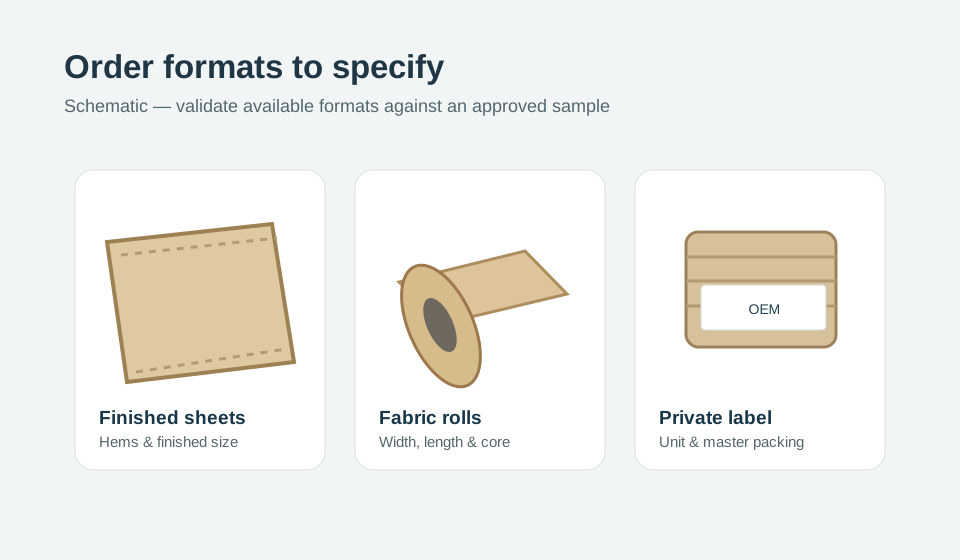
The right format depends on whether you supply painters directly, convert material in your own workshop or sell through a private-label retail program. The choices below are a specification framework, not a claim that every combination is a stocked DERFLEX item.
Ready-to-use sheets
Set the finished dimensions, number of joined panels, edge hems, seam position, folded size and unit packing. Useful for contractor replenishment and distributor catalog programs.
Continuous roll goods
Specify usable width, continuous length, core, winding direction, roll label and acceptable width/length tolerance. Confirm whether the selected cotton canvas is available as a roll, not just as pre-cut stock.
OEM / private label
Define logo label, safety wording, barcode requirements, printed insert, folded pack and master carton arrangement. Branding and packaging are reviewed after the sample and supplier route are agreed.
DERFLEX's existing canvas tarp range provides useful context for canvas materials, while its fabric roll supply program describes coated textile rolls. Cotton canvas drop cloth roll sourcing must be specified separately.
Canvas Drop Cloth Weight, Size and Construction Matrix
Common trade descriptions such as 6 oz, 8 oz, 10 oz and 12 oz are useful market-reference classes. The approximate gsm conversions below describe oz per square yard, not measured DERFLEX product weights. Confirm the actual finished fabric weight and tolerance for every approved item.
| Market-reference canvas class | Approx. areal mass | Typical sourcing decision | Confirm before buying |
|---|---|---|---|
| 6 oz/yd² lighter canvas | ≈ 203 g/m² | Lower carrying weight; occasional covering and furniture protection. | Density, underside grip, absorbency, seams and repeated washing. |
| 8 oz/yd² general painter grade | ≈ 271 g/m² | Versatile sheets or runners for routine painting tasks. | Weave, leakage after saturation, cut size and shrinkage. |
| 10 oz/yd² heavier grade | ≈ 339 g/m² | Higher handling mass for repeat professional deployment. | Thickness by actual construction, seam bulk and floor contact. |
| 12 oz/yd² very heavy grade | ≈ 407 g/m² | Frequent-use or larger work-zone programs needing heavier textile. | Foldability, wash/dry practices, pack volume and actual weight. |
Conversion: 1 oz/yd² ≈ 33.906 g/m². These are comparative buying classes observed in the market; none is represented as a verified DERFLEX SKU or inventory commitment.
| Specification field | What to put in an RFQ | Why it affects repeat orders |
|---|---|---|
| Fiber / fabric | 100% cotton duck or specified blend; untreated / backed | Affects absorbency, feel, washing and comparison of samples. |
| Sheet dimensions | e.g., 4 × 12 ft runner, 9 × 12 ft or 12 × 15 ft sheet, marked as cut or finished size | Hems and joined seams change coverage; proposed dimensions are inquiry examples only. |
| Roll dimensions | Required usable width, target length, roll core and weight | Controls conversion yield and freight handling. |
| Construction | One piece or joined panels; sewn hem / seam type; thread preference | Changes laying-flat behavior, strength and trip risk. |
| Appearance / care | Natural / off-white or agreed shade; wash and care instructions | Influences color variation, marking, cleaning and repeatability. |
| Packing / control | Single or multi-pack, label, barcode, carton count, approved sample ID | Defines shelf presentation and repeat-order identity. |
All sizes above are common buyer inquiry examples; no manufacturer stock size, MOQ, lead time, price or test result is asserted.
Choose a Drop Cloth for the Painting Conditions
For painters' canvas drop cloths, the goal is usually controlled absorbency and practical handling. A separate backing or different cover material may be needed when liquid penetration is unacceptable.
| Use case | Canvas selection priority | Caution / alternative |
|---|---|---|
| Interior walls and ceilings | Absorbent cloth that is easy to reposition; manageable finished size. | Test paint penetration and secure edges; keep damp cloth off vulnerable finishes. |
| Trim and hallway runners | Narrow, foldable panels with flat low-profile hems. | Control wrinkles and foot traffic; do not assume anti-slip performance. |
| Furniture and equipment draping | Soft handling, clean fabric and suitable coverage. | Confirm lint and color transfer on sensitive finishes. |
| Heavy paint or liquid spills | Absorbent upper layer plus verified barrier or protective underlay. | Canvas alone may bleed through when saturated. |
| Industrial paint enclosures | Often separate vertical containment and floor protection specifications. | See painting containment tarps; fabric alone is not a compliant spray booth. |
Details That Differentiate a Reorderable Wholesale Product
Large canvas sheets can have joined fabric widths. Specify whether the size is measured before hemming, after hemming or after washing. Joined seams, overlocked edges and heavy reinforcement may behave differently when walked on or folded.
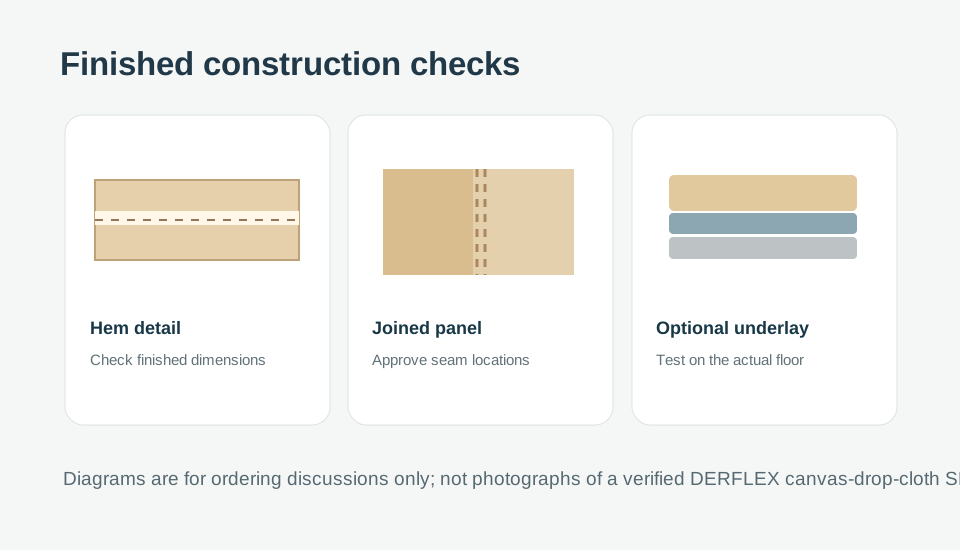
Ask for these checks on the approved sample
- Dimensions: finished coverage after sewing, seam allowances and any agreed washing or conditioning.
- Fabric and edges: yarn/cloth consistency, holes, visible defects, hem and stitching integrity.
- Use performance: liquid penetration after representative drips, lint release, transfer to flooring and folding behavior.
- Packing: folded dimensions, unit labeling, master-carton count and appearance after transit.
For related industrial covering construction, see DERFLEX canvas tarpaulin. Outdoor tarp grommets and treated finishes should not be copied automatically into a floor drop cloth.
Canvas Drop Cloth Supplier, Manufacturer & Factory Review
A wholesale canvas drop cloth program needs more than a low unit price. Confirm who actually weaves or sources the cloth, who cuts and sews the finished drop cloth, which entity is accountable for inspection, and which documents support a repeat order.
Send the buyer brief
Explain painter application, cotton content, preferred weight, target market, sizes and annual or first-order volume.
Confirm supply model
Establish the proposed manufacturer / supplier role and whether sheets, rolls and stitching are within the actual production route.
Agree construction
Review weave, weight tolerance, cut and finished measurements, seams, care, backing and unit pack design.
Evaluate a sample
Check label versus fiber content, finish, absorbency, floor contact, sewing details and packaging under representative use.
Set QC and commercial terms
Agree inspection points, lot identification, documentation, quantity, packaging, delivery basis and acceptance criteria.
Approve repeat program
Use an approved sample and written specification for future orders; revalidate changes in material source or construction.
What drives wholesale canvas drop cloth pricing?
Fiber type and fabric weight; woven width and cutting yield; size and number of joined pieces; sewing time; printing or labels; pack quantity; inspection; and destination terms all change the quotation. A lower gsm can reduce mass but does not by itself establish a better overall value.
Ask for a like-for-like quotation with the same finished coverage and packing specifications across suppliers.
What documentation may be needed?
Depending on the customer and market: fiber-composition declaration, controlled sample, size and weight tolerance, relevant test reports, packing list, labeling artwork and inspection record. Requirements must be agreed before any claim about certification, compliance or wash life.
Review the broader tarpaulin fabric specification process for how DERFLEX approaches coated-textile orders; those tests are not proof of cotton canvas drop cloth performance.
Existing Canvas Product Images and Construction References
The two photographs below come from existing DERFLEX pages. They show associated canvas tarp products, not confirmed photos of a finished, uncoated cotton painter's drop cloth or cotton roll supply. Review material identity and sample photos before final catalog publication.

Protect the Floor and the Purchase Order
Test against the actual finish
Check that the floor is clean and adequately cured. On wood, polished stone, epoxy and decorative finishes, verify moisture trapping, residue and color transfer using a small approved sample. Keep wet paint from being carried onto uncovered areas.
Plan finished coverage
Record room dimensions and any usable overlap. A “9 × 12 ft cut size” does not necessarily deliver the same coverage as a 9 × 12 ft finished size once hemming or joined seams are considered.
Maintain and store the cloth
Follow the specific product care instructions. Remove wet paint appropriately, allow damp material to dry before folding and inspect seams, stains and worn areas before repeat use. Do not assume every treated or backed canvas sheet can be machine-washed.
Approve sourcing evidence
For substantial OEM purchases, request a labeled construction sample and the identity of the manufacturing or converting party. Use one master specification for quote comparison and repeat batches.
Canvas Drop Cloth FAQ
Concise answers to the material, sizing, manufacturing and bulk-order questions purchasers most often need to settle.
What is a canvas drop cloth used for?
A canvas drop cloth is a woven fabric sheet used to cover floors, furniture and work areas during painting or renovation. Cotton duck canvas absorbs many small paint drips and can be reused after appropriate cleaning, but liquid can soak through unbacked fabric. Choose the fabric, backing and handling method for the surface and paint involved.
Which canvas weight is best for painting: 6 oz, 8 oz, 10 oz or 12 oz?
No weight is best for every project. Lighter cloth is easier to carry and fold; heavier constructions may be preferred where repeated handling and greater absorbent mass matter. Weave density, yarn quality, seams and backing also affect performance. The weight figures here are common market reference classes, not confirmed DERFLEX stock grades.
Are canvas painter's drop cloths waterproof or leakproof?
Not by default. Uncoated woven canvas is absorbent rather than a sealed liquid barrier. Paint or water can pass through once saturated. If liquid-through protection is essential, specify a separate tested backing, underlay or appropriate coated protective sheet and evaluate it on the intended floor.
Can I request canvas drop cloths in bulk or wholesale packaging?
Yes, you can submit a bulk or wholesale sourcing inquiry to DERFLEX. Include fabric composition, target weight, sheet dimensions, quantity per size, packaging and destination. Availability, production route, minimum order and sample approval must be confirmed before the company accepts an order.
Can DERFLEX supply canvas drop cloth fabric rolls as well as finished sheets?
DERFLEX publicly documents related canvas tarp and coated-textile supply programs. For a specific uncoated cotton canvas drop cloth, confirm whether fabric rolls, cut lengths or sewn finished sheets can be supplied under the proposed sourcing arrangement. Provide usable roll width, roll length and any finishing instructions.
Is DERFLEX the actual cotton canvas drop cloth manufacturer or a supplier?
DERFLEX has documented manufacturing capabilities in coated technical textiles and offers related canvas tarp programs. That alone does not establish an in-house cotton-weaving or painter's drop-cloth factory line. Ask for the proposed order's manufacturing entity, production route, sample and inspection documentation before describing the supplier as the factory of record.
What should I send for an OEM canvas drop cloth quotation?
Send the intended use, cotton content or blend, target oz/yd² or gsm, cut size versus finished size, hemming and seam requirements, size-by-size quantities, labeling, unit/master packing, target market, delivery destination and any agreed testing or sampling requirements. A competitor sample or photograph can help define construction without copying branding.
Continue Material and Surface-Protection Selection
Canvas, coated fabric and finished tarps have different strengths. These existing DERFLEX pages explain the nearest choices without conflating cotton drop cloths with waterproof PVC protective sheets.
Request a Canvas Drop Cloth Bulk or OEM Quote
Tell DERFLEX the type of canvas painter's drop cloth you want to source. The team can review the relevant supply route, sample requirements and quotation variables for your project. No unsupported stock, factory or delivery claim is implied.
Include these details if available
- Use: house painting, contractor reuse, retail or industrial supply
- Fiber and weight: cotton / blend, oz/yd² or gsm
- Sizes: cut versus finished, or required roll width and length
- Seams, backing, preferred color and sample requirements
- Quantities by size, label and master-carton details
- Destination market and requested date or delivery basis
Need waterproof rather than absorbent protection? Mention it in the same inquiry so an appropriate coated textile alternative can be reviewed.