News
Company News

Does PU Leather Mean Fake? Material Guide & Custom PU Leather | DERFLEX

Update:2026/7/26 23:48:03 Views:
DERFLEX logo Polyurethane Leather Material Guide

Does PU Leather Mean Fake?

In everyday language, 100% PU leather is a type of faux or synthetic leather rather than natural animal-hide leather. That does not mean it is counterfeit or automatically low quality. It means the leather-like surface is engineered with polyurethane and a selected backing. The important exception is PU-coated split or bicast leather, which may contain an animal-hide base.

The accurate one-word answer Usually.

But buyers should verify the backing and product description before assuming the material is fully synthetic or animal-free.

Material identity

“Fake” Describes the Origin, Not the Performance Grade

PU stands for polyurethane. In a typical fully synthetic PU leather, a polyurethane surface system is applied to a knitted, woven, nonwoven, polyester or microfiber backing. The result is an engineered material designed to reproduce a leather-like grain, color and touch without using a full natural hide.

The word “fake” can sound negative, but it is not a technical quality grade. A well-specified PU leather can offer controlled color, repeatable grain, flexible hand feel and efficient roll processing for furniture, vehicle interiors, bags and commercial products. A poorly matched PU construction can peel, crack, become sticky or fail early. The decisive issue is the specification—not the informal label.

Buyer caution: “PU leather,” “vegan leather,” “synthetic leather,” “bicast leather” and “bonded leather” are not always interchangeable. Ask the supplier to confirm the surface chemistry, backing composition and whether any animal-hide layer is present.
Three common identities

Not Every Product Called “PU Leather” Has the Same Structure

For procurement, customs descriptions, product claims and application testing, the exact construction matters more than the front-surface appearance.

01

100% Synthetic PU Leather

A polyurethane-based surface is combined with a textile, nonwoven or microfiber base. This material is faux leather and normally contains no animal hide, subject to supplier confirmation of all layers and additives.

Synthetic structure
02

PU-Coated Split or Bicast Leather

A polyurethane finish is applied over split leather or another animal-hide layer. The surface is PU, but the total material is not fully synthetic and should not be described as animal-free.

Hybrid structure
03

Bonded Leather with PU Finish

Leather fibers or scraps may be bonded with polymers and covered by a PU surface. Composition can vary, so the percentage and backing information should be requested instead of inferred from the name alone.

Composition varies
Typical construction

What Is PU Leather Made Of?

A commercial PU leather roll is a multi-layer material. Suppliers can adjust each layer to change appearance, softness, flex behavior, cleanability and processing performance.

  • Top finish: controls gloss, touch, stain behavior and surface protection direction.
  • PU skin or coating: creates the leather-like color, grain and flexible surface.
  • Bonding or foam layer: influences body, softness and adhesion between layers.
  • Backing: affects sewing, cutting, wrapping, stretch, tear behavior and finished-product feel.
Typical 100% Synthetic PU Leather Cross-Section
Protective FinishTouch / gloss / cleanability
Polyurethane SurfaceColor / grain / flexibility
Bonding or Foam LayerBody / adhesion / softness
Textile or Microfiber BackingProcessing / strength / hand feel
Material comparison

PU Leather, Real Leather and Other Leather-Look Materials

No material is automatically suitable for every product. Compare the structure against the required touch, processing, cleaning, service environment and price position.

Material Typical Composition What the Name Usually Means Common Buyer Priorities Important Confirmation
100% PU Leather PU surface over textile, nonwoven or microfiber backing Synthetic or faux leather Soft touch, color control, grain development, flexible processing Backing, hydrolysis direction, abrasion, coating system and animal-free status
PU-Coated Split / Bicast PU coating over split animal leather Hybrid material; not fully synthetic Leather-containing structure with uniform coated surface Hide content, labeling rules and target-market claims
Natural Leather Tanned animal hide Real leather Natural grain, patina, breathability and long-term aging character Leather grade, tanning route, finish, defects and maintenance
PVC Leather PVC surface system over fabric backing Synthetic or vinyl leather Cleanability, water-resistance direction, structure and cost control Plasticizer system, cold behavior, flexing and application suitability
Microfiber PU PU surface with microfiber base construction Upgraded synthetic leather direction Refined hand feel, structural stability and premium product development Microfiber composition, physical tests, processing and target use
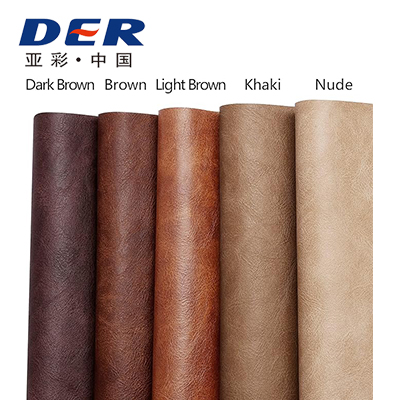
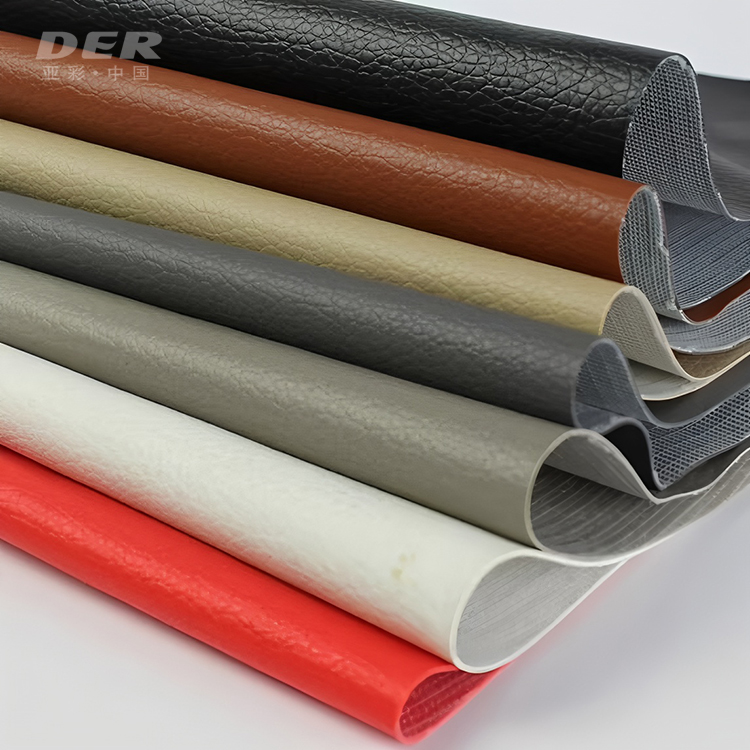
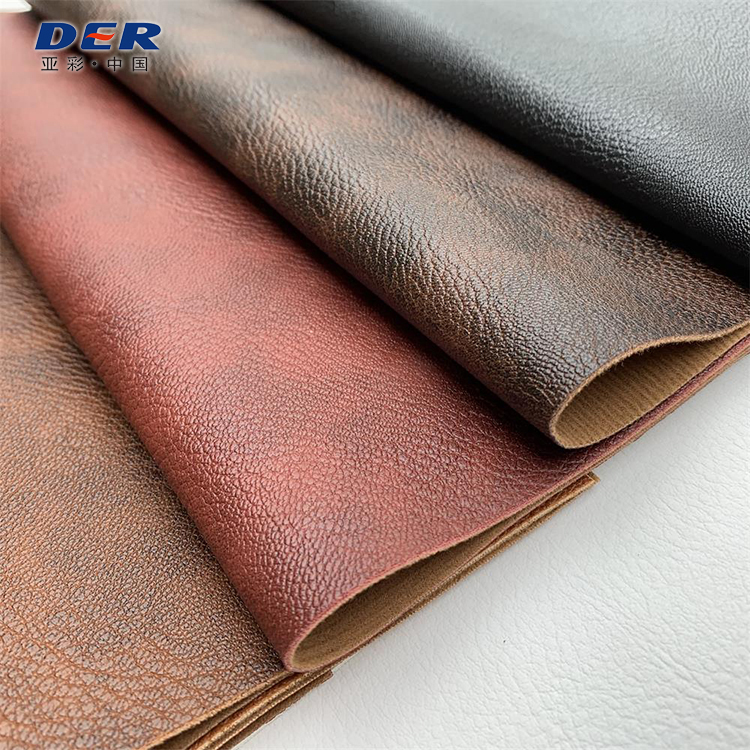
DERFLEX synthetic PU leather color rolls
DERFLEX synthetic leather color-roll display. Surface appearance alone cannot confirm whether a material contains animal hide; review the specification and backing.
Practical identification

How to Tell Whether PU Leather Is Fully Synthetic

Smell, touch and a water-drop test can be inconsistent and may damage a finished product. For B2B purchasing, documentation and sample inspection are more reliable.

1
Read the exact composition

Look for wording such as “PU-coated polyester,” “100% polyurethane synthetic leather,” “split leather with PU coating” or a percentage breakdown.

2
Ask what the backing is

A fabric, nonwoven or microfiber backing usually indicates a fully synthetic construction; a split-hide backing indicates animal content.

3
Inspect the reverse side and cross-section

The back often reveals a knitted, woven, microfiber or leather-fiber structure that is not visible from the coated face.

4
Confirm claims in writing

For vegan, animal-free, recycled-content or compliance claims, request supplier declarations and relevant test documentation for the exact item.

Why manufacturers use it

PU Leather Is an Engineered Material Choice—not a Disguised Hide

When the material is correctly labeled and matched to the product, synthetic PU leather offers design and production advantages that natural hides do not provide in the same way.

Repeatable Appearance

Color, grain, gloss and embossing can be developed for collections and repeat purchasing.

Roll Processing

Continuous roll format supports cutting, sewing, wrapping, lamination and upholstery workflows.

Application Tuning

Backing, thickness, softness and surface performance can be adjusted around the end product.

Material Alternatives

Buyers can compare PU, PVC, microfiber and silicone directions instead of relying on one universal leather-look material.

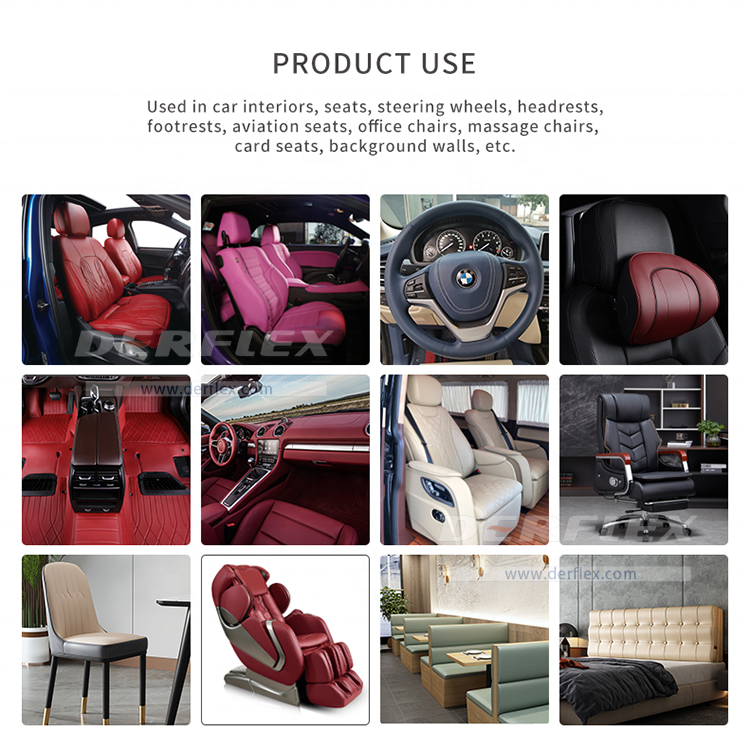
Product image display

Where Custom PU Leather Is Commonly Used

Each application creates a different performance profile. A bag panel, car-seat surface and hotel chair should not automatically use the same PU leather construction.

Procurement checklist

Do Not Buy PU Leather by the Word “PU” Alone

A clearer inquiry helps the supplier match the surface, backing and roll specification to the real manufacturing process.

A

Finished Product & Environment

State whether the material is for furniture, automotive interiors, bags, marine seating, medical surfaces or decorative panels, plus indoor/outdoor use and cleaning frequency.

B

Surface Design

Define color, grain, embossing, matte or semi-gloss direction, softness, touch and any reference sample that must be reviewed.

C

Backing & Processing

Confirm whether the material will be sewn, wrapped, bonded, laminated, edge-folded or stretched during upholstery installation.

D

Performance Direction

Discuss abrasion, flexing, hydrolysis resistance, UV direction, easy-clean behavior, cold resistance, anti-mildew or flame-retardant pathways based on the project.

E

Roll & Packing Details

Provide target thickness, width, roll length, order quantity, labeling, carton marks, pallet requirements and destination.

F

Composition & Claims

Specify whether the product must be fully synthetic, animal-free, phthalate-controlled, solvent-free direction or compliant with a named market requirement, subject to verification.

Specification discussion

Custom PU Leather Options for OEM Roll Programs

Final values depend on the application, sample approval, minimum order structure and selected testing route.

Specification PointAvailable Discussion DirectionWhy It Matters to the Buyer
Material Identity100% synthetic PU, microfiber PU, PU-coated composite or comparison with PVC/silicone leatherControls labeling, animal-content statements, target positioning and processing route.
SurfaceSmooth, pebbled, lychee, Saffiano-style direction, matte, semi-gloss, gloss, embossed, printed or perforatedDetermines visual language, touch, cleaning expectation and collection consistency.
BackingKnitted, woven, nonwoven, polyester, microfiber, foam-supported or project-specific baseAffects cutting, sewing, stretch, wrapping, bonding and structural feel.
Thickness & WidthProject-specific thickness and roll width based on machinery and finished-product targetInfluences yield, hand feel, dimensional fit and production efficiency.
Performance RouteAbrasion, flex, hydrolysis, easy-clean, water-resistance, UV, anti-mildew, cold or flame-retardant directionPrevents appearance-only selection and supports application-based sample testing.
OEM SupportColor matching, sample development, roll labels, carton marks, packing and export coordination, Supports distributors, importers, brands and repeat production programs.
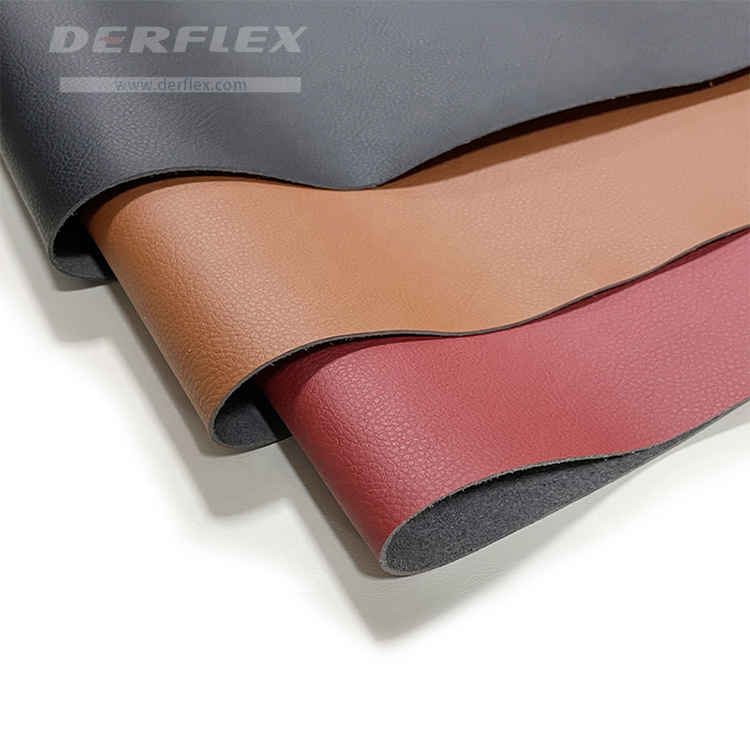
DERFLEX leather-look material roll selection
Material system support
Compare PU, PVC, microfiber and other synthetic leather directions according to the final product.
DERFLEX supply approach

From Material Name to a Repeatable PU Leather Specification

DERFLEX supplies custom polyurethane leather and related synthetic leather materials for manufacturers, importers, distributors and OEM product teams. The development process begins with the product application rather than a generic color card.

Buyers can discuss color, grain, finish, backing, thickness, softness, roll dimensions, performance direction, labeling and export packing. Physical sample confirmation and application testing are recommended before volume production.

Application ReviewFurniture, automotive, bags, hospitality, marine, medical and panels.
Custom DevelopmentColor, grain, gloss, hand feel, backing and thickness.
Bulk Roll SupplySpecification records, packing standards and repeat-order coordination.
Alternative MaterialsPU, PVC, microfiber, silicone and coated textile comparison.
Project workflow

How DERFLEX Supports a Custom PU Leather Inquiry

The following workflow helps reduce gaps between a sample appearance, factory processing and the delivered bulk roll.

01

Application Review

Confirm the finished product, use environment, manufacturing process and target market.

02

Material Direction

Choose PU or compare it with PVC, microfiber, silicone or another leather-look structure.

03

Sample Development

Review color, grain, surface finish, backing, thickness, softness and roll details.

04

Approval & Testing

Confirm the physical sample and conduct appropriate material or finished-product tests.

05

Bulk Coordination

Align production, roll packing, labels, inspection points and export documentation.

Frequently asked questions

PU Leather Meaning & Sourcing FAQ

Clear answers for furniture manufacturers, automotive suppliers, bag producers, importers and OEM product teams.

Does PU leather mean fake leather?

Usually, yes. A 100% synthetic PU leather is a type of faux or artificial leather made with a polyurethane surface and a non-animal backing. However, PU-coated split or bicast leather can contain an animal-hide base, so the full composition should be checked.

Is fake leather the same as counterfeit leather?

No. “Fake leather” is an informal material description for leather-look products that are not full natural hide. A correctly labeled PU leather product is not counterfeit simply because it is synthetic.

Is all PU leather vegan?

No. Fully synthetic PU leather may be animal-free, but PU-coated split leather, bicast leather and some bonded leather structures can contain animal-derived material. Request a written composition statement for the exact product.

Does “fake” mean PU leather is low quality?

No. The term describes material origin, not grade. PU leather quality depends on coating chemistry, backing, adhesion, thickness, hydrolysis resistance, abrasion, flexing, finish and suitability for the final application.

What information should I send for a custom PU leather quote?

Send the final application, target color and grain, reference sample or photo, desired thickness, backing preference, roll width, quantity, processing method, performance direction, packing requirements and destination.

Can DERFLEX customize PU leather for furniture, automotive or bags?

DERFLEX can discuss custom PU leather for furniture upholstery, vehicle interiors, bags, luggage, hospitality seating, marine cushions, wall panels, medical furniture and OEM product programs. Final suitability should be confirmed through samples and relevant testing.

Need a Clearly Specified Custom PU Leather?

Tell DERFLEX whether your project requires a fully synthetic structure, target color and grain, backing, thickness, roll size, performance direction and order quantity. The team can review a practical material route for sampling and quotation.

Material performance and compliance depend on the confirmed specification, production batch, application design, processing method, use environment and testing route. Product statements should be verified for the exact item before commercial use.

Consulting Services
+86-021-54361792 / 54361798
Email
sales@derflex.com