


Drop Cloth for Painting, Renovation & Reusable Surface Protection
DERFLEX supplies PVC coated protective sheets and custom finished covers for buyers who need a waterproof, wipe-clean and reusable drop cloth for floors, equipment, furniture, work zones and industrial maintenance. Choose the material by spill risk, traffic, surface sensitivity and reuse cycle—not by thickness alone.
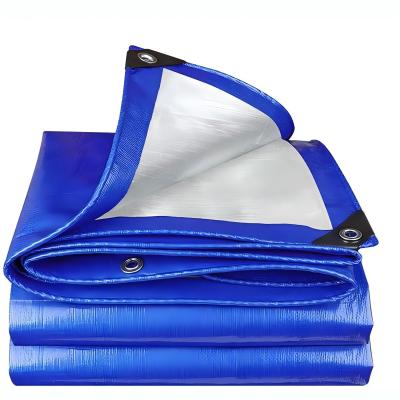
What Is a Drop Cloth?
A drop cloth is a temporary protective sheet placed over floors, furniture, equipment or work surfaces during painting, renovation, cleaning, moving or maintenance. Canvas drop cloths are valued for absorbency and reuse; thin plastic drop cloths are economical and leak-resistant; PVC coated polyester drop cloths are better suited to buyers who need a stronger waterproof barrier, custom fabrication and repeated cleaning.
In natural English, “drop cloth” is the standard term. Searchers sometimes type “cloth drop”, but they usually mean the same protective covering used by painters and contractors.
Canvas, Plastic or PVC: Which Drop Cloth Material Fits the Job?
There is no single best drop cloth for every floor or painting project. The correct choice depends on whether the priority is absorbency, waterproofing, slip control, low cost, reuse, custom size or industrial durability.
| Material | Water / Paint Barrier | Reuse | Typical Strength | Best Fit | Important Limitation |
|---|---|---|---|---|---|
| Cotton canvas | Absorbs drips; not inherently waterproof unless backed or treated. | Commonly reusable and washable. | Good fabric durability depending on weave and weight. | Interior painting, furniture covering, general contractor use. | Absorbed liquid can pass through; performance varies by weave and backing. |
| Thin PE plastic | Good leak barrier when intact. | Usually limited reuse. | Lightweight; puncture and tear resistance depend on thickness. | Dust control, furniture covering, light paint work and disposable protection. | Can move easily underfoot and can tear around sharp objects. |
| Paper / poly laminate | Depends on laminate structure. | Usually short-term. | Moderate for light work. | Quick masking, light renovation and packaged retail programs. | Lower durability in wet or repeated-use environments. |
| PVC coated polyester | Waterproof coated surface; welded seams can improve liquid blocking. | Designed for repeated use when correctly specified and maintained. | Reinforced textile structure supports stronger handling and larger custom panels. | Reusable painting protection, industrial maintenance, renovation, moving routes, OEM surface-protection programs. | Not absorbent; may trap moisture and is not automatically non-slip on every floor. |
Match the Drop Cloth to the Real Surface-Protection Problem
Interior Painting
Prioritize floor compatibility, edge control and the type of paint spill expected. Absorbent canvas may suit drip-heavy decorating; waterproof PVC is useful where liquid must not pass through.
Commercial Renovation
Repeated walking, tools, dust and cleanup favor a stronger reusable sheet. Use suitable underlay and fixing where finished floors are sensitive to rubbing or movement.
Industrial Maintenance
Choose by liquid exposure, equipment movement, cleaning chemistry, reuse frequency and whether custom runners, welded sheets or attachment details are required.
Moving & Delivery Routes
Reusable runners can protect corridors and staging zones. Thickness alone is not enough—edge design, surface texture and grit control under the cover also matter.
Furniture & Equipment Covering
Flexible waterproof sheeting helps block dust, splash and moisture. Clear PVC can be considered where visibility of the covered item is useful.
OEM / Retail Programs
Distributors can specify finished dimensions, roll format, color, labeling, packing, logo treatment and repeat-order construction for their own protective-cover range.
Reusable PVC Drop Cloth & Protective Sheet Specification Guide
DERFLEX’s related floor-protection and tarp programs can be adapted into reusable protective sheets. Final construction should be confirmed by application review and approved sample rather than copied from a generic retail size.
| Specification Item | DERFLEX Direction | What the Buyer Should Define |
|---|---|---|
| Material | PVC coated polyester tarpaulin or application-specific coated protective textile. | Painting, renovation, industrial maintenance, moving, furniture protection or OEM resale. |
| Weight | Project-selected within related DERFLEX coated-tarp programs; the floor-protection range references approximately 300–1200 gsm. | Traffic, fold frequency, spill level, handling stress, target reuse cycle and price point. |
| Size / Format | Roll goods, runners, cut sheets, large welded panels or custom finished covers. | Room, aisle, furniture, equipment or work-zone dimensions plus overlap requirements. |
| Surface | Glossy, matte, embossed or other project-based finish subject to the selected material. | Cleanability, visual preference and required movement control on the target substrate. |
| Edge Design | Cut edge, welded hem, sewn hem, webbing reinforcement, rope-in-hem or corner reinforcement where appropriate. | Whether the cloth will be dragged, tied, hung, overlapped or stored repeatedly. |
| Joining | Hot-air / HF welding on suitable grades, sewing or project-defined joining. | Finished panel size, liquid-blocking requirement, foldability and fabrication route. |
| Hardware | Eyelets, D-rings, straps, loops, pockets or other fixing features by project. | How the sheet stays positioned and whether hardware can contact delicate floors. |
| Branding | Color, printed logo, labels, carton / roll marks and private-label packaging can be discussed. | Target market, brand guideline, unit pack, master carton and repeat-order coding. |
Five Details That Matter More Than Calling a Drop Cloth “Heavy Duty”
Protect the floor from the protector
Grit trapped beneath a reusable sheet can scratch timber, polished stone, coated floors or other sensitive finishes. Keep both surfaces clean and add a compatible underlay where required.
Do not trap curing moisture
PVC is not vapor-permeable. Do not cover newly installed concrete, coatings, wood finishes or resilient flooring until the floor manufacturer confirms that non-breathable protection is acceptable.
Control movement and slip risk
No flexible drop cloth is automatically non-slip on every substrate. Surface finish, moisture, dust, overlap, tape or mechanical fixing all affect movement. Test the approved sample on the actual floor.
Check paint and cleaner compatibility
Water-based paint, solvent systems, reducers and cleaning chemicals can interact differently with a coated surface. Tell DERFLEX what liquids may contact the cloth if chemical exposure is more than incidental splash.
Design for handling, not only coverage
Large sheets need practical folding, lifting and storage. Repeatedly dragged edges or corners may justify reinforced hems, webbing, grab points or modular panel sizes.
A Reusable Waterproof Drop Cloth Is a Different Product from a Painter’s Canvas
Consider PVC coated protection when you need:
- A waterproof, wipe-clean barrier
- Repeated contractor or industrial reuse
- Custom runners, large welded sheets or equipment covers
- Reinforced edges, eyelets, straps or other fabrication details
- OEM color, logo, labels or private-label packing
Use another protection type when you mainly need:
- High absorbency for frequent paint drips
- Vapor-permeable protection for curing substrates
- A rigid board for concentrated wheel or impact loads
- A disposable ultra-light cover for one short task
- A certified slip-control system without project testing
Where Reusable Drop Cloths and Protective Sheets Are Used
Painting & Decorating
Floor, stair, furniture and equipment protection where paint splash, wash water, dust and cleanup are part of the job.
Construction & Fit-Out
Temporary protection of finished areas during later trades, installation, punch-list work and interior renovation.
Industrial Repair & Maintenance
Reusable barrier sheets beneath maintenance zones, equipment service, cleaning operations and temporary workshop areas.
Moving, Delivery & Event Setup
Custom runners or panels for corridors, staging areas, equipment routes, exhibition build-out and temporary logistics paths.
Build the Drop Cloth Around the Buyer’s Workflow
Roll Goods
For converters and distributors who cut, weld or sew protection products locally.
Finished Sheets & Runners
Custom dimensions, panel shapes and larger joined sheets based on the required coverage map.
Reinforcement & Hardware
Hems, webbing, patches, eyelets, straps, loops and other handling details where the application justifies them.
Surface & Color
Matte, glossy or embossed directions and application-matched colors subject to the selected grade and production route.
OEM Branding
Logo, warning text, color coding, labels and private-label packaging for distributor and contractor programs.
Sample Approval
Confirm handling, surface behavior, fabrication and target-floor compatibility before committing to a repeat bulk specification.
Material, Manufacturing & Protection References
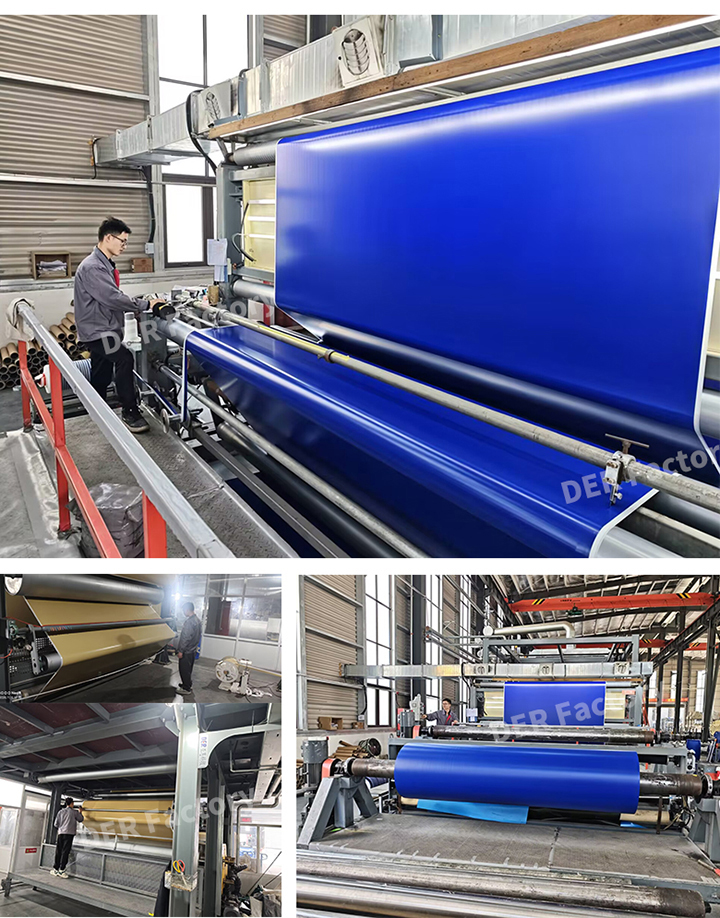
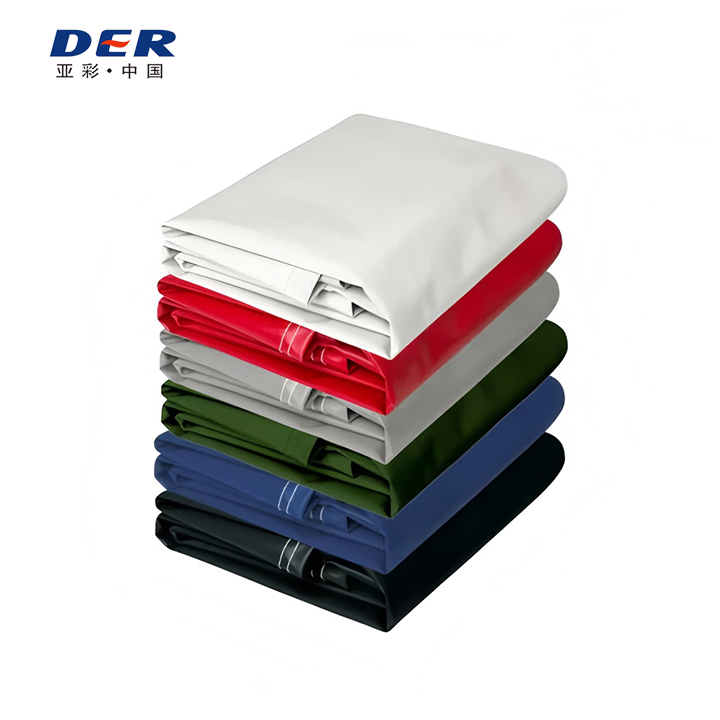
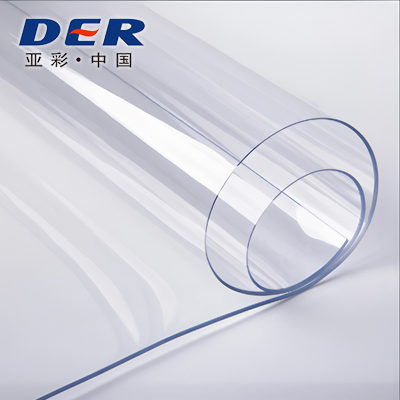
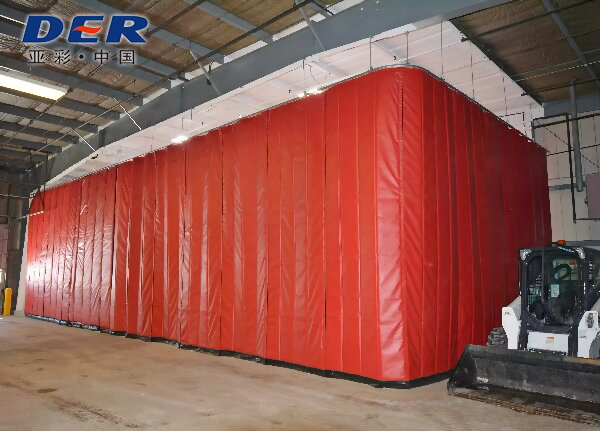
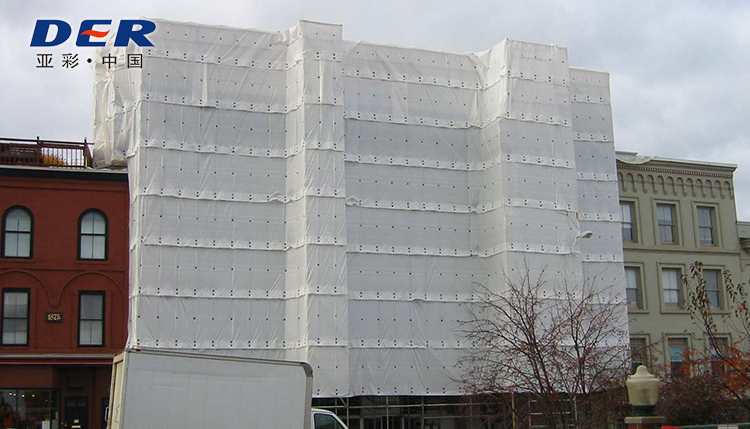
The following are existing DERFLEX website assets that support the material and manufacturing context of reusable protective sheets. They are shown as references and are not presented as photographs of one single standardized retail drop-cloth SKU.
Common Drop Cloth Sourcing Errors
Buying by weight alone
A heavier sheet is not automatically safer or more durable. Base fabric, coating, seam construction, edge reinforcement and the real traffic pattern must be considered together.
Assuming “waterproof” means safe for every floor
Waterproof protection can trap moisture. New coatings, concrete or timber finishes may require breathable protection until curing is complete.
Treating a textured surface as a universal anti-slip guarantee
Slip behavior changes with the floor, dust, water, paint and how the cover is fixed. Test a sample under actual use conditions.
Ignoring cleaning chemistry
Repeated exposure to solvents or aggressive cleaners should be discussed before material approval. Incidental paint splash and prolonged chemical contact are not the same requirement.
What to Send DERFLEX for a Useful Drop Cloth Quotation
1. Application
Painting, renovation, moving, maintenance, equipment protection, retail program or another use.
2. Surface Type
Concrete, tile, timber, vinyl, stone, epoxy, carpet or another substrate; state whether it is fully cured.
3. Size / Roll Format
Finished dimensions, runner width, roll width / length, number of panels and overlap preference.
4. Exposure
Paint type, water, oil, cleaner, dust, tools, walking traffic, carts or repeated dragging.
5. Finishing
Cut edge, hem, webbing, eyelets, straps, logo, warning text, label or special packing requirement.
6. Commercial Program
Quantity, sample requirement, destination, one-time project or repeat wholesale / private-label supply.
Continue from Drop Cloth Selection to the Right Material Platform
Drop Cloth Questions Buyers Commonly Ask
Is “cloth drop” the same as “drop cloth”?
Usually yes. “Drop cloth” is the standard English term for a protective sheet used during painting, decorating, renovation and maintenance. “Cloth drop” is commonly a reversed-wording search for the same product.
What is the best material for a painting drop cloth?
It depends on the job. Cotton canvas is useful when absorbency and familiar painter handling matter. Thin plastic is economical for short-term covering. PVC coated polyester is more suitable when the buyer needs a reusable waterproof barrier, stronger handling, large custom sizes or reinforced fabrication.
Are canvas drop cloths waterproof?
Not automatically. Traditional canvas can absorb paint and moisture, and liquid may eventually pass through depending on weave, weight and treatment. Waterproof canvas products normally require a backing or coating. For a true coated barrier, specify a waterproof material rather than assuming every canvas drop cloth will stop liquid.
Is a plastic or PVC drop cloth better than canvas?
Plastic or PVC is better for blocking liquid, while canvas is often better for absorbency and familiar interior painting use. PVC coated polyester adds reinforcement and reuse value compared with very thin disposable film, but it is not absorbent and may require underlay or fixing on sensitive floors.
Can I put a waterproof drop cloth directly on hardwood or polished stone?
Use caution. Keep the floor and the underside of the cover clean, avoid exposed hardware contact and consider a compatible soft underlay. Test the selected material on a small area, especially when the finish is new, delicate or moisture-sensitive.
Can DERFLEX make custom drop cloth sizes and runners?
DERFLEX’s related PVC floor-protection and tarp programs support custom finished sizes, runners, larger joined sheets, hems, reinforcement, eyelets, straps, colors, logos and packing. Final construction should be confirmed from your dimensions and use conditions.
What should I provide before asking for wholesale drop cloth pricing?
Provide the application, surface type, size or roll format, preferred material or target duty level, quantity, exposure to liquids or traffic, required finishing, branding / packing needs and destination. A sample approval step is recommended for repeat B2B programs.
Specify the Surface First, Then Build the Drop Cloth Around It
Send the floor or surface type, required coverage, spill risk, traffic, reuse target, quantity and finishing details. DERFLEX can review whether a reusable PVC protective sheet, floor-protection tarp or another material direction is the better fit.
Product configuration should be confirmed by application review and approved sample before bulk production.