News
Company News

Painting Containment Tarps | Spray Enclosures | DERFLEX

Update:2026/9/3 15:46:29 Views:
Industrial Painting & Coating Containment

Painting Containment Tarps for Spray & Coating Work Enclosures

Custom PVC-coated enclosure panels, overspray containment curtains and reusable painting tarps for shipyards, bridges, tanks, fabrication plants, maintenance shutdowns, construction projects and flexible industrial work cells.

DERFLEX supplies roll goods and project-built panels with reinforced load paths, welded or sewn fabrication, custom access details, clear vision zones and project-defined performance options. The containment skin is specified together with airflow, support geometry, cleaning method and local spray-finishing requirements.

Quick Answer

What Are Painting Containment Tarps?

Painting containment tarps are reinforced flexible panels installed around spray painting and coating work to help keep overspray, paint mist and process contamination inside a defined work zone while supporting the project’s ventilation and recovery plan.

Reusable containment skins are commonly made from low-permeability coated fabric such as PVC-coated polyester. Depending on the enclosure, the system may also use clear viewing sections, screened air-entry zones, floor tarps, roof panels, retractable curtains, zipped or overlapped access, and removable replacement panels.

For industrial buyers, the practical specification is not simply “18 oz vinyl” or “650gsm tarp.” Panel size, reinforcement, joining method, cleanability, coating chemistry, airflow direction, support loads and reuse cycle can matter as much as fabric weight.

Containment Architecture

Painting Enclosures Need Different Material Zones for Different Jobs

A bridge repaint, ship repair cell, tank coating project and indoor preparation bay can all use flexible containment, but the correct panel architecture changes with overspray level, wind, ventilation, visibility, cleaning and installation geometry.

01

Containment Objective

Define whether the priority is wet overspray, coating mist, dust from surface preparation, weather shielding, privacy or a combined work enclosure.

02

Airflow Strategy

Identify planned make-up air, exhaust points, filtered zones and pressure direction before deciding how much of the enclosure should be solid or permeable.

03

Surface & Cleaning

Consider how often overspray will build up, which cleaners may contact the curtain, and whether disposable inner liners or modular replacement panels are preferred.

04

Support & Access

Map tracks, frames, scaffold bays, cables, doors, hose routes and equipment openings so fixing loads and leakage paths are designed before fabrication.

Selection Matrix

Choose the Painting Containment Material by Enclosure Function

The most useful question is not “What GSM is best?” but “What must this specific zone do?”

Work Zone / Need Recommended Direction Why It Fits Buyer / Engineering Check
Primary overspray wall or roof Solid PVC-coated polyester panel Low-permeability, weldable surface supports reusable enclosure skins and large custom panels. Coating/cleaner compatibility, seam design, fire requirement, exhaust layout and structural support.
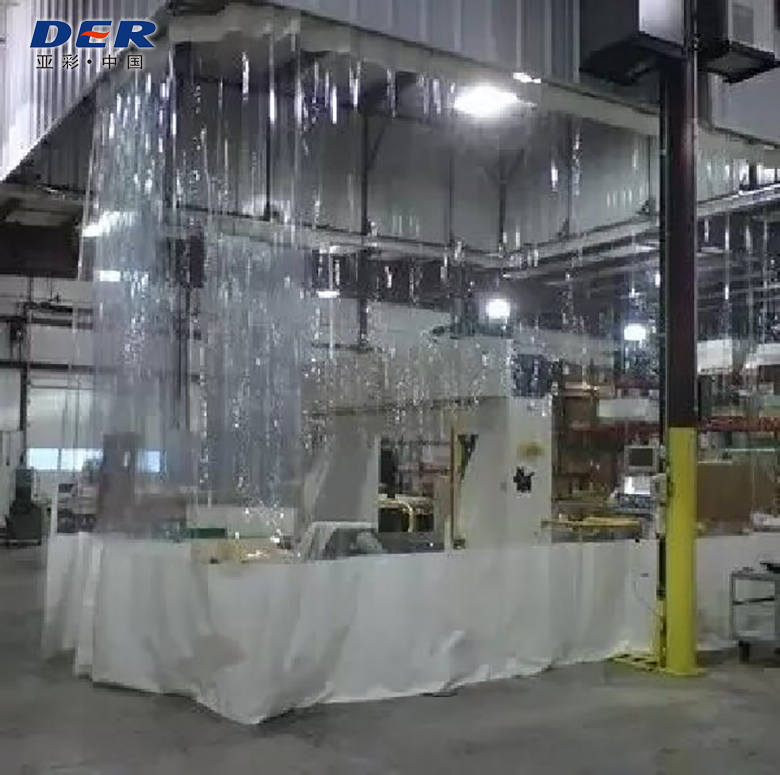
Operator visibility zone Clear PVC vision panel integrated into reinforced opaque fabric Allows visual supervision and light transmission without making the whole enclosure transparent. Vision-panel location, scratch/overspray exposure, replaceability and any project restrictions.
Controlled air-entry or lower-wind zone Project-approved mesh / screened section or engineered inlet zone Can support planned air entry or reduce sail effect in exposed temporary enclosures. Mesh is not sealed overspray containment; coordinate with the ventilation design and containment objective.
Floor and drip collection Solid floor tarp / removable collection layer Helps isolate drips, overspray and coating waste from decks, slabs or surrounding surfaces. Slip risk, drainage, solvent/cleaner contact, seams, grounding/static plan and waste handling.
Indoor movable work cell Retractable or fixed industrial curtain panels with track interface Creates flexible bays that can open when equipment or large parts move through the area. Track load, floor sweep, overlap, access, local spray-finishing rule applicability and ventilation.
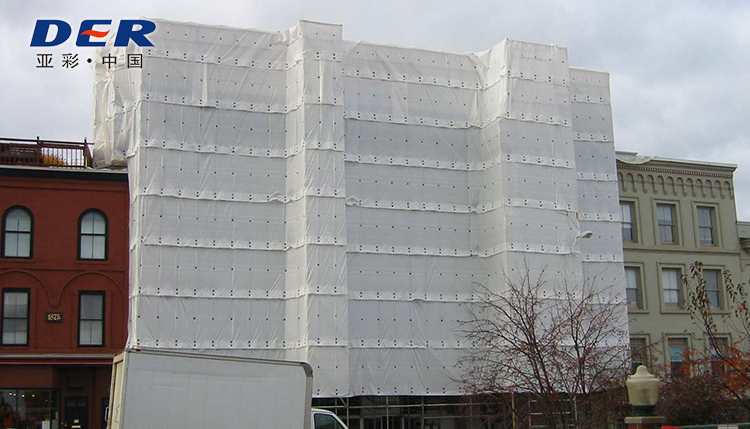
Bridge, tank or shipyard scaffold enclosure Modular wall/roof/floor panels with reinforced load paths Panelization supports phased installation, replacement and complex geometry. Wind review, scaffold design, panel numbering, drainage, access, extraction and environmental containment plan.
Material & Fabrication

Typical DERFLEX Painting Containment Tarp Specification Directions

DERFLEX related PVC-coated polyester and heavy-duty industrial curtain product lines provide a practical material base for custom enclosure programs. Final values should be confirmed against the selected product, approved sample, coating chemistry, required test method and project drawing.

  • Primary material: reinforced PVC-coated polyester for reusable low-permeability panels.
  • Reference weights: approximately 650–1200gsm across related heavy-duty curtain constructions; select by handling, load and reuse needs rather than weight alone.
  • Reference width: related curtain fabric is available up to 5.1m; finished panels can be fabricated wider by welding or seaming.
  • Reference strength: related heavy-duty curtain material publishes tensile values around 3000 / 2800 N/5cm and tear values around 450 / 400 N, subject to exact construction.
  • Temperature direction: related PVC curtain grades publish approximately -30°C to +70°C; actual coating and cleaner compatibility must be separately verified.
  • Surface options: matte, glossy or lacquered directions depending on selected grade.
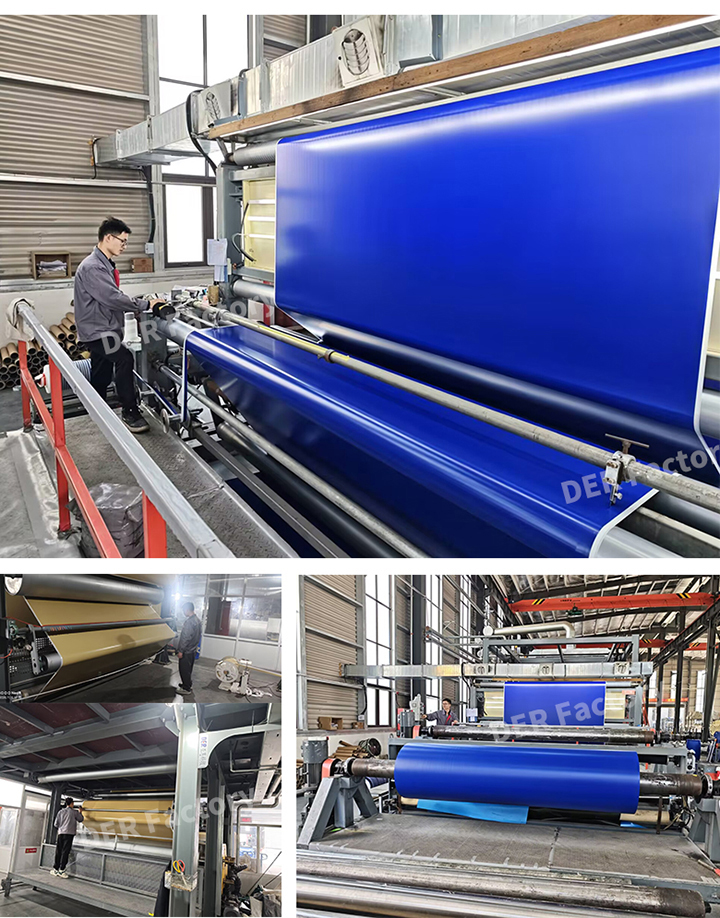
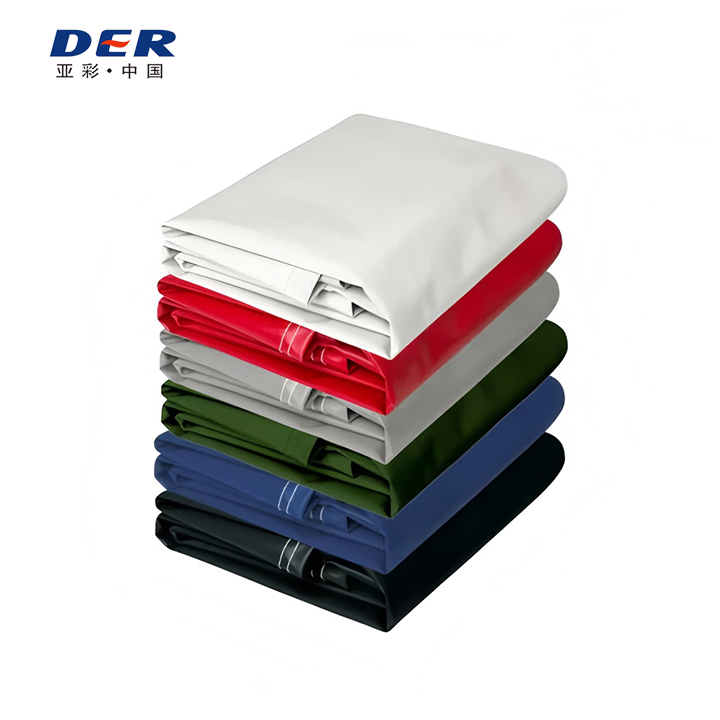
DERFLEX PVC coated fabric manufacturing for painting containment tarp material
DERFLEX coated-fabric manufacturing reference for industrial tarp and curtain programs.
Specification Item Typical Direction / Option What the Buyer Should Define
Product Format Roll goods, cut panels, finished curtains, roof/floor panels, replacement sections Panel map, quantity, installation sequence and replacement strategy
Joining Hot-air / high-frequency welding where suitable, sewing, overlaps, hook-and-loop, zippers or project-defined closures Leakage tolerance, opening frequency, maintenance access and cleaning method
Reinforcement Perimeter webbing, internal webbing grids, corner patches, double hems, rope edges Support spacing, wind exposure, pull direction and maximum practical panel size
Attachment Grommets, D-rings, straps, loops, pockets, keder-style edges, curtain-track interfaces Frame/scaffold/track design and desired installation speed
Visibility Opaque body with optional clear PVC vision zones Required sight lines, lighting, overspray exposure and replaceable-window preference
Performance Options Waterproof / weather-resistant surface, UV direction, anti-mildew, low-temperature, FR or anti-static directions subject to exact grade and method Required standard, test method, acceptance value and report format before bulk production
Chemical Compatibility Project-specific verification Paint system, solvents, reducers, cleaners, washdown agents and expected contact time
Branding & Packing Panel labels, roll labels, project bundle marking, OEM / private label supply Drawing number, bay number, install sequence, destination and repeat-order program
Engineering & Fabrication Notes

Five Decisions That Usually Matter More Than a Generic “Heavy Duty” Claim

Painting containment performs as a system: enclosure skin, load path, access, airflow, exhaust/filtration and cleaning strategy must work together.

STEP 01 Define the coating process

Identify spray method, coating chemistry, solids/solvent direction, expected overspray and nearby contamination-sensitive assets.

STEP 02 Map air in and air out

Set make-up air, exhaust, filtered openings and negative/positive pressure intent before finalizing solid and screened zones.

STEP 03 Engineer the load path

Place webbing, patches and attachment points around actual frame, scaffold, cable or track spacing rather than generic grommet intervals.

STEP 04 Seal access intelligently

Doors, hose ports, crane openings and material-transfer points need planned overlaps or closures that match how the work will move.

STEP 05 Plan cleaning and replacement

Design high-overspray zones as replaceable panels or use a sacrificial inner layer where project-approved so the main enclosure lasts longer.

Safety reference: U.S. OSHA 29 CFR 1910.107 and 1910.94 address spray finishing and ventilation, including mechanical ventilation and spray-booth / spray-room requirements. For construction work, review 29 CFR 1926.57 and 1926.66. Always check the current rule text, coating SDS and project-specific requirements. OSHA 1910.107 · OSHA 1910.94
Application Difference

Painting Containment vs. Blasting Containment vs. Dust Curtains

These systems can share coated-fabric components, but the dominant engineering problem is different.

P

Painting Containment

Prioritizes overspray migration, coating mist, surface cleanability, visibility, chemical compatibility, filtered airflow, controlled access and protection of adjacent equipment or finished surfaces.

B

Blasting Containment

Prioritizes abrasive dust, spent media, removed coating chips, recovery, abrasion zones and heavier wear. Direct blast impact may require a separate sacrificial liner.

D

Dust / Work-Zone Curtains

Prioritizes flexible zoning, general dust separation, privacy or light contamination control and may use retractable track systems where full spray-finishing containment is not required.

Application Decision Guide

Where Painting Containment Tarps Are Commonly Specified

Every application changes the balance between overspray control, wind, cleaning, access, visibility, reuse and environmental protection.

Shipyards & Dry Docks

Hull repair and coating work may use scaffold skins, roof panels, floor protection and modular replacement sections around blast-and-paint zones. Salt exposure, wind and access planning matter.

Bridge Rehabilitation

Bridge painting containment can require modular panel maps, controlled openings, environmental protection, filtered exhaust planning and project-specific temporary-works review.

Storage Tanks & Towers

Vertical structures require careful suspension, wind and roof-transition details. Panel geometry should follow scaffold rings, cables and work elevations.

Industrial Maintenance

Shutdown painting around steelwork, piping, vessels and equipment often needs temporary separation from adjacent production, walkways or sensitive machinery.

Fabrication & Equipment Plants

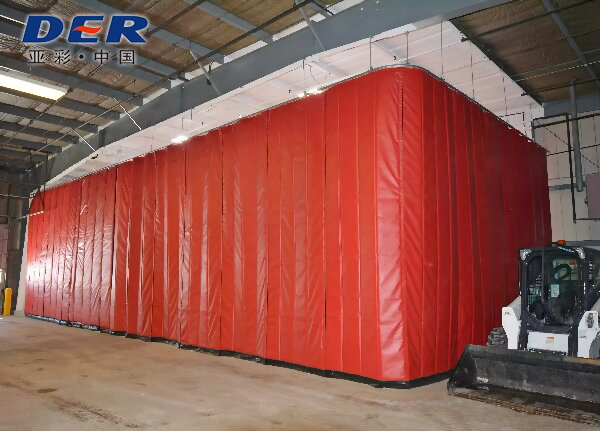
Retractable or fixed containment curtains can create flexible preparation and coating cells where the process and applicable rules allow a curtain-based enclosure.

Construction & Field Coating

Temporary painting enclosures can help protect nearby surfaces from overspray while also supporting weather shielding. Exterior spray work still requires site-specific safety and environmental controls.

B2B Manufacturing Advantage

Why Source Custom Painting Containment Panels from DERFLEX?

Online stock curtains are useful for standard bays. Larger contractors, fabricators and distributors often need material selection, panel engineering, repeatable drawings and program supply rather than one fixed size.

Manufacturing-led project support

DERFLEX’s broader company profile combines coated-fabric production, engineering support and global B2B supply.

60,000㎡Production Area
450+Employees
25+Senior Engineers
120+Countries Served

DERFLEX Project Supply

  • Roll goods or finished custom panels
  • Panel maps from scaffold, frame or track drawings
  • Custom webbing, D-rings, grommets, pockets and access details
  • Material and test-document direction defined at quotation stage
  • OEM / private label, project labeling and repeat-order programs

Generic Stock Tarp / Curtain

  • Useful when standard dimensions already fit
  • Usually fixed attachment spacing and construction
  • Limited control over panel mapping and access details
  • May not match project-specific test or documentation requirements
  • Less efficient for large phased enclosures or distributor programs
DERFLEX Image Pack

Related Enclosure, Material & Manufacturing Images

These are existing DERFLEX website assets used as material and enclosure references. They are not presented as certified spray-booth installations. Final enclosure geometry, material grade and safety controls must be project-specified.

Buyer Checklist

What to Send DERFLEX for a Useful Painting Containment Quote

A marked-up drawing, scaffold elevation or simple hand sketch is often more useful than requesting “heavy-duty paint tarps” without the enclosure details.

1

Painting Process

Spray method, coating type, solvent/water-based direction, surface-prep work and expected overspray level.

2

Enclosure Geometry

Length, width, height, scaffold/frame/track spacing, roof/floor panels, doors and penetrations.

3

Containment Objective

Overspray, mist, dust, weather shielding, privacy, visibility, environmental separation or combined requirements.

4

Airflow Layout

Planned air inlets, exhaust points, filtered openings and any project-defined pressure strategy.

5

Fixing & Joining

Grommets, D-rings, webbing, straps, pockets, keder, track interface, overlaps, hook-and-loop or zippers.

6

Cleaning Chemistry

Paint system, thinners, reducers, cleaners and washdown agents that may contact the tarp.

7

Required Tests

Fire, anti-static, tensile, tear, low-temperature or other project test methods and required report format.

8

Commercial Program

Quantity, one-time vs repeat use, destination, target schedule, project labels, packing and OEM/private label needs.

Send the Enclosure Drawing — DERFLEX Can Help Define the Panel Direction

For bridge, tank, shipyard, plant-maintenance or OEM containment programs, send your dimensions, fixing layout, coating process and required test documentation. DERFLEX can review the project as roll goods, modular panels or finished enclosure curtains.

Consulting Services
+86-021-54361792 / 54361798
Email
sales@derflex.com