Fit the Load, Not the Trailer Alone
Flatbed tarp dimensions should be developed around the finished load height, width and length. Trailer deck size is only one input; actual coverage, overlap and flap requirements determine the finished tarp.



DERFLEX manufactures custom flatbed tarps and PVC coated tarp materials around the actual load profile—not only a catalog size.
Specify finished dimensions, side drop, flap layout, fabric weight, D-ring rows, grommets, webbing, wear patches, color, logo and packing for fleet, distributor, converter or private-label programs.
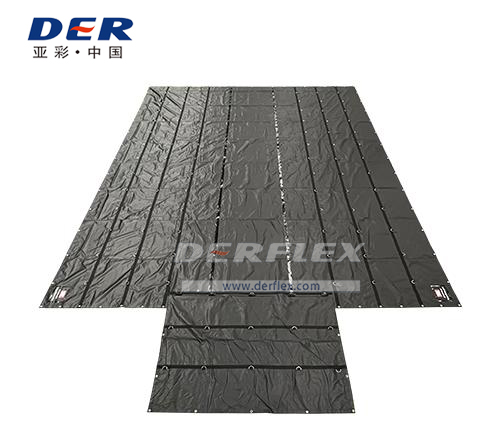
Flatbed tarps are reinforced covers used over cargo on open-deck trucks and trailers to reduce exposure to rain, road spray, UV, dust and debris. The most common families are lumber tarps, steel tarps, machinery tarps, smoke tarps and lightweight flatbed tarp sets.
The correct tarp is selected by loaded cargo dimensions, required side drop, handling weight, edge abrasion, tie-down layout and route conditions. For heavy-duty waterproof applications, PVC coated polyester is a widely used construction because it combines weather resistance, weldability and reinforcement flexibility.
Flatbed tarp dimensions should be developed around the finished load height, width and length. Trailer deck size is only one input; actual coverage, overlap and flap requirements determine the finished tarp.
Heavier vinyl can improve wear resistance, but added material also increases lifting, folding and storage effort. A useful specification balances service life with the working cycle.
Edges, corners, D-ring bases, strap contact points and known cargo corners fail earlier than low-stress areas. Reinforcement planning often matters as much as nominal fabric weight.
Use cargo geometry first, then decide the side drop, flap, material weight and reinforcement. The table below is a practical starting point for quotation—not a universal engineering standard.
| Cargo / Route | Best Starting Tarp Type | Coverage Logic | Construction Priorities | Buyer Note |
|---|---|---|---|---|
| Lumber, plywood, wallboard, insulation | Lumber tarp | Deeper side drop, usually with rear flap | Full side coverage, multiple D-ring rows, strong hems | See DERFLEX lumber tarps for tall rectangular loads. |
| Steel plate, coils, pipe, rebar, cable | Steel tarp | Shorter drop for low-profile freight | Abrasion patches, edge protection, compact fit | Use a steel tarp when unnecessary drop adds weight or flap. |
| Machinery, equipment, irregular loads | Machinery / custom tarp | Custom shape or modular coverage | Corner patches, extra webbing, planned attachment points | Irregular loads benefit from drawing-based development. |
| Mixed fleet freight | Modular flatbed tarp set | Flexible combinations for varying load length and height | Repeatable D-ring rows, easy folding, manageable panel weight | Useful when no single tarp geometry fits every route. |
| Frequent driver handling / lighter duty | Lightweight flatbed tarp | Reduce fabric mass where service conditions allow | Strategic heavy reinforcement only at stress zones | Do not compare by ounce alone; compare full construction. |
| Retractable / sliding flatbed systems | System-matched tarp | Fit frame movement, pockets and pull zones | Weldability, repeated flexing, reinforcement layout | Review sliding flatbed tarp systems for moving assemblies. |
“Flatbed tarp” is a category, not one fixed shape. The geometry should change with the cargo.
Designed for tall rectangular freight with deeper side coverage and commonly a rear flap. A fleet may use 4 ft, 6 ft, 8 ft or project-specific drops depending on load height.
Shorter-drop covers for coils, plate, rebar, pipe, wire and compact cargo. The lower profile reduces excess material and can make tensioning and handling easier.
Developed around irregular load shapes, protrusions and concentrated contact points. Reinforced corners and wear patches should be planned before fabrication.
Used at the front of a load to reduce exposure to road grime, spray and debris. They can be used alone for limited protection or as part of a larger tarp set.
Designed to lower lifting and folding effort. The useful question is not “What is the lightest tarp?” but “Where can weight be reduced without weakening the working zones?”
Finished size, drop, flaps, D-ring rows, grommets, webbing, logo, color, label and packing can be documented for distributor, fleet and private-label programs. See custom truck tarp manufacturing.
A good quotation starts with the loaded cargo, not a guess at the finished tarp size.
Approx. tarp width = loaded cargo width + (2 × desired side drop) + practical overlap / handling allowance
Example: an 8 ft wide load with a target 6 ft drop on each side already needs about 20 ft of coverage before any additional allowance or special flap geometry is considered.
Approx. tarp length = loaded cargo length + front coverage + rear coverage / flap + overlap needed for the tarp set
For multi-piece tarp systems, overlap between sections matters. Confirm finished dimensions, not only cut size, because hems, seams and reinforcement affect the manufactured result.
Estimated lb ≈ (tarp area in ft2 ÷ 9) × fabric oz/yd2 ÷ 16
This estimates the base fabric only. Finished tarp weight is higher after flaps, webbing, D-rings, grommets, reinforcement patches and overlapping seams are added.
20 ft × 27 ft = 540 ft2 = 60 yd2. At 18 oz/yd2: 60 × 18 ÷ 16 ≈ 67.5 lb of fabric before hardware and reinforcement.
The same dimensions in a lighter structure can reduce handling weight, but the correct choice still depends on abrasion, service frequency, weather and service-life target.
A tarp rarely wears uniformly. The most useful durability improvements are usually targeted at the zones where load contact, tension or repeated folding is concentrated.
The table below uses verified DERFLEX product directions and common market terminology. Final values should be confirmed against the cargo, destination market and buyer standard.
| Specification Item | Available / Common Direction | Why It Matters |
|---|---|---|
| Material | PVC coated polyester / vinyl coated polyester; selected lightweight structures by project | Determines weather barrier, weldability, strength, flexibility and handling. |
| Fabric Weight | Common market references include approx. 14 oz, 16 oz, 18 oz, 22 oz and custom GSM/oz structures | Heavier is not automatically better; compare service stress and driver handling. |
| Base Fabric | High-strength polyester scrim; yarn and density selected to target performance | Influences tensile strength, tear behavior, stability and repeated folding. |
| Finished Size | Custom width, length, side drop, front/rear flap and multi-piece layouts | Fit determines weather coverage, stability, handling weight and tensioning. |
| Surface / Finish | Glossy, matte, semi-matte, embossed, lacquered or other project-defined finish | Affects cleanability, appearance, friction, sliding and branding. |
| Performance Direction | Waterproof / water-resistant PVC surface, UV resistance, anti-mildew, cold-flexible, abrasion-resistant and optional flame-retardant direction where required | Performance options should be tied to a real route, climate or buyer specification. |
| Seams | Hot-air welding, high-frequency welding, sewing or combined construction according to material and design | Seam method influences weather resistance, repeatability and fabrication efficiency. |
| Hardware | D-rings, grommets / eyelets, webbing loops, ropes, straps and buyer-specified attachment patterns | Hardware layout controls how the tarp adapts to different load heights and tie-down points. |
| Reinforcement | Webbing hems, corner patches, D-ring patches, wear strips, double-layer contact zones | Targeted reinforcement helps manage known failure points without making the full tarp unnecessarily heavy. |
| Color & Branding | Standard / custom color discussion, printed logo, labels and private-label packaging | Useful for fleet identity, distributor programs and market-specific product lines. |
| Supply Format | Fabric rolls, cut panels, semi-finished components or finished flatbed tarps | Lets converters, distributors and fleets buy at the processing level that fits their operation. |
Most problems are caused by a mismatch between the tarp specification and the actual working condition—not by one isolated material property.
A photo or sketch plus the following data can reduce repeated revisions and help the material, hardware and finished size match the real job.
Retail stock tarps and manufacturer-direct programs solve different purchasing problems.
These are real images currently hosted on DERFLEX. The hero image is loaded immediately; below-fold images use lazy loading.
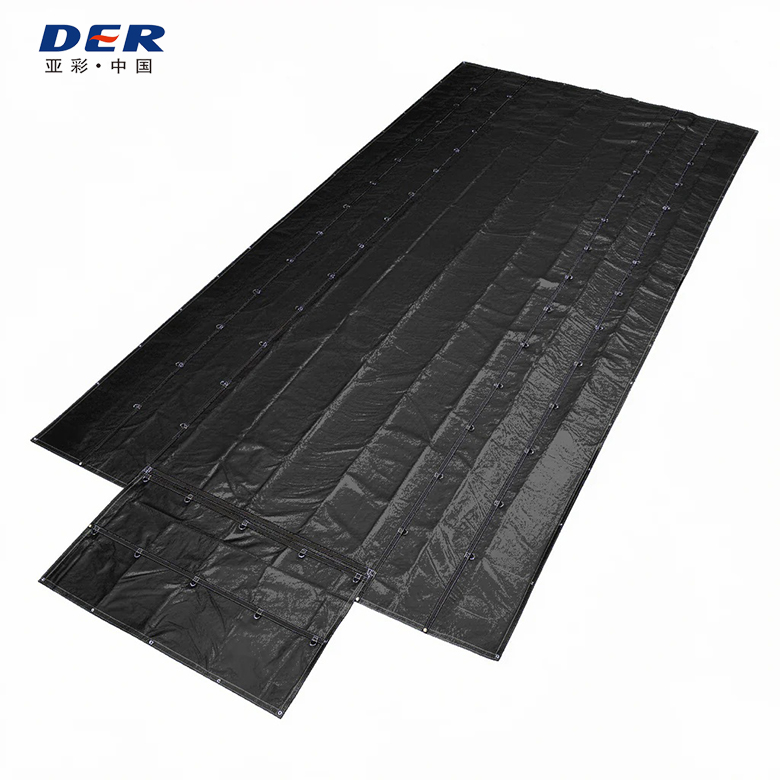
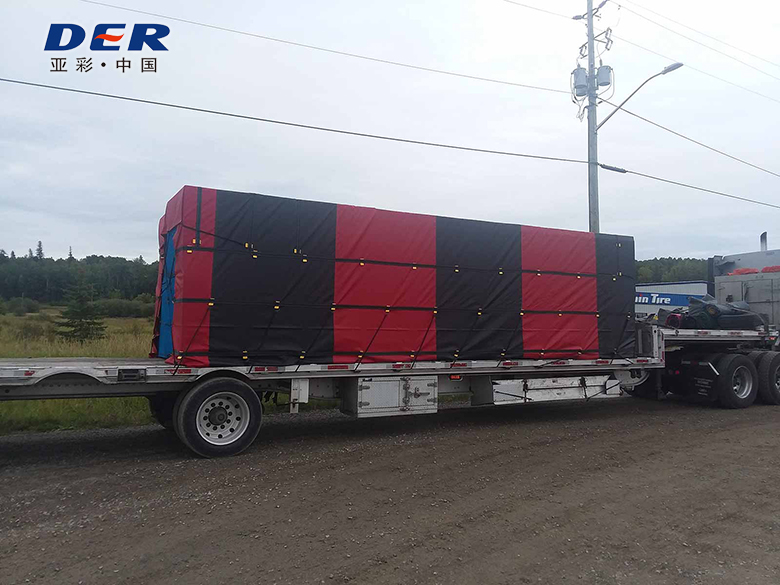
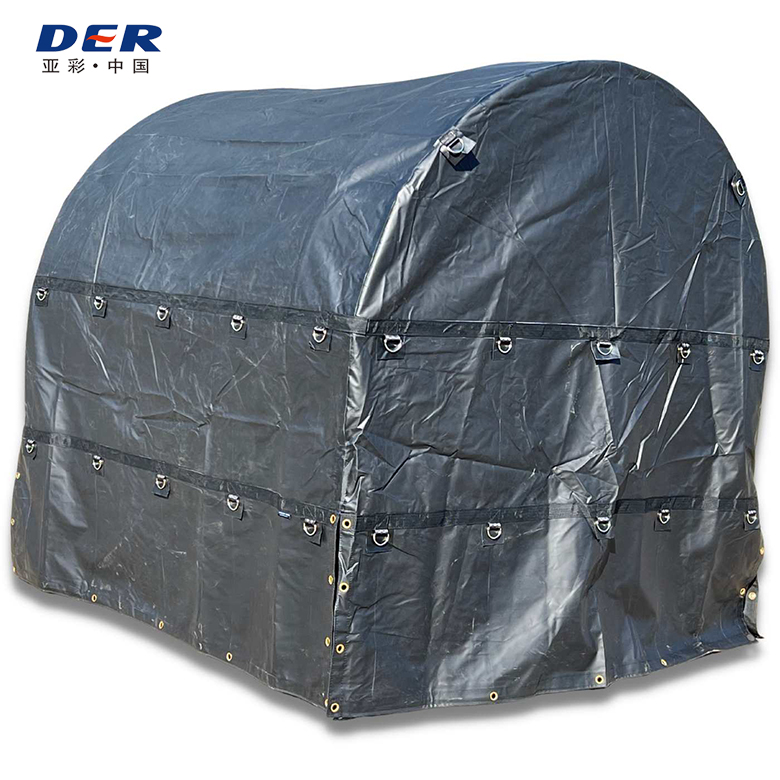
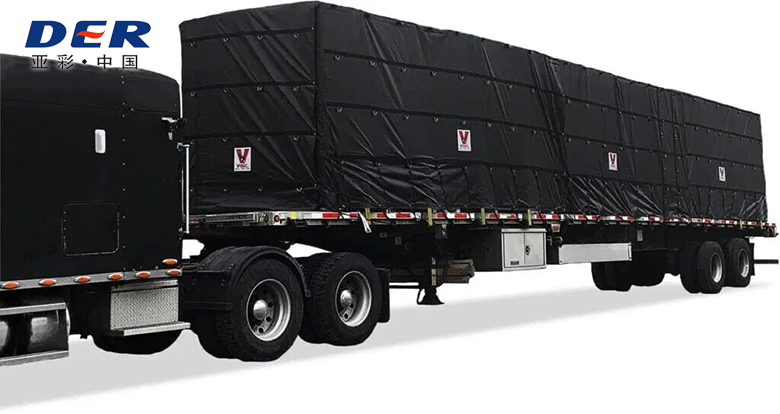
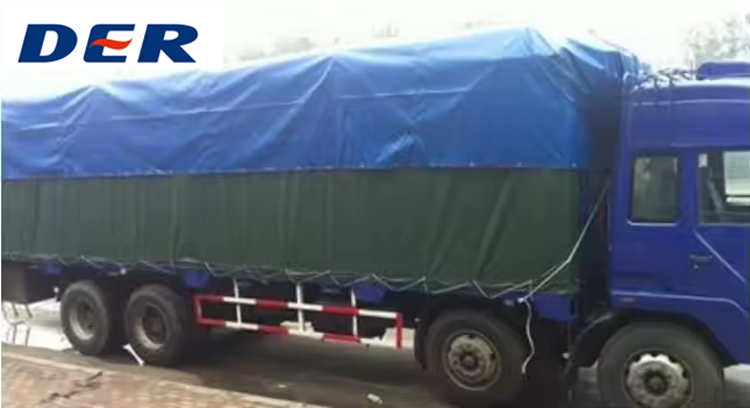
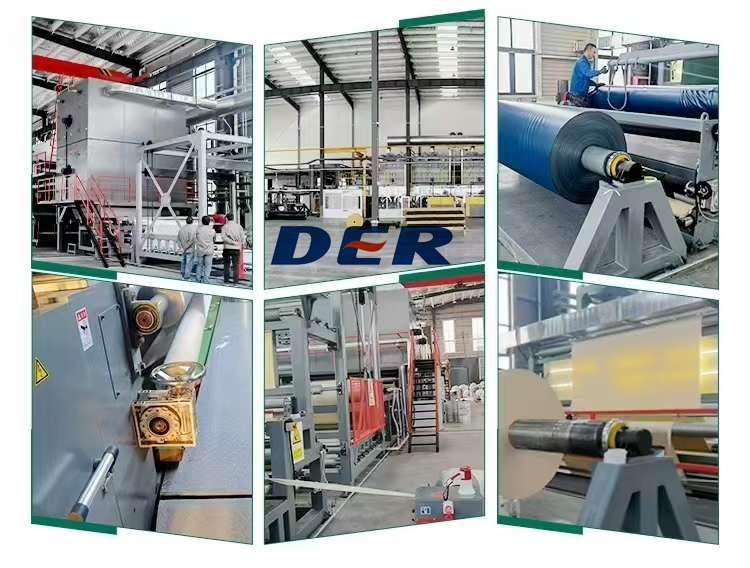
These related pages form the closest topic cluster for truck tarp materials, finished covers and application-specific flatbed tarps.
Direct answers to common questions from fleets, distributors, tarp converters and truck tarp buyers.
Measure the loaded cargo width, length and height, then decide the side drop, front/rear coverage and overlap needed between tarp sections. Do not use trailer deck dimensions alone. For a rough starting point, tarp width is the load width plus twice the desired side drop, with additional allowance as required by the covering method.
Lumber tarps normally use deeper side drops and often a rear flap because they cover tall rectangular loads such as lumber, plywood and wallboard. Steel tarps usually use shorter drops for lower-profile freight such as steel plate, coils, pipe and rebar, reducing unnecessary material and handling weight.
18 oz PVC/vinyl coated polyester is a common heavy-duty market construction, but it is not automatically best for every fleet. Lighter structures can reduce driver handling effort, while heavier or reinforced constructions may suit repeated abrasion. Compare the complete fabric, seams, reinforcement and hardware—not ounce weight alone.
Finished weight depends on dimensions, fabric oz/yd2, flaps, reinforcement, webbing and hardware. As a fabric-only estimate, divide tarp area in square feet by 9, multiply by fabric oz/yd2, then divide by 16 to estimate pounds. A 20 × 27 ft tarp in 18 oz material contains about 67.5 lb of base fabric before hardware and added reinforcement.
No. A tarp is primarily a protective cover. Cargo must still be properly secured using the required tiedowns, blocking, bracing or other applicable cargo-securement systems for the vehicle and commodity.
Yes. DERFLEX can discuss custom finished size, drop height, D-ring rows, grommet spacing, webbing, reinforced hems, corner patches, wear strips, flaps, color, logo, labels and packaging according to buyer requirements.
DERFLEX can support PVC coated fabric rolls, cut panels, semi-finished components and finished flatbed tarps. The practical supply model depends on whether the buyer is a local converter, distributor, fleet operator, importer or private-label brand.
Provide the truck or trailer type, loaded cargo dimensions, target finished tarp size and drop, preferred fabric weight or current sample, D-ring and grommet layout, reinforcement zones, color, logo, order quantity, packing requirement, destination and preferred supply format. Photos or drawings can improve specification review.
Send DERFLEX the load dimensions, side drop, fabric direction, hardware layout, wear zones, quantity and destination. The team can review a practical roll-material, panel or finished-tarp supply route.