


 PVC / PVDF Coated Technical Fabric
for Biogas & Industrial Membranes
How to Choose PVC/PVDF Membrane Fabric for Double Membrane Gas Holders
DERFLEX supplies reinforced PVC/PVDF coated polyester membrane fabric for double membrane gas holders, biogas storage domes, anaerobic digester covers, tank-mounted gas holders and OEM membrane fabrication. This guide helps gas holder manufacturers, EPC contractors and membrane fabricators select the right membrane structure by layer, climate, gas composition, welding method and project life requirement.
- Outer membrane: PVDF surface direction for UV, rain, dirt and weathering exposure
- Inner membrane: gas-tight PVC coating direction for methane-rich biogas storage
- Bottom and sealing areas: reinforced fabric options for anchoring and gas-tight connection
- OEM supply: customized GSM, width, color, coating structure and welding compatibility
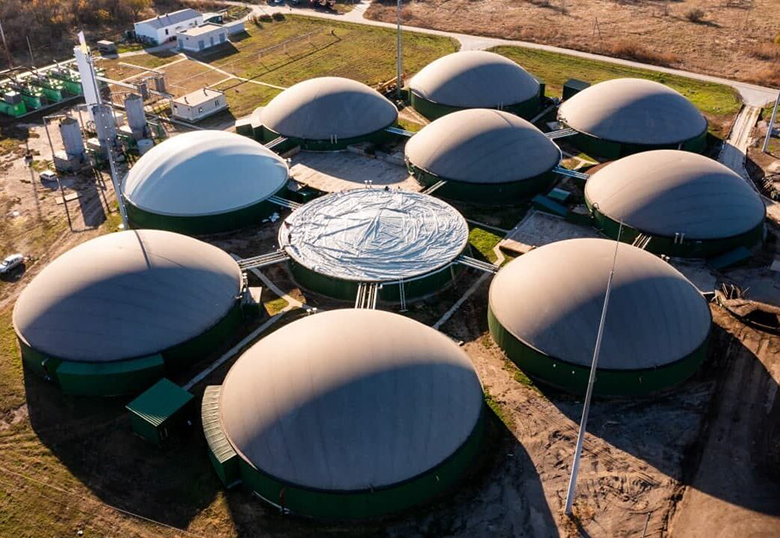
What Is PVC/PVDF Membrane Fabric for Double Membrane Gas Holders?
A double membrane gas holder normally uses at least two flexible technical textile layers: an outer membrane that keeps the structural dome shape and protects against the environment, and an inner membrane that expands or contracts while storing biogas. In some slab-mounted or dome systems, a bottom membrane or sealing skirt is also required.
More Than Waterproof Fabric
PVC/PVDF membrane fabric for gas holders is not ordinary PVC tarpaulin. It must combine high-tenacity polyester reinforcement, gas-barrier coating, stable adhesion, weldability, chemical resistance, UV stability and long-term dimensional control. The membrane is exposed to methane, carbon dioxide, humidity, possible hydrogen sulfide, condensate, heat, cold, wind and repeated movement.
DERFLEX focuses on the membrane material itself: base fabric design, PVC coating, PVDF surface direction, gas tightness, welding behavior, layer-specific specification and OEM repeatability for gas holder builders.
Who Should Use This Guide?
- Double membrane gas holder manufacturers selecting roll goods or fabricated panels.
- Biogas system integrators and EPC contractors preparing project specifications.
- Membrane fabricators checking welding, seam strength and replacement membrane requirements.
- Wastewater treatment, agricultural biogas and renewable energy buyers comparing material options.
- Distributors or OEM brands that need stable, repeatable PVC/PVDF membrane supply.
Choose the Membrane Fabric by Function, Not Only by Thickness
The most common mistake is using one generic fabric requirement for every part of the gas holder. A reliable system separates the functions of outer protection, inner gas containment, bottom sealing and reinforced connection zones.
Outer Membrane
Prioritize PVDF surface direction, UV resistance, dirt release, weathering durability, tensile strength, dimensional stability and resistance to rain, wind, snow and outdoor aging.
Inner Membrane
Prioritize gas tightness, low permeability direction, chemical resistance, flexibility, seam reliability and stable movement as the stored gas volume changes.
Bottom Membrane
For slab-mounted or independent dome systems, the bottom membrane should focus on sealing, foundation connection, anchoring accuracy, welded seam reliability and puncture resistance.
Seam & Edge Zone
Reinforced zones around clamping rails, keder, flanges, inspection windows, belts and seams should be considered early to reduce field installation risk.
Recommended Specification Direction for PVC/PVDF Gas Holder Membrane Fabric
Final values should be confirmed according to tank diameter, gas storage volume, pressure range, wind and snow load, climate, gas composition, welding method, local code and expected service life. DERFLEX can support custom development after reviewing your project brief.
| Selection Item | DERFLEX Custom Direction | Why It Matters for Double Membrane Gas Holders |
|---|---|---|
| Base Fabric | High-tenacity polyester woven fabric; yarn denier and weave density can be adjusted. | Provides tensile strength, tear resistance, dimensional stability and mechanical support for large welded membrane panels. |
| Coating System | PVC coated polyester, PVC/PVDF surface-coated membrane, upgraded lacquered PVC or project-specific gas-barrier structure. | Balances weldability, gas tightness, chemical exposure, outdoor durability, surface cleanliness and project cost. |
| Typical Weight | Common custom direction: 900–1500 g/m²; lighter or heavier structures can be discussed. | Weight affects strength, flexibility, handling, welding parameters and suitability for inner, outer or bottom membrane use. |
| Membrane Position | Outer membrane, inner membrane, bottom membrane, sealing skirt, reinforced edge zone or replacement membrane. | Each position has different priorities: weather protection, gas containment, foundation sealing or mechanical reinforcement. |
| Gas Tightness | Low gas permeability direction available by coating structure and test requirement. | Helps reduce methane loss, odor emission and unstable gas storage behavior. |
| Outdoor Resistance | UV-resistant PVC, PVDF surface option, anti-aging additives and weathering-resistant top finish. | Outer membranes must resist long-term sunlight, rain, dirt accumulation, temperature cycling and wind exposure. |
| Chemical Resistance | Biogas-oriented coating direction for moisture, condensate, organic vapor and possible H₂S exposure. | Inner membranes and covers may contact aggressive gases or condensate, making chemical compatibility important. |
| Welding Compatibility | HF/RF welding, hot-air welding, hot-wedge welding or project-specific seam testing depending on formula. | Large gas holders depend on welded seams; sample welding and seam checks should be confirmed before bulk production. |
| Optional Treatments | Flame-retardant option, anti-mildew, anti-wicking, low-temperature flexibility, custom color and OEM packaging. | Supports local safety requirements, climate adaptation, installation performance and repeat procurement programs. |
| Supply Form | Roll goods, customized width rolls, fabricated panels, reinforced strips, replacement membrane packages. | Allows gas holder builders and fabricators to control seam layout, logistics, installation planning and repeat orders. |
Quotation note: For accurate recommendation, please provide gas holder type, membrane layer, tank diameter, storage volume, gas composition, operating pressure, climate, wind/snow load, welding method, color, width, quantity and whether you need roll goods or fabricated panels.
How to Choose PVC/PVDF Membrane Fabric Step by Step
A professional purchasing brief shortens sampling time and reduces the risk of selecting a membrane that is strong on paper but mismatched to the real gas holder design.
Define the Gas Holder Type
Confirm whether the membrane is for a tank-mounted cover, freestanding double membrane gas holder, slab-mounted biogas dome, gas bag or replacement system.
Separate the Membrane Layers
Specify outer, inner, bottom and edge-zone requirements separately. The best outer membrane is not always the best inner membrane.
Confirm Gas & Pressure Data
Provide biogas composition, methane content, possible H₂S exposure, pressure range and expected gas volume movement.
Match Climate Exposure
Review UV level, temperature range, wind, rain, snow, dirt, industrial pollution and long-term outdoor maintenance expectations.
Verify Welding & Sampling
Confirm HF/RF, hot-air or wedge welding, then test sample welding, seam strength, folding behavior and gas-tight connection before bulk production.
PVC, PVC/PVDF and Ordinary PVC Fabric: Which Direction Should You Choose?
The right choice depends on membrane position, project life, climate, budget, gas composition and fabrication method. DERFLEX helps buyers choose by application rather than selecting only by price or thickness.
PVC Coated Gas Holder Fabric
A practical and widely used direction for gas holder membrane systems where weldability, flexibility and cost control are important.
- Suitable for inner membranes and general gas covers
- Good welding process compatibility
- Custom GSM, width and color available
- Best when project requirements are clear and tested
PVC/PVDF Surface Membrane
A stronger direction for exposed outer membranes where long-term weather resistance, appearance retention and surface durability are important.
- Recommended for premium outer membrane applications
- Improved UV, dirt and weathering direction
- Useful for long-service outdoor biogas projects
- Requires matched welding and surface testing
Ordinary PVC Waterproof Fabric
General waterproof fabric can be attractive by price, but it is normally not the right starting point for professional gas holder fabrication.
- May lack gas-barrier design direction
- Unclear biogas chemical resistance
- Possible mismatch in seam and edge zones
- Higher risk for gas loss or early replacement
Where DERFLEX PVC/PVDF Gas Holder Membrane Fabric Can Be Used
DERFLEX supports membrane material supply for renewable energy, wastewater treatment, agriculture, landfill gas, odor control and OEM flexible gas storage systems.
Double Membrane Gas Holders
Outer and inner membrane fabric for low-pressure biogas storage with flexible gas volume control.
Tank-Mounted Gas Holders
Membrane material for systems installed on anaerobic digesters, fermenters, wastewater tanks or storage tanks.
Ground-Mounted Biogas Domes
Bottom, inner and external membrane directions for independent dome-style gas storage structures.
Anaerobic Digester Covers
Flexible membrane cover material for gas collection, odor control, weather protection and heat retention.
Agricultural Biogas Plants
Membrane fabric for livestock manure, crop residue, food waste and farm-based renewable energy systems.
Municipal & Industrial Wastewater
Gas holder membrane material for sludge digestion, methane recovery, odor control and process gas buffering.
Manufacturing-Oriented PVC/PVDF Membrane Fabric Supply
DERFLEX is suitable for buyers who need membrane fabric, roll goods, custom material structure or fabricated panel support—not only a generic product description. We help connect engineering requirements with practical coated fabric production.
DERFLEX Advantages for Gas Holder Builders
- Layer-specific material recommendation for outer, inner, bottom and reinforcement zones.
- PVC/PVDF coated polyester fabric direction for biogas storage and outdoor membrane applications.
- Custom GSM, thickness, color, width, surface finish, flame-retardant and anti-wicking options.
- Support for HF/RF, hot-air and wedge welding direction according to buyer fabrication equipment.
- OEM packaging, sample approval and repeat supply coordination for gas holder manufacturers.
OEM Development Workflow
1. Requirement review: Gas type, tank size, membrane position, pressure range, climate, welding method and expected lifetime are reviewed.
2. Material structure proposal: DERFLEX recommends a PVC, PVC/PVDF or upgraded coated membrane direction based on the layer function.
3. Sample and welding check: The buyer checks coating surface, flexibility, welding behavior, seam strength and appearance.
4. Bulk supply: After approval, DERFLEX supports roll goods, customized width, packaging, labeling and repeat production.
Case Example: Replacing a Tank-Mounted Double Membrane Gas Holder Fabric
This example shows how DERFLEX helps turn project information into a more practical membrane specification.
Buyer Challenge
A membrane fabricator needs replacement material for a tank-mounted double membrane gas holder. The existing outer layer has aged under UV exposure, while the inner layer needs improved gas-tightness and more stable welding performance. The buyer wants to keep fabrication under its own control but needs a reliable coated fabric supplier.
DERFLEX Material Direction
DERFLEX can recommend a PVDF-surface direction for the exposed outer membrane, a gas-tight PVC coated direction for the inner membrane, and reinforced fabric for edge zones, inspection windows or clamping areas. The buyer confirms sample welding and coating behavior before bulk material supply.
The value is not only one roll of fabric. It is a clearer material standard, better layer matching, more predictable fabrication and a stronger basis for repeat gas holder projects.
Internal Links for Biogas Membrane Buyers
Explore related DERFLEX pages for gas storage, digester covers, PVDF surface membrane, flexible gas bags and technical membrane fabric selection.
Frequently Asked Questions
Practical answers for buyers comparing PVC/PVDF membrane fabric for double membrane gas holders.
What is the best membrane fabric for a double membrane gas holder?
The best choice depends on membrane position and project conditions. The outer membrane usually prioritizes PVDF surface direction, UV resistance and weathering durability. The inner membrane should prioritize gas tightness, chemical resistance, flexibility and welding reliability. Bottom membranes and edge zones may need reinforcement and foundation sealing performance.
Is PVC/PVDF membrane fabric better than ordinary PVC fabric?
For exposed outer membranes, a PVC/PVDF surface direction can offer stronger outdoor durability and appearance retention than ordinary PVC waterproof fabric. For inner gas storage layers, low gas permeability and weldability are more important than surface appearance alone. Ordinary PVC fabric should not be selected unless gas holder requirements are verified.
What is the difference between the inner membrane and outer membrane?
The outer membrane forms the visible dome shell and protects the system from UV, wind, rain, snow and dirt. The inner membrane stores methane-rich biogas and moves according to gas volume. Therefore, the outer layer needs outdoor durability, while the inner layer needs gas containment and chemical compatibility.
Which welding methods can DERFLEX membrane fabric support?
Depending on material structure and formula, DERFLEX can discuss membrane directions for HF/RF welding, hot-air welding or hot-wedge welding. Sample welding and seam testing are recommended before mass fabrication.
Can DERFLEX customize GSM, color and width?
Yes. DERFLEX can customize GSM, thickness, base fabric, coating structure, PVDF surface direction, color, roll width, flame-retardant option, anti-mildew, anti, -wicking and OEM packaging according to project requirements.
Does DERFLEX supply finished gas holders or membrane fabric?
DERFLEX focuses on coated membrane fabric and custom material supply. It supports gas holder manufacturers, membrane fabricators, EPC contractors and OEM biogas system suppliers that need roll goods, fabricated panels or project-specific membrane materials.
What information should I provide for a quotation?
Please provide gas holder type, membrane layer, tank diameter, storage volume, gas composition, working pressure, wind/snow load, project location, climate, welding method, color, width, quantity and whether you need roll goods or fabricated panels.
Can this membrane be used for anaerobic digester covers?
Yes, the suitable structure can be discussed for anaerobic digester covers, biogas domes, tank-mounted gas holders, lagoon covers, gas bags and other flexible low-pressure gas storage or collection systems.
Need PVC/PVDF Membrane Fabric for a Double Membrane Gas Holder?
Send DERFLEX your membrane layer, gas holder size, gas composition, pressure range, climate conditions and welding method. Our team will help recommend a practical PVC/PVDF membrane fabric direction for your project.