Scope & intended function
State what the tarp covers, protects, encloses or separates; whether it is static, mobile, retractable or repeatedly handled; and whether the purchase is a one-time project or repeat program.



A strong tarpaulin tender specification turns field conditions into measurable requirements that qualified suppliers can price on the same basis, manufacturers can reproduce, and inspectors can verify at sample, production and shipment stages.
Use this framework for PVC tarpaulin rolls, fabricated covers, truck and trailer tarps, industrial protection sheets, construction covers, agriculture programs and other specification-led B2B procurement.
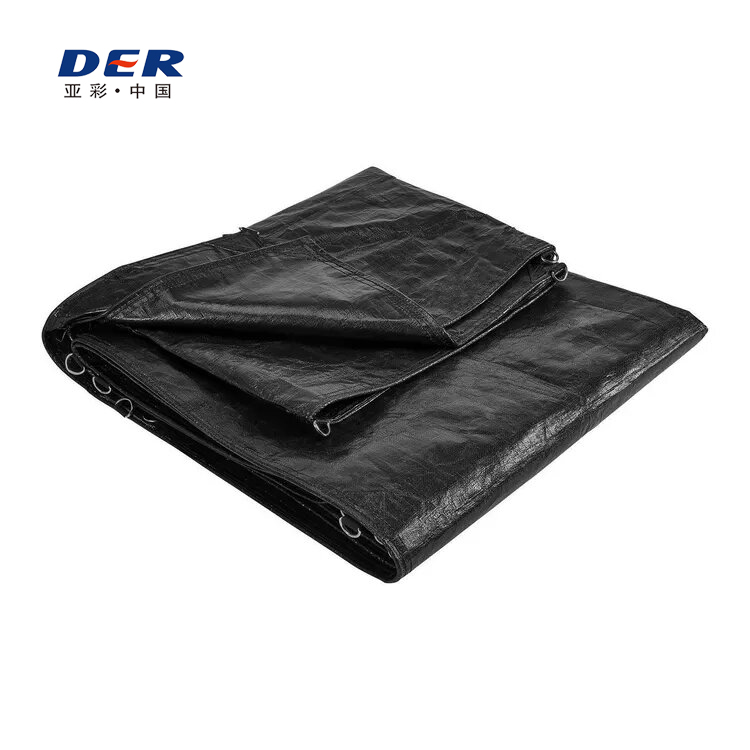
Material, seams, hems, reinforcement, hardware, marking, packing and acceptance evidence should be controlled as one procurement package.
A tarpaulin tender specification should define the end use, service conditions, supply format, material or performance requirements, finished dimensions and tolerances, seams and reinforcement, hardware, marking and packing, required test methods, inspection and acceptance rules, sample approval, bidder deviations and change control. Avoid vague phrases such as “heavy duty,” “waterproof,” “UV resistant” or “strong eyelets” unless the tender also states how those claims will be measured or approved.
Start with the job and the failure risks, then define the measurable product, fabrication and verification requirements. This prevents a tender from becoming a list of disconnected material numbers.
State what the tarp covers, protects, encloses or separates; whether it is static, mobile, retractable or repeatedly handled; and whether the purchase is a one-time project or repeat program.
Define rain, sun, wind, abrasion, cold, heat, oils, chemicals, dirt, folding frequency, tie-down loads, storage and cleaning conditions that influence construction.
Separate roll goods, cut panels, welded sheets and finished covers. Attach drawings when finished geometry, anchor locations, pockets, flaps or openings affect fit.
Specify the material family only when necessary. Otherwise state measurable performance outcomes and let qualified suppliers propose a construction with supporting evidence.
Control seams, hems, webbing, rope edges, corner patches, eyelets, D-rings, straps, printing and any interface with frames, rails, hooks or existing equipment.
Define approval samples, reports, inspection, acceptance, deviations, packing, marking, batch identification, shipment documents and change notification.
This is one of the fastest ways to reduce over-specification without creating loopholes. Mandatory lines protect fit, safety, performance or contract comparability; conditional lines apply only to certain projects; supplier-proposed lines invite technical optimization.
| Requirement area | Recommended status | What the buyer should write | Why it changes the bid |
|---|---|---|---|
| Application & service environment | Mandatory | End use, indoor/outdoor, dominant weather, wind/abrasion risk, handling cycle and contact surfaces. | Determines the material and reinforcement logic before price is compared. |
| Supply format | Mandatory | Roll goods, cut panels, welded sheet or finished cover, including finished dimension basis. | Changes conversion scope, labor, inspection, packing and unit-price basis. |
| Material family | Conditional | Prescribe PVC coated polyester when compatibility, welding, repair practice or existing system design requires it; otherwise allow qualified alternatives. | Prevents unnecessary restriction while protecting critical interfaces. |
| GSM / thickness | Conditional | State a value only when it is truly controlled. Otherwise specify performance and ask the supplier to state the proposed construction. | Nominal weight alone does not define tensile, tear, adhesion or hardware retention. |
| Strength / water / weather performance | Mandatory when critical | Property + method + unit + direction + minimum/maximum + specimen condition. | Turns marketing claims into contract acceptance criteria. |
| Finish, color and branding | Conditional | Color reference, gloss/texture, artwork revision, print position and tolerance/approval route. | Affects formulation, surface process, artwork and repeat-order consistency. |
| Technical optimization | Supplier proposal | Ask bidders to state the proposed material code, construction, justification and deviations. | Allows experienced manufacturers to improve manufacturability without hiding departures. |
A good requirement describes a subject, an outcome, the condition in which it applies, the measurement method and the acceptance limit.
Requirement = subject + “shall” + measurable outcome + operating / specimen condition + test or inspection method + acceptance limit + evidence required
“Supply a blue heavy-duty waterproof tarp with UV resistance and strong eyelets.”
“The finished cover shall meet Drawing [ID / Revision], use the approved coated-fabric construction, meet the minimum directional properties in Table [X], and include the defined perimeter reinforcement and hardware layout. Compliance shall be supported by the agreed sample, current technical data and inspection evidence.”
If alternatives are permitted, state the minimum performance and documentary evidence that an alternative must satisfy.
A catalog typical value is not automatically a contractual acceptance limit. State which status applies.
The tender, supplier proposal, drawing, sample, test report and purchase order should refer to the same controlled product revision.
For PVC coated tarpaulin, the base fabric, coating or lamination route, mass, thickness, adhesion, tensile and tear behavior, surface finish and environmental options work as a system. Avoid treating GSM as a complete quality grade.
| Field | Tender-writing direction | Acceptance evidence |
|---|---|---|
| Material identification | Product code, coated/laminated construction, base-fabric notation, surface finish, color and revision. | Current TDS + approved sample identity. |
| Mass / thickness | Nominal value plus tolerance only if commercially or technically controlled. | Agreed measurement method and lot inspection. |
| Tensile strength | State both directions where relevant, with method, unit and minimum value. | Test result linked to the supplied construction. |
| Tear resistance | State the specific tear method; different methods are not directly interchangeable. | Report with method, direction and specimen state. |
| Coating adhesion | Specify when delamination, folding, welding or long-term durability makes bond strength important. | Current method and agreed minimum. |
| Water resistance | State whether requirement applies to flat fabric, production seam, finished cover or field assembly. | Named method or defined leak test. |
| UV / weathering | Define exposure method, duration and retained property where long-term outdoor exposure is critical. | Relevant report for the ordered construction. |
| Low-temperature behavior | State the test, endpoint and temperature if cold folding or impact is a real risk. | Test result for the selected formulation. |
| Flame / regulatory requirement | Name the exact required standard/classification only where the project or destination requires it. | Current evidence matching the supplied configuration. |
For a deeper property-by-property purchasing framework, see DERFLEX’s tarpaulin technical specification guide and PVC tarpaulin material page.
A tender that specifies only fabric weight can still produce a weak finished cover. Concentrated loads often reach the tarp through seams, hems, grommets, D-rings and corner reinforcements.
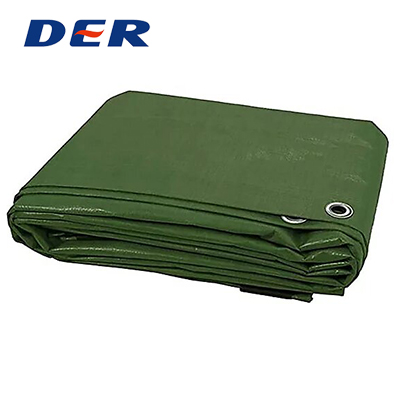
DERFLEX’s heavy duty tarps and industrial tarps pages provide additional context for application-specific material and fabrication decisions.
This separates “complies” from “we can offer something similar.” It also makes technical evaluation faster because every departure is visible before commercial comparison.
| Tender clause | Purchaser requirement | Bidder response | Evidence / reference | Deviation |
|---|---|---|---|---|
| 4.1 | Material construction and approved product code | Comply / Proposed alternative | TDS, sample ID | None / describe |
| 4.2 | Finished mass / thickness where controlled | State offered nominal + tolerance | Data sheet / test result | State difference |
| 5.1 | Tensile requirement, MD/CD | State offered minimum | Test report + method | State difference |
| 6.3 | Hem + webbing construction | Comply / attach drawing | Fabrication drawing | State difference |
| 6.4 | Hardware type and spacing | Comply / state offered detail | Sample + drawing | State difference |
| 8.2 | Inspection / document package | Included / excluded | List supplied records | State difference |
Inspection should verify the same product that was tendered, sampled and approved. The most useful control chain links product code, document revision, sample identity, test evidence, production lot and shipment marking.
Identify the sample or prototype, color/finish approval, drawings, product code and any required testing before bulk production is released.
Define dimensions, appearance, seams, edge construction, hardware, quantity, marking, packing and agreed property checks.
State how samples are selected, what happens after a nonconforming result and who bears reinspection or retesting responsibility.
Require a batch or lot identity that connects the shipped goods to inspection records and relevant technical evidence.
Require written approval before changing construction, coating formulation, base fabric, finish, color, hardware, production route or critical subcontracted process.
List the records required with shipment: packing list, inspection report, agreed certificates/reports, labels, photos or other project-specific documents.
Copy this structure into an RFP, ITB, ERP sourcing event or technical annex. Replace all bracketed text with confirmed project requirements. Delete non-applicable clauses rather than filling them with arbitrary values.
TARPAULIN TENDER / TECHNICAL SPECIFICATION
Document No.: [ ]
Revision: [ ]
Issue Date: [ ]
Project / Program: [ ]

1. SCOPE
Supply of [roll goods / cut sheets / welded panels / finished covers] for [application].
Intended use: [ ]
Quantity / estimated call-off quantity: [ ]
Destination / delivery location: [ ]

2. SERVICE CONDITIONS
Indoor / Outdoor: [ ]
Rain / water exposure: [ ]
UV / sun exposure: [ ]
Wind / flutter / tie-down condition: [ ]
Abrasion / sharp-edge risk: [ ]
Temperature / cold-flex requirement: [ ]
Chemical / oil / mildew exposure: [ ]
Handling / folding / rolling frequency: [ ]
Expected service / reuse cycle: [ ]

3. SUPPLY FORMAT & DRAWINGS
Supply format: [ ]
Finished size or roll size: [ ]
Dimensional tolerance: [ ]
Measurement basis: [ ]
Drawing No. / Revision: [ ]
Openings / pockets / flaps / sleeves: [ ]

4. MATERIAL CONSTRUCTION
Material family: [PVC coated polyester / other / supplier to recommend]
Coating / lamination route: [ ]
Base fabric / yarn / weave requirement (if controlled): [ ]
Nominal GSM / tolerance (if controlled): [ ]
Nominal thickness / tolerance (if controlled): [ ]
Color / finish: [ ]
Product code / revision after award: [ ]

5. PERFORMANCE REQUIREMENTS
For every mandatory property state method, unit, specimen state, direction and acceptance limit.
Tensile strength: [ ]
Tear resistance: [ ]
Coating adhesion: [ ]
Water resistance / leak requirement: [ ]
UV / weathering: [ ]
Low-temperature behavior: [ ]
Abrasion / puncture (if applicable): [ ]
Flame / regulatory requirement (if applicable): [ ]
Other project-specific requirement: [ ]

6. FABRICATION & HARDWARE
Seam / welding / sewing requirement: [ ]
Seam location / overlap / strength or leak requirement: [ ]
Hem / perimeter reinforcement: [ ]
Webbing / rope edge: [ ]
Corner / wear patches: [ ]
Grommet / eyelet material, size and spacing: [ ]
D-rings / straps / buckles / pockets: [ ]
Hardware corrosion requirement: [ ]

7. WORKMANSHIP & VISUAL ACCEPTANCE
Unacceptable defects: [holes / open welds / delamination / exposed reinforcement / damaged coating / loose hardware / contamination / other]
Color / gloss / print approval basis: [ ]
Finished geometry / symmetry requirement: [ ]

8. MARKING & PACKAGING
Product / batch marking: [ ]
Logo / artwork file and revision: [ ]
Fold / roll method: [ ]
Individual packing: [ ]
Carton / bale / pallet requirement: [ ]
Shipping marks / barcode / labels: [ ]
Container / loadability information required: [Yes / No]

9. SAMPLE & APPROVAL
Pre-production sample required: [Yes / No]
Sample quantity / size: [ ]
Approval points: [material / color / dimensions / seam / hardware / print / packing]
Golden sample ID after approval: [ ]

10. TESTING, INSPECTION & ACCEPTANCE
Required standards / test methods: [ ]
Sampling plan: [ ]
Inspection stage: [pre-production / in-process / pre-shipment / third party]
Acceptance limits: [ ]
Retest / nonconformance rule: [ ]
Required shipment evidence: [ ]

11. BIDDER COMPLIANCE RESPONSE
Bidder shall submit a line-by-line compliance matrix and clearly identify every deviation.
Proposed product code / construction: [ ]
Technical data sheet: [attached / pending]
Relevant test evidence: [attached / pending / not applicable]
Fabrication drawing: [attached / pending]
Sample route / timing: [ ]

12. COMMERCIAL / DELIVERY INTERFACE
Unit basis: [per m² / per roll / per piece / other]
Packing included: [Yes / No]
Freight basis / Incoterm: [ ]
Delivery lot plan: [ ]
Required shipment date / arrival date: [ ]

13. CHANGE CONTROL
No change to the approved material construction, coating system, base fabric, finish, color, hardware, fabrication method or critical supplier process shall be made without written purchaser approval.

END OF TECHNICAL SPECIFICATION
The tender should name the exact standard only when it is relevant to the ordered product and required acceptance. Always confirm the edition and method written into the contract.
PVC-coated fabrics for tarpaulins — Specification. Useful as an overall tarpaulin material specification reference when the tender is genuinely based on this scope.
Official ISO referenceDetermination of tensile strength and elongation at break for rubber- or plastics-coated fabrics.
Official ISO referenceDetermination of tear resistance by constant-rate-of-tear methods. State the actual method used in the tender.
Official ISO referenceDetermination of coating adhesion strength of coated fabrics. Relevant where bond integrity and delamination risk matter.
Official ISO referenceCurrent ASTM test-method framework for coated fabrics, covering multiple physical and mechanical properties including strength, tear, water resistance, adhesion and seam-related tests.
Official ASTM referenceFire, chemical, environmental, recycled-content, marking, packaging or local regulatory requirements should be written exactly as required by the purchaser or destination market—never assumed from a generic tarp description.
Different suppliers may interpret the phrase through weight, yarn, coating or finished construction. Define the application and measurable minimums instead.
Finished mass does not prove yarn strength, weave density, coating adhesion, UV behavior or edge retention.
Separate material properties from welding, hems, reinforcement, hardware and finished dimensions.
A number loses procurement meaning when specimen direction, units, conditioning and method are unknown.
Over-specification can increase cost or reduce manufacturability. Mark noncritical construction fields as supplier-proposed where appropriate.
If bidders do not list departures line by line, “complies” can hide a different construction or evidence basis.
Without a coded reference, a good pre-production sample may not be connected clearly to the production lot or repeat order.
Material or process changes can alter behavior even if the nominal GSM, color and size remain unchanged.
Fold method, bale/carton size, pallets, shipping marks and loadability can materially affect landed cost and receiving operations.
These related DERFLEX pages cover the technical and supplier-side decisions that sit around the tender document.
It should define the end use, service conditions, supply format, material or performance requirements, finished dimensions and tolerances, fabrication, reinforcement, hardware, marking, packing, testing, sample approval, inspection, acceptance rules, bidder deviations and change control. Critical numbers should include a unit, method and acceptance basis.
Use GSM when the project intentionally controls finished mass or must match an existing approved product. For many industrial applications, combine any GSM requirement with performance criteria such as tensile, tear, coating adhesion, water resistance, weld/seam behavior and finished-edge construction. Weight alone is not a complete performance specification.
State what must resist water and how it will be checked. A flat coa, ted fabric, a welded production seam and a finished cover are different test objects. Define the relevant method or leak-test procedure and the acceptance result instead of using only the word “waterproof.”
State hardware material, internal or hole size, center-to-center spacing or exact coordinates, perimeter reinforcement, corner treatment and any retention requirement when attachment load is critical. Spacing alone does not define edge strength.
An RFQ collects the commercial and technical information needed for suppliers to quote. A formal tender specification is usually more controlled: it defines mandatory requirements, acceptance evidence, deviations, drawings, inspection and change control so bids can be evaluated on a common basis.
They can be allowed when the material is not a fixed interface or regulatory requirement. State the minimum performance, required evidence and approval process, and require the bidder to identify the alternative clearly in the compliance matrix.
Depending on project risk, request the final technical data sheet, identified approved sample, signed drawings or size schedule, relevant test reports, color/finish approval, fabrication trial, packing approval and final specification revision. Only require certifications that are genuinely needed and can be verified.
DERFLEX can review the application, material direction, dimensions, fabrication scope, hardware, test requirements and packing information to clarify what can be quoted. Final tender eligibility, regulatory obligations, acceptance criteria and contractual requirements remain the purchaser’s responsibility.
Send the tender file, drawings and quantity. DERFLEX can review the material and fabrication scope before quotation so technical assumptions, sample needs and documentation requirements are visible early.