Condensation under a tight cover
Warm air meets a cooler covered surface, moisture condenses and the underside remains damp. Ventilation gaps, slope and application design can be as important as the anti-fungal formulation.




DERFLEX develops mildew resistant tarps and anti-mildew PVC tarpaulin for humid storage, agriculture, transport, industrial equipment and outdoor cover programs. Material formula, surface cleanability, seam layout, drainage and storage practice are considered together so buyers can specify a more dependable cover.
Fungal growth needs moisture and a usable nutrient source. The tarp surface may be synthetic, yet dust, plant residue, oils, feed particles, salt deposits or packaging contamination can remain on it. When these residues stay damp in a folded or poorly ventilated area, visible mildew can develop on the contamination layer.
A waterproof sheet keeps rain from passing through the fabric. It does not automatically remove condensation, drain standing water or keep a dirty surface dry during storage.
Warm air meets a cooler covered surface, moisture condenses and the underside remains damp. Ventilation gaps, slope and application design can be as important as the anti-fungal formulation.
Flat areas, reverse laps, stitched pockets and deep creases can hold water after rain or washing. Weld direction and runoff planning should be reviewed before fabrication.
Hay dust, soil, food residue, leaves and process grime can support growth. A smoother, easy-clean PVC finish helps maintenance, but cleaning frequency still depends on the real environment.
Even a mildew resistant tarp should be cleaned and dried before long storage. A wet folded bundle creates a dark, humid microclimate and can also cause odor, staining and hardware corrosion.
A useful specification connects the coated fabric to the finished cover and its maintenance routine. DERFLEX can review the following layers for roll supply, cut panels or custom finished tarps.
The woven base provides tensile support and dimensional stability. Yarn system and fabric construction are selected around cover size, wind exposure, folding and handling stress.
The PVC layer creates the waterproof, washable surface. An anti-fungal package can be discussed for humid, agricultural, marine-adjacent or wet-storage conditions.
A smooth or lacquered finish can make soil and biological residue easier to remove. Gloss, matte, embossing and print requirements should be balanced with cleanability.
Welded seams, properly oriented overlaps, reinforced hems and planned hardware can reduce water entry and avoid pockets where dirt and moisture collect.
Slope, airflow, periodic washing and full drying remain part of performance. The finished cover should be designed for the way it will actually be installed, removed and packed.
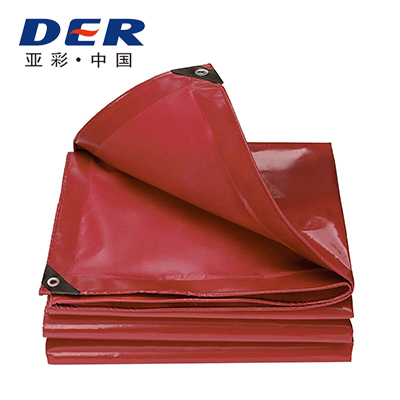
DERFLEX can supply coated fabric rolls, welded panels or finished tarp covers with application-matched surface, weight and reinforcement.
Mildew resistance does not make every tarp material interchangeable. Decide whether the priority is a waterproof barrier, breathability, temporary economy or continuous airflow.
| Material route | Moisture behavior | Useful fit | Buyer caution |
|---|---|---|---|
| PVC-coated polyester | Waterproof coated surface; optional mildew-resistant and easy-clean direction; heat-weldable. | Industrial covers, farm storage, transport tarps, machinery, humid warehouses and OEM finished covers. | A sealed cover can trap condensation. Plan slope, air exchange and drying access. |
| Treated canvas | Breathable and commonly treated for water and mildew resistance, but many grades are water-resistant rather than fully waterproof. | Equipment or materials that benefit from evaporation and reduced condensation. | Cotton can absorb moisture, shrink and require more drying care; treatment and color transfer should be checked for sensitive surfaces. |
| PE / poly tarp | Lightweight waterproof film structure with rot-resistant synthetic fibers. | Short-term covers, seasonal use and price-sensitive temporary protection. | Thin grades may wear faster at folds, edges and tie-down points during repeated industrial use. |
| Mesh tarp | Allows airflow and releases heat and vapor; does not provide a full rain barrier. | Shade, ventilation, wind reduction and applications where moisture escape matters more than rain exclusion. | Not suitable when the covered goods must remain dry during rain. |
The ranges below are inquiry directions, not a universal promise for every construction. Final values should be confirmed against application, quantity, processing route and approved sample.
PVC-coated or PVC-laminated polyester; commonly discussed from approximately 350–1200 gsm across light, medium and heavy-duty routes. Base cloth, coating mass and finish must be reviewed together.
Anti-fungal formulation, smooth easy-clean surface, optional lacquer and outdoor UV package can be evaluated according to climate, expected wet time and cleaning routine.
Roll width, cut panel or finished size; roof pitch, seam direction, overlap and low points should be planned so water is directed away rather than collected.
Welded or sewn hems, webbing, rope-in-hem, corner patches, grommets, D-rings, straps and pockets can be positioned around actual tension and access points.
Hot-air welding, high-frequency welding, sewing or combined construction. Trial settings should confirm coating response, seam appearance and peel behavior before bulk fabrication.
Color matching, logo printing, labels, folding method, cartons, woven bags, pallet plan and private-label marks can be aligned for distributors and OEM product programs.
The need is strongest where high humidity, repeated wetting, biological residue and folded storage occur together.
Farm dust and plant residue can remain on a tarp after use. Specify cleanable surfaces, runoff, reinforced edges and a drying routine. Confirm any direct food or feed contact requirement separately.
Tropical warehouses and outdoor staging areas need covers that tolerate rain, condensation and repeated handling. Access flaps or ventilation strategy may help reduce trapped vapor.
Road spray, dirt and folding can keep surfaces damp. Washable PVC, stable welding, edge reinforcement and a packing method that allows drying are practical priorities.
Factories, recycling yards and water-treatment areas may combine moisture with process residue. Describe chemicals, oils, temperature and cleaning agents when requesting material advice.
Humidity, salt deposits and condensation make drainage and rinse access important. Material compatibility with painted or polished surfaces should be reviewed before direct contact.
Large covers need correct roof pitch, tension and ventilation. If flame-retardant performance is also required, state the applicable project standard before formula selection.
A clear purchase specification is more useful than a vague “mildew-proof” claim. Align the material, sample, test language and finished-cover details before the order is released.
State climate, indoor or outdoor use, cleaning interval, contact residues, wet duration, storage method and expected service conditions.
For synthetic polymeric materials, ASTM G21 or ISO 846 may be discussed. Confirm the applicable edition, specimen, conditioning, rating and acceptance criteria with the supplier and laboratory.
Where practical, evaluate the approved coating and top finish—not only a generic raw material. Printed, welded or contaminated surfaces can behave differently.
Check surface texture, staining, cleaning-agent compatibility and whether dirt is removed without damaging the coating or print.
Approve seam direction, pocket details, hems, access flaps and installation slope. A material test does not validate poor drainage geometry.
Retain an approved color, surface, handle and construction sample with the signed specification for repeat-order comparison and incoming inspection.
Maintenance does not replace a suitable material, but it strongly affects surface appearance and odor in high-humidity service.
Brush off soil, leaves, feed dust and loose process debris before washing.
Use a compatible mild cleaner and soft tools; avoid unapproved solvents or aggressive abrasion.
Pay attention to hems, seam overlaps, hardware zones and creases where residue collects.
Allow the cover to dry fully with airflow before rolling, folding or placing it in packaging.
Keep the bundle off wet floors, away from leaks and protected from dirty or biologically active materials.
DERFLEX supports B2B buyers who need a mildew-resistant tarp program tied to real fabrication and repeat-order requirements. Supply can be discussed as roll material, cut panels or finished custom tarps.
Discuss Your ApplicationApplication matching: humidity, contaminants, cover geometry, handling and service target reviewed before specification.
Custom material direction: GSM, base fabric, coating, surface, color, width and functional treatments.
Finished tarp planning: welding, reinforcement, hems, grommets, webbing, openings and runoff details.
OEM supply: labels, logo, packing, shipping marks and repeat-order specification control for distributors and brands.
Use these six pages to compare the base tarp material, waterproofing, UV exposure, farm applications and custom fabrication options around a mildew-resistant requirement.
Clear answers for importers, distributors, fabricators, agricultural suppliers and industrial cover buyers.
A mildew resistant tarp is a cover whose material and surface are selected or treated to reduce susceptibility to fungal growth under defined conditions. The term should not be interpreted as an unlimited guarantee: dirt, organic residue, standing water and wet storage can still support surface growth.
PVC-coated polyester does not behave like an absorbent natural-fiber cover and can provide a smooth, washable surface. However, additives and surface contamination can affect fungal growth. For demanding humid use, discuss an anti-fungal formulation, test requirement and cleaning plan rather than relying on the base polymer name alone.
It depends on the moisture route. Treated canvas is breathable and can reduce condensation, but ma, ny canvas tarps are water-resistant rather than fully waterproof and require thorough drying. PVC-coated polyester is a stronger route when a waterproof, washable and weldable surface is needed, provided ventilation and drainage are planned.
DERFLEX can discuss custom PVC tarpaulin routes for humid environments, including material weight, coating formulation, surface finish, color, width, finished size, seams, reinforced edges, grommets, printing and OEM packaging. Feasibility and final performance requirements should be confirmed during sampling.
ASTM G21 is used to evaluate the effect of fungi on synthetic polymeric materials, while ISO 846 includes methods for evaluating deterioration of plastics due to microorganisms. Buyers should agree on the standard edition, specimen, conditioning, evaluation method and acceptance criteria before testing. A laboratory result does not replace real-use drainage and maintenance.
Remove organic residue, clean the surface with compatible products, rinse folds and hems, and dry both sides fully. Roll or fold only when dry, then store off damp floors in a clean, ventilated area away from leaks and contaminated goods.
Send the application, indoor or outdoor environment, climate and humidity, contact residues, finished size or roll width, target GSM, color, quantity, seam and edge details, grommet spacing, expected test requirement, packaging and destination. Photos or drawings help DERFLEX review drainage and water-trap risks.
Share the cover environment and DERFLEX can review a practical material, surface, seam and supply route for your mildew resistant tarp project.