Custom Vinyl Box Covers for Equipment & Pallets | DERFLEX
Update:2026/10/29 18:40:58 Views:
Coated fabrics · Custom industrial covers
Fitted protection / Drawing-based OEM supply
Custom Vinyl Box Covers for Industrial Equipment & Pallets
Specify a cover that fits the equipment, opens where operators need access and puts reinforcement at the contact points. DERFLEX supports custom vinyl box covers using PVC-coated polyester, with material rolls, cut panels or finished covers defined in the quotation. For equipment OEMs, industrial distributors and pallet-cover buyers, the starting point is a clear drawing: maximum object dimensions, finished internal size, lower-edge position, seam layout and closure direction. Send a sketch, photographs and your quantity breakdown to develop a project-specific specification.
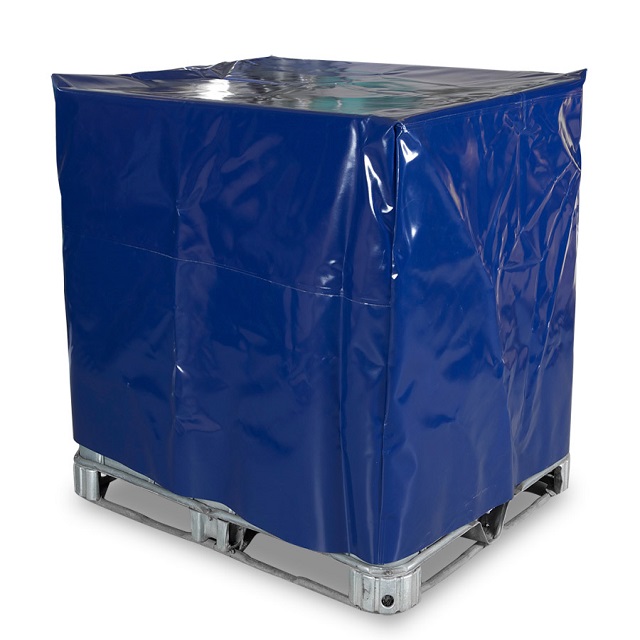
Fitted-cover product reference from DERFLEX’s website. The visible pallet base and formed corners illustrate why the lower edge and object profile need separate dimensions.01 / Define the order
One cover specification, from the object to the finished assembly
A custom vinyl box cover is a shaped protective hood made from joined panels rather than a loose sheet folded around corners. In this application, vinyl normally refers to a PVC-coated textile with a reinforcing polyester base. A familiar configuration covers the top and four vertical faces, leaving the underside open. The drawing must still identify every covered face and opening.
DERFLEX’s equipment-cover supply includes coated material, fabricated panels and custom covers. State which of these you need: a roll-material quote does not include cover fabrication or hardware. For other panel arrangements, review the box-shaped tarp configuration guide.
Equipment OEMs & distributors
Develop a defined cover for a repeat machine model, storage cabinet or rectangular assembly. Record the model revision, protrusions and access routine so the same description can support later orders.
Pallet & returnable-packaging buyers
Specify the packed load envelope, not just the pallet footprint. Include top caps, corner boards, straps and any bulging packaging. For load-handling and reuse considerations, see reusable pallet covers.
Separate the object envelope from the finished internal size
Measure the object first. Agree the cover size second. Identify the front and use the same orientation on photographs, sketches and the order drawing. A nominal cabinet size or empty pallet dimension can miss the handle, latch or packaging edge that controls the actual fit.
On smaller screens, swipe within the table to view all columns.
Dimension schedule for a rectangular fitted cover — use mm and state the measurement condition
Drawing field
What to record
What the approval must resolve
Object L × W
Maximum outside length and width, including protrusions and packaging.
Whether every installation fits within the recorded envelope.
Object height
Vertical distance from the highest point to a named reference line.
Whether the cover stops at the deck, above the floor or at another feature.
Finished internal L × W
The usable inside size of the assembled cover, with closures in the agreed position.
Fit clearance, dimensional tolerance and how the flexible cover is measured.
Finished side drop
Distance from the agreed top reference to the finished lower hem.
Hem position without dragging or obstructing fork pockets and controls.
Opening coordinates
Width, height and offsets from named edges; front-view orientation.
The clear usable opening after overlaps and closures are installed.
Agree ease without double counting it
Fitting ease is the space needed to install and remove the cover. It differs from manufacturing tolerance, which defines acceptable variation in the finished size. Neither is the seam allowance used to cut the panels. If a buyer has already added ease, label that explicitly so it is not added twice.
Check the path onto the object
A cover may fit in its final position yet fail to pass over an upper handle or side projection. Mark the largest profile encountered during installation. If the hood cannot be lowered vertically, review a split or opening side instead of simply increasing every dimension.
A useful approval question: “Can the agreed smallest acceptable cover fit the largest permitted equipment envelope?” Record the answer through a physical fit trial or an agreed checking method. Do not choose a universal clearance from a generic size chart.
03 / Construction & access
Specify the seam and the opening together
Start with the exposure and the working routine. The material specification, panel joins and closure detail need to support the same requirement. Review PVC-coated fabric construction for the material route; the completed cover needs its own assembly assessment.
Seam layout
Identify roof joins, vertical corners, intersections and hardware attachments on the drawing. Where welding is selected, agree a compatible fabric and process, the finished joint configuration and the inspection basis. Where sewing is used, assess needle penetrations against the expected exposure.
Keep high-contact locations visible in the review. A corner seam running directly over a sharp equipment edge can face repeated rubbing during removal, even when the cloth itself is substantial.
Access layout
Mark the face to open, its clear dimensions and the direction of movement. A side zipper, lift-up flap or opening panel changes how workers install the cover and reach the equipment. Show closure ends, any rain overlap and where the open panel rests.
Check clearance around hinges, latches and nearby equipment. Give operators a usable opening without requiring them to pull against the main panel or drag the hem across the floor.
A closure is not automatically watertight. For outdoor storage, consider runoff at the top of the opening and at its lower ends. For indoor dust protection, practical access and cleaning may take priority. Describe the required protection condition rather than specifying a zipper alone.
Match the opening to the operating task
Operator task
Detail to review
Check on the sample
Cover removed completely between uses
Open-bottom hood with an agreed skirt and fixing arrangement.
Installation reach, snagging and removal clearance.
Access to one face without removing the hood
Zipper or flap arrangement located on the access face.
Opening size, closure operation and exposure around the edges.
Repeated reading of a label or instrument
A defined inspection opening or compatible window detail, if suitable.
Visibility, actual position and the joint around the insert.
Little overhead installation clearance
An opening side or wrap-around construction for review.
Whether installation is possible in the actual storage position.
04 / Reinforcement plan
Put extra material where contact and tension occur
Specify reinforcement by location and purpose. “Reinforced corners” alone does not say which corner, which face or how far the patch extends. Annotate the equipment photograph and transfer those locations to the cover drawing.
Contact & abrasion
Map upper corners, metal edges, bands and any part that touches the cover during installation. Discuss local wear patches and separate edge protection where needed. Added cloth should not be treated as a cure for an unprotected sharp edge.
Closure ends & handholds
Check where a zipper terminates or a flap is pulled repeatedly. Identify whether a tab is for positioning, fastening or handling. A convenient tab does not establish a lifting capacity for the load beneath it.
Hem & fixing zones
Place grommets, webbing or straps where usable anchors actually exist. The reinforcement should distribute the intended cover tension into the panel. Give hardware positions as offsets from a named datum; do not leave critical locations to an unspecified “regular spacing.”
Lower-edge clearance
Keep the hem and loose straps clear of fork-entry zones, wheels and the floor where required. A cover protects the outside of the load; pallet stability and cargo restraint remain separate requirements.
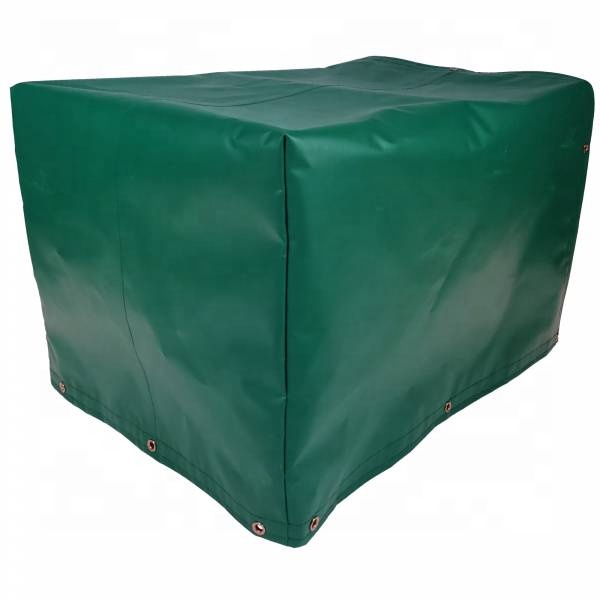
Second DERFLEX website product reference: lower-hem eyelets and a formed corner are visible. The photograph does not establish hardware strength, fabric grade or a weather rating.05 / Quote specification
Compare the full cover build, not fabric weight alone
A heavier coated textile may change handling and fold bulk without correcting a poor opening or an exposed seam. Ask each quotation to describe the same material, geometry and fabrication scope. The following is a purchasing schedule, not a stock-grade data sheet.
Fields to settle in the quotation and approved drawing
Item
Specification direction
Evidence or confirmation
Material
PVC-coated polyester reference; surface and color; project-required mass or thickness.
Grade-specific technical information and approved material sample.
Fit
Finished internal dimensions, side drop, datum and tolerance.
Agreed measurement method and fit check on the relevant object.
Assembly
Panel layout, seam method, openings, overlaps and hem construction.
Drawing details and the corresponding sample construction.
Reinforcement & hardware
Patch extent, attachment detail, hardware type and location.
Marked reinforcement map and functional review.
Required performance
Actual exposure, cleaning routine and any specified test requirement.
Report for the applicable material or assembly, with its method and conditions.
Order control
Size codes, markings, quantity split, packing and drawing revision.
Approved order schedule and retained sample reference.
Where a test result matters, identify the sample, material grade, test method and acceptance criterion. A material report does not by itself establish the performance of the finished openings or installation. For coating, strength or weathering requirements, request the applicable evidence during specification review.
06 / First article to repeat order
Approve a reference that the next batch can follow
Before a bulk order, agree what will be checked and who will record acceptance. Treat the sample as a physical reference for a defined drawing revision. A good fit on one unit is useful only if that unit represents the equipment or packaging variation in the program.
A / Geometry
Install on the relevant object
Check the largest specified profile, side drop and closure position. Record tight areas, excess folds and interference. Include the measurement condition when recording flexible dimensions.
B / Working routine
Open, remove & refit
Use the intended installation direction and normal working access. Check whether operators can reach closures and whether the cover catches at handles, corners or nearby structures.
C / Construction
Inspect the agreed details
Match seams, local patches, hems and hardware to the drawing. If water exposure is a purchase requirement, agree an assembly assessment that reflects the installed condition.
D / Order reference
Freeze the approved revision
Retain photos, drawing, material reference, markings and packing instructions. Record any accepted deviations. Recheck fit when the equipment, packaging or cover construction changes.
For a multi-size OEM program, build a size schedule with a separate reference for each geometry. Sharing a color or material does not establish that two equipment models can use the same pattern. Discuss the required supply stage through DERFLEX custom tarp manufacturing.
07 / Before you order
Account for the conditions around the cover
Outdoor storage & moisture
Show how the installed top will shed water; avoid unsupported low pockets. Distinguish external leakage from condensation underneath. Moisture-sensitive contents may need a separate packaging or ventilation plan. A fitted outer hood alone does not control humidity.
Equipment state & cleaning
Describe whether the asset is stored, cooling or in service. Confirm suitability before enclosing operating equipment, hot surfaces or ventilation paths. Agree a compatible cleaning method, dry the cover before folded storage and inspect high-wear areas between uses.
08 / Purchasing brief
Send enough detail for comparable quotations
Start with an annotated photo, the true object dimensions, storage environment and quantity by size. Add the preferred material if known; otherwise describe the handling routine and protection required. Include the destination and planned project date so feasibility and delivery arrangements can be reviewed.
Geometry: object envelope, desired hem line, protrusions, front orientation and installation path.
Access: opening location, usable opening size, closure direction and inspection needs.
Build: material direction, color, seam requirements, wear zones and fastening positions.
Approval: sample quantity, fit-review method, required documents and acceptance conditions.
Order: quantity per size, logo or labels, packing, destination and delivery requirements.
Material usage, roll-width utilization, seam length, access features, reinforcement and hardware all affect the quotation. Small runs across many sizes may involve different pattern and setup work from a repeat order for one approved model. MOQ, sample terms, production schedule and commercial conditions are established in the project quotation.
09 / Buyer questions
Custom vinyl box cover FAQ
What information is needed to quote a custom vinyl box cover?
Send the maximum object length, width and height, a photo or sketch, the desired lower edge, storage conditions and quantity by size. Mark access panels, protrusions and available attachment points. Label dimensions as object measurements or required finished internal dimensions.
How much clearance should I add to the cover dimensions?
There is no universal allowance. Installation direction, material stiffness, protrusions and closure construction all affect clearance. Submit the true object dimensions first, then agree the finished internal dimensions and tolerances on the drawing. Verify them with a fit sample.
Are welded vinyl box covers completely waterproof?
A waterproof coated fabric and a suitable welded seam can support rain protection, but the complete cover also has openings, corners, hems and an installation condition. Specify the required water-exposure assessment for the finished cover rather than assuming a fabric result proves the whole assembly.
Can a fitted cover have a zipper or an opening side?
Access zippers, flaps and hook-and-loop details can be reviewed for the project. Define the opening position, clear opening size, operating direction and required overlap. For outdoor use, assess rain paths around the closure and its ends.
Can I order roll fabric or cut panels instead of finished covers?
DERFLEX supports coated fabric rolls, cut panels and finished custom covers through its equipment-cover supply. State the required supply format in the RFQ so material, fabrication, hardware and packing are quoted against the same scope.
What should be approved before a repeat OEM order?
Retain the approved drawing revision, material reference, finished dimensions, access layout, reinforcement map, hardware positions, markings and packing specification. Review changes to the equipment model before reordering; a model name alone does not establish an unchanged fit.
DERFLEX · Custom coated fabrics and industrial covers. Final supply follows the agreed quotation, drawing and approved specification.



 Coated fabrics · Custom industrial covers