


 Technical materials / PE tarps
Heavy-Duty Polyethylene Tarp for Bulk & Custom Orders
Choose a heavy-duty polyethylene tarp around the cover you need to receive: its finished dimensions, woven reinforcement, coating, seams and attachment points. DERFLEX offers PE tarpaulin materials and custom tarp options for distributors, OEM buyers and businesses protecting stored goods, equipment and work areas. Share your application, quantity and a drawing or reference sample to discuss a suitable construction. Put GSM, measured thickness, edge details and exposure requirements into the same specification so that bulk orders can be compared and inspected consistently.
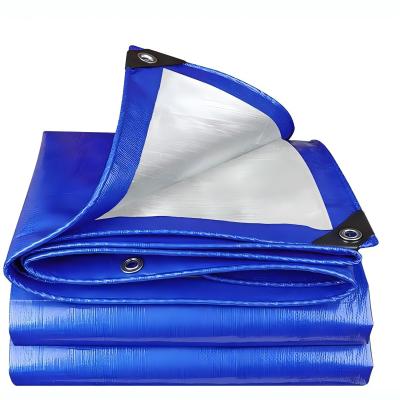
- Material
- Woven HDPE with LDPE coating
- Coverage
- Usable finished size + tolerance
- Finishing
- Hem, corner and eyelet layout
- Verification
- Agreed sample + acceptance criteria
Discuss material rolls or a finished tarp separately. Installation structures and site anchoring need their own specification.
What makes a polyethylene tarp heavy duty?
A heavy-duty polyethylene tarp is a reinforced PE cover whose fabric, coating, edges and fittings are selected for its intended handling and exposure. The woven core supports the sheet, while the coating provides the water barrier. The words “heavy duty” do not replace measurable requirements for the complete tarp.
Use the table below as a purchase specification framework. It identifies what to agree with DERFLEX for the selected construction; it is not a list of stocked grades or certified test results. For the wider material family, see DERFLEX polyethylene tarpaulin.
On small screens, scroll the table horizontally to compare all fields.
| Specification field | What to put in the order | What to check on the sample |
|---|---|---|
| Construction | Woven HDPE core with LDPE coating; solid sheet | Material identity and coating continuity |
| Mass per area | Selected GSM in g/m², with tolerance and sampling basis | Body fabric separately from hems and hardware |
| Thickness | Measured value in mm or mil, tolerance and method | Representative body locations, excluding folded edges |
| Dimensions | Finished length × width; units and tolerance | Usable coverage after seams and hems |
| Seams and perimeter | Panel layout, joining method, hem and corner reinforcement | Join consistency, edge finish and corner construction |
| Eyelets / grommets | Material, inside diameter, spacing and edge setback | Placement, setting and reinforcement around each fitting |
| Outdoor exposure | Climate, exposure period and any required UV test evidence | Report matched to the proposed grade and test conditions |
| Order identification | Color pair, size code, artwork and packaging | Approved sample, label and packing list agree |
GSM and mil measure different things. GSM is mass per area; mil is thickness. One mil equals 0.0254 mm, so 12 mil equals 0.3048 mm. Do not convert GSM directly to thickness without the construction and density data, or compare a body reading with a folded hem. The heavy-duty tarp selection guide explains the broader comparison.
The core, coating and edge do different jobs
The woven HDPE reinforcement gives a poly tarp its fabric structure. The LDPE coating covers the weave to form a continuous barrier. Both matter: an apparently substantial coating can hide a weak core, and a strong core cannot compensate for holes in the coating.
The finished edge transfers tie-down forces into the sheet. Reinforcement around corners and eyelets, the hem construction and seam placement therefore deserve the same attention as GSM. Ask for a finished sample that includes a corner, an eyelet and a representative join rather than approving only a small fabric swatch.
DERFLEX also lists super-duty poly tarp options. Compare their actual proposed constructions instead of treating the duty label as a standard.
Typical PE tarp structure
Schematic only; layers are not drawn to scale.
Continuous surface barrier
Reinforcing fabric structure
Opposite face protection
The seam, folded hem and reinforced attachment point are separate parts of the finished tarp specification.
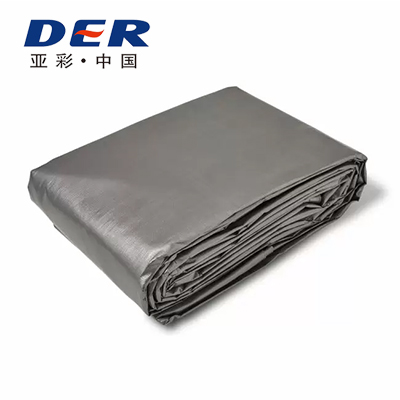
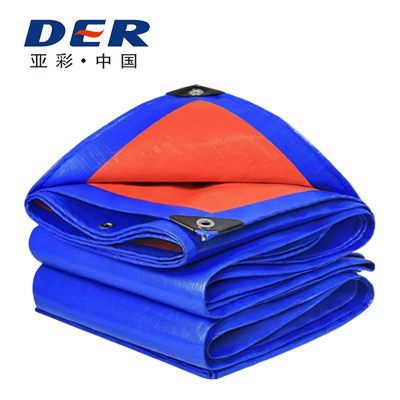
Choose for the exposure, handling and goods underneath
Start with the work the tarp must do. A stored pallet, a frequently uncovered machine and a temporary roof each create different demands on the sheet and its fastenings.
| Application | Prioritize | Plan before use |
|---|---|---|
| Outdoor goods and pallet covers | Coverage, handling weight, coating and reinforced tie points | Drainage, ventilation and protection from sharp corners |
| Construction material covers | Tear behavior, abrasion exposure, panel layout and edge strength | Inspection intervals and a site-specific fastening arrangement |
| Agricultural storage covers | UV evidence for the grade, coverage and moisture management | Ventilation, drainage and a fastening plan that avoids damage to stored goods |
| Temporary roof protection | Roof geometry, sheet integrity and attachment design | Professional access, water runoff and a repair schedule |
| Distributor / OEM programs | Repeatable specification, finished sizes and identifiable packaging | Sample approval, inspection criteria and quantity by size |
For roof work, review PE roof tarp selection alongside the site requirements. A material specification alone does not establish the wind resistance of an installed cover.
When should you compare PE with PVC?
PE is often considered for economical area coverage and manageable handling weight. Where covers face frequent deployment, sustained rubbing or demanding repair requirements, compare an appropriate PVC-coated polyester tarpaulin as well. Compare complete samples, mass, test results and finished edge designs under the same conditions.
Order by finished size, with the required drop
Record the footprint of the goods, the drop required down each side and the room needed for fastening. Identify which edges need extra coverage. If the tarp is to reach attachment points beyond the goods, measure that distance too. Keep the usable finished dimensions distinct from the manufacturer’s cut dimensions.
A simple sizing example
Assume a rectangular top of 3.0 × 2.0 m, a 0.6 m drop on each side and an illustrative 0.1 m additional allowance at each edge.
Length: 3.0 + 2(0.6 + 0.1) = 4.4 mWidth: 2.0 + 2(0.6 + 0.1) = 3.4 mIllustrative geometry for a flat draped cover. These allowances are not an installation rule. Folds, unusual shapes, anchor positions and ventilation can change the required size.
Turn the sketch into an order
- Mark finished length and width, face colors and orientation.
- Show corners, seams and every required attachment line.
- State the measurement condition and dimensional tolerance.
- Approve the layout against the goods or a representative mock-up.
A flat tarp folds around corners; it does not produce a fitted box cover without additional shaping. Send a drawing if access openings, shaped corners or a closer fit are required.
Check handling mass before increasing GSM. A 4.4 × 3.4 m body panel has an area of 14.96 m². At an illustrative 250 g/m², the flat panel material would weigh about 3.74 kg. This calculation excludes extra seam overlap, hems, reinforcement, fittings and packaging; it is not a DERFLEX grade or a finished shipment weight.
Approve the specification before comparing price
A useful heavy-duty poly tarp quotation describes the same deliverable each time. For material rolls, state width, length and fabric requirements. For finished tarps, add usable dimensions, panel layout, perimeter details and packaging. Keep accessories, transport and installation services as separately identified requirements.
Agree a reference sample
Use a material swatch to assess color and surface, then a representative finished section to review hems, joins and fittings. Record the sample reference and agreed inspection criteria so that the next order has a clear comparison point.
Define the order mix
List quantities by finished size and color pair. Include artwork, labels, individual pack requirements and carton identification for distributor or private-label programs. MOQ and scheduling depend on the confirmed construction and order mix.
Review the cost drivers
Material mass, sheet dimensions, panel utilization, seam length, edge reinforcement, fittings, printing and packing all affect price. Compare the total cost of the same usable finished cover, with the same delivery terms.
Connect tests to the grade
If strength, water resistance or UV exposure is critical, request the relevant report for the proposed material. Keep method, direction, conditions and acceptance criteria together. UV test hours do not directly establish years of service.
DERFLEX’s PE and PVC offering gives buyers a route to compare material families within one inquiry. Use the tarpaulin material overview for alternatives and the tarp buying guide to organize the wider purchasing decision.
Plan for water, movement and inspection
Use the cover within its agreed duty
- Arrange runoff so water does not collect in unsupported pockets.
- Protect the tarp from sharp corners, rough contact and hot surfaces.
- Distribute fastening forces through the approved reinforced points.
- Allow appropriate ventilation where condensation could damage goods.
Inspect the complete tarp
- Check the sheet, joins, hems and fittings before deployment and after severe exposure.
- Investigate loose eyelets, seam opening, coating cracks and brittle areas before reuse.
- Clean with a method compatible with the selected grade; dry before packing.
- Use PE-compatible repairs only after checking adhesion and the remaining material condition.
A general cover is not a lifting device, a fall protection system or a certified wind barrier. Flame resistance, chemical containment and contact with food or drinking water require separate evidence for the specific material and intended use.
Heavy-duty polyethylene tarp FAQ
How thick should a heavy-duty polyethylene tarp be?
There is no single thickness that defines heavy duty across all suppliers. Specify measured thickness and its tolerance alongside GSM, woven construction, tear resistance and edge details. A thicker sample is not automatically stronger if its reinforcement or seams are weaker.
Can a waterproof PE tarp still allow moisture underneath?
Yes. Rain can enter through damaged seams, holes or an unsuitable cover layout, while condensation can form beneath an intact waterproof sheet. Plan drainage, ventilation and inspection around the goods being covered.
Should I order by cut size or finished size?
Order by the usable finished dimensions when coverage matters. State the measurement method and tolerance on the purchase order, and identify any extra drop, overlap or fastening allowance. Cut dimensions can be reduced by hems and seams.
Can DERFLEX supply custom sizes and branded bulk orders?
DERFLEX lists custom PE tarp dimensions, colors, grommet spacing and logo printing within its poly tarp offering. Send a drawing, quantity by size and packaging requirements so the available construction, order terms and sample can be agreed for your program.
Is polyethylene or PVC better for repeated industrial use?
Compare complete constructions under the same handling and exposure conditions. PE is often considered where handling weight and coverage cost matter; PVC-coated polyester is also worth evaluating for frequent reuse, abrasion and repair requirements. Neither material name alone establishes suitability.
What should I send for a bulk PE tarp quotation?
Send the application and destination, finished dimensions, quantity by size, required GSM or a reference sample, colors, reinforcement and eyelet layout, packaging, required documents and delivery plan. If you do not have a specification, start with photos and a sketch.
Get a PE tarp specification and quotation
Send the application, destination, finished dimensions, quantity by size, target GSM or a reference sample, colors, reinforcement, eyelet layout and packing requirements. Include required documents and your delivery plan. Photos and a simple sketch are enough to begin the discussion.
Your quotation defines the selected construction, supply format, order quantity and delivery terms.