


 MATERIALS • FINISHED COVERS • OEM SOURCING
Harbor Freight Tarps: Materials, Sizes & Bulk Alternatives
Comparing Harbor Freight tarps for equipment, a trailer or an outdoor storage job? Start with the material, finished dimensions and attachment details. Retail covers can be a practical choice for an immediate, standard-size purchase. A recurring commercial requirement may need a controlled specification, custom reinforcement or consistent repeat supply. This guide helps contractors, distributors and cover fabricators compare those routes. DERFLEX supplies PVC tarp materials and develops custom cover enquiries around the application, rather than treating a retail duty label as a complete specification.
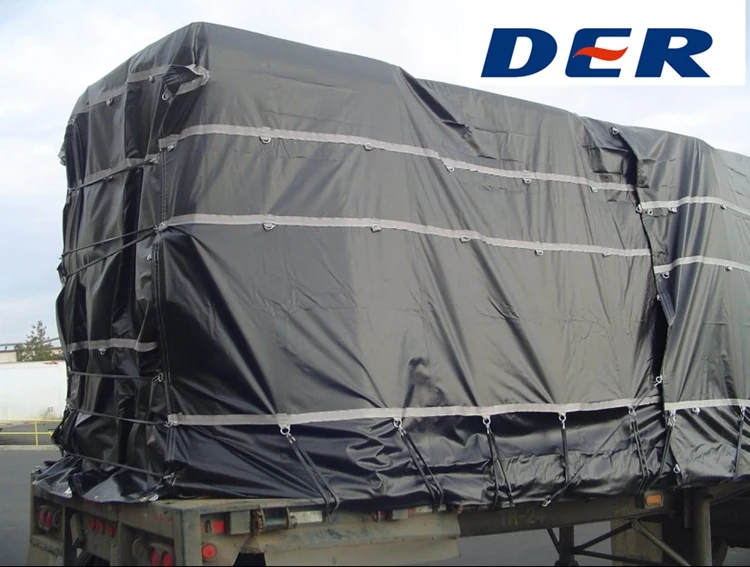
Which purchasing route fits your job?
Choose the route that matches the quantity, fit and evidence you need. A listed retail tarp can suit a one-off purchase when its finished size and product instructions fit the task. Request a custom or bulk specification when you need repeated sizes, a defined attachment layout, roll material for fabrication or a documented approval sample. Neither route makes every tarp suitable for every application.
Looking for a specific Harbor Freight item, current price or store availability? Check the official Harbor Freight tarp catalog. The comparison below focuses on selection and commercial sourcing.
Retail convenience or a repeatable commercial specification?
The difference is the purchase brief. For one cover, you may be choosing among listed items. For a distributor range or maintenance program, you are defining what every approved delivery must contain. Start by writing down the condition that makes a cover unacceptable: too little coverage, an attachment in the wrong position, a leaking seam or an unsuitable handling weight.
A standard retail tarp may fit when
- You need a small quantity in a listed size.
- The stated material and product instructions match the job.
- The edge layout works with your existing attachment points.
- You can inspect the individual item before using it.
A bulk enquiry adds value when
- Several locations need the same approved construction.
- A stock size leaves too much slack or insufficient drop.
- Your fabricator needs rolls or panels instead of a finished tarp.
- Labels, packaging and inspection criteria must remain consistent.
Use the industrial tarp supply overview to distinguish roll goods from finished-cover enquiries. Hardware, frames and installation services should be identified separately in the quotation.
Poly, canvas, mesh and PVC solve different problems
Harbor Freight’s catalog includes several tarp constructions. A search for “Harbor Freight heavy duty tarps” does not identify one universal material or test level. Compare the individual listing with your use conditions, then decide whether a listed cover or a separately specified industrial cover is appropriate.
On a narrow screen, scroll the comparison table horizontally.
| Material direction | Useful starting point | What to examine | Important limit |
|---|---|---|---|
| PE / polyethylene tarp | General coverage where handling weight and purchase cost matter. | Laminated surface, weave, actual dimensions, hems and corner reinforcement. | Color and a duty name do not establish exposure life or tear performance. |
| Canvas / treated textile | Textile covers where the specified fabric’s moisture behavior is relevant. | Fiber, treatment, water resistance, shrinkage, drying and possible transfer onto the protected surface. | “Canvas” alone does not establish waterproofing or breathability. |
| Open mesh | Ventilated coverage, shading or suitable screening tasks. | Opening size, stated shade characteristics, edge design and attachment compatibility. | Water passes through openings. It is not a sealed rain barrier. |
| PVC coated polyester | Custom fabricated covers where a coated textile and designed seams are required. | Reinforcement, mass, thickness, coating adhesion, seam construction and application testing. | The material does not establish the performance of a complete installed cover. |
For a fuller explanation, read the PVC, PE, canvas and mesh material guide. DERFLEX’s PVC tarpaulin material page is the next step when a coated polyester construction is under consideration. These are separate sourcing options, not claims of equivalence to a Harbor Freight SKU.
Material and finishing references from DERFLEX
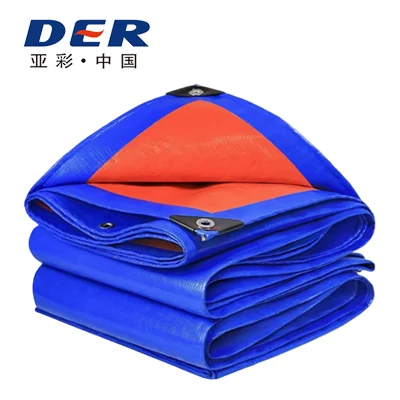
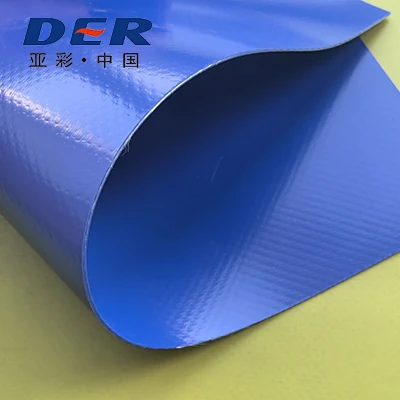
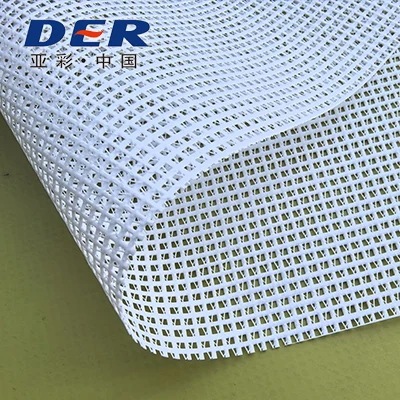
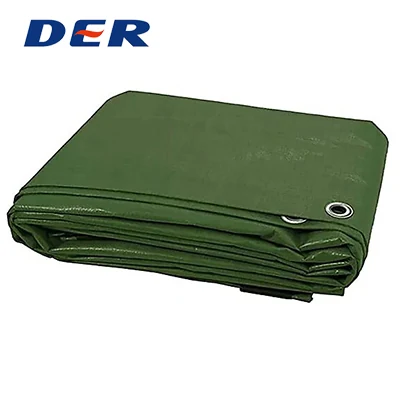
These catalog photographs show different construction features. They are selection references, not test reports or pictures of Harbor Freight merchandise. Confirm the sample and specification for your order rather than selecting by appearance alone.
Finished dimensions matter more than the size category
Before choosing a Harbor Freight tarp size, read the exact dimensions on the selected listing. Do not assume the rounded size category is the usable finished dimension. For a custom enquiry, state the finished dimensions you need and agree a tolerance. Your cover fabricator can then account for hems and seams in its cutting plan.
A flat-cover sizing example
Assume a rectangular top measuring 2.4 m × 1.2 m, with a required vertical drop of 0.5 m on every side. Ignoring shaped corners and extra fastening allowances:
Length: 2.4 + 0.5 + 0.5 = 3.4 m
Width: 1.2 + 0.5 + 0.5 = 2.2 m
The resulting geometric starting size is 3.4 m × 2.2 m finished. This example is not a production drawing. It excludes fit clearance, slope, corner formation, pockets and attachment geometry; resolve those before approving the order.
Measure over protrusions, handles and protective padding. Mark where ropes, straps or eyelets must meet existing fixtures. For a five-sided fitted cover, supply length, width and height with opening positions; simply adding drop to a flat rectangle does not create a fitted box cover.
Document whether the cover is for stationary storage or moving transport. An apparently correct size can still leave a cover loose, create water pockets or concentrate force at an edge. The tarpaulin buying guide explains how the application changes the purchasing brief.
What to specify beyond “heavy duty”
A retail label can help you browse a product range, but it does not replace a technical agreement. To compare quotations, ask each supplier to answer the same fields. Distinguish a material test result from evidence about a welded seam, reinforced border or complete finished cover.
| Order field | Put this in the enquiry | Use it to decide |
|---|---|---|
| Supply format | Roll goods, cut panels or fabricated covers; quantity per size. | Who performs cutting, seams and final inspection? |
| Dimensions | Finished size and tolerance, or roll width and length; drawing revision. | Will the cover fit and reach the planned fixtures? |
| Material | Construction, nominal mass and thickness, with agreed tolerances where relevant. | Are the offers describing comparable constructions? |
| Exposure and handling | Sunlight, rain, temperature, abrasion contact and deployment frequency. | Which properties need sample or test evidence? |
| Fabrication | Seam layout, hems, patches, eyelet or D-ring positions and permitted openings. | Does the finished design suit the attachment method? |
| Approval and packing | Reference sample, inspection points, batch marking, labels and pack quantity. | How will deliveries be checked against the approved order? |
Keep units comparable. A mil measures thickness: 1 mil = 0.0254 mm. GSM measures mass per square metre. There is no universal GSM-to-mil conversion across different material constructions. Ask what was measured and how. The tarp thickness guide provides further context; thickness by itself is not a strength rating.
Approve the cover, then control the reorder
When a cover becomes a recurring business purchase, replace informal descriptions with a retained approval record. A photograph helps identify appearance, but a signed drawing and sample record are more useful for dimensions, construction and permitted variation.
Record the job and the failure point
Describe what is being protected, how the cover is handled and where earlier covers failed. Mark sharp contact points, pooling areas and any dimensions that affect fit.
Check a representative sample
Review material, seam and border details against the proposed order. Where performance evidence is required, identify the material or assembly tested and its relationship to the sample.
Agree the incoming checks
Define the inspection sample size, dimensional checks, workmanship criteria, hardware positions and packaging checks. These are agreed order requirements, not universal pass values.
Keep a controlled reference
Retain the approved sample identity and drawing revision. Ask for changes to material, finishing or packaging to be identified before a repeat order is approved.
Contractors can use the same brief when buying covers for several crews. See contractor tarp applications for examples of how rain protection, airflow and repeated site handling change the selection.
Retail price and bulk cost answer different questions
Use Harbor Freight’s own listing for the current retail price of its product. For a bulk quote, compare the same finished size, construction and delivery scope. A lower price per cover is not directly comparable when one offer excludes reinforcement, printing, packing or freight.
- Material and yield: roll width, cutting layout and required joins affect material use.
- Finishing: extra hems, patches and attachment points add operations and hardware.
- Order structure: many small size variants create a different production and packing task from one repeated size.
- Delivery scope: compare the agreed commercial term, destination, freight, applicable taxes and inspection scope.
Consider expected replacement and handling costs using your own records. This guide does not assume a service life, price advantage or payback period for either a retail tarp or a DERFLEX specification. MOQ, lead time, sampling and shipping are confirmed for the actual enquiry.
Check the installation conditions as well as the fabric
Water, airflow and contact
Decide whether you need a solid rain barrier or an open ventilated cover. Allow drainage and avoid pockets that collect water. Protect the fabric from sharp edges. Consider condensation and drying when covering moisture-sensitive goods; changing the tarp material alone does not guarantee a dry microclimate.
Fixing, movement and maintenance
Agree a compatible attachment arrangement rather than pulling isolated eyelets tight. Inspect seams, holes and worn contact areas before reuse. Road use, lifting, structural wind resistance and flame performance require their own relevant specifications and evidence; they cannot be inferred from a general-purpose or heavy duty label.
Follow the chosen product’s instructions. For a custom program, approve how the cover will be folded, cleaned and stored so those steps remain compatible with its material and construction.
Questions buyers ask about Harbor Freight tarps
What types of tarps does Harbor Freight sell?
Harbor Freight lists general-purpose polyethylene, heavier-duty poly, canvas and mesh tarp categories. Choose using the current individual product listing: material, finished dimensions, thickness or fabric weight, edge construction and intended use can differ by item. This DERFLEX guide does not represent the retailer’s live stock or pricing.
Are Harbor Freight heavy duty tarps the same as PVC vinyl tarps?
A heavy duty label does not establish the material. Check the selected item’s construction before comparing it with PVC coated polyester. Polyethylene and PVC coated fabrics have different structures, handling characteristics and fabrication requirements; compare the finished cover and its evidence as well as thickness.
Are canvas tarps or mesh tarps waterproof?
Open mesh allows water to pass through and should not be selected as a sealed rain cover. Canvas water resistance depends on the fabric and treatment. Read the exact product specification, and test seams and likely contact points when the contents must remain dry.
How do I choose the right tarp size?
Measure the area to be covered, add the required drop on each side, and account for the fastening layout. Ask whether the listed dimensions are cut size or finished size. For a fitted cover, supply a drawing showing length, width, height, openings and acceptable dimensional tolerances.
Can DERFLEX supply Harbor Freight branded tarps?
This page presents an independent buying guide and DERFLEX sourcing options. It does not offer Harbor Freight branded goods or claim an authorized supply relationship. Buyers seeking that retailer’s products, coupons, warranties or store availability should use Harbor Freight’s own channels.
What should I send for a bulk or custom tarp quotation?
Send the application, quantity by size, finished dimensions or roll requirements, exposure conditions, material preference, reinforcement and attachment details, packaging needs, destination and requested documents. A photo or sketch is useful when the material grade is undecided. MOQ, price, sampling and timing are confirmed for the proposed order.
Need a consistent tarp specification for your business?
Send DERFLEX your application, quantity by size, finished dimensions or roll requirements, exposure conditions and attachment details. Add a photo or sketch if you are still choosing the material. Include the destination, packaging needs, requested documents and planned purchase date.
We can review the enquiry for PVC tarp material or a custom cover program. The proposed construction, fabrication scope, sample process and commercial terms are agreed in the quotation.
Reference and independence
Retail category information was checked against Harbor Freight’s official tarp catalog on October 31, 2026. Consult each current item listing for its specification, instructions, availability and price.
This guide is published by DERFLEX. Harbor Freight Tools is a separate business; no affiliation or endorsement is implied. Images show DERFLEX website material and application references. The guide does not offer Harbor Freight branded goods.