


 Industrial materials
Buyer guide
Canvas Tarps at Harbor Freight: A Practical Buyer’s Guide
Comparing canvas tarps at Harbor Freight? Start with the exact material and the coverage you need. A useful choice depends on more than a “heavy duty” label: fiber composition, water resistance, finished dimensions, seams and edge reinforcement all affect the result. This guide explains how to read a retail listing and turn those details into a clear specification for repeated commercial purchases. For distributors, fabricators and equipment buyers, DERFLEX offers a separate route to discuss tarp materials and custom covers, with the construction and supply scope agreed in the quotation.
Independent guide by DERFLEX. DERFLEX is not affiliated with Harbor Freight Tools and does not represent itself as the manufacturer, authorized seller or supplier of Harbor Freight’s canvas tarps. All retailer product names refer to the retailer’s own listings.

What does the Harbor Freight canvas tarp listing tell you?
Harbor Freight lists canvas tarps, but “canvas” does not automatically mean cotton. Its official 10 ft. × 12 ft. listing, SKU 59274, identifies polyester canvas and describes the item as water resistant. Check the exact SKU before treating any comparison as like for like.
| Listed field | SKU 59274 | Buyer interpretation |
|---|---|---|
| Nominal size | 10 ft. × 12 ft. | Confirm actual finished coverage and orientation. |
| Material / color | Polyester canvas / olive green | Do not substitute a cotton specification. |
| Weight description | 10 oz. per square yard | Areal mass; this is not a thickness measurement. |
| Water resistance | Yes | Not evidence of a watertight cover assembly. |
Source: Harbor Freight’s official SKU 59274 listing. Specifications may change. Current price, stock, warranty and retailer purchase terms should be checked directly there.
A retail stock item can be a practical starting point for an occasional purchase when its dimensions and documented construction fit the job. A repeat purchasing program needs an agreed specification that another batch can reproduce. A reference SKU helps describe the starting point; it does not establish that a separately sourced cover is identical.
Choose by moisture, contact surface and handling
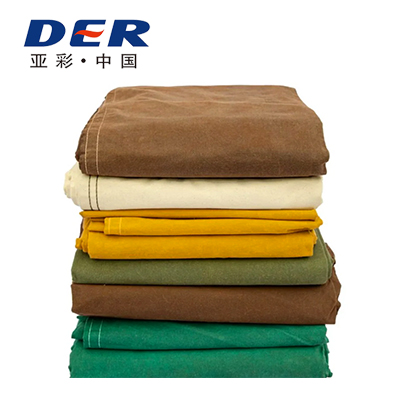
Separate the fiber from the finish. Cotton, polyester and coated textiles can all be described with canvas-related wording, yet behave differently. Ask what the fabric is made from, how it is treated and how the finished cover is joined. For broader context, see the tarp material guide.
When a textile cover is the starting point
For machinery in storage or covered building materials, discuss moisture release, surface contact and the frequency of removal. Treated cotton canvas may change dimensions when exposed to moisture, and some treatments can transfer to adjacent surfaces. Evaluate a swatch against the actual equipment finish rather than relying on the fabric name.
The oiled canvas tarp page provides a related material route to discuss when a treated textile is required.
When excluding rain is the priority
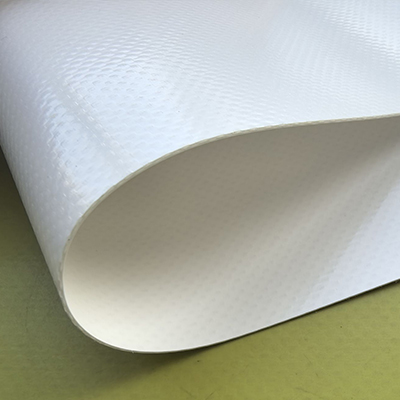
Specify the allowable leakage and evaluate both fabric and seams. A coated material may be a better starting point when a continuous water barrier and a wipe-clean surface are priorities, but edges, openings and joints still determine the finished result.
Review PVC tarpaulin materials and agree the selected construction before changing a canvas specification.
For a direct discussion of these material families, use the PVC, vinyl and canvas tarp comparison. An alternative should be selected for the application, not described as universally stronger or equivalent to a retailer’s product.
A practical application decision table
Describe the failure you want to avoid before choosing a replacement. The following table is a purchasing framework, not a performance claim for an unnamed grade.
| Application | Specify first | Check on the sample |
|---|---|---|
| Stored equipment | Ventilation, desired drop, paint contact and removal frequency | Fit, rub points and finish transfer |
| Outdoor material stacks | Rain exposure, drainage path and required edge coverage | Pooling, overlap and wet handling |
| Contractor cover inventory | Repeat finished sizes, folding and item identification | Hem consistency, labels and bundle size |
| Trailer or cargo cover | Attachment layout and the actual transport conditions | Fit and reinforcement; assess load restraint separately |
| Branded distributor range | Fiber, finish, size assortment and retail packaging | Approved reference sample and repeat-order records |
For a canvas-based inquiry, the DERFLEX canvas tarp product page is the next step. Identify the required material before asking for sizes or a price.
Measure the finished cover, not only the top footprint
Record the object’s length, width and height, including projections and sharp corners. State how far the cover should drop on each side and where the fasteners should sit. “Cut size” describes material before finishing; “finished size” describes the completed cover. Do not apply another supplier’s standard size deduction to a new order.
Flat width = top width + both side drops
Illustrative example: an 8 ft. × 6 ft. top with a 2 ft. drop on all four sides needs a nominal flat coverage rectangle of 12 ft. × 10 ft. That calculation excludes fitting clearance, fastener position, hems, seams, sloped drainage and any dimensional change. It is a measurement exercise, not a ready-to-order drawing.

For batch supply, draw finished outer dimensions and a separate attachment layout. Mark the distance from each corner to the first eyelet, the intervals along each edge and any no-seam or no-contact zones. Approve a fitted prototype where coverage or access is critical.
What a repeat-order canvas tarp specification should include
A complete specification lets both sides discuss the same product. Use the retailer’s item only as a reference, then write the requirements that matter to your own application. The tarp specifications guide explains related material and finished-product terms.
| Requirement | Write into the inquiry | Approval record |
|---|---|---|
| Material identity | Fiber composition and treatment or coating | Agreed material description and sample reference |
| Areal mass | g/m² or oz/yd²; state before or after treatment | Target, tolerance and measurement basis |
| Dimensions | Finished length and width; direction and permitted variation | Signed drawing with measurement conditions |
| Joining and edges | Seam locations, hem construction and corner patches | Representative seam and corner sample |
| Attachments | Eyelet material, opening and location map | Layout and agreed inspection criteria |
| Performance | Relevant moisture, contact and mechanical requirements | Applicable test method, conditions and acceptance limits |
| Packing and identity | Folded size, labels, piece count and carton marking | Approved pack sample and batch identification |
Read units carefully. One oz/yd² is approximately 33.906 g/m²; one mil is 0.0254 mm. Fabric weight cannot be converted directly into thickness without information about the construction. Matching mass alone does not establish matching strength, treatment or handling.
Use a sample to resolve the expensive uncertainties
Check the cover in its intended position
Fit it over the actual equipment or a representative fixture. Check corners, handles, exhaust openings and access points. Look for tension concentrated at individual eyelets. Record whether the cover can be installed, removed and folded by the intended users.
Evaluate drainage and rubbing separately. Adding fabric weight will not correct a pocket that collects rain or an unprotected sharp corner.
Agree repeatable acceptance criteria
Record the sample’s dimensions and condition before a trial. Where wet exposure matters, agree the exposure, drying and remeasurement procedure. Where treated fabric touches paint or packaging, include a representative contact trial.
Request evidence for the offered construction when a performance claim is important. A report for a different fabric, finish or seam should not be treated as approval of the ordered cover.
This approval process is a proposed purchasing workflow, not a statement that an unnamed DERFLEX grade has passed a particular test. Keep the approved material, drawing and inspection criteria together for reorders.
Set the supply scope and compare the complete quotation
Tell DERFLEX whether the requirement is fabric rolls for your own fabrication or completed covers. Ask the quotation to list the selected material, dimensions, finishing, quantity and packing. Frames, installation and cargo restraints require a separate, explicit scope; a tarp image does not mean these items are included.
The main cost drivers include fabric consumption, usable roll width, seam length, reinforced areas, attachments, labeling and order mix. Compare quotations against the same finished specification and delivery basis. Retail promotions and a custom export quotation cover different purchasing conditions, so a headline price alone is a weak comparison.
- Keep a slope or supported shape where drainage is needed; inspect hems and seams after use.
- Protect sharp contact points and provide suitable ventilation around stored equipment.
- Follow the selected material’s cleaning instructions and dry the cover before folding.
- Record damage, treatment transfer or fit changes before issuing a repeat order.
Canvas tarp buying questions
Does Harbor Freight sell canvas tarps?
Yes. Harbor Freight lists canvas tarps, including a 10 ft. × 12 ft. model identified as SKU 59274. Check the retailer’s current listing for the exact item, availability and purchase terms. DERFLEX does not sell that retailer’s SKU.
Are Harbor Freight canvas tarps made from cotton?
Do not assume so. The official listing for SKU 59274 identifies the material as polyester canvas. Other items must be checked individually. For a custom order, put the required fiber composition and finish into the written specification.
Are canvas tarps waterproof?
The answer depends on the fabric, treatment and finished seams. The Harbor Freight example in this guide is listed as water resistant. A water-resistant description is not evidence of a watertight finished cover. Where leakage matters, evaluate the material and a representative seam assembly under the intended conditions.
What does 10 oz. mean on a canvas tarp?
If expressed as oz/yd², it describes mass per unit area, not thickness. Ten oz/yd² is approximately 339 g/m². Ask whether a quoted weight is measured before or after treatment; it does not by itself establish tear strength, waterproofness or service life.
How much larger should a tarp be than the equipment?
Measure the top and the required drop on each side, then add only the allowances agreed for fit, fastening and drainage. For a simple rectangular object, flat cover length equals top length plus both end drops; flat cover width equals top width plus both side drops. Check the result on a sample before ordering a batch.
Can I request a custom or bulk tarp quotation from DERFLEX?
Yes. Send the application, required finished dimensions, material preference, quantity, edge details and destination through the DERFLEX quotation page. Specify whether you need fabric rolls or finished covers. The quotation should identify the offered construction, sample approval, packaging and delivery scope.