


 Request a Quote
DERFLEX / TECHNICAL MATERIAL SELECTION
Architectural Membrane GSM Guide
Choose fabric weight with the performance data that actually matters.
For architects, tensile-membrane fabricators and project buyers, GSM is a useful way to compare the mass of PVC/PVDF-coated fabrics—but it does not certify strength or structural suitability. Use this guide to screen weight bands, compare membrane families, calculate provisional sheet mass and prepare a test-based RFQ before approving a production grade.
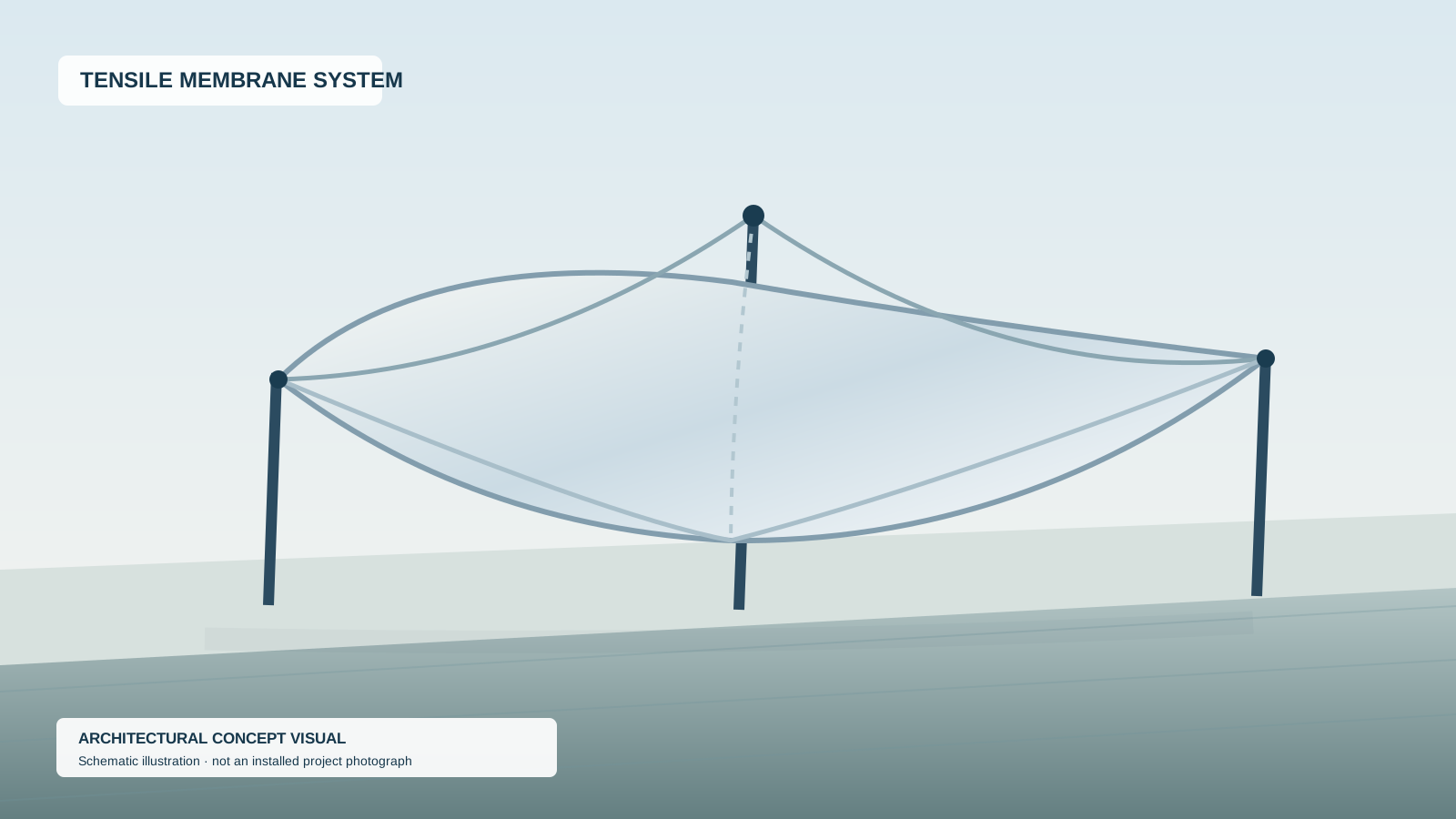
What does GSM mean in an architectural membrane?
GSM means grams per square metre: the mass of one square metre of the finished membrane. A quoted 900 GSM is nominally 0.90 kg/m² of material. It says nothing by itself about required prestress, allowable load, tear propagation or welded seam efficiency.
A useful screening number—not an engineering shortcut
For a PVC-coated polyester architectural fabric, the quoted GSM normally includes the woven polyester base cloth, PVC coatings and specified finishes. The percentage assigned to yarn versus coating can differ substantially between products that have exactly the same finished GSM.
Two fabrics at 900 g/m² may use different yarn counts, weave densities, coating formulations and coating distributions. Their measured tensile performance can therefore differ. Test the exact finished composite, and compare results taken using equivalent methods and reporting units.
For mass measurement of coated textiles, ISO 2286-2 defines methods for total, coating and substrate mass per unit area. Use a documented grade and sampling plan, not a hand-estimated material weight.
Which architectural membrane GSM range should you shortlist?
For initial comparisons of PVC/PVDF-coated polyester, DERFLEX’s published architectural pages discuss approximately 650–1350 g/m² across different project grades. The bands below organize procurement conversations; they are not load ratings, standard product SKUs, or a substitute for structural calculations.
| Finished mass (indicative) | Early-stage project discussion | Verify before approval |
|---|---|---|
| ~650–800 g/m² | Lighter canopy, shading and smaller membrane-panel concepts where the design team permits a lower-mass grade. | Minimum tensile and tear capacity, panel geometry, wind uplift, weather exposure and fire classification. |
| ~800–1050 g/m² | A common comparison territory for architectural PVC-coated fabrics and tensioned roof concepts requiring a balance of handling and mechanical performance. | Warp/weft strength, yarn construction, UV/weathering, seam tests, low-wick requirement and color/translucency. |
| ~1050–1350+ g/m² | Heavier architectural fabric options to compare for more demanding design briefs; additional GSM does not prove increased usable capacity. | Engineer’s load path, installed weight, elongation, attachment design, welding and project-specific certification evidence. |
Note: boundaries here are editorial screening ranges. Real product grades do not necessarily start or end at these values, and not all applications are suitable for any one band. Use the approved technical data sheet and the engineer’s minimum performance schedule.
A coherent request identifies material family, minimum warp/weft performance, seam efficiency, fire requirements, finish and expected environmental exposure. More coating mass may increase GSM without proportionally increasing the textile's tensile capacity.
PVC, PVDF, PTFE and ETFE: compare like with like
The term “architectural membrane” describes several distinct constructions. PVC/PVDF fabric weight bands must not be carried over uncritically to PTFE fiberglass or ETFE foil.
PVC-coated polyester
A woven load-bearing textile coated with PVC. Compare finished GSM, textile construction, mechanical data, color, weldability and environmental resistance. Roll goods can be fabricated into tensioned panels following qualified processes.
Specify by finished fabric grade + performance tests.PVC with PVDF finish
In many architectural fabric quotations, “PVDF membrane” means a PVDF-finished PVC/PES coated fabric. The protective surface affects cleaning and weathering, but it does not automatically establish tensile strength or the total finished GSM.
Identify front/back finish and welding preparation.PTFE-coated fiberglass
A different reinforced composite used in specialist architectural projects. Compare its specified areal mass, fiberglass construction, mechanical properties, folding limitations and the fabricator's joining method on its own datasheet.
Do not assume PVC-grade welding or weight bands.ETFE film
ETFE is a fluoropolymer foil rather than a coated woven fabric. Film thickness, cushion arrangement, pressure management, connection details and system engineering often define the specification. A PVC fabric GSM table is not an ETFE selection tool.
Specify foil and system requirements separately.For a surface-by-surface breakdown, read the PVC vs PVDF membrane comparison; for broader system selection, explore membranes for tensile architecture.
Why two membranes with the same GSM perform differently
The finished weight is the sum of multiple layers. Where that mass sits—and how the reinforcement and coating work together—changes the material’s behavior during pretensioning, fabrication, weathering and cleaning.
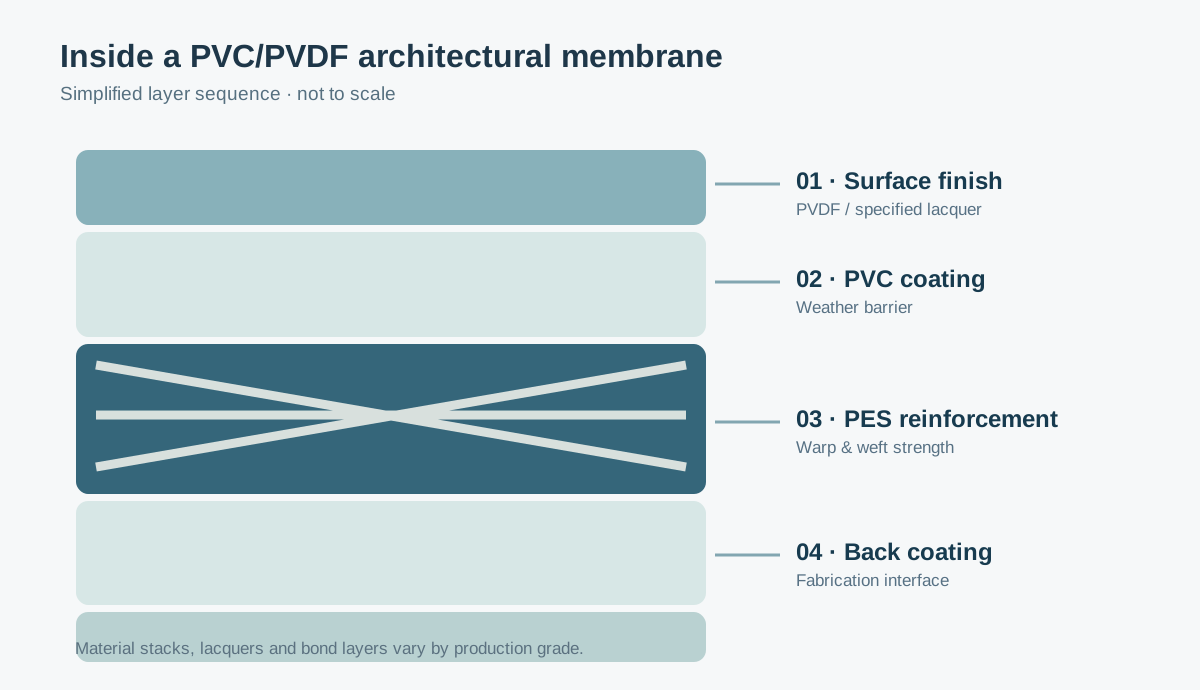
Ask for the construction, not only the weight
Reinforcement: High-tenacity polyester yarn and weave design contribute most directly to tensile behavior. Report both warp and weft, because membrane patterns may orient the fabric differently.
Coating: PVC quantity and adhesion affect the barrier, flexibility, handling and bonding of the composite. A heavier coating cannot compensate for insufficient yarn strength.
Top finish: PVDF, acrylic or another specified finish can change cleanability, dirt pickup and the preparation required before welding.
Edges and seams: Cut edges, welds, clamping zones and attachment details can govern failures outside the flat, unseamed test specimen. In wet locations, consider the low-wick architectural membrane specification.
What to specify alongside GSM in a membrane RFQ
An architectural membrane schedule is not complete until the mechanical results, fabrication route and acceptance rules are written down. Use these fields to request comparable, grade-specific documentation.
| Specification field | What to ask for | Why it matters |
|---|---|---|
| Finished areal mass | Nominal GSM, tolerance and test method (for coated fabrics, e.g. ISO 2286-2). | Comparable roll mass and controlled incoming inspection. |
| Tensile strength | Warp and weft results, units such as N/50 mm, method such as ISO 1421, and the tested grade. | Evidence for engineering calculations and material orientation. |
| Tear resistance | Directional tear results, specimen geometry and method (e.g. applicable ISO 4674 method). | Helps assess local damage propagation, handling and details. |
| Elongation / creep | Elongation data and any time-dependent behavior requested by the structural engineer. | Affects prestress retention and shape stability over time. |
| Coating adhesion / seam | Coating adhesion data plus weld trial and seam-strength acceptance criteria. | Panel performance depends on the fabricated joint, not only virgin fabric. |
| Fire and weather | Applicable local fire requirement and reports on the exact product; UV/weathering evidence if required. | Material tests are not a building-system approval or universal fire certification. |
| Roll and finish | Usable width, length, color, translucency, finish sides, lot ID and surface inspection criteria. | Controls nesting yield, visual consistency and traceability. |
Testing names are examples of methods to agree for a relevant product—not claims that every DERFLEX grade has been tested or passed. Use the latest project-appropriate standard editions and actual reports.
For project context and the role of structural engineering, see tensile architecture materials and what a membrane is in architecture.
GSM affects the budget, but roll width and seams also matter
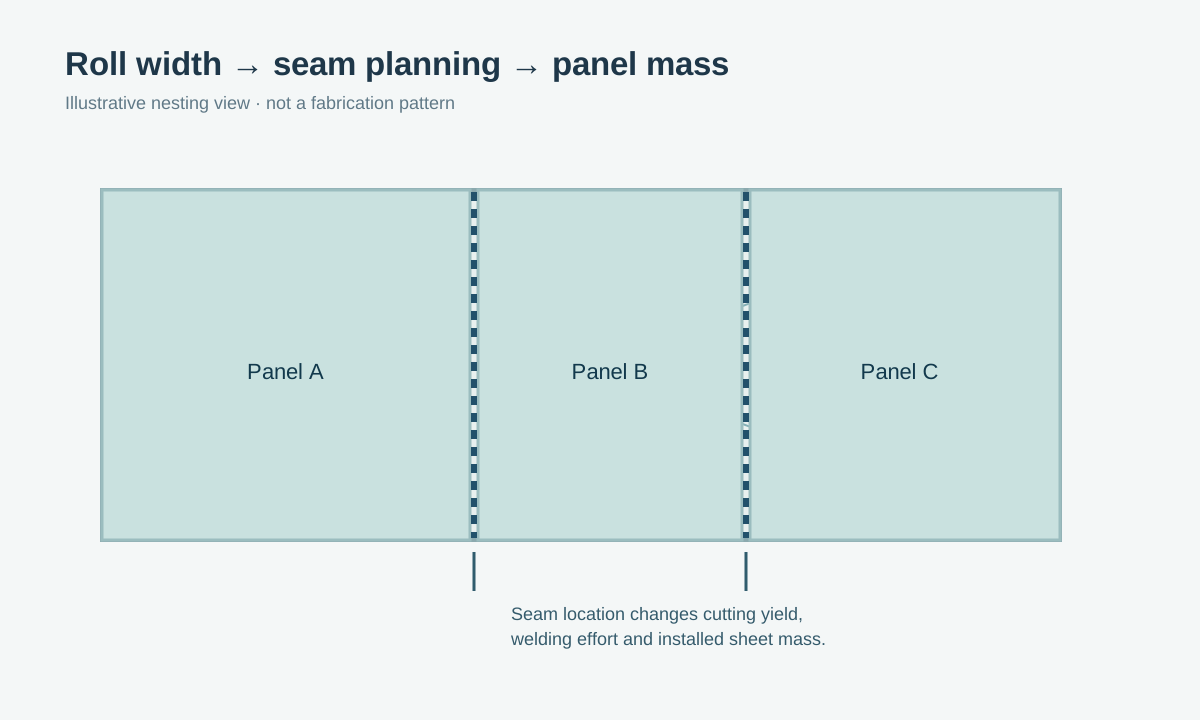
A membrane with a lower quoted weight is not necessarily the lower-cost installed option. Panel nesting, waste, usable roll width, seam length, finish requirements and quality risk often matter as much as the coating mass.
Design the purchase around the panel layout
Ask the fabricator for the actual cutting schedule. It can reveal whether a wider roll reduces the number of long seams, whether the usable width creates excessive offcuts, and how fabric orientation aligns with the engineer's warp/weft load path.
Compare quotation terms using the same finished area, color, topcoat, working width, accepted seam method, inspection scope and packaging. A grade's nominal GSM does not capture the labor or risk associated with additional cutting and welding.
For white architectural canopies, surface maintenance and anti-wicking at edges may justify a different finish even if two candidate fabrics share the same nominal GSM. The architectural membrane collection provides the broader material supply overview.
Before you order
Confirm usable width, lot-to-lot weight tolerances, sample review, weld parameters on the intended coating, panel orientation, local fire requirements and site exposure. The structural designer and installer must approve the engineered system; DERFLEX material roll supply does not by itself include a structural design, roof frame or installation service.
A practical six-step approval route
Use the same sequence for a new canopy tender, a membrane roof replacement or a recurring coated-fabric supply program.
- Describe the structure.
Provide canopy or roof type, dimensions, sketch, design life direction, coastal/industrial exposure and geographic code requirements.
- Define mechanical minima.
Let the structural design team establish load cases, warp/weft strength, tear performance and acceptable deformation; GSM is not a substitute.
- Shortlist material systems.
Compare PVC, PVDF-finished PVC, PTFE or ETFE on a matching system basis, then narrow coated-polyester grades by construction and weight.
- Verify sample and tests.
Request actual grade-specific test records, representative samples, finish identification, color and translucency evidence.
- Qualify the joint.
Run fabricator-controlled cutting, welding and edge-detail trials. Check seam strength and any required surface preparation before volume commitment.
- Lock the purchase order.
Record approved sample ID, GSM tolerance, usable width, packaging, lot traceability, inspection criteria and destination for the shipment.
Send the project data. Get a comparable membrane specification.
For a useful material discussion, share the roof or canopy application, preliminary drawing, target area, climate, intended fabricator, requested fire route, color/translucency, target mechanical performance, preferred GSM band, usable width, order quantity and delivery destination.
Supply discussion concerns membrane material and confirmed processing options; complete structural design and code approval remain with the appointed project team.
Architectural membrane GSM: buyer questions
What GSM is best for an architectural membrane roof?
There is no universal best GSM. For PVC-coated polyester projects, approximately 650–1350 g/m² is a useful initial comparison range, not a structural selection rule. The final grade depends on the engineer’s load calculations, tested warp/weft strengths, tear resistance, seam performance, fire requirements and exposure.
Is 1050 GSM architectural membrane stronger than 900 GSM?
Not necessarily. A 1050 g/m² fabric has about 16.7% more mass per square metre than a 900 g/m² fabric, but it can still have lower tensile or tear strength if its reinforcement, weave or manufacturing process differs. Compare test reports for the exact grades.
Does PVDF coating increase membrane GSM?
A PVDF-based topcoat contributes some mass, but the word PVDF does not establish the total GSM or reinforcement strength. Ask for the finished composite’s nominal weight and tolerance, including all coatings, and the surface system on each side.
Can membrane GSM be converted to thickness in millimetres?
No reliable direct conversion is possible without material construction and density data. GSM measures mass per area, while millimetres describe thickness. Ask for both independently when thickness affects clamping or welding.
Do PTFE and ETFE use the same GSM selection bands as PVC?
No. PTFE-coated fiberglass needs its own grade and strength data. ETFE is a fluoropolymer film rather than a woven coated textile and is often specified by film thickness and engineered system requirements. Do not assign PVC fabric GSM bands to either system.
What documents should I request before bulk membrane supply?
Request a grade-specific technical data sheet with measured mass per area, warp/weft tensile and tear results, coating adhesion and relevant fire test evidence. Approve a representative roll sample and fabrication or weld trial, then define inspection tolerances and lot identification in the purchase order.