



What Is Clear PVC Film?
Clear PVC film is a transparent, flexible sheet made from polyvinyl chloride (PVC), usually formulated with plasticizers to make it bendable and easy to convert. It is commonly sold as a clear vinyl film roll or cut sheet for transparent curtains, tent windows, protective covers, table coverings and manufactured components. The right grade depends on thickness, optical appearance, softness, exposure conditions and processing method—not just whether a roll looks clear.
- Understand how clear PVC differs from rigid plastics and reinforced tarps
- Use thickness, optical and fabrication criteria to choose a grade
- Prepare a concise specification before requesting a sample or quote
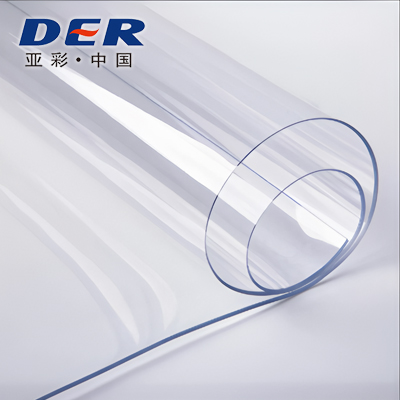
What exactly is transparent PVC film?
Clear PVC film is a see-through vinyl material with a continuous, nonporous PVC surface. In its flexible form, it can hang, fold, roll or be heat joined when the selected formulation and process are compatible. The film itself can block liquid water, but the waterproofness of a finished curtain or cover also depends on seams, openings and installation.
In supplier catalogs, the terms clear PVC film, transparent PVC film, clear vinyl film and flexible transparent PVC sheet frequently overlap. “Film” often describes roll stock while “sheet” may describe a thicker material or a cut piece; there is no universal thickness boundary applied across every supplier. Always agree on dimensions in millimeters and request a physical sample.
Clear flexible PVC is different from rigid PVC board and hard acrylic glazing. A transparent film can drape over a doorway or be fabricated into soft windows. A rigid board is self-supporting and requires a different design for cutting, mounting and loading. It is also different from woven PVC tarpaulin, whose textile reinforcement is used when dimensional and tensile demands are higher.
Three questions to settle first
- Must people see through it? Define acceptable tint, haze, reflections and scratches.
- Must it remain flexible? Consider rolling, folding, impact and the lowest service temperature.
- How will it become a finished item? Identify welding, heat sealing, cutting, sewing, hanging and cleaning methods.
Terminology note: “Clear PVC film” is not automatically a self-adhesive architectural window film, a transparent rigid board or a certified safety glazing material.
What is clear PVC film made of—and how does it work?
Flexible transparent PVC begins with PVC resin. A formulation may include plasticizers to control flexibility, stabilizers to support processing and aging performance, and specialty additives selected for the intended environment. The sheet is made through a film-forming process, commonly calendering, then wound or cut for downstream fabrication. Exact ingredients and processing routes vary by grade.
PVC base resin
Forms the continuous transparent body and contributes moisture-barrier behavior. It does not by itself specify outdoor life, optical clarity or end-use compliance.
Plasticizer system
Changes bendability, surface feel and cold flexibility. The plasticizer chemistry should be specified when the destination market imposes substance restrictions.
Stabilizers & additives
Grades can be developed for UV exposure, lower temperatures, flame performance or other functions, but each requested property requires grade-specific evidence.
Why clarity, softness and thickness must be evaluated together
A highly polished surface may appear exceptionally clear when new but can still show creases, reflection or abrasion after repeated use. A softer film may roll easily but can behave differently around hanging edges or welds. Increasing thickness generally changes handling and mass; it does not automatically improve UV aging or prevent yellowing. The correct answer is a balanced material specification linked to the final product, not a single number.
How thick should clear PVC film be?
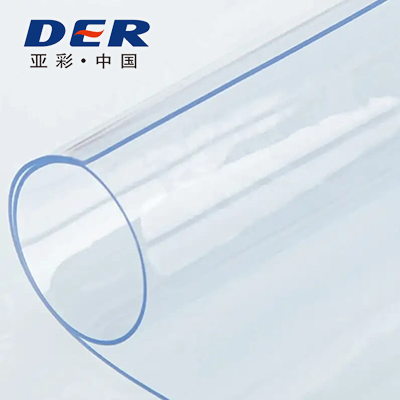
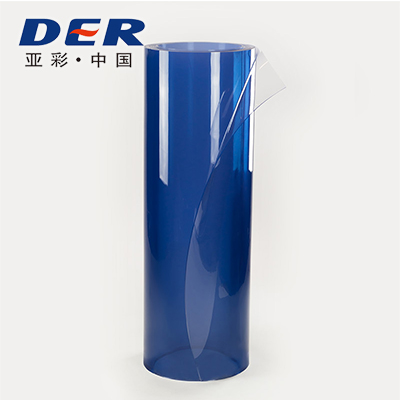
Clear PVC is measured by thickness, usually in millimeters (mm), micrometers (µm) or thousandths of an inch (mil). Choose a range based on bending frequency, panel area, support, abrasion and converting equipment. DERFLEX's existing product pages discuss configurable film thicknesses across applications; the examples below are broad buying orientations, not promised in-stock grades or a substitute for sampling.
| Illustrative thickness | Typical selection direction | What to check first |
|---|---|---|
| 0.05–0.20 mm | Light flexible films, packaging components, protective overlays or simple covers | Handling, blocking between layers, sealing temperature window and puncture risk |
| 0.20–0.50 mm | Medium flexible curtains, transparent cover components and lighter viewing panels | Clarity at finished size, repeat folding, seam compatibility and surface marks |
| 0.50–1.00 mm | More substantial clear window panels, patio curtains and protective sheets | Weight, hanging tension, roll-up handling, cold flexibility and attachment geometry |
| Above 1.00 mm | Thicker specialty sheets or heavily handled panels; project dependent | Production width, cut handling, bend radius, hanging structure and equipment capacity |
Application examples are educational categories, not certified installation limits. Final permissible thickness and width depend on the specific film grade, processing method and supplier confirmation.
mm, mil and µm: simple conversions
1 mm = 1,000 µm ≈ 39.37 mil
1 mil = 0.001 inch = 0.0254 mm
Examples: 10 mil ≈ 0.254 mm; 20 mil ≈ 0.508 mm; 30 mil ≈ 0.762 mm. These are dimensional conversions, not statements about the strength of a particular film.
How to read a roll specification
Ask for the nominal thickness and tolerance, measured width, usable length, roll core, surface orientation, softness target and any protective interleaving. When appearance matters, approve the same grade under the lighting and viewing distance expected in service.
GSM (g/m²) describes mass per area; it cannot be converted to mil thickness without knowing material density and structure. Do not assume a thicker film is always the more appropriate film.
What is clear PVC film used for?
Transparent flexible PVC is useful when a manufacturer needs a bendable viewing barrier or protective layer. These applications do not all use one interchangeable film grade. Start with the finished product and its exposure conditions.
| Application | Useful material properties | Essential caution or buyer check |
|---|---|---|
| Tent and awning windows | High clarity, surface appearance, weldability and flexible handling | Test welding with adjacent fabric; assess sun exposure, cold flex and panel distortion. |
| Patio and porch curtains | Visibility, cleanable surface, roll-up handling and weather-focused formulation | Specify attachment detail, wind loads, water shedding and outdoor aging evidence. |
| Industrial door and strip curtains | Controlled softness, visibility and repeated-contact performance | Account for machinery, traffic, temperature and static or hygiene requirements. |
| Table protection and transparent covers | Flatness, clean finish, suitable surface feel and thickness consistency | Check dye transfer, contact staining, heat sensitivity and cleaning agents. |
| Packaging windows and flexible components | Gloss, sealing performance, cutting behavior and optical consistency | Verify legal substance restrictions and any direct product-contact requirements. |
| Greenhouse or agricultural panels | Light transmission, exterior aging direction and fabrication compatibility | Require relevant UV and optical data, support design and condensation drainage. |
A finished clear PVC tarp needs edge, seam and fastening specifications in addition to film selection. For work-zone visibility curtains, use the related industrial curtains guide to distinguish a flexible sheet from a complete hanging system. If an application prioritizes exceptionally high appearance, compare super clear PVC film grades rather than assuming all products sold as “transparent” look the same.
Clear PVC film vs PET, PE and rigid acrylic: which one fits?
Other transparent plastics can be better depending on the job. This is a material-family comparison, not a laboratory ranking. Individual additives, film gauges and finished constructions can change the outcome.
| Material family | Typical advantage | Frequent trade-off | Where to start |
|---|---|---|---|
| Flexible clear PVC (vinyl) | Flexible, see-through barrier; converting and welding options in suitable grades | Plasticizer, surface wear and long-term appearance must be matched to use | Soft windows, curtains, protective covers and roll stock |
| PET film | Can offer stable, clear thin-film performance in suitable constructions | Stiffer feel than many plasticized PVC grades; joining method differs | Flat overlays, printed films and other precision film applications |
| PE film | Lightweight and economical moisture barrier in many uses | Common grades may not deliver the same optical presentation or joining behavior | Temporary covers, wrapping and functional protective layers |
| Rigid acrylic sheet | Clear, self-supporting glazing panel | Does not drape, fold or roll like flexible PVC | Rigid windows, displays and framed installations |
Is clear PVC film the same as transparent tarpaulin?
Not necessarily. A clear flexible PVC film is a material. A transparent tarpaulin is a finished cover that may have hemmed edges, welded joins, grommets or reinforcement. Some tarp constructions include woven scrim, which changes the view through the panel. For large or tensioned covers, consult DERFLEX's PVC tarpaulin material range and clear plastic tarp options before substituting a simple film.
When clear PVC is a sensible starting point
Choose it when clear visibility, flexibility, roll-to-roll converting and transparent protective coverage must coexist. Confirm the temperature and surface conditions before committing to bulk production.
When another material may be better
Choose a rigid transparent sheet when a self-supporting structural panel is needed, or investigate an alternative film when very high stiffness, dimensional stability or a specific regulatory requirement dominates.
What affects clarity, yellowing and outdoor performance?
“Transparent” describes the new material's appearance, not a lifetime promise. In use, sunlight, heat, plasticizer changes, surface wear, deposits and incompatible chemicals can influence haze, discoloration, tackiness or loss of flexibility. Film performance must be considered together with the completed curtain or enclosure.
Haze and color tone
Compare one clean, dry layer with an approved sample. Record viewing distance and light conditions. Multiple rolled layers can exaggerate tint.
UV and temperature
For sun-facing and cold environments, ask what grade was actually tested and under which method or conditions.
Weld and edge quality
A clear film that passes an optical check may still fail a seam or installation check. Trial the actual joining method and joint geometry.
What evidence matters in a production program?
Request documentation relevant to the selected grade: thickness tolerance and measurement approach, optical criteria, cold-flex or outdoor aging results where needed, and compatibility trials for the actual heat sealing or high-frequency welding setup. For chemical-sensitive, flame-regulated or food-contact work, ask for the specific report and jurisdictional requirements; never infer compliance from a generic certificate or material name.
For a practical diagnostic method, see the DERFLEX guide to clear vinyl yellowing and inspection. Color change alone does not prove loss of waterproofing, and an initial clear appearance does not prove resistance to prolonged sunlight.
Before you order: a clear PVC film specification checklist
Film buyers can often prevent repeat sampling by sending a brief, usable specification instead of requesting a “high-quality clear film.” For converters and importers, the most valuable checks connect the roll to the equipment and finished product.
Describe tent window, curtain, cover, table protector or packaging, including indoor/outdoor use, sunlight, heat, cold and cleaning.
State nominal thickness in mm, tolerance needs, usable roll width/length, core requirements and expected order quantity.
Provide acceptable tint, haze, gloss, surface marks, scratches and the sample comparison method.
Identify cutting, sewing, welding, printing or lamination equipment and the critical seam or edge design.
Specify relevant UV, cold-flex, antistatic or fire requirements and required evidence for the destination market.
Request approved samples, labeling, roll protection, packing details and repeat-order comparison criteria.
How to choose between roll goods and finished panels
Buy roll film when your team will cut or weld it. Request cut sheets if you need specified panel dimensions. Ask about finished clear curtains or covers only when seams, hems, mounting or other converting work is part of the agreed supply scope. Confirm whether the quotation includes fabrication, hardware, structural support and installation; a film roll does not include a complete installed system.
For production-specific discussions, see DERFLEX's clear PVC film roll supply page or the related clear vinyl film range. Share a drawing or representative sample through the DERFLEX quote request page.
Explore the right next page for your project
Use the film knowledge above to narrow the material family; these related pages cover purchasing, specialized grades and finished covers in more detail.
Clear PVC film: common questions answered
Is clear PVC film the same as clear vinyl film?
Usually yes in industrial and commercial buying language: both often refer to transparent flexible polyvinyl chloride. Confirm the material composition, plasticizer system, thickness and whether it is adhesive or non-adhesive before treating two quotations as equivalent.
Is clear PVC film waterproof?
The continuous PVC film is a nonporous material that can resist liquid water penetration. A finished curtain, enclosure or cover may still leak at welds, stitching, penetrations, edges or openings. Specify the entire system if watertight performance is required.
Can clear PVC film be used outdoors?
Some formulations are intended for outdoor use, but not every clear film is UV stabilized or suited to low temperatures. State the expected sunlight, temperature range, installation design and appearance requirements, then request evidence for the exact grade.
Can transparent PVC film be welded or sewn?
Many flexible PVC grades can be cut and joined by suitable heat sealing or high-frequency welding processes; sewing may be used where the panel design permits. Trial the actual film and equipment because weld strength, appearance and handling vary with formulation and thickness.
What thickness is best for a clear vinyl curtain?
There is no single best gauge. Light curtains favor drape and easy handling, while larger or exposed curtains require consideration of panel span, fixing detail, abrasion, cold flexibility and wind exposure. Start from the installation drawing and test representative film samples.
Does transparent PVC film turn yellow over time?
It can. UV exposure, heat, formulation aging, surface contamination and contact chemicals can contribute to discoloration or haze. Compare a clean sample under consistent lighting and request relevant aging data rather than relying on a generic lifetime claim.
What should I send when requesting bulk clear PVC film?
Provide intended use, required thickness and width, quantity, softness, target clarity, surface finish, converting method, exposure conditions, required reports and packaging needs. If unsure of technical terminology, send an application photo or drawing and identify your key performance concern.
Need a clear PVC film grade for your application?
Tell DERFLEX what you are making, how the film will be processed and where it will be used. Ask for material options and sample confirmation before placing a bulk order.