


 Architectural membranes / selection guide
How to Choose Tensile Membrane Fabric
Choose tensile membrane fabric by the demands of the structure: load response, exposure, fire requirements, daylight and fabrication. This guide helps architects, fabricators and procurement teams compare material families, read a technical submittal and prepare a useful inquiry for DERFLEX PVC/PVDF coated polyester roll material.
How do you choose the right tensile membrane fabric?
Start with the building use and an engineer-defined performance brief. Shortlist the appropriate membrane family, compare grade-specific strength and biaxial behavior, then verify fire documentation, weathering, seams and optical properties. Approve representative material and fabrication samples before ordering. GSM, thickness or the word “PVDF” alone cannot establish structural suitability.
Define the project before choosing the fabric
A tensile membrane is a flexible surface supported through tension. Choosing it therefore involves both the building envelope and the structural design. A waterproof sheet can still be unsuitable if its deformation, joints or attachment details do not match the proposed form.
Create one project brief for everyone quoting. Identify whether the structure is permanent, seasonal or repeatedly dismantled; whether it is open-sided or enclosed; and whether the membrane is a roof, façade or interior element. Include location, approximate dimensions, drawings, maintenance access and the required approval documents.
Information the buyer can provide
- Building use, site photographs and intended appearance.
- Rain protection, shade, daylight or blackout priorities.
- Pollution, coastal exposure, cleaning access and operating conditions.
- Quantity, delivery destination and project schedule.
Information the design team must establish
- Geometry, supports, prestress and applicable load cases.
- Material design properties and required test evidence.
- Drainage, edge details and attachment interfaces.
- Applicable fire criteria and approval route.
Use the DERFLEX tensile membrane fabric product page to discuss material supply after these requirements are defined. A roll-material quotation should state separately whether cutting, panel fabrication, connection hardware or other services are included.
Compare the construction, not just the material name
The principal distinction is the complete material construction. PVC/PVDF architectural fabric usually means polyester reinforcement with PVC coating and a PVDF-containing surface treatment. The PVDF finish is not a replacement for the load-carrying reinforcement. PTFE-coated glass is a different composite, while ETFE is a film rather than a woven coated fabric. See the material references below for technical background.
On smaller screens, scroll the table horizontally.
| Material family | When to investigate it | What to confirm before selection |
|---|---|---|
| PVC-coated polyester | Architectural roofs and canopies where flexible fabrication and weldable coated textiles fit the design. | Architectural grade, finish, directional properties, fire report and seam procedure. |
| PVC-coated polyester with PVDF surface treatment | Outdoor projects where the surface finish and cleaning strategy are important selection factors. | Exact finish formulation and coverage, welding preparation and grade-specific weathering evidence. |
| PTFE-coated glass fabric | Permanent architectural projects considering a coated glass reinforcement system. | Specialist fabrication and handling requirements, optical data, joints and applicable fire evidence. |
| ETFE film / foil | Projects seeking a transparent film envelope, as a designed single-layer or cushion system. | Film grade, support details, solar control and the equipment and operation required by the chosen system. |
| Open mesh shade fabric | Shade or façade screening where an open textile is intended. | Openness, shade performance and structural properties; do not specify an open mesh as a watertight roof. |
Keep comparisons specific. “PVC versus PVDF” can compare finishes on a similar coated fabric, while “PVC/PVDF versus PTFE” compares different composite constructions. Neither comparison supports a universal winner. DERFLEX’s architectural membrane overview provides a route into the material categories.
Ask each supplier to identify substrate, coating and exposed finish on its quotation. Avoid accepting “premium membrane” as a complete specification, or treating the same polymer label from two suppliers as proof of identical behavior.
Understand what each layer contributes
For PVC-coated polyester, separate the reinforcement specification from the coating and surface treatment. This makes it easier to trace whether a proposed change affects load behavior, surface appearance or fabrication. The following is a construction schematic, not a measured cross-section.
Schematic only; layers are not to scale and do not define a DERFLEX grade.
Ask for a complete construction description
Specify which face is exposed and whether the finish is one-sided or two-sided. Confirm usable roll width, reverse-face color and any difference between nominal thickness and tolerance limits.
A visual sample helps establish color and surface texture. It cannot establish tensile strength, coating adhesion or a particular weathering result. The PVC fabric for tensile structures page is the relevant material route for a PVC/PVDF inquiry.
Read the technical data sheet as an evidence package
A technical data sheet is the start of a comparison. Record the grade and revision on the quotation, sample approval and purchase order so the supplied material can be traced to the reviewed documents.
On smaller screens, scroll the table horizontally.
| Property / document | How to compare it | What a useful submittal identifies |
|---|---|---|
| Construction, mass and thickness | Separate g/m² from mm; record tolerances and the exact grade. | Substrate, coating, surface treatment, usable width and product identity. |
| Tensile strength and elongation | Compare warp with warp and weft with weft using matching methods and units. | Test method, specimen definition, conditioning and directional results. |
| Biaxial response | Review the two-direction load response required by the designer. | Test protocol, stress ratios, loading history and data for the proposed material. |
| Tear and coating adhesion | Check the actual method and specimen; keep the properties separate. | Method-specific results and agreed acceptance requirements. |
| Fabricated seams | Review the actual grade, finish, joint and fabrication process together. | Trial seam details, test conditions and the agreed acceptance basis. |
| Fire performance | Review the required document against the specified use and exact material. | Report identity, classification or result, tested construction and scope. |
| Weathering and appearance | Compare exposure method and measured outcomes, not test hours alone. | Changes in agreed properties, exposure conditions and relevant limitations. |
| Light and solar properties | Request grade- and color-specific optical data. | Visible-light transmission and the solar data needed by the building designer. |
For coated-fabric tensile testing, ISO 1421:2016 distinguishes strip and grab methods. A method name without its method variant and specimen conditions is insufficient for a direct numerical comparison. Citing the standard also does not mean a particular DERFLEX material has been tested to it.
A simple unit check can prevent a false comparison
Illustrative arithmetic only: a strip result of 3,000 N per 50 mm corresponds to 60 kN/m of specimen width: 3 kN ÷ 0.05 m. This converts the reporting basis; it does not create a new test result, make a grab result equivalent, or establish an allowable structural load.
Why GSM and breaking strength are not enough
GSM measures mass per unit area. Thickness measures a dimension. Neither describes the full fabric construction or how a tensioned panel deforms in use. Additional coating mass can increase total GSM without a proportional change in the reinforcement properties.
Likewise, a breaking-strength result is not the allowable load for the completed roof. The engineer must use the applicable design method and account for the selected material, seams, connections, loading and relevant reductions. This guide does not assign a membrane grade from span or wind speed.
Ask how the material behaves in two directions
For tensioned woven fabrics, warp and weft interact. Biaxial testing characterizes their combined response under defined load paths. The responsible designer and fabricator should agree how the data will support analysis and cutting compensation. A single elongation-at-break value cannot replace that information.
Relevant coated-fabric methods include EN 17117-1 for tensile stiffness and EN 17117-2 for pattern compensation values. The project team should establish which method and data are appropriate.
In procurement, ask whether the required biaxial data are available for the proposed grade, how they are identified and who will approve their use. If the material changes after analysis, flag the substitution before fabrication begins. Do not reuse compensation values merely because two rolls have the same GSM.
Match the material to exposure and building use
On smaller screens, scroll the table horizontally.
| Project condition | Prioritize | Resolve before order |
|---|---|---|
| Permanent exposed canopy | Approved mechanical data, finish, seams and a maintenance strategy. | Grade selection, drainage and the project fire requirement. |
| Polluted or difficult-to-clean location | Surface treatment evidence and practical cleaning access. | Cleaning method, staining expectations and access responsibility. |
| Repeated dismantling or transport | Handling instructions, fold sensitivity and abrasion protection. | Packing method, repeated-use requirements and sample fabrication trial. |
| Bright public space or sports cover | Daylight, glare, solar behavior and underside appearance. | Optical data, color sample and the building designer’s comfort assessment. |
| Wet edges and exposed reinforcement interfaces | Edge detailing and evidence for any low-wick requirement. | Tested treatment and how cut edges, holes and joints will be protected. |
| Transparent architectural envelope | An appropriate film or transparent-material system. | Full-system design, solar control, maintenance and operating needs. |
Where moisture migration through reinforcement is a concern, distinguish coating waterproofness from capillary behavior at an exposed yarn or edge. Review the low-wick architectural membrane guide and specify how that property will be demonstrated for the chosen construction.
For general exterior planning, the PVC membrane for architecture page gives further application context. Environmental descriptions should be specific: “coastal canopy with accessible annual cleaning” is more useful than “outdoor grade.”
Verify fire, weathering and daylight requirements separately
Fire documents must match the material
Ask the project team which test or classification is required. Check that the report covers the proposed product construction and relevant application conditions. A report for another grade, color or assembly needs an explicit applicability review.
Flame retardancy, non-combustibility and whole-roof fire performance describe different matters. Do not substitute one label for the document requested by the project.
Durability needs a defined basis
Ask what was measured after weathering: appearance, coating condition, strength or another agreed property. A laboratory exposure duration alone cannot be converted into a promised number of outdoor service years.
For daylight and comfort, assess the actual membrane color and system. Visible light, solar gain, thermal insulation and acoustics need their own evidence; “translucent” does not answer all four.
Keep any warranty separate from a service-life estimate. Read its coverage, maintenance obligations and exclusions before treating it as part of the commercial comparison. The preferred material is the one whose documented performance matches the brief, rather than the one with the largest headline lifespan.
Approve the seams and fabrication route
Evaluate the membrane with the fabricator before bulk purchasing. The surface treatment, material faces and joint design can affect seam preparation. Some finishes require a particular preparation method; use the grade supplier’s procedure and validate it on representative samples.
- Identify the faces and roll direction. Mark the exposed face, warp direction and proposed panel orientation.
- Make a representative trial seam. Use the actual grade, intended equipment and planned overlap or joint detail.
- Evaluate the finished joint. Agree the required tests and visual checks; record the sample identity and process conditions.
- Review edges and intersections. Confirm reinforced corners, cable pockets, clamping interfaces and seam crossings against the drawing.
- Release the approved process. Retain the approval record and define how material or process changes will be handled.
Roll width affects panel layout, nesting and seam work, but wider material does not automatically reduce total cost. Compare usable width and cutting yield with the fabricator’s pattern. Do not order only the roof’s plan area: the curved surface, seams, edges, nesting losses and agreed spares affect material quantity.
Before fabrication: agree who owns structural analysis, cutting compensation, panel manufacture, installation and final inspection. Material roll supply does not, by itself, include these services or certify the completed structure.
Look at the material and the details it must serve
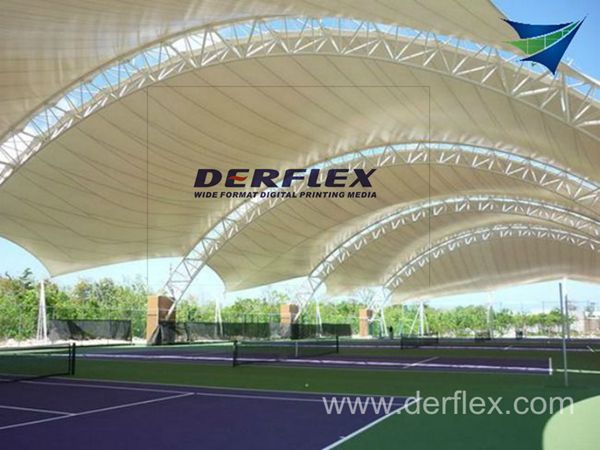
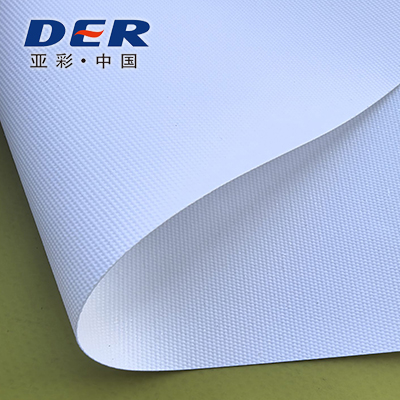
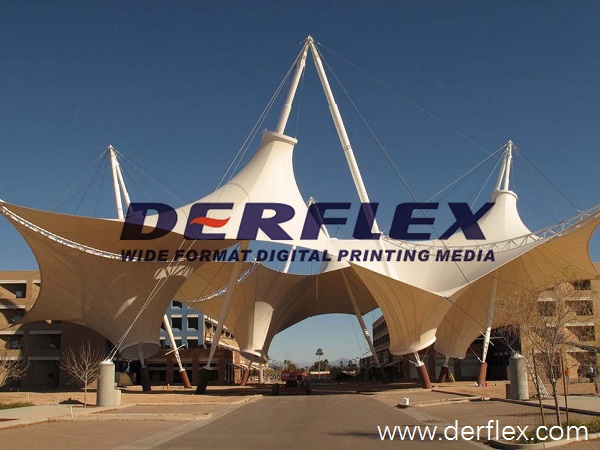
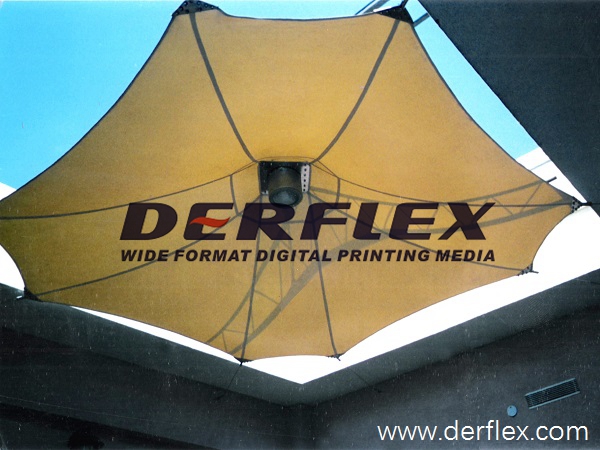
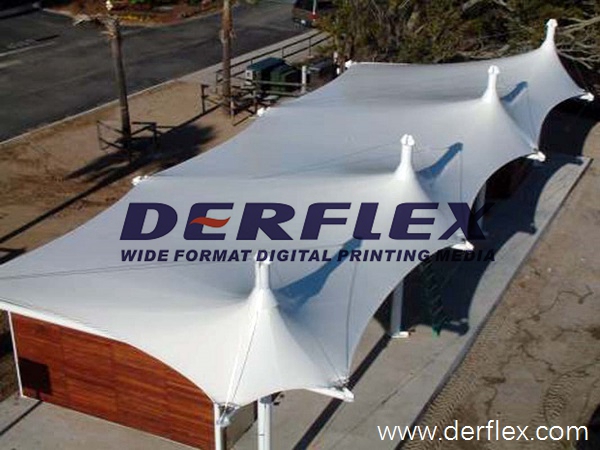
These existing DERFLEX website images illustrate architectural membrane forms and a coated-fabric sample. They are visual references; project identity, material grade and test performance are not established by the images.
Before you order: compare complete offers
Compare quotations against the same specification revision. Record the proposed material identity, usable width, quantity basis, finish, packaging and required documents. Then list exclusions, especially panel fabrication, hardware, structural design, freight and installation.
Approve before release
- Material construction and the agreed technical submittal.
- Face and reverse appearance against a retained sample.
- Representative weld and edge details where required.
- Roll identification, inspection requirements and packaging.
- Who approves substitutions or specification changes.
Plan for use and maintenance
- Access for inspection, cleaning and drainage checks.
- Manufacturer-compatible cleaning products and methods.
- Protection from sharp surfaces during handling.
- Storage and packing requirements before installation.
- A route for evaluating damage or repair proposals.
Price depends on construction, finish, usable width, order quantity, documentation and the agreed delivery scope. Request MOQ, sample terms and lead time for the specific offer; do not infer them from a generic membrane category. The DERFLEX tensile fabric supplier page explains the broader supply inquiry route.
A practical inquiry you can adapt
Project: building use, location, permanent or temporary service, approximate dimensions and drawing revision.
Material: proposed family or existing grade, color, daylight requirement, usable width and estimated quantity.
Evidence: mechanical data required by the engineer, fire requirement, weathering information and seam-test expectations.
Commercial scope: rolls or agreed fabricated items, packaging, delivery destination, required date and documents.
If the grade is not yet selected, send the application description, photographs and drawings first. Ask DERFLEX to propose a clearly identified PVC/PVDF material for review against the project brief.
Tensile membrane fabric selection FAQ
What is the best fabric for a tensile membrane structure?
The best fabric is the grade that meets the project’s structural, fire, environmental and fabrication requirements. PVC/PVDF coated polyester and PTFE-coated glass are different composite options. ETFE is a film-system option when the design calls for it. The responsible designer must approve the selected material for the proposed structure.
Is PVDF membrane fabric different from PVC fabric?
In many architectural fabrics, PVDF describes a surface treatment on PVC-coated polyester. Ask for the complete construction, finish on each face and welding instructions. A PVDF label alone does not establish strength, service life, fire performance or suitability for a particular roof.
What GSM should I choose for tensile membrane fabric?
There is no universal GSM for a canopy or roof span. GSM is mass per unit area. Select the grade using the engineer’s performance requirements, directional mechanical data, relevant biaxial information and fabricated-joint evidence. Do not substitute another material only because its GSM matches.
Why do I need biaxial data as well as tensile strength?
Tensile breaking-strength data describe failure under a defined test. Biaxial data describe the combined warp-and-weft response under defined loading. The designer and fabricator use appropriate material data to assess behavior and determine cutting compensation. One elongation-at-break number cannot replace a project-relevant biaxial evaluation.
How long will an architectural membrane last outdoors?
Outdoor service life depends on the specific construction, exposure, detailing, installation and maintenance. Request grade-specific weathering evidence and written warranty terms. Laboratory exposure hours, a generic polymer name or a project photograph cannot establish a guaranteed service life for your roof.
What should I send DERFLEX for a membrane fabric quotation?
Send the project use and location, drawings or dimensions, proposed material family, color and daylight needs, quantity, required technical and fire documents, destination and schedule. State whether you need roll material or a separately agreed fabricated scope. If the grade is undecided, start with the application brief.
Bring your project brief to DERFLEX
Discuss PVC/PVDF coated polyester membrane roll material with a clear scope, the required documents and a sample-approval plan. Keep the project requirements attached to the inquiry so the proposed material can be evaluated consistently.