


 Industrial Synthetic Leather & Coated Fabric Solutions
 What is PU Leather? A Complete Industrial Buyer Guide
PU leather, also called polyurethane leather, artificial leather, synthetic leather, or faux leather, is a flexible surface material made by applying polyurethane coating to a textile, nonwoven, microfiber, or split-leather backing. It is widely used in furniture, automotive interiors, bags, footwear, contract upholstery, decorative panels, and OEM products where a leather-like surface, consistent color, easy cleaning, and scalable production are required. 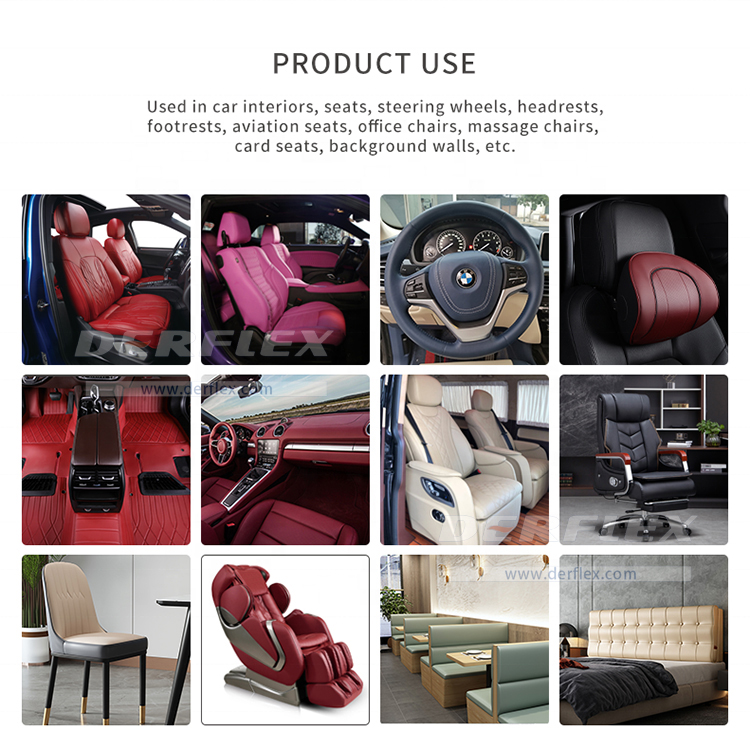
This DERFLEX guide explains what PU leather is, how it is manufactured, where it performs best, what limitations buyers should understand, and how to choose the right PU leather specification for commercial and industrial projects.
What is PU Leather?
PU leather is a leather-like material made with a polyurethane surface layer. The PU layer is coated, laminated, or transferred onto a base material such as polyester fabric, cotton fabric, nonwoven fabric, microfiber, or split leather. The surface is then colored, embossed, textured, printed, or finished to create the appearance and hand feel required for the final product.
In commercial language, “PU leather” may describe different material structures. Some PU leather is 100% synthetic and contains no animal hide. Some PU-coated split leather or bicast leather uses a leather-based backing with a polyurethane finish. For professional procurement, the important question is not only “Is it PU leather?” but “What is the base layer, coating system, thickness, finish, performance level, and end-use requirement?”
Main Types of PU Leather Buyers Should Know
Many online guides stop at a simple definition. For industrial buyers, the material structure matters more.
100% Synthetic PU Leather
Made with PU coating on textile, nonwoven, or microfiber backing. It is commonly selected for vegan-friendly products, bags, upholstery, decorative panels, and OEM consumer goods.
Animal-free optionPU-Coated Split Leather
Uses split leather as the backing and applies PU coating on the surface. It may look consistent and polished, but it is not the same as 100% synthetic PU leather.
Also called bicast leatherMicrofiber PU Leather
Uses microfiber backing for better strength, softness, and more refined hand feel. Often used when buyers need a premium synthetic leather structure.
Higher-performance optionFunctional PU Leather
Engineered with special finishes such as anti-scratch, flame retardant, antibacterial, anti-mildew, UV-resistant, water-resistant, or easy-clean surfaces.
Project-specific finishHow is PU Leather Made?
A professional PU leather production process is not only coating. It combines base selection, surface engineering, curing, embossing, finishing, inspection, and roll packaging.
Base Selection
Choose polyester, cotton, nonwoven, microfiber, or split-leather backing based on strength and hand feel.
PU Coating
Apply polyurethane resin by coating, transfer coating, or lamination to form a uniform surface layer.
Embossing
Use rollers to create leather grain, matte texture, smooth finish, carbon texture, or custom patterns.
Surface Finish
Add color, protective top coat, anti-scratch treatment, easy-clean finish, or flame-retardant function.
Inspection & Packing
Check thickness, width, color, surface defects, bonding strength, roll tension, and shipment packaging.
Advantages and Limitations of PU Leather
A reliable supplier should explain both the strengths and the limits of PU leather.
Advantages of PU Leather
- Leather-like appearance with consistent color and grain
- Generally lighter and more flexible than many natural leather options
- Can be produced in many colors, textures, embossing patterns, and finishes
- Easy to wipe clean for furniture, bags, footwear, and interior applications
- Suitable for scalable OEM production and repeat orders
- Can be engineered with water resistance, flame retardancy, anti-scratch, and easy-clean performance
- 100% synthetic structures can be positioned as animal-free material choices
Limitations of PU Leather
- Low-quality PU leather may crack, peel, or become brittle over time
- Performance depends heavily on resin quality, backing, coating thickness, and finishing
- Not all PU leather is breathable; comfort depends on construction and end use
- Hydrolysis resistance is important in humid climates and long-term upholstery use
- Direct heat, harsh chemicals, and prolonged UV exposure may shorten service life
- Material labels may be confusing unless the supplier clearly states the backing and composition
Typical PU Leather Specification Options
Final specifications should be confirmed by sample testing, application environment, and buyer requirements.
| Specification Item | Common Options | Buyer Notes |
|---|---|---|
| Material Structure | PU surface + polyester / cotton / nonwoven / microfiber / split leather backing | Confirm whether the material is 100% synthetic or PU-coated split leather. |
| Thickness | Approx. 0.6 mm – 2.0 mm or customized | Thicker is not always better; flexibility, backing strength, and application fit matter. |
| Width | Common roll widths can be customized by production capability | Confirm roll width, usable width, tolerance, and cutting loss before mass order. |
| Surface Texture | Smooth, matte, leather grain, pebble grain, carbon texture, custom embossing | Texture affects visual quality, cleanability, scratch appearance, and perceived value. |
| Backing | Knitted fabric, woven fabric, nonwoven, microfiber, or project-specific backing | Backing affects tear strength, dimensional stability, softness, and upholstery performance. |
| Color | Standard color card or customized color matching | Request lab dips or strike-off samples for brand colors and repeat orders. |
| Functional Finish | Easy-clean, anti-scratch, anti-mildew, antibacterial, UV-resistant, flame-retardant | Select functions according to application: automotive, contract furniture, hospitality, medical, or outdoor-adjacent use. |
| Testing Options | Abrasion, hydrolysis, color fastness, flame resistance, peeling strength, odor, REACH / RoHS support | Use testing standards required by your target market and buyer specification. |
| Packaging | Roll packing, protective film, export carton, pallet, or customized packaging | Good packaging reduces crease marks, surface pressure, contamination, and transport damage. |
PU Leather vs Genuine Leather vs PVC Leather vs Fabric
Buyers should compare materials by application performance, not only by price or appearance.
| Material | Strengths | Limitations | Best Used For |
|---|---|---|---|
| PU Leather | Soft hand feel, leather-like appearance, color flexibility, easy cleaning | Needs correct grade for hydrolysis, abrasion, and UV exposure | Furniture, bags, footwear, automotive interiors, wall panels, decorative upholstery |
| Genuine Leather | Natural texture, premium perception, long-term aging when maintained | Higher cost, natural variation, care requirements, water sensitivity | Luxury goods, premium interiors, high-end accessories |
| PVC Leather | Strong water resistance, easy cleaning, cost-effective, durable surface options | Often less breathable and may feel less natural than PU | Commercial seating, protective covers, marine-adjacent upholstery, public seating |
| Textile Fabric | Breathable, soft, wide design choices | Can absorb stains and may require more cleaning protection | Indoor furniture, acoustic panels, soft furnishings |
| Microfiber Synthetic Leather | Premium synthetic feel, good strength, refined appearance | Usually higher cost than basic PU leather | Premium upholstery, automotive, footwear, bags, contract interiors |
Where is PU Leather Used?
DERFLEX supports PU leather and coated material solutions for commercial, industrial, and OEM applications.
Furniture & Upholstery
Sofas, chairs, office seating, dining chairs, wall panels, headboards, and contract furniture requiring consistent surface appearance and easy maintenance.
Automotive & Transport Interiors
Seat covers, trim panels, door inserts, RV interiors, bus seating, and transport upholstery where abrasion, cleanability, and surface stability matter.
Bags, Luggage & Accessories
Handbags, backpacks, wallets, luggage panels, belts, packaging, and promotional products requiring custom color and texture.
Footwear & Sports Products
Shoe uppers, sports padding, protective panels, and wearable goods requiring flexible leather-like materials.
Hospitality & Commercial Interiors
Hotels, restaurants, public seating, retail interiors, and decorative panels needing consistent design and easier cleaning.
OEM Custom Projects
Brand-specific leather-like surfaces, private label materials, customized embossing, color matching, packaging, and project-based technical performance.
How to Choose PU Leather for Your Project
The right PU leather is not the cheapest roll. It is the material that fits your product, market, manufacturing process, and after-sales risk.
Why Choose DERFLEX for PU Leather & Coated Material Projects?
DERFLEX focuses on practical material solutions for international buyers who need stable supply, customization support, and clear communication.
DERFLEX Manufacturing Value
- Support for PU leather, PVC leather, coated fabrics, and engineered flexible materials
- OEM / ODM customization for color, texture, backing, thickness, and packaging
- Material recommendation based on end-use, climate, cleaning method, and target price
- Sample development and pre-production confirmation for project buyers
- Export-oriented communication for distributors, factories, contractors, and brands
- Quality control logic covering appearance, thickness, roll condition, and functional performance
DERFLEX vs General Content Pages
Many “What is PU leather?” pages explain the material only from a consumer viewpoint. DERFLEX goes further by connecting the definition with real procurement questions: specification, structure, finish, testing, application, supplier reliability, and OEM repeatability.
For B2B buyers, a strong PU leather page should not only answer “what is it?” It should help buyers decide which grade to choose, which tests to request, and which supplier can support long-term production.
Example: Selecting PU Leather for Contract Seating
A professional material decision should balance surface feel, durability, cleaning, price, and repeat order stability.
Buyer Requirement
A commercial furniture buyer needs leather-like upholstery for hotel seating with consistent color, easy cleaning, and good abrasion resistance across repeated production batches.
Material Recommendation
DERFLEX recommends confirming PU surface finish, backing strength, thickness, embossing pattern, hydrolysis resistance, cleaning method, and sample testing before bulk production.
Procurement Result
The buyer can reduce appearance variation, improve cleaning performance, align cost targets, and maintain consistent upholstery quality for repeat projects.
How to Clean and Maintain PU Leather
Correct cleaning helps extend the service life of PU leather surfaces.
Recommended Care
- Wipe dust with a soft dry cloth
- Use a damp cloth with mild soap for light stains
- Test any cleaner on a hidden area first
- Keep away from prolonged high heat and direct strong sunlight when possible
- Dry naturally after cleaning and avoid excessive soaking
What to Avoid
- Do not use bleach, strong solvents, or harsh chemicals
- Do not scrub with steel wool or abrasive pads
- Do not apply real leather oil or conditioner unless approved for PU surfaces
- Do not expose rolls to heavy pressure, sharp folds, or contaminated storage
- Do not mix cleaning chemicals without supplier confirmation
Need PU Leather for Furniture, Automotive, Bags, or OEM Production?
Send DERFLEX your application, target thickness, backing preference, color, grain, performance requirements, roll width, quantity, and market standards. Our team will help recommend a suitable PU leather solution.
Explore Related DERFLEX Materials
Continue comparing PU leather, synthetic leather, PVC leather, and coated fabric solutions for your next OEM or industrial project.
Frequently Asked Questions About PU Leather
These answers help buyers, search engines, and AI search systems understand PU leather more clearly.
What is PU leather made of?
PU leather is made with a polyurethane surface layer applied to a backing material such as polyester fabric, cotton fabric, nonwoven fabric, microfiber, or split leather. The final structure depends on the product grade and application.
Is PU leather real leather?
100% synthetic PU leather is not real leather. However, some PU-coated split leather or bicast leather contains animal hide backing. Buyers should always confirm the exact material composition with the supplier.
Is PU leather vegan?
100% synthetic PU leather can be animal-free. PU-coated split leather is not vegan because it contains leather backing. Always ask for material composition confirmation when vegan positioning is required.
Is PU leather waterproof?
PU leather is usually water-resistant rather than fully waterproof. It can resist light spills and easy cleaning, but performance depends on coating quality, seams, backing, and long-term exposure conditions.
How long does PU leather last?
Service life depends on resin quality, backing, coating thickness, surface finish, abrasion level, UV exposure, humidity, cleaning method, and daily use intensity. A project-grade PU leather should be selected according to the real application environment.
Does PU leather peel or crack?
Low-quality PU leather may peel or crack faster, especially under heat, humidity, friction, or poor cleaning. Better resin systems, stronger backing, proper finishing, and suitable testing can improve performance.
What is the difference between PU leather and PVC leather?
PU leather is often softer and more leather-like in hand feel, while PVC leather is often selected for stronger water resistance and cost-effective durability. The better option depends on the application, comfort requirements, cleaning needs, and target budget.
Can DERFLEX customize PU leather?
Yes. DERFLEX can support customized color, texture, backing, thickness, surface finish, roll packaging, and project-based performance requirements for OEM and industrial buyers.
How do I request a PU leather quotation from DERFLEX?
Send your application, target thickness, color, texture, backing, roll width, quantity, required test standards, and reference sample if available through the Request A Quote page.