



PVC Tarpaulin Tear Strength
Many tarp failures begin with a small cut, punched hole or damaged corner. Tear strength describes the ability of a specified test specimen to resist the initiation or growth of that damage. For purchasing, the key is to keep the tear method, fabric direction and finished-edge design together.
Tear strength is not tensile strength. ISO 4674-1:2016 covers constant-rate methods for forces associated with initiating and propagating tears in coated fabrics; ISO 4674-2:2021 uses a ballistic pendulum route. Results from different procedures or specimen geometries cannot be compared as if they were one scale.
Test method, scope and buyer meaning
What the laboratory measures, where the method applies and why the test procedure must accompany every strength or endurance number.
A tear test introduces a controlled cut or shaped specimen and measures the force or energy needed to continue damage. Coated-fabric methods include constant-rate approaches under ISO 4674-1 and a pendulum approach under ISO 4674-2. ASTM D751 specifies coated-fabric tear procedures, including tongue tear. Each method is designed to answer a particular question; purchase orders must name the procedure rather than writing only 'tear resistance'.
A strong scrim can sometimes redistribute force around a notch, while a stiff or strongly bound coating can constrain yarn movement. Neither a higher GSM nor a higher tensile value reliably predicts tear behavior in every woven construction.
Direction conventions matter: a cut extending along a yarn set can behave differently from a cut across it. Include both specified test orientations and clearly identify how the lab labels propagation direction.
Grommet pull-out, puncture resistance, seam tear and edge tear are different failure modes. The test of a notched laboratory strip is valuable for comparison, but it is not a finished-cover endurance test.
Primary reference methods
| Standard / open reference | Purpose | Procurement interpretation |
|---|---|---|
| ISO 4674-1:2016 | Constant-rate tear methods | Specify initiation/propagation route and direction. |
| ISO 4674-2:2021 | Ballistic pendulum tear method | Do not compare directly with constant-rate results. |
| ASTM D751 | Coated-fabric tear procedures | Name tongue or other relevant procedure. |
The links are to official standards catalogs. They identify the published scope; use the licensed full text and contract edition for laboratory execution.
Units, readings and reporting
A test result is a number plus its method, specimen, condition, direction and acceptance rule. Require all of those fields in a supplier comparison.
| Report field | Typical unit / expression | How the buyer reads it |
|---|---|---|
| Tear force | N or lbf depending on method | Confirm maximum, average or other prescribed calculation. |
| Tear energy | Unit specified by pendulum method | Not interchangeable with force from a constant-rate method. |
| MD / CD orientation | Method-defined specimen orientation | State direction of cut and/or tear propagation. |
| Specimen type | Tongue, trapezoid or specified shape | Different geometries can produce different results. |
| Initial / aged result | Same unit and procedure for comparison | Include conditioning and any post-exposure retention. |
Requirements differ by application
Use the failure mode—not the headline GSM—to determine which property deserves the most attention and which assembly details need independent approval.
| End use | What to prioritize | Main risk | Buyer action |
|---|---|---|---|
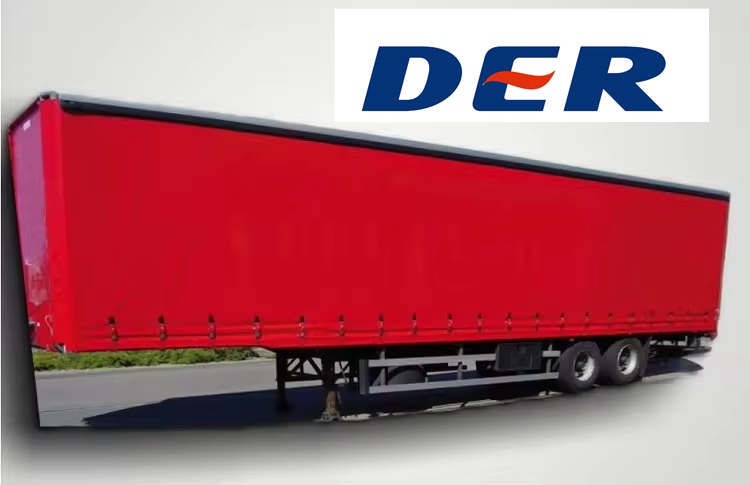
| Open-road truck tarps | Tear propagation after small edge damage | Flapping and point loading | Pair material tear data with hem and tie-point design. |
| Agricultural and site covers | Resistance to snag-driven damage | Contact with sharp equipment | Evaluate snag prevention and reinforcement, not tear value alone. |
| Tent panels | Cut propagation at seams or attachments | Cycles of wind-driven loading | Review seam geometry and cut orientation. |
| Reusable industrial covers | Repeated handling without notch growth | Corner rubbing and bending | Inspect wear zones and damaged parts during reuse. |
How GSM, denier and coating affect performance
PVC tarpaulin is a system of coating, polyester reinforcement and surface finish. No single construction number substitutes for the finished-material test.
Yarn mobility
The weave and coating bond affect whether yarns can move and distribute load around a developing tear. A very rigid system may resist one loading mode but behave differently in another.
Denier and density
Stronger and denser polyester reinforcement can contribute, but strand grade, crimp and local damage also matter. Record both the yarn construction and actual tear results.
Coating formulation
PVC flexibility, coating continuity and plasticizer selection influence bending and damage response; coating mass alone is insufficient to predict a tear test.
Fabrication details
Corners, eyelets, cutouts and weld stops concentrate stress. Reinforcement and geometry should be separately verified with representative assembly samples.
Simplified construction diagram for buyer education. Layer number and composition vary by grade; this is not a cross-section or verified test result.

Common defects and receiving inspection
Inspection should record actual defect locations, confirm the approved reference and distinguish visual observations from standard-test results.
Tears radiating from eyelets
Check hole clearance, flange damage, spacing, backing patches and applied tension.
Progressive damage at cut edges
Inspect trim quality and whether exposed yarns are secured by hems or compatible welding.
Localized coat splitting
Look at bending damage, stiffness and peeling adjacent to the tear; add adhesion checks if needed.
Unexpected differences between rolls
Confirm orientation, fabric lot, density and specimen method before assuming a supplier grade change.
How to qualify the grade before bulk purchase
Link test evidence to the actual roll specification and to the way the material will be converted and used.
Define the expected tear risk
Indicate whether the product sees wind flutter, snagging, repeated attachment or dragging over abrasive surfaces.
Select one comparison method
List ISO 4674 part/procedure or the precise ASTM D751 procedure, along with specimen direction and units.
Review finished-edge construction
Provide eyelet pitch, hem width, reinforcement layout and loading sketches for converted tarps.
Document failure evidence
For a complaint, send close photographs, location, lot code and service conditions; avoid testing a damaged scrap as if it were virgin material.
DERFLEX documentation, TDS and sample discussion
Ask which grade-specific technical data sheet, representative sample and test evidence may be available for the proposed construction. Availability, report coverage, sample charges, sampling locations, independent-laboratory work and issue dates must be confirmed in the quotation and approval documents. This page does not claim that DERFLEX already holds a particular passing report for every product or lot.
For an efficient technical enquiry, include the following:
- End use, exposure and intended market
- GSM, base yarn and construction if known
- Roll width, color, finish and quantity
- Named test methods and minimum acceptance limits
- Seam, hem, eyelet or conversion drawings
- Required TDS, sample and inspection evidence
Tear Strength — FAQ
Concise answers for procurement teams preparing a test plan, sample approval or comparison of supplier technical data.
Is tear strength the same as tensile strength?
No. Tensile measures breakage of a pulled specimen, whereas tear testing studies an initiated tear or notch. A material can rank differently on the two measures.
What is ISO 4674 used for?
ISO 4674 specifies tear-resistance methods for coated fabrics; Part 1 uses constant-rate techniques and Part 2 uses ballistic pendulum techniques.
Can I compare a tongue-tear result with a trapezoid-tear result?
Not directly. Different specimen shapes and loading routes can yield different values for the same fabric.
Why does a tarp tear at the eyelet when the TDS has good numbers?
The eyelet introduces a hole and concentrated stress. Material tear results do not include eyelet installation quality, backing patches or tie-down forces.
Does higher GSM always improve tear resistance?
No. Polyester scrim, coating flexibility, weave behavior and manufacturing quality determine performance alongside mass per area.
What samples should I approve for a high-risk tarp?
Approve both a clearly identified base-fabric swatch and a representative reinforced-edge or fastening coupon when the finished attachment is critical.