



PVC Tarpaulin Waterproof Test
Waterproof fabric and a waterproof finished cover are not the same engineering claim. Hydrostatic testing evaluates resistance to penetration through the material under controlled pressure. Buyers must also consider joints, holes, edge treatments, slope, pooling and installation.
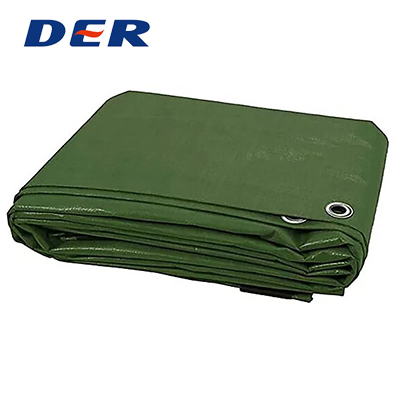
The ISO 811:2018 hydrostatic pressure method tests a fabric's resistance to water penetrating under increasing pressure. Results are commonly stated as a pressure or an equivalent water column. A passed flat-fabric specimen does not demonstrate that sewn seams, grommets, welded joins or the finished tarp assembly are leak-tight.
Test method, scope and buyer meaning
What the laboratory measures, where the method applies and why the test procedure must accompany every strength or endurance number.
In a hydrostatic test, water pressure acts against a clamped fabric specimen until the method's defined penetration event. ISO 811:2018 specifies this kind of textile test; ASTM D751 includes hydrostatic resistance procedures for coated fabrics. ISO 4920 spray testing assesses surface wetting, which is a different property. A buyer should choose the method that matches the actual water-ingress risk.
Hydrostatic pressure can be expressed in kPa, mbar or mm H₂O. Conversion is a physical relation, but comparisons still need the same ramp rate, specimen condition, penetration criterion and specimen orientation. A water column is a test condition, not automatically a safe depth of stored water for a finished assembly.
A PVC coating can provide a continuous water barrier, while punctures, pinholes, stitching and heat-damaged welds create concentrated leak paths. A test of intact material cannot detect all faults introduced during conversion.
For tents and outdoor covers, runoff geometry matters. Pooling water increases pressure and changes mechanical stress; poor drainage can compromise an otherwise suitably waterproof material. For containment or pond liners, sustained head, chemical exposure and sealing details require project-specific methods beyond a general tarp claim.
Primary reference methods
| Standard / open reference | Purpose | Procurement interpretation |
|---|---|---|
| ISO 811:2018 | Hydrostatic water penetration resistance | Record pressure rate, surface orientation and endpoint. |
| ASTM D751 | Hydrostatic resistance of coated fabrics | Name the precise procedure and acceptance criterion. |
| ISO 4920:2012 | Surface wetting / spray rating | Do not equate repellency with hydrostatic waterproofness. |
The links are to official standards catalogs. They identify the published scope; use the licensed full text and contract edition for laboratory execution.
Units, readings and reporting
A test result is a number plus its method, specimen, condition, direction and acceptance rule. Require all of those fields in a supplier comparison.
| Report field | Typical unit / expression | How the buyer reads it |
|---|---|---|
| Hydrostatic head | mm H₂O / cm H₂O or kPa | Pressure at the method-defined penetration endpoint. |
| Ramp rate | Pressure per unit time | Faster or slower pressure rise can affect results. |
| Face orientation | Coated or reverse face toward water | Specify which surface was exposed. |
| Leakage endpoint | Named droplet / penetration criterion | Confirm the method's exact pass/fail event. |
| Seam leak performance | Assembly-specific test record | Keep separate from virgin sheet resistance. |
Requirements differ by application
Use the failure mode—not the headline GSM—to determine which property deserves the most attention and which assembly details need independent approval.
| End use | What to prioritize | Main risk | Buyer action |
|---|---|---|---|
| Protective truck tarpaulins | Rain penetration and seam continuity | Wind-driven rain at stitching and eyelets | Include finished-edge and seam inspection. |
| Temporary shelters and tents | Water head, joints and drainage | Rainfall, folds and ponding | Approve roof slope and welded/sewn joint detailing. |
| Outdoor machinery covers | Pinhole and fastening control | Prolonged wetting with abrasion | Examine mounting points and fabric wear zones. |
| Containment liners | Pressure, seams and liquid compatibility | Sustained head and fluid exposure | Use an engineered application test plan, not ISO 811 alone. |
How GSM, denier and coating affect performance
PVC tarpaulin is a system of coating, polyester reinforcement and surface finish. No single construction number substitutes for the finished-material test.
PVC continuity
Complete coating coverage and absence of pinholes are central to a flat-sheet barrier. Coating mass can help explain construction but does not by itself guarantee a flawless surface.
Base fabric
Denier, weave and yarn support influence deformation under pressure. Strong polyester can limit distortion but is not the component that directly seals water pathways.
GSM and thickness
These describe mass and geometric properties, not a universal hydrostatic result. Different layer systems of similar GSM can perform differently.
Fabrication
Weld design, sewn holes, reinforcements and fittings can dominate the finished cover's leakage risk. Test representative fabricated coupons where stakes are high.
Simplified construction diagram for buyer education. Layer number and composition vary by grade; this is not a cross-section or verified test result.

Common defects and receiving inspection
Inspection should record actual defect locations, confirm the approved reference and distinguish visual observations from standard-test results.
Pinholes or coating skips
Backlight representative specimens and confirm suspect areas with the agreed hydrostatic method.
Leaks at stitching
Inspect thread holes, tapes and sealing; verify the selected assembly method.
Leaks near eyelets
Check reinforcement, puncture sealing and drainage direction.
Water pooling
Review finished geometry and support spacing; do not assume water-pressure tests validate structural loading.
Moisture trapped in folded storage
Assess storage practice and drying even when the fabric itself resists penetration.
How to qualify the grade before bulk purchase
Link test evidence to the actual roll specification and to the way the material will be converted and used.
Define water exposure
Rain splash, wind-driven rain, temporary pooling and continuous containment are different requirements.
Specify material test
Name ISO 811 or a relevant ASTM D751 procedure with exact endpoint, units and minimum.
Verify critical joins
Obtain approved seam types and, if required, matching joint leak or strength tests.
Review installation
Confirm slope, support, drainage, puncture hazards and cleaning instructions before final acceptance.
DERFLEX documentation, TDS and sample discussion
Ask which grade-specific technical data sheet, representative sample and test evidence may be available for the proposed construction. Availability, report coverage, sample charges, sampling locations, independent-laboratory work and issue dates must be confirmed in the quotation and approval documents. This page does not claim that DERFLEX already holds a particular passing report for every product or lot.
For an efficient technical enquiry, include the following:
- End use, exposure and intended market
- GSM, base yarn and construction if known
- Roll width, color, finish and quantity
- Named test methods and minimum acceptance limits
- Seam, hem, eyelet or conversion drawings
- Required TDS, sample and inspection evidence
Waterproof Test — FAQ
Concise answers for procurement teams preparing a test plan, sample approval or comparison of supplier technical data.
What standard is used to test PVC tarpaulin waterproofness?
ISO 811:2018 is a hydrostatic pressure method for fabric water penetration resistance. ASTM D751 also includes hydrostatic tests for coated fabrics.
Is 10,000 mm water column a universal requirement?
No. The appropriate hydrostatic criterion depends on the application and test procedure. Do not insert a generic minimum without engineering or purchasing justification.
Does ISO 4920 prove a fabric is waterproof?
No. ISO 4920 evaluates resistance to surface wetting in a spray test, not hydrostatic penetration under water pressure.
Can a waterproof tarp leak at the seams?
Yes. Stitch holes, poor welds, eyelet penetrations and reinforcement details can leak even when the base fabric passes.
Does thicker fabric always prevent leaks?
Not necessarily. Coating continuity, defects, joint quality and application conditions matter more than a thickness number alone.
What should be specified for a pond or containment liner?
Define liquid type, static head, exposure time, support, seam qualification and application-specific engineering criteria rather than relying only on a general tarpaulin water test.