01
Tear & Puncture Resistance
Reinforcement helps limit propagation of local damage caused by handling, rough substrates, fittings and installation tools. A protective underlay may still be required on abrasive surfaces.



 Reinforced Liquid-Containment Materials
A weldable, polyester-reinforced PVC membrane developed for water containment projects where a thin unsupported film may not provide enough tear strength, dimensional stability or handling durability.
DERFLEX supplies reinforced PVC liner material for tank fabricators, installers, distributors and industrial buyers. Material selection can be matched to tank geometry, water head, substrate condition, indoor or outdoor exposure, welding method and required documentation.
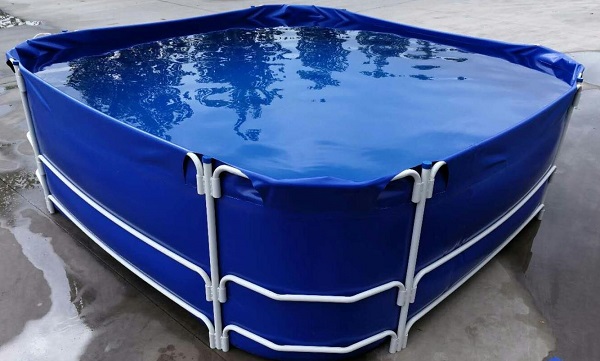
A reinforced PVC water tank liner is a composite flexible membrane in which a woven polyester scrim carries mechanical load while PVC layers create the water barrier, weldable surface and protective skin. This structure is different from thin, unsupported PVC film: the fabric core helps the liner resist stretching, handling damage and localized stress around folds, fittings and tank edges.
For industrial procurement, the liner should not be selected only by thickness. Tank height changes hydrostatic pressure; repeated filling and draining introduces flexing; rough steel or concrete surfaces can increase abrasion and puncture risk; outdoor installations add UV and temperature exposure. The specification therefore needs to connect material construction with the real operating condition.
The PVC compound provides the containment surface, but the woven reinforcement is what gives a heavy-duty liner its structural character. Yarn denier, weave density, coating mass, adhesion and finished flexibility need to work together.
For fabricated liners, seam behavior is equally important. A membrane with strong sheet properties can still underperform if the selected compound, welding parameters or joint geometry are unsuitable. DERFLEX can discuss roll construction around the fabricator's intended welding process.
The useful question is not “Is the liner waterproof?” but “Will the complete liner system remain dependable under the tank's real load, movement and installation conditions?”
Reinforcement helps limit propagation of local damage caused by handling, rough substrates, fittings and installation tools. A protective underlay may still be required on abrasive surfaces.
The woven core reduces uncontrolled stretch and helps fabricated panels hold their designed geometry when the tank is filled.
Compatible PVC surfaces support repeatable heat or high-frequency seam fabrication when equipment settings, overlap and cleanliness are properly controlled.
Flexible coated textile constructions can accommodate folding and fill-drain movement better than brittle sheet systems when the compound is matched to service temperature.
UV-resistant, anti-mildew and weather-oriented formulations can be considered where liner edges or fabricated tanks are exposed to sunlight and humidity.
For treated water, wastewater or process liquids, compatibility should be checked against chemical type, concentration, temperature and contact duration before approval.
The table below is a practical starting range based on DERFLEX water-tank and PVC coated-fabric constructions. Final values should be confirmed in the project TDS and approved sample.
| Specification Item | Typical / Custom Direction | Why It Matters for Tank Liners |
|---|---|---|
| Material Structure | Polyester reinforcement with PVC coating / lamination on both sides | Combines load-bearing textile strength with a waterproof, weldable surface. |
| Reinforcement | 1000D × 1000D is a common project construction; other yarn and weave designs available by review | Influences tensile strength, tear resistance, stretch and dimensional behavior. |
| Fabric Weight | Common DERFLEX tank-fabric direction: about 900–1200 gsm; customized constructions available | Higher mass can support thicker coatings and rugged handling, but total structure matters more than GSM alone. |
| Thickness | Approx. 0.7–1.2 mm common range; selected constructions can be discussed up to about 1.5 mm | Should be chosen with tank height, substrate, fabrication method and puncture risk. |
| Roll Width | Project-dependent; DERFLEX PVC coated fabric production includes wide-width options up to about 5.1 m on selected products | Wider material can reduce the number of seams in large fabricated panels. |
| Color | Blue, gray, white, black, green and custom colors subject to formulation / MOQ | Supports OEM identification, inspection visibility and project appearance. |
| Surface | Smooth, matte / glossy, lacquered or application-specific finish by construction | Surface finish can affect cleanability, abrasion behavior, blocking and welding. |
| Optional Formulation | UV, anti-mildew, cold-resistant, abrasion-oriented or other project-specific options | Allows the formulation to respond to the actual installation environment. |
| Fabrication | Roll goods for converter welding; custom fabricated panels / tank products may be discussed | Supports both OEM liner production and application-specific finished projects. |
| Testing | Tensile, tear, coating adhesion, thickness, weight, weld/seam trials and requested compliance checks as applicable | Creates a more reliable approval process than purchasing by color and thickness alone. |
* Values are not universal limit specifications. Exact construction, tolerances, certificate scope and test methods depend on the ordered product and project requirements.
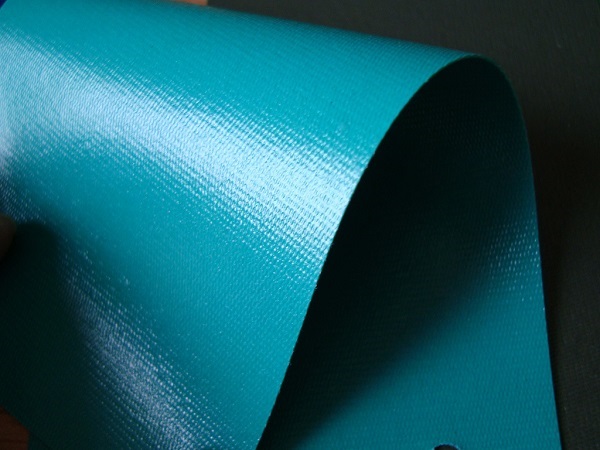
A buyer evaluating reinforced PVC water tank liner material should review the scrim pattern, coating uniformity, surface condition, folding behavior and weld sample—not only a finished installation photo.
For repeat purchasing, an approved reference sample and agreed test items help reduce variation between production batches.
Each application requires its own fit, seam, support and liquid-compatibility review.
A separate flexible liner can isolate stored water from the steel shell and accommodate the geometry of modular tanks.
Useful where an independent waterproof membrane is preferred over relying solely on the existing concrete surface.
Reinforced PVC can support farm water storage, irrigation reservoirs, water trough systems and field storage projects.
Water containment for emergency or fire-service systems can be specified around tank size, installation and required local standards.
Process or utility water tanks may benefit from a replaceable liner, provided liquid compatibility and operating conditions are verified.
The same reinforced PVC material family can be welded into pillow tanks, framed tanks and other flexible containment products.
Sending only “1.0 mm blue PVC liner” leaves too much room for mismatch. A more complete RFQ gives the material team enough information to recommend a practical construction and prepare a relevant sample.
Material choice should follow the project—not a generic rule that one polymer is always better.
| Decision Factor | Reinforced PVC | Thin Unsupported PVC Film | PE / Geomembrane Direction |
|---|---|---|---|
| Mechanical reinforcement | Woven scrim supports tear and dimensional stability | Relies mainly on film thickness | Depends on film / woven construction |
| Shop fabrication | Well suited to welded textile fabrication when formulation and process match | Weldable but easier to overstress or puncture in demanding handling | Commonly welded with polymer-specific equipment and procedures |
| Folding & transport | Practical for pre-fabricated flexible liners and tanks | Lightweight but may be less tolerant of repeated handling | Varies by grade and thickness |
| Surface customization | Color, finish and selected functional additives can be customized | More limited structural tuning | Good chemical / geomembrane options depending polymer |
| Best use logic | Projects requiring waterproofing plus textile reinforcement and fabrication flexibility | Lower-stress containment where reinforcement is not necessary | Large geomembrane or chemical applications where PE properties fit the design |
Two “1.0 mm PVC liners” can behave very differently if yarn construction, coating adhesion, plasticizer system, weldability and surface treatment are different.
For higher tanks, sharp substrate details or frequent cycling, ask for tensile / tear data, seam trials and an approved material sample. For chemical or potable-water service, request application-specific documentation before order confirmation.
DERFLEX's value in tank liner projects comes from being able to work at the material level—reinforcement, coating, lamination, width, surface and welding behavior—rather than treating the liner as a generic finished sheet.
Company-profile figures are presented as DERFLEX operating information. Exact line allocation, available constructions and project lead time should be confirmed for the requested specification.
Consider a circular bolted steel tank that shows aging at panel joints but remains structurally serviceable. Instead of specifying a liner from capacity alone, the buyer records tank diameter and wall height, inspects protrusions and fasteners, identifies inlet/outlet locations, defines the stored-water category and confirms whether the liner will be shop-fabricated or welded on site.
A reinforced PVC construction can then be evaluated for tensile and tear performance, folding behavior and seam process. The installation design can include a protective layer against rough steel surfaces and reinforced details around penetrations. This engineering sequence reduces the risk of buying a membrane that is technically waterproof but poorly matched to the tank.
These six internal resources support material comparison, tank-fabric selection and related waterproof applications.
It is a flexible waterproof membrane made with a woven reinforcement—commonly polyester—encapsulated by PVC layers. The reinforcement improves tensile, tear and dimensional behavior compared with an unsupported PVC film, while the PVC surface provides the water barrier and a weldable fabrication surface.
There is no single thickness for every tank. DERFLEX water-tank constructions commonly fall around 0.7–1.2 mm, with heavier designs available for selected projects. Tank height, substrate roughness, liquid, seam method, handling and expected service conditions should be reviewed together before the thickness is fixed.
Potentially, but potable-water use should never be assumed from the polymer name alone. Tell DERFLEX the destination country and required drinking-water standard so the exact formulation and documentation can be reviewed. The finished liner, seams, fittings and installation may also be part of the compliance scope.
DERFLEX supplies coated-fabric roll goods and also works with custom PVC fabrication. For a fitted liner or fabricated panel, provide the tank drawing, finished dimensions, attachment method, penetrations and seam plan so feasibility can be reviewed.
It can be considered for both. The substrate should be structurally sound, clean and free of sharp points. Concrete roughness, steel bolts, welds, corrosion edges and penetrations may require smoothing, padding or protective underlay to avoid damaging the liner.
Reinforced PVC liner panels are commonly fabricated by high-frequency or hot-air / hot-wedge welding, depending on the material and equipment. Seam overlap, temperature or power, pressure, dwell time and cleanliness need to be validated with a representative weld trial.
Service life depends on formulation, UV exposure, temperature, liquid chemistry, substrate condition, fill-drain cycling, seam quality and maintenance. Rather than using a universal life claim, specify the real conditions and request a construction suited to them.
For a more useful quotation, include tank dimensions, substrate, stored liquid, water depth, indoor/outdoor exposure, target thickness or GSM, welding method, required certifications, fittings and estimated quantity. DERFLEX can then discuss a reinforced PVC construction and sample plan.