Load-Bearing Base Fabric
Polyester yarn size, density and weave influence tensile behavior, dimensional stability and how a small cut may propagate under tension.




Custom PVC tarps developed for the full working cycle: deploy, secure, clean, inspect, repair, store and use again.
DERFLEX supports distributors, contractors, fleet operators, industrial buyers and OEM brands with coated tarp rolls, cut panels and finished covers. Material weight, reinforcement, attachment hardware and packaging can be aligned with the intended handling frequency and service environment.
A cover may look heavy duty on delivery yet fail to become a practical reusable asset. Early damage often starts at unsupported grommets, rough contact zones, folded coating, trapped moisture or an unsuitable storage method. The specification should therefore follow the complete operating cycle.
Reusable heavy duty tarps are reinforced protective covers intended for repeated deployment rather than short-term disposal. They are commonly made from woven polyester with a durable PVC coating because this structure can combine tensile strength, waterproof protection, weldability, abrasion resistance and practical cleaning.
The word “reusable” does not describe a guaranteed number of cycles. Actual service depends on material grade, cover geometry, attachment method, climate, wind movement, surface contact, cleaning, folding and storage. A professional quotation should describe these conditions before the tarp construction is confirmed.
DERFLEX can discuss reusable waterproof tarps for construction stock, industrial equipment, truck and trailer protection, agriculture, seasonal inventory, municipal storage and private-label distribution.
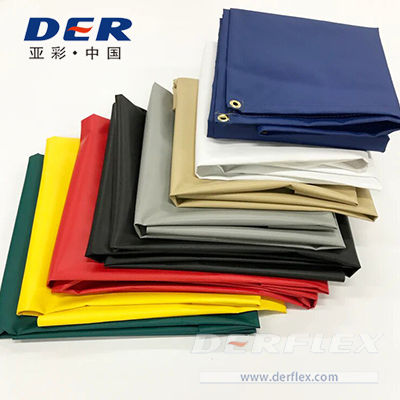
For repeated industrial handling, PVC coated polyester is often selected over lightweight temporary sheeting. The polyester base fabric carries tensile load while the coating forms a protective, cleanable and weldable surface.
Weight alone is not enough. Yarn structure, coating adhesion, seam construction, perimeter reinforcement and hardware backing should be considered together.
Repeated use depends on the weakest part of the cover. These six areas should be reviewed as one connected system.
Polyester yarn size, density and weave influence tensile behavior, dimensional stability and how a small cut may propagate under tension.
The PVC layer supports waterproofing, cleaning and welding. Formulation can be discussed for UV exposure, cold flexibility, mildew, oil or abrasion conditions.
Large covers require panel joints. Seam direction, overlap and welding method should avoid concentrating force at corners or repeated folding lines.
Webbing, multilayer hems, rope-in-hem or additional PVC strips help transfer tie-down load into a wider edge area.
Contact points around cargo corners, frames, roof bows or machinery projections can use replaceable strips or local reinforcement patches.
Grommets, D-rings, straps and buckles should be corrosion-appropriate, backed by sufficient material and positioned for the actual pull direction.
The coated fabric is the foundation, but finished-tarp durability is determined by how that material is cut, joined and reinforced. For example, a stronger fabric cannot compensate for a grommet installed into a single unsupported layer.
DERFLEX can supply roll material for local converters, semi-finished welded panels or completed tarps. Buyers can share a drawing, sample, installation photo or marked-up sketch so high-load and high-wear areas can be discussed before sampling.
Surface options may include matte, semi-matte, glossy, lacquered or embossed directions. Custom color, logo printing and identification labels can also support fleet management and private-label programs.
Use this table as a quotation checklist. Final values and compliance requirements should be confirmed through an approved data sheet, sample and agreed test method.
| Item | Common project direction | Why it matters for reuse |
|---|---|---|
| Base material | Woven polyester with PVC coated or laminated construction | Supports tensile load, weldability, surface durability and repeatable fabrication. |
| Finished weight | Approximately 450–1200 gsm for many projects; heavier structures can be reviewed | Weight affects handling, coating volume and strength, but should not be evaluated without scrim and reinforcement details. |
| Supply form | Full rolls, slit rolls, cut panels, welded sheets or complete finished tarps | Allows importers, converters, fleets and project buyers to choose the most efficient production stage. |
| Panel joining | Hot-air welding, high-frequency welding, sewing or combined construction | Seam placement and method influence waterproofing, folding and load transfer. |
| Edge reinforcement | Folded hems, webbing, rope-in-hem, additional PVC strip or multilayer edge | Helps spread tie-down force and reduces concentrated damage around the perimeter. |
| Hardware | Grommets, D-rings, buckles, hooks, straps, elastic cord and custom fittings | Attachment spacing and pull direction should match installation rather than use a generic layout. |
| Functional options | UV, cold-flexibility, mildew, flame-retardant, anti-static, oil or abrasion directions | Optional treatment should be matched to the exposure and verified against the requested standard. |
| Branding & packing | Logo printing, labels, serial identification, barcodes, cartons, bales or pallets | Supports inventory control, reusable fleet tracking, wholesale presentation and repeat-order consistency. |
A reusable cover program can be evaluated as an operating asset. The lowest purchase price may not create the lowest cost over repeated deployments.
Include labor required to install, remove, clean, inspect and store the tarp. A heavier specification can also be inefficient when staff cannot handle it safely or when the cover is oversized for the task.
The cover design should follow the way it is moved, tensioned and stored in each application.
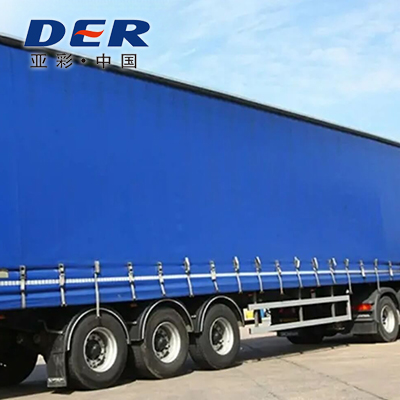
Truck, trailer, flatbed and cargo covers with abrasion strips, reinforced edges and repeatable fastening layouts.
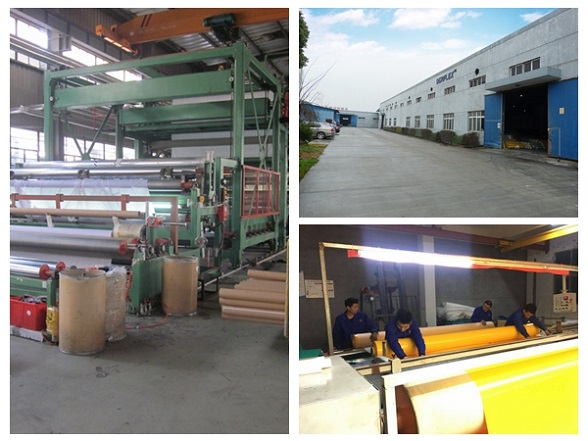
Made-to-measure machinery, warehouse and outdoor storage covers for repeated maintenance or shutdown cycles.
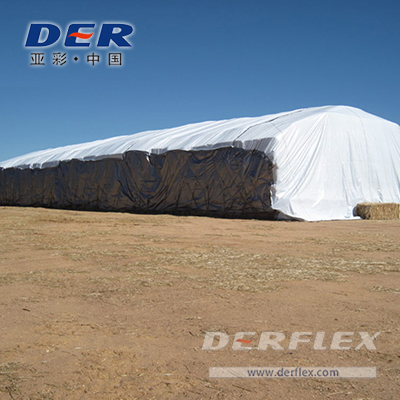
Hay, feed, machinery and material covers planned for seasonal cleaning, drying, inspection and storage.
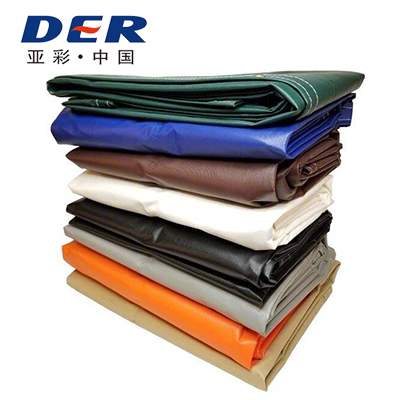
Reusable site covers for material stacks, weather protection, temporary enclosure and project inventory rotation.
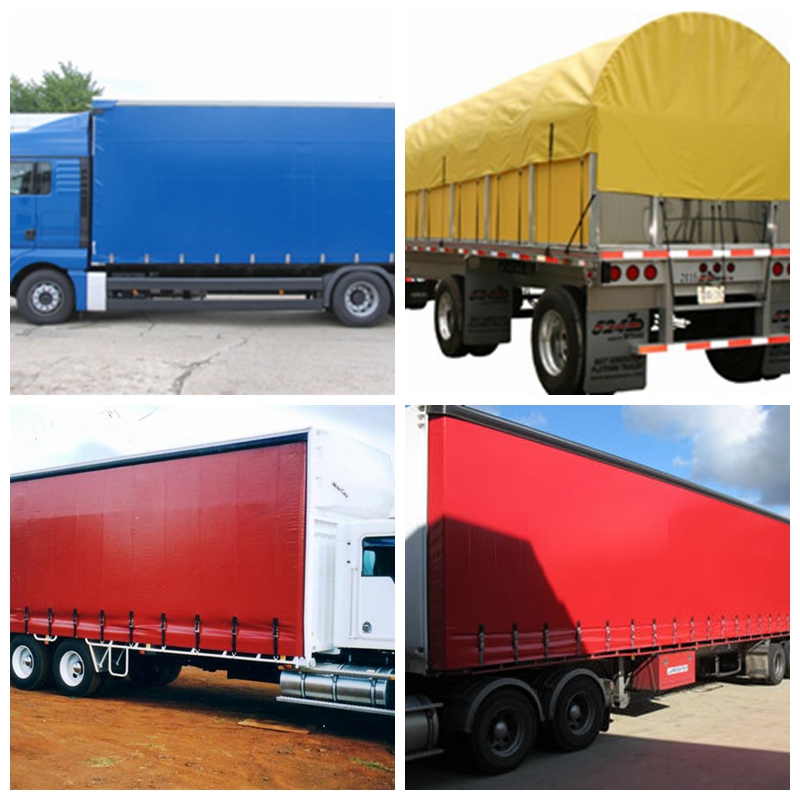
Clearly labeled covers packed for storage, inspection schedules and redeployment during maintenance or response work.
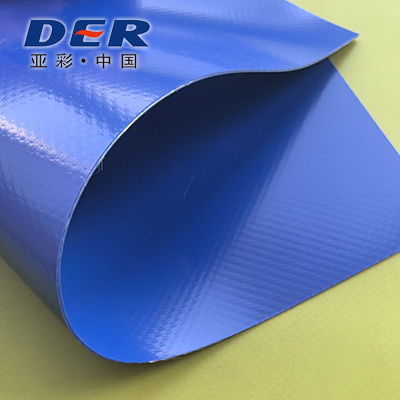
Standardized material, color, hardware, cartons and labels for distributors selling repeatable tarp product lines.
No single tarp material is ideal for every use. The decision should reflect exposure, handling, breathability, fabrication and target service cycle.
| Decision factor | PVC coated polyester | Reinforced PE | Canvas |
|---|---|---|---|
| Typical direction | Repeated industrial, truck, equipment and custom-cover use | Temporary to moderate-duty general covering | Breathable protection for selected equipment or dry goods |
| Water protection | Waterproof material surface; finished performance depends on seams and installation | Generally waterproof when intact; puncture and seam design remain important | Usually water-resistant rather than fully waterproof |
| Fabrication | Suitable for welded panels, shaped covers, reinforced hems and custom hardware | Can be heat-sealed or sewn depending on structure | Commonly sewn; breathable but less suited to welded waterproof panels |
| Cleaning | Smooth coated surface can support practical washing and wipe-down | Lightweight and washable, but repeated creasing may affect lower grades | May retain moisture and dirt; requires thorough drying |
| Handling | Higher grades may be heavier; weight should match crew and installation method | Lighter and easier to move | Can become heavier when wet |
| Best procurement use | Programs where durability, repairability, branding and repeat specification matter | Price-sensitive or shorter-duration protection | Applications prioritizing breathability and traditional fabric handling |
A structured approval process helps reduce specification drift between samples and repeat orders.
Share use, dimensions, climate, contact surfaces, fastening method, handling cycle, quantity and destination market.
Discuss fabric grade, coating, seams, hems, wear zones, hardware, labels and supply format.
Review color, surface, dimensions, reinforcement, folding method, packing and agreed inspection points.
Manufacture against the approved specification and coordinate packing, palletization and export documentation.
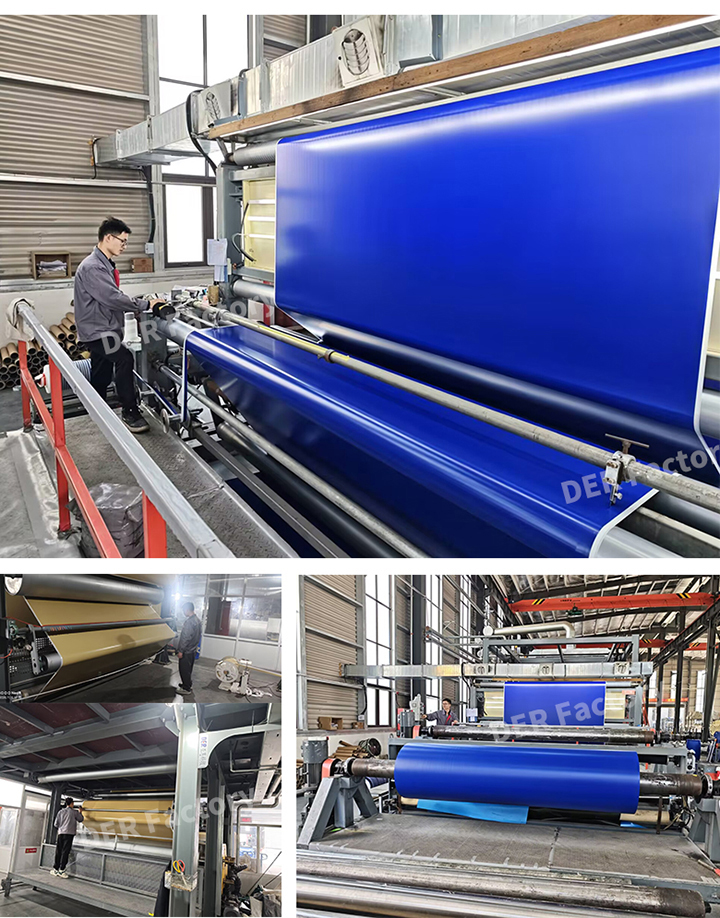
DERFLEX is a manufacturing-based supplier of PVC coated fabrics and tarpaulin solutions for international B2B buyers. The team can discuss both roll-level material requirements and finished-cover details, helping buyers align coating, welding behavior, reinforcement and packaging within one specification.
Required performance values, certificates or market-specific compliance documents should be identified during inquiry and confirmed in the final quotation.
Discuss Your Tarp ProgramThese six pages support specification decisions for reusable, reinforced and waterproof tarp programs.
Care instructions should be confirmed for the selected material and contamination type. The following practices are useful general planning points.
Remove grit, mud and residues that can abrade the coating during folding. Use compatible cleaning methods and avoid unapproved solvents.
Do not pack a wet tarp into a closed bale or container. Trapped moisture can create odor, mildew risk or surface staining.
Check seams, hems, grommets, D-rings, straps and contact zones. Repair small damage before the next installation increases the load.
Label size, application, inspection date and repair status. Store away from sharp edges, excessive heat and direct sunlight where practical.
Answers for importers, distributors, contractors, fleets, converters and OEM sourcing teams.
There is no universal cycle count. Reuse depends on the material structure, fabrication, exposure, attachment load, abrasion, cleaning, repair and storage. Buyers should define the intended operating cycle and approve a sample against real use conditions.
PVC coated polyester is commonly considered for repeated industrial and outdoor use because it can combine a waterproof surface, tensile strength, welding compatibility, cleaning and custom reinforcement. Reinforced PE or canvas may be suitable for other priorities and service levels.
Many PVC tarp constructions can be patched by compatible hot-air welding, high-frequency welding, adhesive systems or professional repair methods. The correct process depends on the coating formulation, damage location and available equipment.
Yes. Grommet spacing, D-rings, webbing, rope-in-hem, patches, wear strips, straps and other hardware can be discussed according to drawings, samples or installation photos.
Yes. Supply formats can include PVC coated fabric rolls, slit rolls, cut panels, welded sheets, semi-finished components and completed custom tarps.
Send the application, size or drawing, expected quantity, target material weight, color, surface, exposure, handling frequency, seam method, reinforcement zones, hardware type and spacing, packing, destination and any required test standard.
Share your application, dimensions, handling frequency, weather exposure, contact points, fastening layout, quantity and packaging. DERFLEX can review a practical material and finished-cover route for sampling and bulk supply.