


The Science of UV Resistant Tarps: How Sun Protection Works
UV resistance is not a color, a thickness number, or a simple “UV treated” label. It is the result of polymer chemistry, stabilizer packages, pigments, coating structure, surface protection, base-fabric support and the way a finished tarp is fabricated and exposed outdoors.
This guide explains what sunlight does to tarpaulin materials, how UV protection systems slow degradation, how accelerated weathering tests should be interpreted, and what B2B buyers should ask before specifying an outdoor tarp.
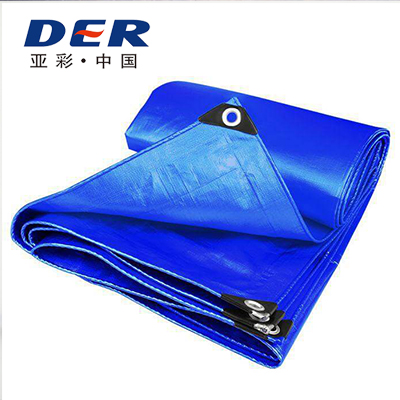
A finished tarp can look simple, but outdoor durability depends on the chemistry and construction beneath the surface.
How do UV resistant tarps work?
UV resistant tarps slow sunlight-driven material degradation by combining physical screening and chemical stabilization. UV absorbers can intercept damaging ultraviolet energy, light stabilizers can interrupt radical-driven degradation reactions, pigments can reduce light penetration, and a well-designed coating protects the load-bearing textile beneath it.
For heavy-duty outdoor PVC tarps, the best result comes from treating the tarp as a complete system: coating formulation + pigment package + surface finish + polyester scrim + welded seams + reinforced edges + correct installation.
What Sunlight Actually Does to a Tarp
Sunlight contains ultraviolet radiation energetic enough to initiate chemical changes in susceptible polymer systems. The visible result may be fading or chalking, but the more important procurement question is whether the coating is losing flexibility, adhesion or mechanical performance.
UV Energy Arrives
Short-wavelength solar radiation reaches the exposed polymer surface.
Molecules Absorb Energy
Chromophores, impurities, pigments or polymer structures can absorb that energy.
Reactive Species Form
Excited states and free-radical reactions can start oxidation and chain damage.
Material Properties Shift
The surface may harden, chalk, discolor, crack or lose elongation and adhesion.
Mechanical Failure Accelerates
Wind, folding and tie-down stress then exploit the weakened material.
Four Ways a UV Protection System Can Slow Degradation
Outdoor stabilization is usually not one magic additive. Different mechanisms can be combined because they act at different points in the degradation chain.
UV Absorbers
UV absorbers preferentially absorb damaging ultraviolet energy and dissipate it in a less harmful form, reducing how much reaches vulnerable polymer structures.
Light Stabilizers / HALS
Hindered amine light stabilizers do not primarily block UV. They help interrupt radical-driven degradation reactions, especially useful in many polymer systems.
Pigments & Screening
Well-selected pigments can reduce penetration of damaging light. Pigment chemistry, dispersion and heat absorption must be considered together.
Surface & Barrier Design
Coating thickness, lacquer or topcoat, adhesion and surface uniformity help protect the textile core and reduce pathways for weathering damage.
Technical note: a tarp formulation may use different stabilizer strategies depending on polymer type, color, required transparency, coating process, climate and target performance. Buyers should specify the required performance outcome rather than demand one additive name without context.
Why PVC Coated Polyester Can Be Effective for Heavy-Duty Outdoor Tarps
In a PVC coated polyester tarp, the coating and the textile core perform different jobs. The coating provides the weather barrier and carries the outdoor additive system; the woven polyester scrim carries much of the mechanical load.
PVC Coating / Lamination
The outer polymer layer faces sunlight, rain, dirt, temperature cycling and abrasion. Outdoor formulation, pigment dispersion, coating uniformity, adhesion and optional surface finish all influence how this layer ages.
For product-level sourcing, compare these factors alongside the specifications in DERFLEX's UV resistant PVC tarpaulin range rather than selecting by thickness alone.
Polyester Base Fabric
The woven scrim helps provide tensile strength, tear resistance and dimensional stability. If prolonged weathering makes the coating crack or lose adhesion, the core can become more exposed to moisture and mechanical stress.
This is why a heavy-duty outdoor tarp should be specified as a coated textile system, not simply as “a thick plastic sheet.” See the broader PVC tarpaulin material platform for construction directions.
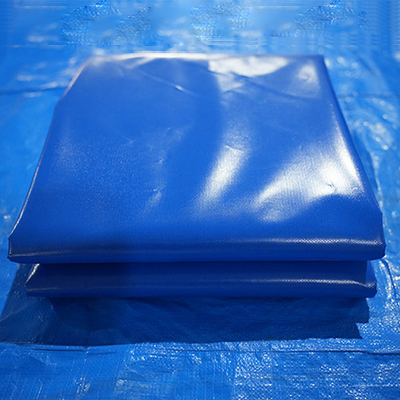
The outer layer takes the first impact from UV, heat, rain and surface abrasion.
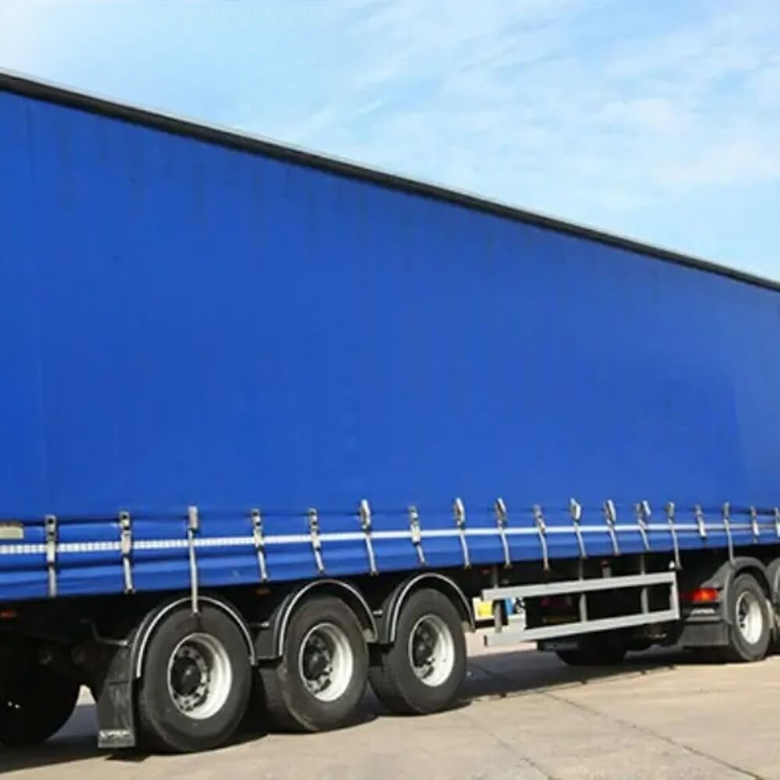
Truck curtains combine UV exposure with wind, road heat, flexing, tension and repeated movement.

Finished tarp life also depends on hems, corners, tie-down geometry and contact with the load.
Color, Thickness and “UV Proof” Labels Can Mislead Buyers
Several visible characteristics influence outdoor behavior, but none of them is a complete UV-resistance specification on its own.
“Black is always the most UV resistant.”
Some dark pigment systems can screen UV effectively, but color alone cannot prove the stabilizer package, pigment quality, dispersion, coating adhesion or heat performance. Dark surfaces may also run hotter in strong sun.
“A thicker tarp automatically lasts longer in sun.”
Higher GSM can improve mechanical robustness, but UV resistance depends on formulation as well as thickness. A lighter properly stabilized material can outlast a heavier poorly stabilized one in UV aging.
“1,000 test hours means X years outdoors.”
There is no universal conversion between accelerated weathering hours and outdoor years. Geography, orientation, temperature, moisture cycles, irradiance and the material itself can all change the relationship.
How UV Resistance Is Evaluated — and What Test Reports Should Tell You
A credible weathering claim should identify the test method, exposure conditions, duration and what property was measured before and after exposure. “Passed UV test” without those details gives buyers very little information.
| Evaluation Method | What It Does | Useful For | Buyer Interpretation |
|---|---|---|---|
| ASTM G154 | Uses fluorescent UV lamps with controlled temperature and moisture cycles. | Accelerated screening of UV/moisture-driven property changes. | Ask for lamp type, cycle, irradiance, temperature, exposure hours and property-retention criteria. |
| ASTM G155 | Uses filtered xenon-arc light with controlled heat and optional moisture. | Broader simulation of sunlight-related exposure including UV and visible spectral regions. | Results from different exposure conditions cannot be compared unless the operating conditions are reported. |
| ISO 4892-2 | Specifies xenon-arc exposure methods for plastics in the presence of moisture. | Internationally recognized laboratory weathering programs. | Confirm the actual cycle and acceptance criteria; the standard itself does not create a universal lifespan number. |
| Natural Outdoor Exposure | Exposes material in a defined real environment over time. | Benchmarking real weathering behavior and validating accelerated rankings. | Location, orientation, season, mounting and exposure period must be known. |
| Post-Exposure Property Tests | Measures retained tensile, tear, elongation, adhesion, flexibility, color/gloss or cracking after weathering. | Turning “UV resistance” into measurable performance retention. | Retention of a relevant property is usually more useful than hours alone. |
Ask for retained performance, not only exposure hours
- Appearance after exposure: fading, chalking, gloss change, cracking.
- Tensile and tear strength retention where mechanically relevant.
- Coating adhesion and flexibility retention for coated textiles.
- Cold-flex or fold behavior if the tarp will be handled after weathering.
- Reference/control sample tested under the same conditions when possible.
Use the test that reflects the failure you care about
A truck tarp buyer may care about cracking, color and tear retention after UV + heat; an agricultural cover buyer may care about continuous sun plus moisture; a printed tarp buyer may place extra weight on color/gloss retention. Testing should follow the end-use risk.
For a broader material-selection view, use the DERFLEX UV resistant tarp guide.
Standards and technical references discussed on this page: ASTM G154, ASTM G155, ISO 4892-2, polymer light-stabilization principles (UV absorbers and hindered amine light stabilizers), and established accelerated-weathering interpretation guidance.
Match UV Protection to Exposure + Mechanical Duty
The best UV resistant tarp is not simply the tarp with the highest advertised UV number. Start with climate and exposure, then add the mechanical demands of the finished application.
| Use Condition | Material Direction | UV Priority | Other Failure Drivers | Procurement Focus |
|---|---|---|---|---|
| Seasonal farm cover | UV-treated PE or lighter PVC depending on reuse target | Moderate | Wind flutter, puncture, fold wear | Expected season count, tie-down spacing, lightweight handling |
| Continuous outdoor storage | UV-stabilized PVC coated polyester | High | Heat buildup, pooling water, abrasion | Stabilizer direction, coating integrity, reinforcement, drainage geometry |
| Truck / trailer tarp | Heavy-duty PVC coated polyester | High | Highway wind, repeated folding, cargo abrasion | Tear strength, welding, webbing, edge reinforcement, UV/heat retention |
| Construction enclosure | PVC tarp or mesh depending on weather-sealing need | High | Flapping, anchor stress, scaffold contact | Panel size, anchor layout, wind pressure, FR requirement if applicable |
| Shade / privacy screen | UV-stabilized mesh | High | Wind load, edge tearing | Shade factor, openness, UV stabilization, reinforced perimeter |
| High-sun / desert market | Project-specific enhanced outdoor formulation | Very high | High surface temperature, thermal cycling, dust | Weathering evidence, pigment/heat strategy, retained flexibility and color |
For buyers who already know they need a heavier outdoor construction, DERFLEX also provides an 18 oz UV resistant PVC tarpaulin direction and broader heavy-duty tarpaulin options. Final construction should be matched to the application rather than selected by oz/GSM alone.
Why a UV-Stabilized Fabric Can Still Fail Early
Laboratory material performance does not eliminate poor installation or weak fabrication. Outdoor failures are often multi-factor: UV aging weakens the material, while wind or repeated folding determines where it finally tears.
Hems & Corners
High-load corners need reinforcement that spreads tension into the body of the tarp rather than concentrating it at one point.
Grommets & D-Rings
Hardware spacing and reinforcement should match wind load, tarp size and the way the cover is tensioned in service.
Welded Seams
Seam design, overlap, welding settings and coating compatibility influence water resistance and fatigue performance.
Pooling & Flutter
Standing water and repeated flapping create loads unrelated to UV chemistry but can accelerate failure of an aged tarp.
What to Specify When Requesting a UV Resistant Tarp
A useful RFQ describes the environment and failure risk first. DERFLEX can then discuss the appropriate tarp material, UV package, construction and fabrication direction.
Truck, storage, construction, agriculture, shelter, mesh screen; continuous or seasonal use.
Region, altitude if relevant, high-sun/desert, coastal, tropical, snow or large temperature swings.
PVC coated polyester, PE, mesh; target GSM/oz only if already defined.
Desired test method, cycle, exposure duration and post-exposure acceptance criteria.
RAL/Pantone if needed; color-retention expectations and heat-load considerations.
Hot-air/HF welding, stitching, hems, webbing, grommets, D-rings, rope or pockets.
Roll width or tarp size, seam count, reinforcement zones and mounting geometry.
Quantity, packaging, private label, destination, sample/testing documentation needs.
Six Ways Buyers Over-Simplify UV Resistance
Color influences light and heat behavior but does not prove the full stabilizer system or outdoor durability.
Weight is a mechanical/material quantity, not a direct measure of UV stability.
Ask what test was used and what property was measured after exposure.
Outdoor exposure severity changes with climate, orientation, wetness, heat and the material itself.
A UV-stable center sheet can still tear first around eyelets, corners, seams and contact points.
A material can block UV transmission yet still weather poorly, or resist weathering without being specified for human UV protection.
Continue from Science to Material Selection
This page is intentionally focused on UV degradation mechanisms and testing. Use the related DERFLEX pages below for product specification, application matching and purchasing decisions.
UV Resistant Tarp Science FAQs
Direct answers to questions procurement teams, distributors and fabricators often ask when comparing outdoor tarp materials.
What makes a tarp UV resistant?
A tarp becomes more UV resistant when its polymer/coating system includes outdoor stabilization and when the complete construction protects the load-bearing fabric from sunlight-driven degradation. Depending on the material, this can involve UV absorbers, light stabilizers, pigments, surface finishes and a suitable coating structure.
Are UV absorbers and HALS the same thing?
No. UV absorbers primarily intercept harmful UV radiation and dissipate the energy, while hindered amine light stabilizers (HALS) mainly interrupt radical-driven degradation reactions. They can be complementary in some polymer/coating systems.
Does a black tarp have better UV resistance than a white tarp?
Not automatically. Some dark pigment systems can provide strong light screening, but UV resistance depends on the entire formulation and coating system. Black surfaces can also absorb more solar heat, so color, heat and durability should be evaluated as separate specification questions.
Does higher GSM mean better UV resistance?
No. GSM describes mass per unit area. A heavier tarp may be stronger mechanically, but UV stability depends on polymer formulation, pigment/stabilizer package, coating integrity and exposure conditions. GSM and UV resistance should be specified separately.
What do ASTM G154 and ASTM G155 measure?
They are practices for accelerated weathering exposure. ASTM G154 uses fluorescent UV lamps with controlled heat and moisture, while ASTM G155 uses xenon-arc light with controlled conditions. The useful result comes from measuring how a material's properties change after a defined exposure, not from the test-hour number alone.
How many outdoor years equal 1,000 hours of UV testing?
There is no universal conversion. Outdoor severity varies with latitude, altitude, season, orientation, surface temperature, moisture, wind and the specific material. Accelerated tests are strongest for comparative screening, qualification and quality control unless they are correlated with relevant outdoor exposure data.
What should I ask a supplier for when comparing UV resistant tarps?
Ask for the material structure, weight, base fabric, outdoor formulation direction, test method and exposure conditions, plus post-exposure criteria such as color, cracking, flexibility, adhesion or strength retention. For finished tarps, also evaluate seams, hems, corners, hardware and installation.
Specify the Outdoor Environment Before You Specify the Tarp
Send DERFLEX the application, climate, exposure level, target weight, finished dimensions, color, fabrication method, quantity and any required weathering test method. The goal is to select a UV-resistant tarp system that matches the real failure risks of the project—not just a marketing label.