


 Technical outdoor textiles · OEM material supply
Cantilever umbrella · Offset patio umbrella · OEM canopy textile
Side Pole Umbrella Canopy Fabric & Replacement Cover Planning
A side pole umbrella, also called a cantilever umbrella or offset patio umbrella, suspends its canopy from a support arm at the edge rather than a pole through the center. For manufacturers and replacement-cover buyers, the canopy needs to match the ribs, vent opening, tension points, outdoor exposure and folding mechanism—not just the overall diameter.
DERFLEX supplies coated and shade textile materials for B2B sunshade applications. This page helps umbrella brands, canopy fabricators and importers specify fabric rolls and discuss custom canopy components. Frames, weighted bases, mechanisms and complete assembled umbrellas are not represented as standard DERFLEX supply.
Technical orientation: the off-center mast clears the shaded seating space. The drawing is illustrative; the canopy and hardware geometry must come from the umbrella OEM.
What Is a Side Pole Umbrella?
A side pole umbrella is a freestanding shading design with its vertical mast outside the main shaded footprint. A cantilever arm transfers the canopy load to that offset mast and its base or anchored foundation. The clear space under the canopy makes this style attractive for outdoor dining, hospitality terraces, garden lounges and pool decks.
Short answer: Side pole, offset and cantilever umbrella usually refer to the same basic support concept. The naming does not specify a particular fabric, wind rating, rotation mechanism or canopy size. Buyers should request the actual frame and canopy specification before ordering fabric or replacement covers.
Unobstructed shade
Position tables, sofas and recliners under a suspended canopy without a center pole occupying the seating area.
Asymmetric loading
Check rib pockets, canopy tension and folding clearance around the hub and side-mounted support system.
Interfaces & seams
Perimeter hems, tip pockets, vent attachment and stitched or welded seams require appropriate detailing, not just durable fabric.
Which Canopy Fabric Fits a Cantilever Umbrella?
Choose the textile based on the balance between shade, rain exposure, ease of folding, weight on the ribs and finish. No single construction is best for every umbrella frame. Material suitability depends on the specific model and finished cover design.
| Material direction | Best-fit consideration | Trade-off or verification |
|---|---|---|
| PVC-coated polyester | Water-blocking canopy concepts and OEM programs needing a coated, cleanable surface. | Confirm coated-fabric mass, flexibility, fold recovery, seam method and whether the ribs and mechanism can carry the cover. |
| Lightweight coated polyester | Folding umbrellas where compact closing and soft drape are critical. | Check actual coating, colorfastness, water resistance and availability by production grade; do not assume it is the same as heavy PVC tarpaulin. |
| Breathable woven / screen textile | Sun control and ventilation in designs engineered for permeable canopy material. | Open mesh does not make a rainproof umbrella. Confirm edge stretch, tearing at rib tips and acceptable daylight transmission. |
| Solution-dyed acrylic (market comparison) | Often specified in outdoor umbrella markets for soft handle and color appearance. | Listed to help compare market choices; DERFLEX supply of acrylic is not asserted on this page. Verify the actual supplier and test evidence. |
For material families and real OEM sourcing context, compare DERFLEX PVC fabric for awnings, awning & shade fabric and sunscreen fabric.
Outdoor Fabric & Shade Application Gallery
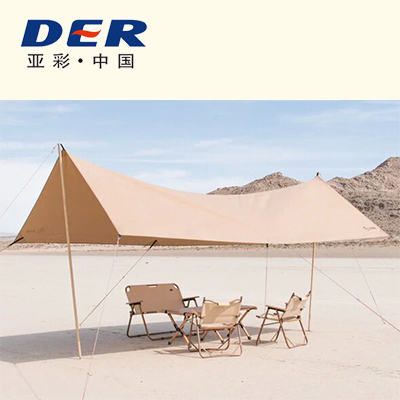
These are existing DERFLEX site images showing related fabrics or outdoor shade applications. They are not claimed to be photographs of a DERFLEX side pole umbrella or evidence of an assembled umbrella supply program.


Fabric Details That Determine Fit & Serviceability
Offset umbrella cover patterns are usually frame-specific. A replacement canopy advertised by nominal diameter may still fail to fit because the rib curvature, vent layout, top hardware or pocket depth differs. Treat the existing cover or OEM pattern as the starting point.
Panel geometry & direction
Specify square, rectangular, octagonal or other outline, number of panels, seam allowance, fabric grain and the measurements from hub to each rib tip. Curved ribs need more than a flat plan diameter.
Rib pockets & corner strength
Record pocket length, entry width, tip shape, reinforcement patch and stitching details. These points are highly concentrated interfaces when the fabric opens and closes.
Vent, hub & hanging point
Photograph the top vent, cap, sleeve and attachment points. Vent type changes fit, drying behavior and airflow; it does not establish a wind rating by itself.
Seams, hems & water runoff
Choose seam construction for the actual coated or woven textile. A waterproof material surface does not guarantee that stitching, vent openings or seams are watertight.
Rotation & fold clearance
Check the closed bundle thickness against the arm, mast and locking parts. A heavy fabric can increase friction and interfere with folding even when it meets strength targets.
UV, colors & surface care
Specify target color references, permitted appearance variation, cleaning method, outdoor exposure and evidence requirements; do not convert lab weathering hours into guaranteed field life.
Side Pole Umbrella Canopy RFQ Specification
Use this structured checklist for a new OEM canopy program, replacement cover development or bulk fabric inquiry. It separates buyer-defined construction from manufacturer-confirmed material properties.
| Specification item | Information to provide | Why it matters |
|---|---|---|
| Supply scope | Fabric roll, cut panel, sewn cover or full assembly inquiry | Separates DERFLEX material supply from umbrella frames, bases and final assembly. |
| Umbrella model | Brand/model number, frame photo, assembly drawing if available | Defines cantilever layout, hub and rib compatibility. |
| Canopy dimensions | Open shape, each rib length, tip-to-tip dimensions, panel count, vent diameter | Controls pattern and coverage rather than relying only on retail size labels. |
| Material priority | Sunshade, water shedding, waterproof surface, breathability, printability or low packed weight | Prevents unsuitable material substitution. |
| Surface & color | Color swatch/RAL/Pantone reference where practical, finish, desired appearance | Allows realistic sample review and color repeat planning. |
| Fabric performance | Target weight, thickness, applicable tensile/tear tests, UV and colorfastness method | Requires grade- and method-specific evidence before specification approval. |
| Conversion | Sewn/welded seams, rib pockets, hem style, vent, reinforcement, branding | Determines tooling, processing compatibility and sample checks. |
| Order plan | Quantity, estimated annual volume, destination market, packaging and schedule | Supports quotation structure and repeat supply planning without invented MOQ or price. |
Technical boundary: Fabric tear or tensile strength is not a finished umbrella's wind certification. Safe wind limits depend on the actual frame, base, anchorage, arm and canopy design, and must be supplied by the responsible umbrella system manufacturer.
Match the Canopy to the Location, Not Just the Color
A side pole patio umbrella shades a different environment when installed over a restaurant terrace versus a residential pool deck. The relevant materials and fit checks change with use.
| Typical setting | Priority in fabric selection | Before committing to bulk supply |
|---|---|---|
| Hotel, resort & restaurant terrace | Appearance consistency, cleaning, outdoor sun exposure and repeat matching across multiple canopies. | Approve shade-color standard, replacement policy, care method and commercial-use documentation. |
| Poolside seating | Sun shade, splash exposure, quick drying and protection during storage. | Check actual pool-chemical contact, mildew-cleaning protocol and corrosion resistance of hardware separately. |
| Garden patio & lounge | Comfortable shade, soft folding, color and closed-cover storage. | Confirm canopy drape, pocket placement and clearance from furniture at every tilt position. |
| Rain-prone outdoor dining | Water-shedding surface and appropriate seam, vent and drainage detailing. | Do not advertise full rainproof coverage without evaluating seams, pooling, edge runoff and the whole umbrella system. |
Side Pole Umbrella vs. Center Pole Umbrella
Both can provide outdoor shade, but their layouts lead to different frame, base and replacement-cover requirements. The correct choice is determined by the footprint and movement of the shaded area.
| Feature | Side pole / cantilever umbrella | Center pole / market umbrella |
|---|---|---|
| Support location | Vertical mast outside canopy footprint; arm supports hub | Vertical pole typically under canopy center |
| Furniture clearance | Open zone below, convenient for sofa and lounge layouts | Pole may pass through a table or shaded floor area |
| Movement | Rotation/tilt may be available by frame model | Tilt or simple opening varies by model |
| Anchorage | Offset load makes base/foundation design especially critical | Load more closely aligned with center support |
| Replacement canopy | Match hub, ribs, vent, pockets and rotation clearance | Match central opening, ribs, pockets and tie arrangement |
How DERFLEX Supports OEM Shade-Fabric Procurement
DERFLEX's documented product range includes PVC-coated polyester, awning textiles and related solar-control fabrics. For side pole umbrella projects, the most reliable process is to verify that a material fits the actual umbrella design before committing to conversion or repeated supply.
Define the application
Send the side pole umbrella model, environment, current cover material or proposed canopy drawings with a clear statement of whether you need fabric or a finished cover.
Match and test fabric
Discuss candidate PVC-coated and related shade materials. Confirm approved sample, color, flex behavior, fabrication interface and any required test report for that grade.
Approve supply scope
Establish roll requirements or assess the feasibility of custom panels or covers. Verify pattern ownership, inspection points, packaging and repeat-order needs.
For broader fabric construction and coating guidance, see PVC coated polyester fabric and vinyl awning & canopy tarp fabric for OEM.
Six Checks That Reduce Replacement-Canopy Mistakes
A successful replacement cover starts with a measurement and fabrication method that match the hardware. Even visually similar cantilever umbrellas can use different canopy patterns.
1. Measure the frame, not the shadow
Provide the actual open rib lengths and curved outline rather than estimating from the shaded floor area.
2. Keep the original cover as a pattern
Photograph every panel, rib pocket, vent piece, tie and label before removing a worn canopy.
3. Confirm fabric flexibility
Heavy coated textiles may be unsuitable for small folding joints; approve the behavior on a real frame sample.
4. Specify seams and water management
Consider stitching, coated seams, vent openings, drainage angle and potential rainwater pooling.
5. Review color and performance evidence
Set measurable goals and testing methods for UV exposure, appearance, tear strength and cleaning before purchase.
6. Separate cover from system safety
Use the frame maker's base, anchorage, operating and closing instructions, especially in windy weather.
Explore Verified Shade & Coated-Fabric Pages
These established DERFLEX pages help converters and importers compare the material layer of outdoor sunshade systems. A related product page does not mean its fabric is automatically approved for any umbrella frame.
Side Pole Umbrella FAQs
Practical answers for offset umbrella manufacturers, replacement canopy buyers and commercial outdoor-shade distributors.
Is a side pole umbrella the same as a cantilever umbrella?
In common patio-umbrella terminology, yes. Side pole, offset and cantilever all describe a canopy supported by a mast positioned to one side. Specific rotation, tilt, frame strength and canopy details still depend on the individual model.
Which fabric is best for a side pole umbrella canopy?
There is no universal best fabric. Choose a suitable outdoor textile based on shade requirement, water exposure, foldability, UV and color performance, canopy size and frame capacity. PVC-coated polyester may suit some waterproof-surface OEM designs, while lighter woven textiles may suit folding mechanisms better.
Can I use heavy PVC tarpaulin as a replacement canopy?
Only after checking the specific frame and pattern. Heavy PVC-coated fabric can add weight and bulk, alter folding clearance and change the forces on rib pockets. The OEM should approve fabric mass, flexibility, seams and load-bearing components before use.
Are side pole umbrellas waterproof and windproof?
Not inherently. Waterproof fabric still needs appropriate seams, vent detailing and rain runoff; complete umbrella wind resistance depends on the frame, anchorage, base, arm and use instructions. Fabric selection alone does not establish a system wind rating.
What measurements are needed for a replacement canopy?
Provide the umbrella model, top-view canopy shape, number and actual lengths of ribs, hub and vent details, rib pocket design, perimeter dimensions and photos of the old cover. A physical sample or OEM pattern is preferable for unusual designs.
Does DERFLEX manufacture complete offset patio umbrellas?
DERFLEX's documented offering on this page is shade and coated textile material supply. Fabric rolls are the clearest scope; custom cut components or cover work require project review. A complete frame, rotating mechanism, base and assembled umbrella are not claimed as standard products.
Develop a Side Pole Umbrella Canopy Specification with DERFLEX
Send your frame model, old canopy photos or pattern, fabric objectives, colors, expected quantity and destination market. We can discuss applicable material directions and clarify whether your request concerns rolls or additional fabric components.
No universal MOQ, price, lead time, wind rating or finished-frame certification is represented without a confirmed product specification.