Construction materials
Temporary protection for stacked timber, tools and building materials; allow runoff and avoid sharp edges.




A practical guide to polyethylene tarps: material layers, waterproof performance, GSM, real-world uses, and when PE or PVC is the better purchase.
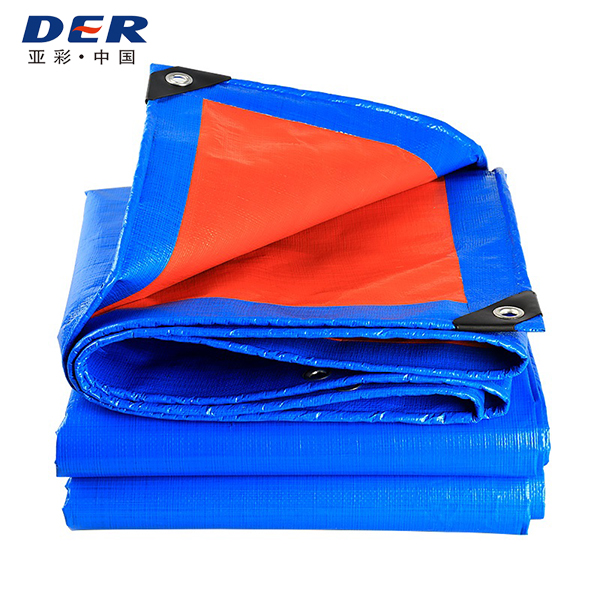
PE tarpaulin means polyethylene tarpaulin (also called a PE tarp or poly tarp). It is typically a flexible protective sheet built from cross-woven HDPE tapes with polyethylene film laminated on the surfaces. The woven center provides strength; the film blocks rain and dirt when the sheet is intact.
Polyethylene is a family of thermoplastic polymers. In many commercial PE tarps, high-density polyethylene (HDPE) is drawn into flat tapes and woven into a scrim. Low-density polyethylene (LDPE) or related PE film is then laminated onto the scrim. The result combines light weight, foldability and basic weather protection at an accessible cost.
The words PE tarp, poly tarp, polyethylene tarp and PE tarpaulin sheet are often used for the same general product category. They do not, by themselves, define its strength or outdoor life.
Material: woven polyethylene with PE lamination
Main advantage: lightweight, practical weather protection
Typical use: temporary covers, agricultural storage, site protection
Purchase check: GSM, UV formulation, tensile/tear data, seams and fastening details
Individual product grades vary; request a specification sheet for the exact construction.
Polyethylene resin is extruded and slit into narrow tapes, which may be oriented for reinforcement.
The flat tapes are interlaced into a scrim. Tape properties and weave density influence the basic mechanical performance.
PE films are applied to the woven base; finished covers may add sealed edges, reinforced corners, ropes, eyelets and packaging.
PE tarpaulin is not simply a thick solid plastic film. Its layered woven construction helps spread load, but holes, bent edges, seams and repeated flapping remain potential failure points. Compare the base weave, lamination integrity and finished cover separately.
Ask for a test method and result when UV resistance, tensile strength, tear strength, hydrostatic resistance, thickness or flame performance affects your decision. Do not assume a generic PE tarp complies with a particular fire code or food-contact requirement.
GSM stands for grams per square metre and describes fabric mass per unit area. It is useful for comparing like-for-like PE constructions, but it is not a direct measure of tear strength, abrasion resistance or lifespan. Published DERFLEX PE product categories discuss a broad 60–300 gsm range; confirm the available grade and test data before specifying an order.
| Specification | What to ask the supplier | Why it matters |
|---|---|---|
| Fabric weight (GSM) | Nominal weight and production tolerance | Cost, handling and construction comparison |
| Woven base | Tape material, weave density, tensile/tear results | Load and puncture behavior |
| Film / lamination | Film type, both-side coverage, bonding quality | Water barrier and durability |
| UV stabilization | Formulation and relevant exposure-test basis | Outdoor aging under sunlight |
| Finished dimensions | Cut size versus finished size; tolerance | Coverage after seams and hems |
| Edges & eyelets | Hem type, corner reinforcements, grommet spacing | Resistance to tearing at tie-down points |
| Packing / MOQ | Folded or rolled format, labels, sample and order terms | Distribution and purchase planning |
For recurring outdoor duty, request a tested sample and assess the complete tarp—including hems and fixing points—under the expected exposure and handling conditions.
PE and PVC tarpaulins can both form waterproof covers, but their reinforcement, fabrication and likely economics differ. The best choice depends on how often the tarp is moved, how much abrasion it experiences and what the finished structure must do.
| Factor | PE tarpaulin | PVC tarpaulin |
|---|---|---|
| Typical structure | Woven polyethylene tapes + PE film | Polyester scrim + PVC coating/lamination |
| Handling | Often lighter and easier to fold | Often heavier in industrial grades |
| Price direction | Usually economical for temporary protection | Often higher initial cost in industrial grades |
| Repeated heavy use | Depends strongly on grade and reinforcement | Commonly specified for repeat-use, abrasive duties |
| Joining / fabrication | Heat sealing depends on PE structure | Hot-air / HF welding options depend on PVC grade |
| Typical decision | Seasonal covers, temporary storage, value retail | Truck curtains, industrial covers, reusable fabricated parts |
Neither polymer label guarantees a service life. Compare samples with the same dimensions, duty cycle and verified testing. For heavier duty requirements, see PVC tarpaulin and heavy duty tarps.
Temporary protection for stacked timber, tools and building materials; allow runoff and avoid sharp edges.
Seasonal crop, machinery and bulk-material covers; select UV package and ventilation for the actual storage conditions.
Fast deployment for interim rain protection, with safe fastening and professional assessment where roof safety matters.
Foldable covers for ground protection and camping equipment; select puncture resistance and expected exposure.
Dust and moisture protection during loading or short-term storage; assess edges and fastening points.
Color, sizes and packed configurations suitable for wholesale channels; specification consistency matters across orders.
For a permanent roof, structural membrane, heavy load containment or safety-critical enclosure, do not select material from an ordinary retail PE tarp description alone. Obtain appropriate engineering and application-specific validation.
Product and application photos sourced from DERFLEX’s existing up/pro/ directory. Image captions describe the corresponding product theme rather than claiming any unverified test result.
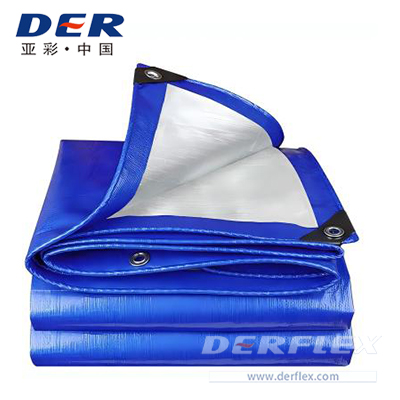


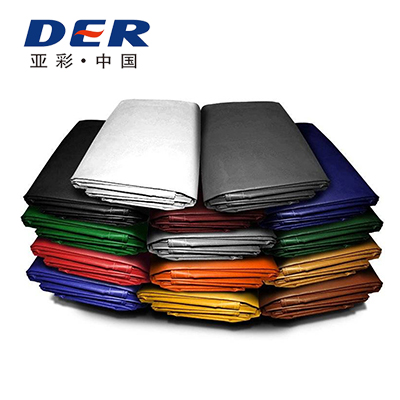


Share intended application, finished width × length, approximate quantity, needed GSM, color, UV exposure, fixing details, packaging requirements and destination market. Include photos or drawings where the shape is complex.
Keep covers away from sharp contact edges; avoid water pockets; distribute fixing forces. Wet trapped goods can develop condensation even under waterproof tarps. Inspect and retension covers during prolonged use.
DERFLEX provides product information and quotation support for industrial textile and tarpaulin buyers. A good enquiry establishes the use conditions and required evidence before comparing unit prices. For PE supply specifications, visit the existing PE tarpaulin product page or polyethylene tarpaulin overview. For other reinforcement and durability needs, compare PVC tarpaulin, poly tarps and the tarpaulin material hub.
Request a written technical data sheet for the offered grade, sample availability and application-specific manufacturing scope. This guide does not imply that every color, weight, edge configuration or claim is available without confirmation.
Tell the DERFLEX team your application, size, exposure, quantity and finishing needs. We can review the material choice and clarify what should be verified before purchase.
A typical PE tarpaulin has a woven high-density polyethylene (HDPE) tape core laminated on both sides with polyethylene film, often LDPE. The weave provides reinforcement, while the continuous film helps keep water out.
An intact, properly laminated PE tarp is generally waterproof as a sheet. However, punctures, seams, holes, edge construction, pooling water and poor installation can allow leakage in the finished cover.
PE tarps usually use a woven polyethylene base and PE film, making them lightweight and economical. PVC tarps commonly have a polyester reinforcement with a PVC coating, often better suited to repeat handling, welded fabrication and demanding abrasion exposure. Compare actual tested grades rather than labels alone.
There is no universal best GSM. Lightweight temporary covers may use lower GSM, while repeated outdoor handling often calls for heavier fabric and reinforced edges. Use the supplier’s verified tensile, tear, UV and finished-cover details alongside GSM.
Service life varies with UV package, film thickness, wind movement, climate, fastening tension and handling. A short-term economy cover and UV-stabilized premium PE tarp can perform very differently; request an exposure basis and samples rather than relying on an unsupported year claim.
Many PE tarp constructions can be heat sealed and finished with reinforced hems, ropes, corners and eyelets. The actual joining method and custom widths depend on the film structure and production capability, so confirm on the approved sample.
PE is used for temporary load protection, but frequently operated truck covers may need greater abrasion resistance, seam integrity and fastening strength. Check your duty cycle, dimensions and local load-securing rules before selecting the fabric.