


 Technical material guide
Fuel Compatibility of Containment Fabrics: Diesel, Biodiesel & Gasoline
For a diesel spill tray, B20 refueling pad or gasoline-contact containment liner, selection begins with the actual commercial fuel formulation—not a generic “oil resistant” label. This guide shows OEM fabricators, mining and oilfield equipment suppliers, and spill-control brands how to document fuel blends, additives, contact duration, fabric grades, welded seams and acceptance evidence before approving secondary-containment materials.
Scope: incidental spills and temporary liquid retention in secondary containment. Not an approval for long-term fuel storage tanks, bladders, hazardous-location design or universal fuel service.
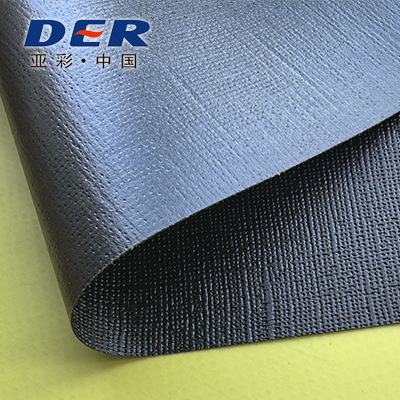
What makes a containment fabric compatible with fuel?
Compatibility is specific to the fluid, coated-fabric grade and construction, exposure scenario and end-of-test acceptance limits.
Approve a diesel resistant containment fabric or gasoline resistant liner material only when the selected grade has relevant evidence for the identified liquid, temperature, maximum realistic spill dwell time and intended wet face. Confirm that welded seams, corners and fittings still meet the assembly’s retention requirement after exposure. Neither PVC nor TPU is automatically compatible with every blend.
Separate lubricant, petroleum diesel, biodiesel and gasoline exposure
The same polymer family may respond differently to different commercial liquids. The table is a procurement screening framework, not a chemical-resistance rating chart.
| Liquid / blend | Details to identify | Why it changes the assessment | Evidence to request |
|---|---|---|---|
| Lubricating oil / hydraulic oil | Actual formulation, mineral or synthetic base, additive package; contamination with fuel or solvent. | Lubricant performance cannot be transferred to gasoline or diesel merely because both are petroleum-related. | Exposure results on the named oil, grade and assembly; include cleaners if routinely used. |
| Petroleum diesel (B0) | Diesel grade, supplier, regional/seasonal formulation and additive package. | A diesel label covers varied commercial formulations and service temperatures. | Fuel-specific coated-fabric and weld assessment for the intended dwell time. |
| Biodiesel blends (B5 / B10 / B20) | FAME percentage, quality standard, feedstock where known, age and oxidation state. | B20 does not automatically behave like B0; changes in biodiesel content or fuel condition can affect materials. | Results on the actual representative blend; revision review when blend or supplier changes. |
| High biodiesel blend / B100 | Blend percentage, FAME source, fuel freshness, water content and intended contact time. | High blends require a distinct review; do not extrapolate from B5 or B20 tests. | Separate grade-specific test plan and assembly approval. |
| Gasoline (E0 / E10 / E15) | Gasoline blendstock, ethanol content, additives, volatility and temperature. | Gasoline and alcohol content introduce different compatibility, permeation and ignition-related considerations. | Evidence for the specific gasoline/ethanol formulation plus vapor/safety design review. |
| Mixed or unidentified waste fuel | All likely components: water, cleaner, solvent, residual diesel, gasoline or hydraulic oil. | An unknown mixture invalidates assumptions based on a single named fluid. | Sample/analysis or a conservative, documented project-specific qualification plan. |
Bxx describes nominal biodiesel blend content; Exx denotes ethanol content in gasoline fuel nomenclature. Labels do not identify the full additive or contamination profile. No DERFLEX model is assigned a blanket compatibility grade here.
Record the commercial blend, additives and maximum contact time
For a meaningful fuel blend compatibility coated fabric inquiry, send the exact commercial liquid rather than a general fuel family name.
Label + SDS + source
Fuel trade name, producer or distributor, batch where available, market/season and current Safety Data Sheet. SDS information may be incomplete for polymer compatibility; add product specification where necessary.
B or E blend percentage
For biodiesel: B0, B5, B20 or B100 and relevant fuel-quality information. For gasoline: E0, E10, E15 or another blend, plus oxygenates, detergents and proprietary additives when disclosed.
Worst credible exposure
Highest and lowest service temperatures, ordinary wetting cycles, spill volume, dwell time before cleanout, cleaning chemicals, repeated folding and outdoor/ground-contact duty.
Specify a timeline, not just “occasional splashes.”
A nozzle-drip tray wiped after each disconnect is not the same as an unattended bund that may retain a fuel release overnight. Define the maximum credible time from release to recovery and the number of exposures before replacement. Cleaning products and water left in the tray may create additional contact cases.
For B20, remember that biodiesel equipment experience does not qualify every flexible coating, and fuel oxidation or contamination can change an older spill residue. For E10/E15, provide the actual ethanol content and consider volatility and vapor risks separately from the liquid-barrier assessment.
Review immersion changes and the actual barrier requirement
ISO 6450:2021 is a useful test framework for rubber- or plastics-coated fabrics: Method A exposes a specimen by total immersion; Method B contacts one side. Select the method according to the use case and record the full conditions.
Total immersion
Both sides and exposed edges contact the liquid. Useful for investigating the broader material response when whole-specimen immersion reflects the proposed assessment.
- Record selected fluid, duration and temperature.
- Compare chosen mechanical or physical properties before and after.
- Do not treat an immersion result as a finished-tray leak certificate.
One-side contact
Liquid is applied to one face, which may better represent the wetted interior of a lined spill tray. Confirm exposure orientation, the tested grade and face, and whether fabric edges and welded joints are represented separately.
- Report contact side, liquid identity and actual conditions.
- Evaluate relevant retained properties after exposure.
- Add a separate barrier/leak or permeation requirement when needed.
| Evaluation element | What a useful record states | What it does NOT prove alone |
|---|---|---|
| Swelling / mass or dimension change | Before/after measurement, exposure duration and recovery/conditioning method. | That seams and attached hardware stay leak-tight. |
| Surface / coating integrity | Softening, tackiness, discoloration, cracking, delamination or coating transfer. | That a visually unchanged sample blocks permeation. |
| Tensile, tear and coating adhesion | Selected test methods, warp/weft where relevant, conditioned baseline and exposed results. | That the assembled basin survives loads or corner peel stress. |
| Permeation or leakage | Dedicated barrier requirement, method, detection limit and test configuration if specified. | That an ISO 6450 before/after property test automatically measures permeation. |
| Weld and fitting integrity | Actual weld recipe/coupon, aged assembly leak check, corner details and fastener interface. | That a flat fabric swatch represents a production-assembled tray. |
Evaluate seams, corners and fittings in contact with fuel
Even when a candidate coating is supported by a relevant liquid-exposure report, a diesel spill tray liner material must work as a fabricated assembly.
Define sample approval and change-control records before bulk supply
A practical grade approval connects the fuel SDS, material sample, laboratory report, weld construction and repeat-order revision under one written specification.
Freeze the liquid identity
Attach fuel supplier name, product designation, SDS issue date, nominal blend and known additives.
State the use envelope
Document wetting frequency, maximum spill dwell, temperatures, cleanout and substrate/abrasion conditions.
Identify the material grade
Record exact coated-fabric code, coating face, textile base, nominal construction and sample/batch ID.
Agree test acceptance
Select relevant before/after property tests, leak or permeation criteria where needed, and report format.
Approve the assembled detail
Test representative seams, corners, fittings, cleanup and handling—not only the flat coupon.
Lock revision & change control
Record order specification, sample authorization and triggers for retest after fuel or material changes.
Sample approval record — fields to complete
Use these headings in the signed approval package. This template intentionally contains no simulated values or pass/fail outcome.
| Record field | Buyer / supplier document | Release control |
|---|---|---|
| Fuel identity | Commercial name, SDS version, blend percentage, additive/water contamination assumptions. | Review when product supplier, SDS or blend changes. |
| Material identity | DERFLEX candidate grade, color/face, base, coating and batch/sample traceability. | Review substitution, coating recipe or base-cloth changes. |
| Exposure & acceptance | Exposure method, actual contact liquid, duration, temperature, tested properties and buyer limits. | Revisit if site duty or recovery procedures change. |
| Assembly trial | Weld samples, layout revision, fittings, corner geometry and leak/retention evidence. | Review welding equipment, process or assembly redesign. |
| Approval status | Approval authority, signed test report ID, approved sample and effective revision. | Do not assume approved until the documents exist and criteria are met. |
Choose the material around the finished spill-control product
DERFLEX can discuss coated fabric rolls and project-specific fabrication requirements for OEM secondary-containment programs. Exact available constructions, minimum order quantities, testing scope and production schedule require quotation confirmation.
Disconnect drip trays
Specify shallow walls, hose parking position, floor cleaning access, fuel-facing side and folding duty. Do not confuse liquid-retaining liners with absorbent-only pads.
Mining / oilfield refueling pads
Identify pump skid feet, hose dragging, sunlight, sharp ground debris and maintenance chemicals. Wear layers and point loads require their own checks.
Reusable flexible berms
Confirm assembled capacity, low-edge geometry, seam route, accessories, rinse protocol and a sample acceptance plan. Panel tensile strength is not a traffic-load rating.
Send DERFLEX these six things
- Commercial fuel SDS plus product name and blend details.
- Longest credible dwell time and operating temperature range.
- Target material/grade or proposed coating and substrate.
- Product drawing with wet face, seams, corners and fittings.
- Quantity and supply form: roll fabric, sample cuts or discussed OEM fabrication.
- Acceptance evidence required by your customer or relevant project standard.
When should an approved sample be revisited?
Review approval when the fuel supplier, biodiesel or ethanol content, additives, cleaning chemical, contact duration, operating temperature, coated-fabric grade, welded detail or fitting material changes.
Pre-production trials and third-party testing may be necessary before purchase approval. A TDS alone is not a record of exposure to the customer’s specific fuel formulation.
Share the commercial fuel specification and intended spill dwell time.
Tell DERFLEX which fuel blend you handle, how long it could remain in the tray, and how the finished liner will be fabricated. Request grade options, samples and relevant test-document scope for review.
Fuel-contact material questions from OEM buyers
Short answers for technical purchasing teams, containment-product manufacturers and refueling-equipment integrators.
Is a diesel-resistant fabric automatically resistant to gasoline?
No. Diesel and gasoline have different compositions and exposure behavior. Approval for diesel is not proof for gasoline, ethanol-blended gasoline or a different additive package. Request tests on the exact grade and intended fuel.
Does B20 require separate checks if a liner is suitable for B0 diesel?
Yes. A B20 blend contains biodiesel components that can change material response. Review the specific fuel, its condition, dwell time and grade-specific exposure evidence rather than extrapolating from petroleum diesel alone.
Are all TPU-coated fabrics compatible with gasoline or E15?
No. TPU refers to a polymer family, not a universal fuel-resistance grade. Formulation, reinforcement, fuel blend and exposure conditions matter. E15 and other gasoline blends require dedicated evidence, including seams and any relevant barrier requirement.
Can an ISO 6450 test prove that a spill tray is leak-proof?
Not by itself. ISO 6450 evaluates selected coated-fabric properties before and after specified liquid exposure. Finished assembly leakage, seam integrity and permeation require additional acceptance methods where relevant.
What should be included with a fuel compatibility test report?
Identify the fabric grade and batch, liquid origin and composition, wetted side, exposure method, duration, temperature, original and exposed property results, acceptance limits and report date. Add seam and fitting evidence for the finished product.
When must compatibility approval be reviewed again?
Reassess it after a change in fuel supplier or blend, additives, spill dwell time, cleaners, fabric formulation, welding process, fittings or operating conditions. Keep the approved sample and document revisions traceable.