


Step Deck Tarps Manufacturer — Custom Drop-Deck Truck Tarps
DERFLEX develops custom step deck tarps for drop-deck trailers carrying tall machinery, building materials, industrial freight and mixed-height loads. Specify the upper deck, lower deck, cargo profile, side drop, overlap, D-ring rows and high-wear zones as one finished covering plan rather than forcing a standard flatbed tarp onto a two-level trailer.
Supply can be discussed as PVC coated fabric rolls, conversion-ready panels, semi-finished parts or finished truck tarps for distributors, tarp fabricators, fleet programs and private-label buyers.
- Custom upper / lower deck geometry
- Deep-drop & modular tarp layouts
- Reinforced D-rings, hems & wear zones
- OEM color, logo & packing
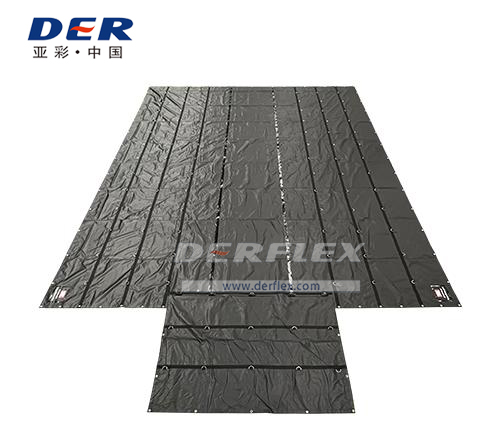
What is a step deck tarp?
A step deck tarp is a truck tarp configured for a trailer with two deck heights. It must cover the raised front deck, the lower main deck and the transition between them while still giving the driver practical tie-down positions. Because drop-deck trailers often carry taller or irregular freight, the tarp is commonly planned with deeper side drops, multiple D-ring rows, flaps and modular sections.
A Drop-Deck Tarp Has to Solve Three Coverage Zones
The key design problem is not simply “more fabric.” A useful step-deck tarp system controls coverage and tension separately at the upper deck, deck transition and lower deck.
1. Upper-deck coverage
The front deck may need a shorter body section, front flap or shaped overlap depending on the load and headboard area.
2. Deck-transition control
The step creates a change in height and tension direction. This area needs enough overlap to prevent exposed gaps without creating excessive loose fabric.
3. Lower-deck deep drop
Tall machinery and oversized freight may need significantly deeper side coverage than a conventional steel tarp or short-drop flatbed tarp.
Custom Step Deck Tarp Specification Framework
The table is a quotation framework, not a fixed SKU. Final construction should be confirmed against the trailer, loaded cargo, climate, handling cycle and any customer-specific test requirement.
| Specification Area | Available / Typical Direction | What the Buyer Should Confirm |
|---|---|---|
| Product type | Step deck tarp, drop-deck tarp, machinery tarp, deep-drop truck tarp, modular flatbed tarp set | Single-piece, multi-piece or shaped-cover concept. |
| Body material | PVC coated polyester / vinyl coated polyester; selected lighter constructions can be reviewed when handling weight is a priority | Route exposure, abrasion, folding frequency, desired handling weight. |
| Material weight | Heavy-duty truck tarp programs are commonly discussed in approximately 550–1100gsm directions; lighter or different structures depend on the approved specification | Do not select by nominal oz/GSM alone; compare base fabric, coating and reinforcement. |
| Finished geometry | Custom width, length, upper-deck section, lower-deck section, side drop, end flap, overlap and shaped cut-outs | Provide finished coverage dimensions or a drawing from the loaded trailer. |
| Deep-drop design | Project-defined; 8–10 ft is a common market reference for specialty deep-drop applications | Confirm loaded height, bungee reach, ground clearance and handling method. |
| Seams | Hot-air, hot-wedge, high-frequency welding, sewing or combined fabrication according to material and tarp design | Identify required water protection and expected seam stress. |
| Edge reinforcement | Webbing hems, double-layer borders, rope hems, wear strips, corner patches and local reinforcement | Mark windward edges, sharp corners, deck transition and high-contact points. |
| D-rings & grommets | Custom rows and spacing; protective patches or flaps can be added around D-rings | Submit the tie-down pattern used by drivers or the distributor's standard. |
| Performance direction | Waterproof/weather-resistant PVC surface, UV resistance, cold-flexible, anti-mildew and project-specific options | State route climate and required test method before sampling. |
| Branding | Custom color, printed logo, part number, orientation marks, labels and private-label packing | Provide artwork, brand color reference and packaging specification. |
| Supply format | Coated fabric rolls, cut panels, semi-finished components or finished step-deck tarps | Choose the format that matches your local conversion and sales model. |
Final dimensions, material, hardware and performance values should be confirmed with DERFLEX before production.
Match the Tarp Layout to the Load, Not Just the Trailer Name
Step-deck trailers are used for very different cargo profiles. The tarp architecture should change with the load.
| Load / Use Case | Useful Tarp Direction | Design Priority | Why |
|---|---|---|---|
| Tall machinery on lower deck | Deep-drop modular tarp or custom machinery cover | Wear patches, multiple tie-down rows, shaped profile | Irregular protrusions and tall height concentrate abrasion and wind load. |
| Building materials / lumber | Deep-drop lumber-style sections with flap and overlap | Full side coverage, end closure, repeatable D-ring pattern | Long rectangular loads need continuous weather coverage and practical tensioning. |
| Mixed-height industrial freight | Multi-piece step-deck tarp set | Overlap planning and section handling weight | Separate pieces can adapt to varying heights and reduce the amount handled at one time. |
| Compact steel or plate | Shorter-drop steel tarp where full deep-drop coverage is unnecessary | Abrasion protection and reduced excess material | Using a deep tarp on a low-profile load adds unnecessary material and handling effort. |
| Front-face contamination risk | Step-deck coverage paired with a front / smoke tarp where appropriate | Leading-face overlap | Targeted front protection can reduce direct road spray, grime and debris exposure. |
| Private-label replacement program | Documented finished tarp set with fixed hardware map | Repeatability, labeling, packaging | Distributors need the next batch to match the approved geometry and attachment points. |
Five Details That Often Decide Step-Deck Tarp Serviceability
A deep tarp can be durable on paper and still be difficult to use if geometry, reinforcement and handling are not designed together.
Control the Step Between Decks
Document where the cover changes height, where sections overlap and how tie-down tension crosses the transition. This is a frequent source of loose fabric.
Balance Durability with Driver Handling
More fabric and heavier coating increase the mass the driver must lift, deploy and fold. Multi-piece layouts or selectively lighter constructions can be reviewed when daily handling matters.
Map Contact Points Before Cutting
Machine corners, lifting points, deck edges, straps and irregular cargo surfaces should be marked so patches or double layers can be placed before production.
Use Multiple Working Rows Where Needed
Deep drops often benefit from several D-ring rows so tension can match different cargo heights. Spacing should follow the user's real bungee or strap pattern.
Separate Fabric Waterproofing from Finished-Cover Design
PVC coated fabric can provide a waterproof surface, but finished protection also depends on seam method, overlap, drainage, tension and avoiding water pockets.
Freeze Finished Dimensions, Not Only Cut Size
Hems, seams, flap construction and reinforcement consume material. Record the approved finished dimensions and hardware map for later batches.
Build the Drop-Deck Tarp Around Your Fleet or Product Line
DERFLEX already supports custom truck and flatbed tarp programs. A step-deck version can be developed from the same controlled inputs with added attention to deck height changes and deep-drop handling.
Geometry & Sections
Upper-deck pieces, lower-deck pieces, front or rear flaps, overlap panels, shaped cut-outs and project-defined multi-piece layouts.
Reinforcement
Webbing hems, double layers, corner patches, wear strips, reinforced D-ring rows and cargo-contact protection.
Hardware Layout
D-rings, grommets, loops, straps, rope hems and attachment patterns based on approved drawings or samples.
Material & Surface
PVC coated polyester weight direction, color, surface finish and selected weather-performance options according to the project.
Branding & Identification
Fleet logos, distributor brand marks, orientation labels, part numbers, set IDs and packing marks.
Supply Model
Roll goods for converters, prepared panels, semi-finished components or complete finished tarps for B2B programs.
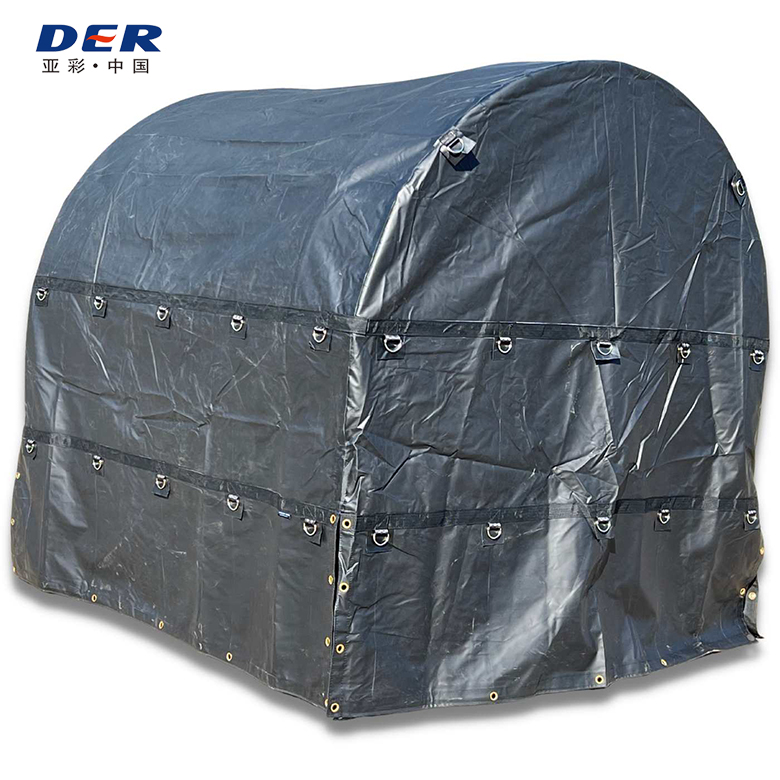
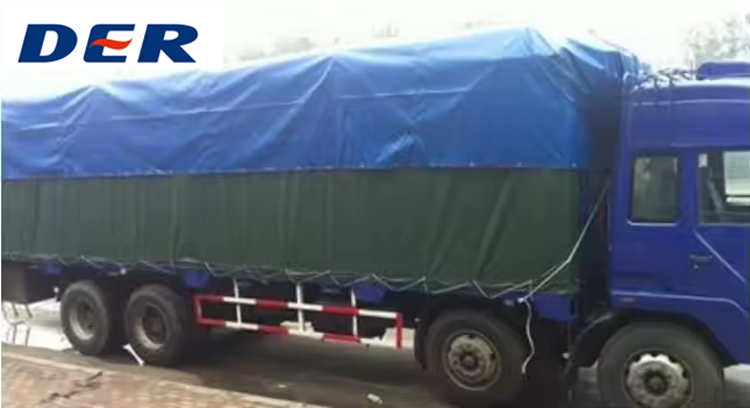
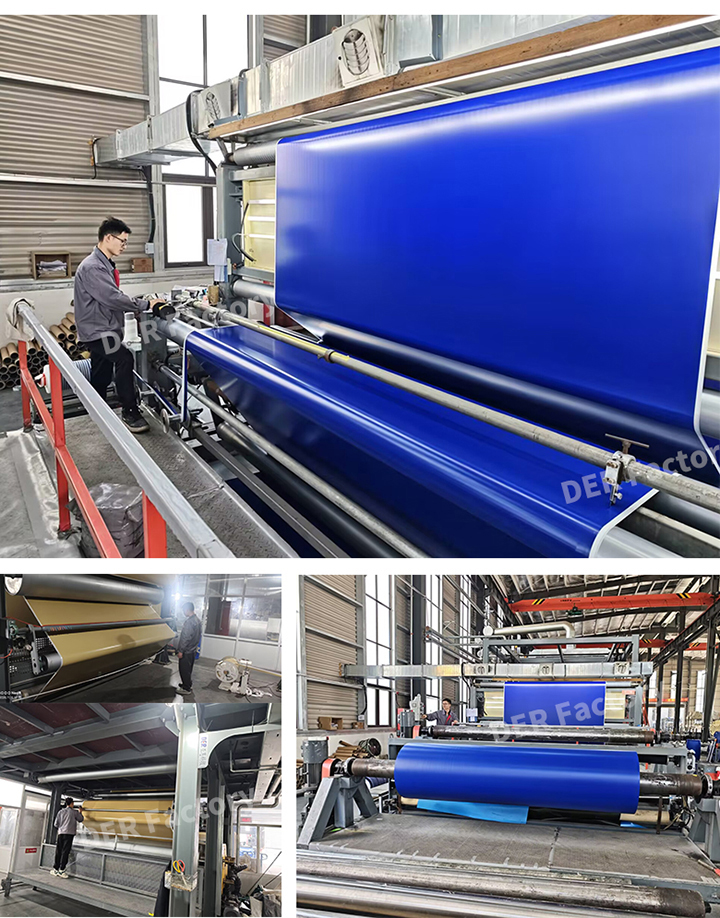
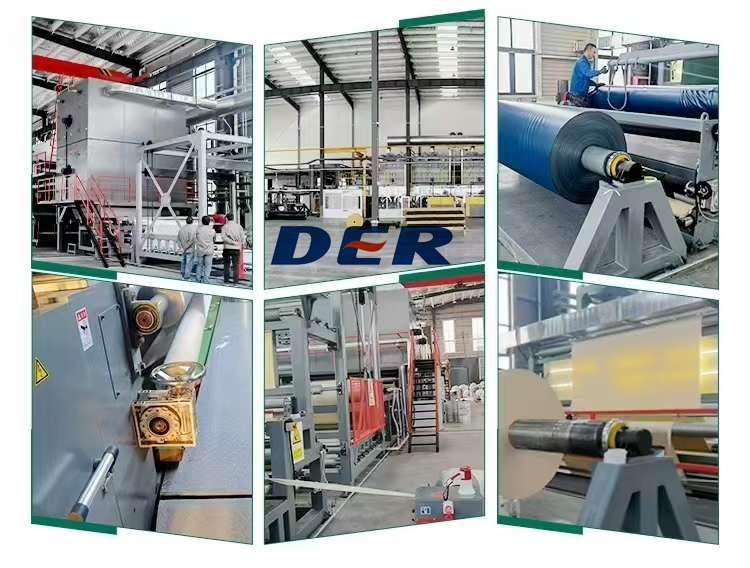
DERFLEX Truck Tarp & Manufacturing Image References
These are real images already hosted on DERFLEX. They provide product, transport and factory context for the page without inventing a step-deck project photo.
What to Send for an Accurate Step Deck Tarp Quotation
The best RFQ is a coverage drawing, not only a trailer model name.
Trailer & Load Profile
- Step deck / drop deck trailer type
- Loaded cargo width, length and maximum height
- Upper and lower deck coverage zones
- Photos or drawing from the side and rear
Finished Tarp Layout
- Finished width and length for each section
- Required side drop and flap dimensions
- Overlap between tarp pieces
- D-ring rows, grommet spacing and hem direction
Commercial Requirements
- Target material weight or existing sample
- Color and logo artwork
- Quantity and supply format
- Packaging, labels, destination and required documents
Avoid These Six Step-Deck Tarp Specification Errors
Ordering by Trailer Length Only
The tarp must follow the loaded envelope and deck-height change, not just the nominal trailer length.
Using a Deep Drop Everywhere
Extra drop adds weight and loose material. Use deep coverage only where the cargo profile needs it.
Ignoring the Transition Zone
The change between upper and lower decks can create gaps, folds or uncontrolled tension without a defined overlap plan.
Reinforcing Only the Perimeter
Irregular machinery often wears the tarp at interior contact points. Mark protrusions and sharp zones before cutting.
Equating Heavier with Better
A very heavy deep-drop tarp may be harder to deploy safely. Material weight, scrim, coating and section size should be balanced together.
Missing Repeat-Order Documentation
Without finished dimensions, flap orientation and hardware maps, later batches can drift from the approved set.
Continue Your Truck Tarp Selection
Use these verified DERFLEX pages to compare adjacent tarp types and material routes.
Why B2B Buyers Source Custom Step Deck Tarps Instead of Adapting Stock Tarps
Custom Manufacturing Route
- Coverage developed around upper and lower deck geometry.
- Project-specific drop, flap, overlap and hardware layout.
- Reinforcement can target actual wear and tie-down zones.
- Rolls, panels, semi-finished parts or finished tarps can match the buyer's business model.
- Color, logo, label and packaging can be documented for repeat B2B programs.
Generic Stock-Tarp Route
- Fast for common replacement needs and one-off purchases.
- Usually built around fixed widths, lengths and drop depths.
- May require drivers to manage excess material at the deck transition.
- Hardware positions may not match an existing fleet standard.
- Less control over repeat specification and private-label presentation.
From Loaded Profile to Repeatable Drop-Deck Tarp Supply
Map the Load
Review the trailer, upper/lower deck areas, maximum cargo height, protrusions and tie-down access.
Define the Tarp Set
Choose single or multi-piece geometry, drops, flaps, overlaps and working orientation.
Fix Material & Hardware
Confirm PVC coated fabric direction, seams, webbing, D-rings, grommets, patches and branding.
Approve & Repeat
Use an approved drawing/sample, finished-dimension sheet and packing standard for future batches.
Step Deck Tarp Questions Procurement Teams Ask
Direct answers to common selection, material and sizing questions.
Are step deck tarps the same as lumber tarps?
Not exactly. A lumber tarp is defined mainly by the tall freight it covers, while a step deck tarp is defined by the two-level trailer geometry. Lumber-style deep-drop sections are often used on step decks, but the complete set may need separate upper-deck, lower-deck and transition pieces.
What is the difference between a step deck tarp and a flatbed tarp?
A conventional flatbed has one main deck height. A step deck has a raised front deck and a lower main deck, so the tarp layout must manage the height transition and may need deeper drops for taller loads. The load profile is therefore more important than a simple rectangular tarp size.
How deep should a step deck tarp drop be?
There is no universal drop depth. Specialty market products commonly use deep drops around 8–10 ft, but the correct finished drop depends on the loaded cargo height, bungee reach, deck clearance, overlap and how much fabric the driver can handle safely.
Is 18 oz vinyl the best material for a step deck tarp?
Approximately 18 oz vinyl/PVC coated fabric is a common heavy-duty market reference, but it is not automatically the best choice for every route. Deep-drop tarps contain a lot of material, so handling weight matters. Compare textile reinforcement, coating, abrasion zones, climate and expected use frequency before fixing the nominal weight.
Can a step deck tarp be made as a multi-piece set?
Yes. Multi-piece layouts are common because they can separate upper-deck and lower-deck coverage and reduce the amount of material handled at one time. DERFLEX can review a project-defined section plan from a drawing or existing sample.
What should be reinforced on a drop-deck tarp?
Typical focus areas include perimeter hems, D-ring rows, corners, front windward edges, deck-transition zones and cargo-contact points such as machine brackets, steel edges or protrusions. Reinforcement should follow the real wear map rather than being added uniformly.
Can DERFLEX make custom D-ring rows and grommet spacing?
DERFLEX's existing truck-tarp programs support custom D-ring rows, grommet spacing, webbing, flaps and reinforcement layouts. For a step-deck program, provide the preferred tie-down map or an approved reference tarp.
What information is needed to quote custom drop-deck truck tarps?
Send the trailer type, loaded dimensions, upper and lower deck coverage zones, finished section sizes, side drops, flap/overlap plan, material direction, D-ring and grommet layout, known wear points, color, logo, quantity, supply format and destination.
Turn Your Step-Deck Load Profile into a Buildable Tarp Specification
Send DERFLEX the trailer type, loaded dimensions, upper/lower deck coverage zones, target side drop, tarp-section plan, material direction, D-ring/grommet layout, high-wear points, quantity and destination. The team can review a practical custom drop-deck tarp direction for sampling or B2B production.
- Drawing- or sample-based development
- Custom size, drop, flap and reinforcement
- OEM color, logo, labels and packaging