Black Tarps
Useful for privacy, dark visual screening and opaque cover systems. Black can become hotter in sun, so it deserves extra review around heat-sensitive cargo, equipment or enclosed spaces.



Yes—tarp color can matter for solar heat, light blocking, visibility, appearance and branding. But color alone does not tell you how strong, waterproof or UV-resistant a tarp is.
For professional sourcing, choose the material construction first, then select color around the real job: cooling, blackout, safety visibility, agricultural blending, fleet branding or OEM product differentiation.
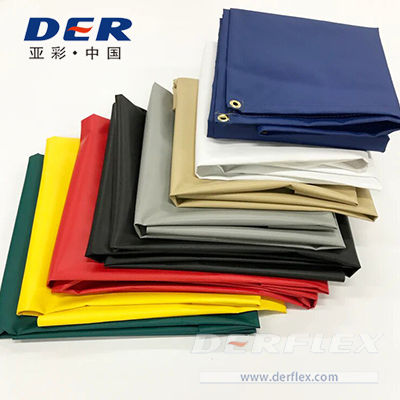
It can. Dark surfaces generally absorb more incoming solar energy than light or highly reflective surfaces. Black is useful for privacy and blackout; white and reflective silver are useful when reducing solar heat gain is important; green is often chosen for agriculture and visual blending; bright yellow, orange or red can improve conspicuity. The final performance still depends on the tarp's polymer, coating, UV package, GSM or thickness, base fabric, seams and reinforcement.
There is no single “best” tarp color. The right choice depends on what the cover must do after it is installed.
| Color direction | Solar / heat direction | Light & visibility | Common application direction | Buyer note |
|---|---|---|---|---|
| Black | Usually higher solar absorption than light/reflective surfaces. | Strong privacy and blackout direction when the construction is opaque. | Visual barriers, equipment covers, industrial covers, dark interior faces. | Choose for opacity and appearance, not because “black” automatically means heavy duty. |
| White | Usually lower solar absorption than black under the same exposure. | Bright appearance; may increase interior brightness. | Events, temporary enclosures, hot-climate covers, clean-looking work areas. | White does not automatically mean blackout; specify opacity if light transmission matters. |
| Silver / reflective | Often selected to reflect solar energy and reduce heat loading. | Highly visible in sun; usually opaque depending on structure. | Outdoor storage, equipment, hay covers, temporary roofs, reversible tarps. | “Silver” is a visual description, not a measured reflectance rating. Critical projects should define test requirements. |
| Blue | Middle direction; depends on shade and coating. | Easy to identify; common in retail and general-purpose tarp markets. | General covers, construction, temporary use, distributor programs. | Some sellers use blue for light-duty ranges, but that is a product-line convention—not an industry standard. |
| Green | Varies with shade; generally darker than white/silver. | Lower visual contrast in vegetation and farm environments. | Agriculture, landscaping, nurseries, outdoor storage, shelters. | Green does not itself make a tarp “agricultural grade.” Confirm UV and material construction. |
| Gray | Mid-range direction depending on pigment and finish. | Neutral industrial appearance; often hides dust better than white. | Machinery, construction, warehouse, transport, industrial covers. | Useful when a neutral look is needed without the heat direction of very dark black. |
| Yellow / orange | Usually lighter than black but heat behavior depends on actual pigment and coating. | High conspicuity in many work environments. | Site identification, equipment covers, hazard-area visual marking, branded fleets. | High visibility is not the same as regulatory compliance; confirm project-specific safety requirements. |
| Red | Depends on pigment, shade and finish. | Strong visual contrast and brand recognition. | Fleet branding, industrial identification, retail/OEM tarp lines, event covers. | Use approved color references for repeat orders if brand shade consistency matters. |
Surface color changes how much incoming solar energy is reflected or absorbed. In a simple like-for-like comparison, dark surfaces normally absorb more solar energy than white or highly reflective surfaces. That is why a black cover can run hotter in direct sun while a white or reflective silver outer face is usually a better starting direction for heat-sensitive goods.
Color is still only one variable. The actual temperature under a tarp also depends on the polymer, coating, surface finish, air gap, ventilation, wind, ambient temperature, contact with the cargo and whether the surface uses pigments engineered to reflect near-infrared energy.
If temperature matters, do not approve a tarp from a color name alone. Define the material and surface, then ask whether thermal performance must be demonstrated by a test method or by an approved application sample.
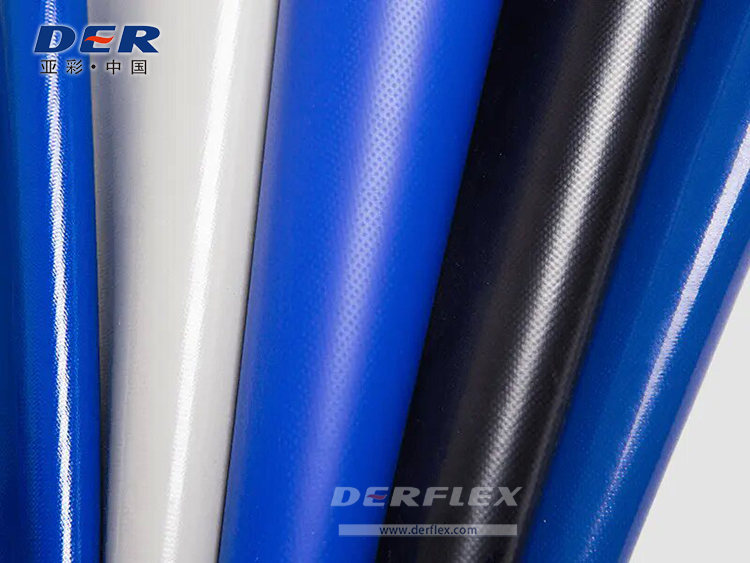
These are practical selection directions, not universal strength grades.
Useful for privacy, dark visual screening and opaque cover systems. Black can become hotter in sun, so it deserves extra review around heat-sensitive cargo, equipment or enclosed spaces.
Useful for bright enclosures, event structures and outdoor covers where a lighter surface is preferred. Specify blackout or blockout construction separately if zero or very low light transmission is required.
Common where solar reflection is a priority. Reflective or metallized-looking surfaces are often used on outdoor storage, hay, equipment and temporary roofs, especially in reversible tarp constructions.
Widely recognized for general-purpose covers and retail tarp programs. Blue can be produced as light, medium or heavy material, so do not infer GSM or strength from the color.
A common visual fit for farms, nurseries, landscaping and field storage. The real agricultural performance still comes from UV stabilization, waterproofing, reinforcement and installation.
A neutral industrial direction that can work well for machinery, construction, transport and architectural-looking covers. Gray often provides a less visually dominant alternative to blue or black.
Useful when conspicuity, area identification or brand visibility matters. They can be effective for work sites and equipment covers, but a bright color is not a substitute for safety certification or site-specific compliance.
Strong for visual identification, fleet branding and differentiated OEM product lines. Repeat-order buyers should control shade, gloss and approved sample references across production lots.
No universal industry rule assigns strength or duty grade by tarp color. A retailer may use blue, silver or brown to separate its own product lines, but a color name cannot tell you whether two tarps have the same weave, coating, GSM, tensile strength, tear resistance or edge reinforcement.
Black, white, blue, green or silver can each be produced in multiple weights and thicknesses. Compare the actual material specification.
Outdoor durability depends on polymer formulation, pigment system, UV stabilizers, coating quality, climate, tension, abrasion and installation—not color alone.
Water resistance is created by the film, coating or lamination and by seam, hem, hole and installation design. A breathable mesh can be black and still allow water through.
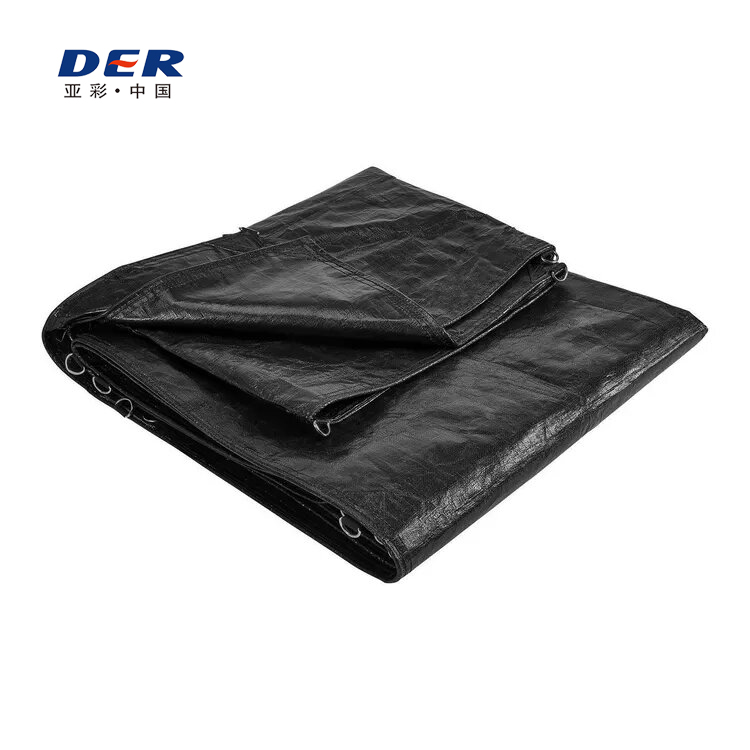
A black tarp is a logical direction when the job prioritizes visual screening, dark interiors, privacy or a low-profile industrial appearance. The trade-off is solar heat: darker surfaces normally absorb more sunlight than white or reflective surfaces.
For a hot-climate project that needs both blackout and reduced solar loading, consider a two-sided construction such as silver/black or white/black. Put the reflective or light side toward the sun and retain the dark face on the inside when the structure allows it.
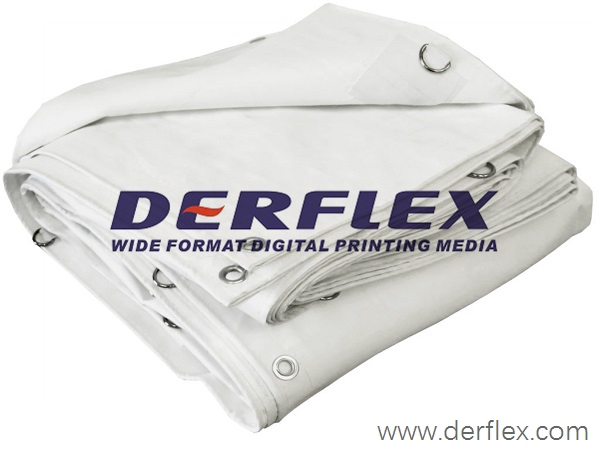
White and reflective silver surfaces are commonly selected when the objective is to reduce solar absorption compared with a dark outer surface. White can also make a work enclosure feel brighter, while silver is often used where reflection is an intentional design function.
Do not treat either color as a guaranteed thermal rating. If the covered product has a strict temperature limit, ask for the exact material construction and define the required validation method before bulk production.
Likewise, do not assume a white tarp is translucent or blackout. Both are possible depending on the internal layer structure and pigment loading.
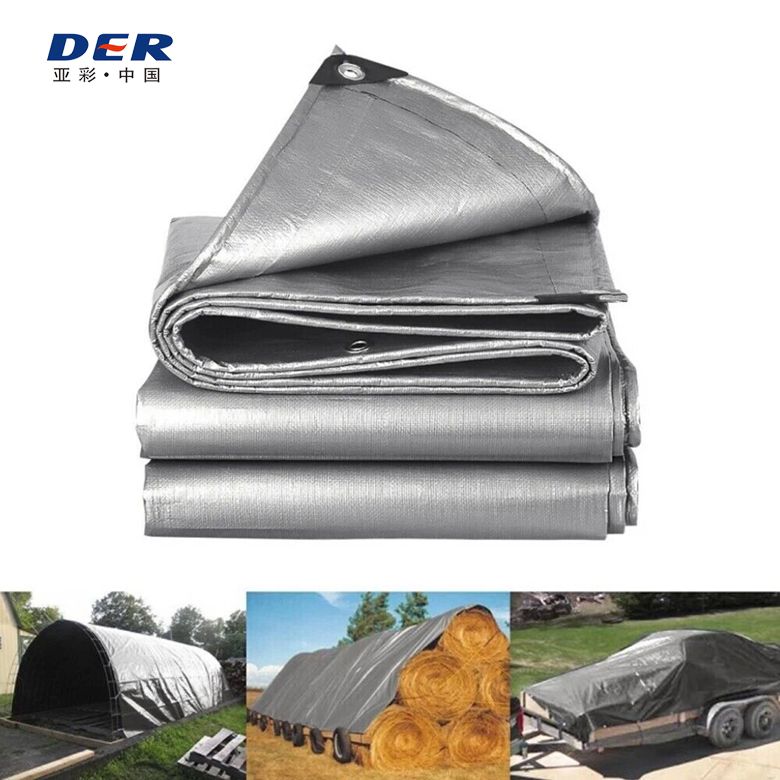
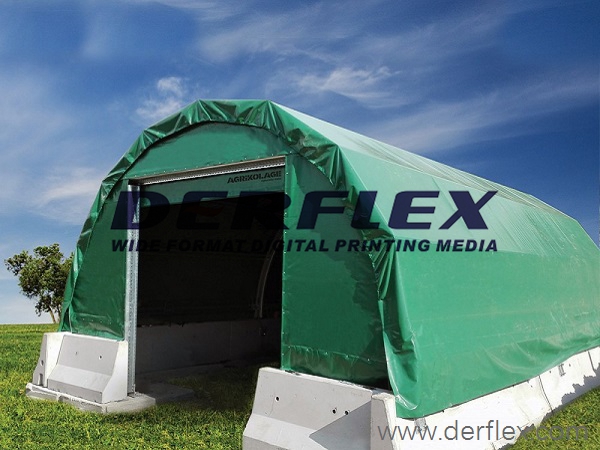
Green tarps are popular for agricultural shelters, nurseries, landscaping, feed storage and outdoor covers because the color blends with vegetation and rural environments better than bright blue, white or reflective silver.
That does not mean green is a technical agricultural grade. A green tarp can be light-duty PE, reinforced PVC-coated polyester or mesh. Buyers still need to specify waterproofing, UV resistance, weight, wind exposure, anchor method and expected handling cycle.
Color should be selected after the material family and primary performance requirement are clear.
| Material direction | Common color approach | Best-fit applications | What to confirm before purchase |
|---|---|---|---|
| PE / poly tarp | Blue, green, silver, white, black and reversible combinations are common. | Temporary covers, retail tarp programs, agriculture, storage and light construction protection. | GSM or mil, weave, lamination, UV package, grommet spacing, finished size and shrink/finished-size convention. |
| PVC-coated polyester | Black, white, gray, blue, green, red, orange, yellow and custom project colors. | Truck tarps, industrial covers, equipment, construction, long outdoor exposure and OEM fabrication. | Base fabric, total GSM, coating, finish, lacquer, UV package, weldability, edge reinforcement and fabrication details. |
| Mesh tarp | Black, green, tan, gray and project-defined colors are common. | Shade, privacy screening, debris control and wind-permeable covers. | Open area or shade factor, airflow, wind loading, edge reinforcement and whether rain sealing is actually required. |
| Clear / transparent PVC | Crystal clear or transparent tinted options. | Patio curtains, visibility windows, enclosures and weather barriers that need light transmission. | Thickness, clarity, cold flexibility, UV exposure and scratch/handling expectations. |
| Canvas / breathable covers | Natural, tan, brown, green, white and muted colors are common. | Applications where breathability and condensation management matter more than welded waterproofing. | Water-repellent treatment, mildew behavior, maintenance and drying requirements. |
Two-sided color combinations let one tarp handle two different priorities. Orient the tarp around the dominant exposure.
Use silver toward the sun when reducing absorbed solar energy is the priority; keep black inward for a darker interior or stronger visual screening.
White outside can reduce solar absorption versus black while the black inner face supports a darker enclosed space, depending on opacity.
Use green outward when visual blending is the priority. Turn silver toward the sun when heat reflection is more important than appearance.
For OEM programs, two-sided colors can separate the branding face from the functional face. Confirm material structure and production feasibility during sampling.
For B2B and OEM orders, a reliable specification freezes the complete construction so repeat orders do not drift in weight, shade, reinforcement or finished dimensions.
Truck, equipment, agriculture, temporary roof, warehouse, event, resale or custom industrial cover.
PE, PVC-coated polyester, mesh, clear PVC or another application-matched construction.
Waterproofing, UV exposure, abrasion, flexibility, flame-retardant requirement, blackout or airflow.
Standard shade, custom RAL/Pantone direction, one-sided/two-sided color, gloss and opacity.
Finished size, hems, welds, webbing, grommets, D-rings, corners, printing, labels and packaging.
A custom tarp color is not finished when someone says “make it red” or “use our blue.” Brand-facing programs should define the reference shade, surface gloss, material construction and approved sample before production.
For repeat orders, keep the approved color sample and product construction together. A shade can appear different when the surface changes from matte to glossy, when the coating thickness changes, or when it is viewed under different lighting.
Reference color → material structure → surface finish → opacity → print/marking → production sample → repeat-order reference.
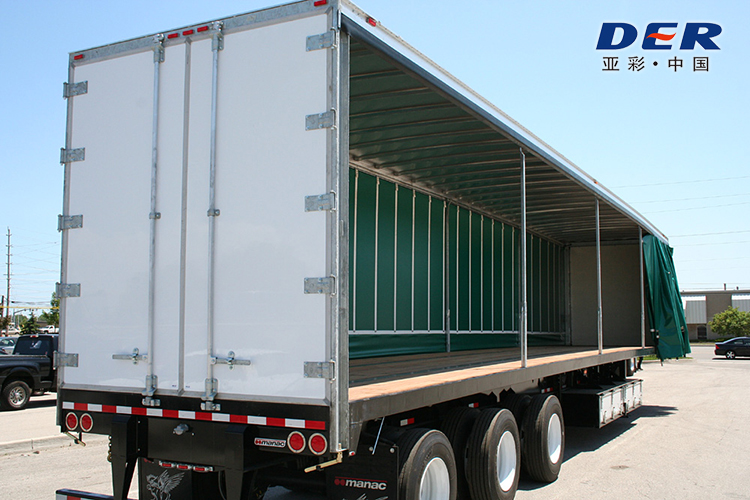
Then confirm UV stabilization, surface reflectance, ventilation and the actual temperature sensitivity of the covered goods.
If full blackout matters, specify an opaque/blockout construction rather than relying on color alone.
Choose material weight, UV package and reinforcement according to wind, exposure duration and handling frequency.
Use conspicuity for identification and branding, but confirm any safety or regulatory color requirements separately.
Useful for event, work-area and industrial enclosures where a bright interior and neutral appearance are preferred.
Put the reflective/light surface outward and the darker face inward when the construction is designed for two-sided use.
Approve material, shade, finish and sample together so repeat production is based on a complete reference, not a verbal color name.
Mid-tone surfaces can make dust and everyday handling marks less visually prominent than very light or very dark surfaces.
| Mistake | Why it causes trouble | Better procurement approach |
|---|---|---|
| 1. Assuming color means grade | A silver tarp may be heavy duty in one product family and light duty in another. | Compare GSM/thickness, weave, coating and reinforcement. |
| 2. Choosing black for heat-sensitive cargo | Black can absorb more solar energy and raise surface temperature in direct sun. | Compare white, reflective silver or reversible constructions. |
| 3. Expecting white to be blackout | A white sheet can still transmit light depending on construction. | Specify opacity or blockout structure. |
| 4. Treating silver as a thermal test result | A silver appearance does not prove a specific reflectance or temperature reduction. | Define measurable acceptance criteria when thermal performance is critical. |
| 5. Ignoring batch color control | OEM/fleet programs can show noticeable shade drift across repeat orders if the reference is vague. | Approve color sample, gloss and construction as a repeat-order standard. |
| 6. Forgetting the underside | Two-sided tarps can behave differently depending on which face sees sun, cargo or customers. | Specify the outward-facing and inward-facing color in the drawing or order sheet. |
Real DERFLEX website images showing multi-color samples, finished tarps, reflective surfaces, agriculture and transport applications.
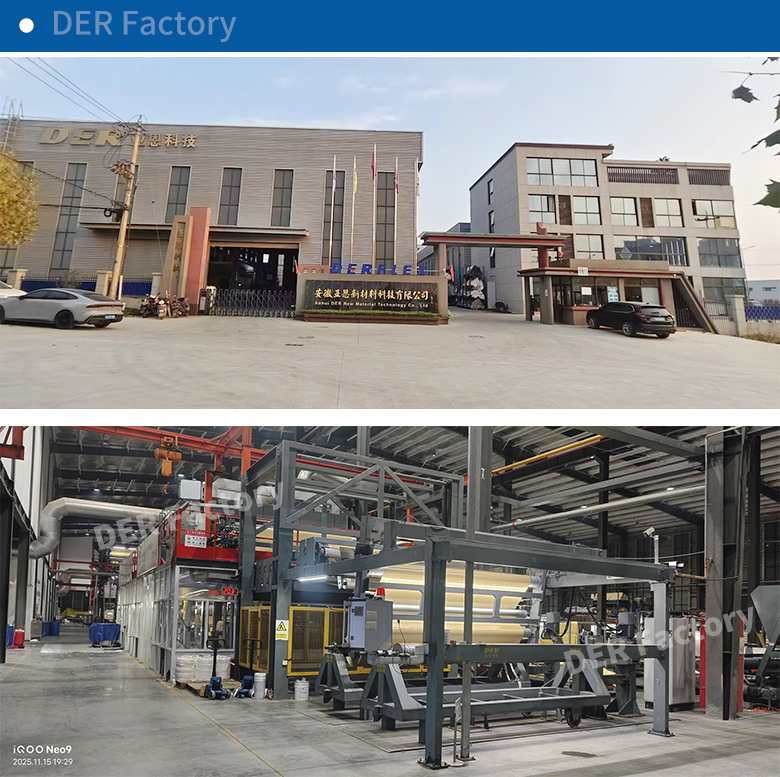
These verified DERFLEX pages cover the material, UV, waterproofing and application decisions that color alone cannot answer.
White and highly reflective silver are generally better starting directions than black when the goal is to reduce solar heat absorption. Actual temperature still depends on the material, surface finish, reflectance, air gap, ventilation, weather and installation.
Generally, yes, under the same direct-sun conditions. Dark surfaces absorb more incoming solar energy than white or highly reflective surfaces. Black remains useful when blackout, privacy or dark appearance is more important than minimizing heat gain.
There is no universal industry standard that assigns a fixed strength or duty grade to tarp colors. Colors are typically selected for heat direction, visibility, light blocking, appearance, branding or market convention. Always verify the actual material specification.
Not necessarily. Strength depends on base fabric, weave, coating or lamination, total weight or thickness, reinforcement and fabrication. Any of those colors can be produced in multiple duty levels.
There is no universal longest-lasting color. UV stabilizers, polymer and pigment formulation, coating quality, climate, exposure angle, tension, abrasion, handling and maintenance are more important than the color name alone.
If the goal is to reflect sunlight, the reflective silver side normally faces the main solar exposure. Reversible tarps can be oriented differently when blackout, camouflage or appearance becomes the higher priority.
They can be, but waterproofing is a material and fabrication property rather than a color property. Check the PE lamination or PVC coating and the finished seam, hem and hole design.
DERFLEX supports project-defined color discussion for suitable PVC-coated and PE tarp programs. Buyers should provide the preferred shade reference, material construction, surface finish, quantity and repeat-order expectations. Final approval should be based on an agreed sample.
For a more accurate recommendation and quotation, send the complete application rather than only a color name.