Improve conversion yield
Roll width can influence seam count, cutting waste and production speed. A width selected around the finished panel can reduce unnecessary joins and off-cuts.




DERFLEX supplies PVC coated polyester tarp fabric by the roll for converters, tarp manufacturers, distributors and industrial OEM programs. Specify the roll around your finished product—not the other way around—with selectable weight, width, color, surface finish and functional treatments for truck covers, industrial curtains, shelters, equipment protection and custom tarpaulin production.
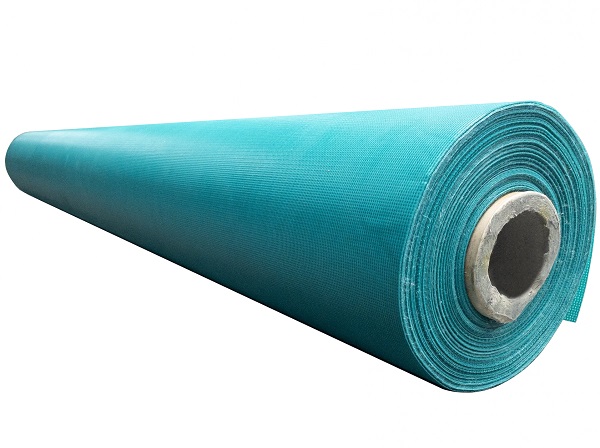
For buyers who fabricate finished covers in-house or need repeatable bulk material for ongoing production.
“Tarp fabric by the roll” is a purchasing format, not a single universal specification. The commercial advantage is control: fabricators can choose the construction that fits their own pattern cutting, welding equipment, stock program and end-use performance instead of adapting to a fixed finished tarp size.
Roll width can influence seam count, cutting waste and production speed. A width selected around the finished panel can reduce unnecessary joins and off-cuts.
For recurring cover programs, consistent roll construction, color and surface behavior help keep fabrication settings more predictable from batch to batch.
Distributors and converters can turn one roll specification into multiple finished SKUs such as truck tarps, curtain panels, machine covers and weather enclosures.
A common heavy-duty tarp roll structure uses woven polyester as the load-bearing reinforcement and PVC on the surface for water resistance, cleanability, color and heat-welding compatibility. The exact yarn, weave, coating formula and finish should be selected according to the application and required test values.
If you are comparing coating structures rather than only roll sizes, see DERFLEX’s PVC coated fabrics overview and the industrial PVC polyester coated fabric page.
The ranges below are practical sourcing directions rather than universal standards. Final values, tolerances and available combinations should be confirmed against the selected construction, test method, order quantity and manufacturing plan.
| Specification item | Typical buying direction | Why it matters in production | Useful for |
|---|---|---|---|
| Fabric weight | Approx. 350–1300 gsm, project dependent | Influences handling, strength potential, abrasion resistance and finished product mass. | Light covers through heavy industrial tarps |
| Roll width | Approx. 1.02–5.10 m by construction | Directly affects cutting yield, seam count and workshop layout. | Large panels, truck tarps, tent sections |
| Roll length | Order-specific; often planned around weight and handling | Changes roll mass, storage efficiency and machine feeding practicality. | Converters and automated cutting operations |
| Color | Standard and custom color programs | Supports fleet color, distributor ranges, branding and application visibility. | OEM, private label and recurring programs |
| Surface finish | Glossy, matte, lacquered or application-oriented | Affects appearance, cleanability, blocking behavior and processing feel. | Outdoor covers, curtains, fabricated panels |
| Functional options | UV, FR, anti-mildew, cold-resistant and other formulations by request | Lets the material be matched to environmental, regulatory or service conditions. | Construction, logistics, agriculture, temporary structures |
| Fabrication method | Hot-air, HF, hot-wedge or sewing compatibility depending on grade | Material and surface must suit the converter’s seam process. | Tarps, curtains, inflatable or membrane-like products |
18 oz vinyl is a widely recognized commercial reference for heavy-duty covers. DERFLEX’s 18 oz vinyl coated fabric page explains how this weight fits between lighter and heavier roll-goods choices.
Use the tarp roll size guide to work through usable width, roll length, GSM and handling before finalizing the purchase specification.
Higher fabric weight can support tougher constructions, but it also increases roll mass, handling effort and potentially cost. For many B2B programs, the efficient choice is the lowest construction that comfortably meets the real tensile, tear, abrasion, weathering and service requirements.
Useful direction for lighter protection, temporary covers and applications where easier handling is important.
A common medium-to-heavy zone for general tarp fabrication, transport covers and outdoor protection.
Suitable direction for higher-wear covers, repeated handling and applications needing a more substantial construction.
Considered for demanding industrial service where additional mass and robust construction are acceptable.
The value of bulk tarp material is versatility. Buyers can standardize a practical roll grade and convert it into different finished products, or maintain several purpose-built constructions for different performance tiers.
Roll goods for flatbed tarps, side curtains, cargo protection and custom transport covers.
Fabricated partitions, equipment barriers, wash-down areas and temporary work-zone separation.
Weather-resistant skins for commercial tents, temporary roofs, canopies and storage shelters.
Protective covers for stored materials, equipment and selected farm or livestock applications.
Machine covers, outdoor equipment wraps and custom industrial protection made to measured dimensions.
Roll material for private-label tarp lines, converter programs and application-specific finished products.
For transport-specific requirements, review the truck tarp fabric page. Buyers focused on repeat wholesale roll purchasing can also use the tarp fabric roll supplier page for bulk supply considerations.
A technically suitable fabric can still create production problems if its width, surface or welding behavior does not match your process. Sharing your fabrication method at the quotation stage helps narrow the material choice before sampling.
Manual, table or automated cutting layout determines useful roll width and repeat pattern planning.
Hot-air, HF or hot-wedge welding can be matched to appropriate PVC coated grades.
Some constructions are sewn, then reinforced or sealed depending on the waterproofing target.
Hems, webbing, rope edges, pockets and reinforcement patches can be planned into the finished design.
Eyelets, D-rings, buckles, straps and fasteners add point loads that should be considered in material selection.
For converters, repeatability often matters as much as peak laboratory values. A practical quality plan should cover the characteristics that directly affect cutting, welding, appearance and finished-product consistency.
Usable width, edge condition, winding and roll presentation influence feeding, cutting and storage.
Surface uniformity and adhesion support predictable waterproofing behavior and conversion.
Tensile and tear requirements should be agreed with test methods appropriate to the application.
Visual consistency is particularly important for distributor programs, fleet colors and repeat OEM orders.
Trial welding can help confirm process windows before the material is released into volume conversion.
Core support, roll wrapping and export packing should be chosen to reduce handling and transport damage.
Retail fabric pages are useful when the buyer needs a fixed width and a few yards. Industrial roll procurement is different: buyers usually need specification continuity, predictable conversion, export packing and a commercial path from sample to repeat order.
Roll material for companies that cut, weld, sew and finish tarps in their own workshops.
Standard or customized colors and grades for regional stock programs and downstream fabricators.
Project-based discussions for material specification, labeling, packing and repeat-order requirements.
| Buying format | Best when | Main advantage | Watch-outs |
|---|---|---|---|
| Tarp fabric by the roll | You fabricate multiple sizes or repeat products | Control over cutting, seam placement, inventory and finished SKU design | Requires workshop capability and roll handling |
| Fabric by the yard | You need a short continuous length for repair, prototyping or small jobs | Low commitment and flexible purchase quantity | Higher unit cost can apply; width choices may be limited |
| Finished tarp | You need a ready-to-use cover rather than conversion material | No in-house fabrication required | Less flexibility for custom production programs |
A short but complete specification usually leads to a more relevant material recommendation than asking only for “the price of a PVC tarp roll.”
These pages cover adjacent decisions without repeating the same purchasing intent.
Answers below are written for converters, distributors, procurement teams and OEM buyers.
It is unconverted tarp material supplied as continuous roll goods before hemming, eyeleting, sewing or welding into a finished cover. For many industrial applications, PVC coated polyester is used because it combines a reinforced textile base with a water-resistant, cleanable and weldable surface.
The useful width depends on your finished panel size, seam plan, cutting equipment and handling limits. A wider roll can reduce seams on large panels, but the roll also becomes heavier and may require different handling equipment. Share your finished dimensions so the width can be planned around production.
In commercial tarp purchasing, “vinyl tarp fabric” often refers to PVC coated polyester fabric. Buyers should still confirm the base cloth, coating structure, weight, thickness, finish and performance values because the same general name can cover different constructions.
Custom color programs can be discussed for qualified orders, together with roll width, weight, finish, functional additives, labeling and packing. Availability depends on the selected construction and order plan.
Suitable PVC coated fabric grades can be used with common thermal welding methods. Because welding performance depends on coating formulation, thickness, equipment and settings, buyers should confirm the intended process and conduct production trials when necessary.
Send the application, target weight, roll width, preferred length, color, finish, UV or flame-retardant requirement, welding or sewing method, expected quantity and destination market. If you already have a technical data sheet or sample, include it for comparison.
Send DERFLEX your application, target GSM, width, roll length, color, finish, welding method and order quantity. The team can help narrow the specification before quotation and sampling.