Heavy Duty Tarps
For repeated handling, outdoor storage, machinery, construction and demanding industrial coverage where edge strength and durability matter.
Explore heavy duty tarp manufacturing →


Source tarp materials, finished covers and OEM programs from DERFLEX for transport, construction, industrial storage, agriculture and outdoor protection.
Instead of choosing only by color or advertised thickness, commercial buyers can compare tarp material, GSM, reinforcement, seam method, fixing hardware, weather exposure, fabrication format and repeat-order requirements. DERFLEX supports PVC coated polyester tarps, vinyl tarps, waterproof tarpaulins, truck tarps and custom tarp development for distributors, fabricators, contractors, importers and OEM brands.
For short-term general coverage, a lightweight tarp may be sufficient. For repeated commercial or outdoor use, compare the material system, fabric weight, waterproofing, UV exposure, tear risk, seam construction, edge reinforcement and tie-down layout. PVC coated polyester or vinyl tarps are commonly selected when buyers need waterproof protection, weldability, stronger reinforcement options and custom fabrication.
“Tarps for sale” covers many products. The correct choice depends on whether the tarp must be inexpensive and temporary, reusable outdoors, fabricated for transport, or built as a repeatable OEM product.
For repeated handling, outdoor storage, machinery, construction and demanding industrial coverage where edge strength and durability matter.
Explore heavy duty tarp manufacturing →For rain, snow, moisture and weather protection where the tarp material and seam strategy must work together to control water ingress.
View waterproof tarp options →For commercial covers that need waterproofing, weldability, abrasion-conscious construction, reinforced finishing and repeat outdoor use.
Compare vinyl tarp solutions →For flatbed, trailer and cargo protection where load shape, abrasion points, repeated folding and tie-down forces influence the final design.
See truck tarp supply →For buyers who need finished dimensions, reinforcement zones, hardware, printing, special shapes, packaging or private-label production.
Review custom tarp capability →Start with application, exposure, waterproofing, weight, fastening and service expectations before comparing quotes or samples.
Use the tarp buying guide →This matrix helps B2B buyers move from a broad search to a practical specification. Final material and construction should still be confirmed around the actual operating environment.
| Application | Typical Material Direction | What Matters Most | Finishing to Review |
|---|---|---|---|
| Temporary general cover | Lightweight PE or economical coated structure | Low handling weight, short-term rain/dust protection, cost control | Simple hems, rope edge, standard eyelets |
| Outdoor equipment & storage | PVC coated polyester / vinyl tarp | Waterproofing, UV exposure, abrasion, reuse frequency | Reinforced hems, corner patches, suitable tie-down spacing |
| Truck & trailer cargo | Heavy duty PVC coated polyester | Tear resistance, flexibility, abrasion points, repeated folding, wind load | Welded seams, webbing, D-rings, grommets, stress-zone reinforcement |
| Construction & jobsite | PVC tarp, PE tarp or mesh depending on the protection problem | Weather exposure, temporary enclosure, debris control, handling frequency | Reinforced perimeter, attachment layout, seam and panel planning |
| Agriculture & seasonal storage | Waterproof PVC or application-matched tarp | UV, rain, seasonal handling, moisture management, cover geometry | Strong edges, anchor points, large-panel seam planning |
| OEM / distributor product line | Multiple grades matched to target market | Repeatable specification, category positioning, packaging, brand consistency | Color, logo, label, carton, hardware standardization and QC reference |
DERFLEX’s current tarp category supports a broad PVC tarp range. Exact structure should be confirmed by application and sample rather than assumed from one headline number.
| Product Category | Heavy duty tarps, waterproof PVC tarps, vinyl tarps, industrial covers, truck tarps, custom finished covers and tarp roll goods. |
|---|---|
| Material Direction | PVC coated polyester fabric, vinyl tarp material, laminated tarpaulin, PE options or application-matched reinforced structures. |
| Current Category Weight Range | Approx. 350–1200gsm+ for general, medium-duty, heavy-duty and industrial-duty PVC tarp programs; final structure should be confirmed for the real use case. |
| Size / Width | Roll goods and finished tarp dimensions can be discussed according to converting method, seam layout, shipping format and end-use dimensions. |
| Surface / Finish | Glossy, matte, smooth, textured, lacquered, printable and other project-dependent surface directions. |
| Performance Options | Waterproof, UV-resistant, anti-mildew, cold-flexible, flame-retardant-oriented or abrasion-conscious configurations according to project requirements. |
| Fabrication | Heat welding, high-frequency welding where suitable, sewing, reinforced hems, rope edges, webbing, D-rings, grommets, corner patches, sleeves and custom hardware. |
| Branding / Packing | Custom color, logo printing, private labels, carton labels, roll labels and export packaging can be discussed for OEM and distributor programs. |
Buyers searching “tarps for sale” often compare prices first. For commercial sourcing, the useful comparison is the complete specification—not only the listed dimensions.
PVC coated polyester, laminated tarp structures, PE and mesh have different raw-material, coating, processing and service characteristics.
Weight influences material usage, handling and durability, but two tarps with similar GSM can still perform differently because base fabric and coating balance differ.
Large covers may require panel joining, seam layout planning and more reinforcement. Confirm whether quoted dimensions refer to finished size or another measurement convention.
Grommets, D-rings, webbing, corner patches, rope edges, pockets and high-stress reinforcement add material and labor but can be essential in field use.
Logo printing, labels, cartons, retail packing and private-label requirements change the commercial specification and should be quoted together with the tarp.
Order quantity, SKU mix, packing density, roll versus finished-tarp format and destination influence manufacturing and shipping efficiency.
No single tarp material is correct for every job. Use the protection problem to narrow the category before you choose thickness, weight or color.
| Tarp Type | Best Fit | Strengths | Trade-Offs to Consider |
|---|---|---|---|
| PVC / Vinyl Tarps | Truck, industrial storage, equipment, construction, reusable outdoor covers | Waterproof material, weldability, strong reinforcement options, good surface durability | Usually heavier and higher-cost than lightweight PE; specification must match handling needs |
| PE Tarps | Temporary cover, general-purpose protection, price-sensitive applications | Lightweight, economical, easy to handle, widely used for short-term coverage | Not the first choice for repeated heavy-duty handling or high-stress fabrication |
| Canvas Tarps | Breathable protection, selected equipment/storage uses | Breathability, traditional feel, useful where condensation management matters | Water resistance depends on treatment; not equivalent to welded PVC waterproofing |
| Mesh Tarps | Shade, debris control, privacy, airflow and selected hauling applications | Airflow, lower wind loading than solid tarps, lighter handling | Not a fully waterproof barrier; openness must match the use case |
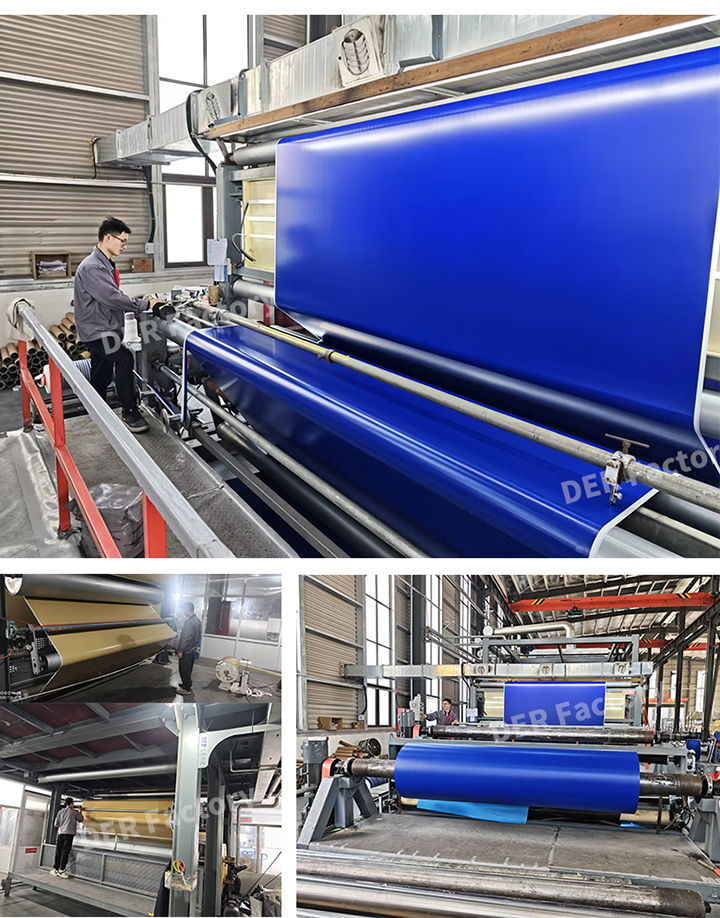
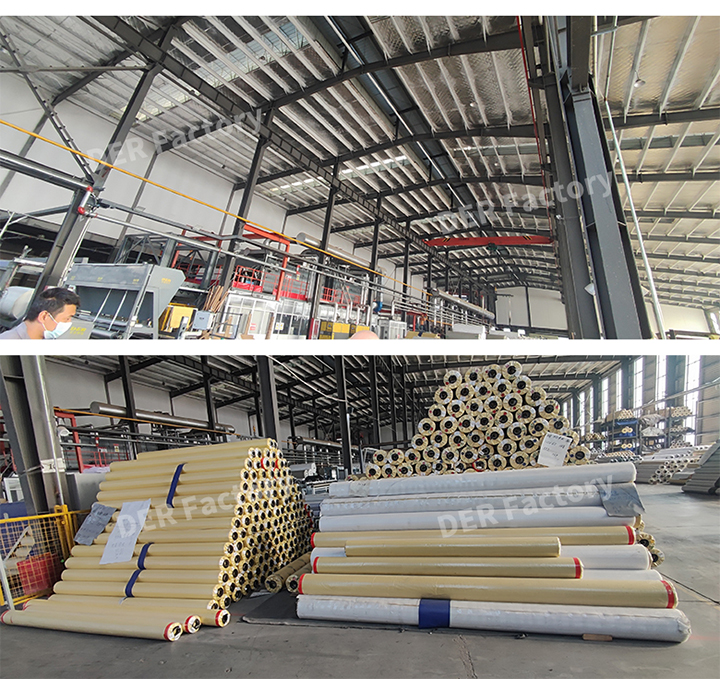
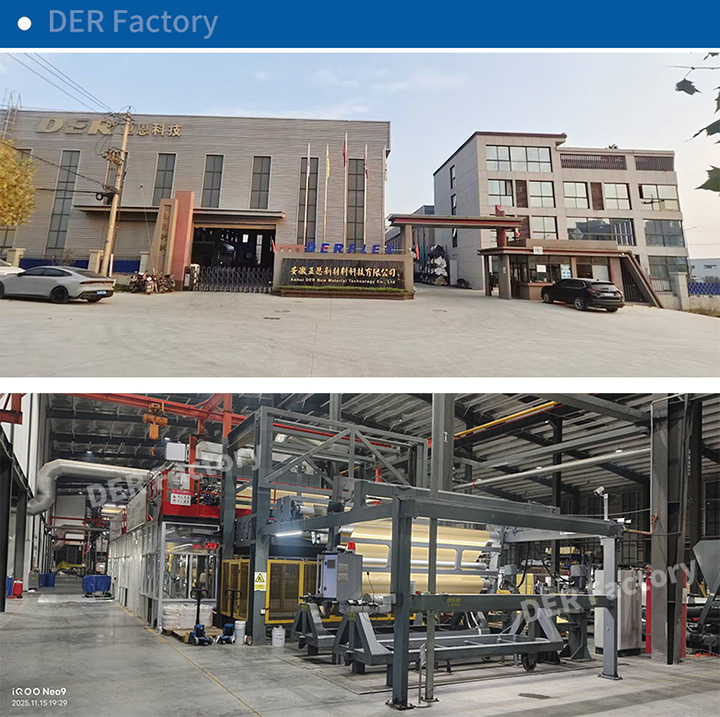
Real product and factory images help buyers understand material appearance, production context and supply format. They also give image search clearer descriptive signals than a logo-only page.

A tarp does not usually fail because the product name was wrong. Failures often begin at stress concentration points: seams, corners, hardware, sharp cargo contact, water pockets or loose fabric exposed to wind.
For commercial tarps, the material and the fabrication strategy should be specified together. Stronger fabric alone cannot compensate for poor load distribution or weak finishing.
Panel joints should be planned around material width, finished dimensions, water flow and high-stress zones. Welding can improve water-tight construction where the material and process are suitable.
Webbing, folded hems, rope edges and corner patches help spread pull loads. High-stress attachment points may need more reinforcement than the rest of the perimeter.
Closer spacing is not automatically better. Spacing should match wind, tie-down pattern, load shape and the strength of the reinforced edge system.
A tarp should be tensioned and supported so water can drain and loose panels do not repeatedly snap in wind. Installation geometry can matter as much as material thickness.
Confirm whether the required dimension is the exact finished cover size, the object size, or a cut-size reference. Allowances for drape, overlap and attachment change the final pattern.
Clear input helps a factory compare structures faster and reduces the risk of receiving quotes that look similar but describe different products.
The goal is not to buy the thickest or cheapest tarp. The goal is to buy a cover that fits the actual operating and commercial requirement.
Blue, silver or black does not tell you the base fabric, coating, GSM, reinforcement or expected durability.
Thickness is one input. Fabric construction, coating balance, reinforcement and seam quality also influence performance.
A cover can be technically strong and still fail the job if the pattern does not include the required drop, overlap or installation allowance.
Grommet or D-ring layout should follow the actual load path. Strong fabric with weak or poorly positioned attachment points can still tear.
Distributors and OEM brands should document approved material, color, hardware, labels and packing so repeat production stays commercially consistent.
Truck cargo, outdoor equipment, temporary roof cover and agricultural storage create different stress, weather and handling conditions.
The same tarp material can be supplied in different forms depending on whether you are a fabricator, distributor, contractor or brand owner.
For tarp makers, welding shops and converters that prefer to control local cutting, fabrication, hardware and final delivery.
For contractors, distributors and project buyers that need covers delivered with finished dimensions and agreed hardware.
For brands and importers building a repeatable tarp line rather than purchasing one-off stock items.
Online retailers are useful for immediate standard-size purchases. Factory-oriented sourcing becomes more useful when the buyer needs specification control, repeatability and custom commercial support.
A simple five-step sourcing flow keeps technical details and commercial requirements aligned before bulk production.
Share application, operating environment, expected handling and what the tarp must protect against.
Provide finished size, shape, drop, overlap, drawings, attachment points and quantity.
Compare material type, GSM, coating, surface finish, UV / weather direction and fabrication method.
Confirm the agreed specification, finishing, branding, packaging and commercial terms before production.
Proceed with production, inspection, packing and shipment coordination according to the approved requirement.
Send DERFLEX your application, finished dimensions, target material or duty level, quantity, reinforcement, hardware, logo or packaging needs and destination. The team can use those details to narrow a suitable tarp structure and quotation.
Final material, performance and production details should be confirmed against the actual project requirement and approved, specification.
Direct answers for buyers comparing tarp materials, heavy duty grades, waterproof options, custom fabrication and B2B purchasing.
PVC coated polyester or vinyl tarps are commonly selected for demanding outdoor use because they can combine waterproof material, weldability, tear resistance, UV-resistant options and strong reinforced finishing. The correct grade still depends on exposure duration, abrasion, wind, handling frequency and attachment method.
In commercial tarp markets, “vinyl tarp” commonly refers to a polyester fabric coated with PVC. Buyers should still confirm the exact base fabric, coating structure, GSM, thickness, surface finish and fabrication details rather than relying only on the product name.
Choose PE when lightweight handling and economical short-term coverage are the main priorities. Choose PVC coated polyester when you need stronger reusable construction, welding, reinforcement options, outdoor durability or custom industrial fabrication.
Provide the application, finished dimensions, quantity, material preference or duty level, target GSM or thickness if known, weather exposure, edge reinforcement, grommet or D-ring layout, color, logo / label requirements, packaging and destination.
No. Higher weight can improve durability in some applications, but service life also depends on base fabric, coating, seam construction, UV exposure, abrasion, edge reinforcement, tension, wind flapping, water pooling and how the tarp is handled.
Yes. DERFLEX supports tarp roll materials for converters and fabricators, as well as finished tarp and OEM programs with custom dimensions, reinforcement, hardware, color, printing, labels and packaging according to the agreed project requirement.