1. Initial Solar Reflectance
This describes a new product. It is useful for product comparison, but it may not be the value that a local code or sustainability program uses for compliance.



White, gray and tan are common TPO roofing colors, but color alone is not a performance specification. White TPO is usually the first option evaluated when high solar reflectance is the priority; gray and tan can provide a softer architectural appearance while still offering light-colored roof options. For any energy code, cool-roof or tender requirement, specify the exact membrane and request its initial and aged solar reflectance, thermal emittance and Solar Reflectance Index (SRI).
White TPO is generally the most reflective of the standard white, gray and tan color families, but the exact solar reflectance depends on the membrane formulation and product line. Gray and tan products can also be formulated for reflective roofing. If a project has a code, LEED, procurement or energy-performance requirement, compare the exact product's measured solar reflectance, thermal emittance and SRI rather than selecting by color name alone.
A roof can look light without automatically meeting a cool-roof requirement. Procurement teams should separate appearance from the measured properties used by codes, rating programs and sustainability specifications.
Color selection should connect roof visibility, climate, code requirements, solar-performance targets, maintenance strategy and the building's architectural design.
| Color Direction | Typical Buying Priority | Reflectivity Logic | Where Buyers Often Evaluate It | What to Verify Before Order |
|---|---|---|---|---|
| White TPO | Maximum emphasis on a light, reflective roof surface. | Usually the first standard color evaluated when high solar reflectance is important. | Warehouses, factories, logistics centers, retail, institutional and other large low-slope roofs. | Initial and aged SR, TE, SRI, required rating/label, thickness, reinforcement and complete roof assembly. |
| Gray / Grey TPO | Architectural appearance, reduced visual brightness and color coordination. | Reflectance can vary significantly by formulation; "gray" does not guarantee a specific SR or SRI. | Visible roof areas, modern commercial architecture, roof zones where white is visually dominant. | Exact shade, product-level reflectance data, outdoor color sample and batch color consistency. |
| Tan TPO | Warmer roof color that can coordinate with beige, sand, masonry or earth-tone building palettes. | Tan can be reflective, but performance must be verified for the exact membrane rather than assumed. | Retail, schools, hospitality, mixed-use buildings and roofs visible from adjacent elevations. | Physical sample, aged reflectance/SRI where required, project color approval and accessory color matching. |
| Custom Color | Branding, planning requirements or architectural color coordination. | A custom pigment package can change radiative properties; existing white/gray/tan data should not be transferred automatically. | OEM programs, signature buildings, market-specific distributor lines and design-led projects. | MOQ, approved color sample, production tolerance, lead time, accessory compatibility and new performance data if the project requires it. |
White normally starts at the high-reflectance end of the standard color discussion. Tan and gray can move toward architectural balance, but the exact order can change with "high-reflectance" pigment technology and product formulation. That is why the data sheet—not the swatch—controls the final technical decision.
Current California 2025 Energy Code guidance is a useful example of why a project should name its required radiative target. For newly constructed nonresidential low-sloped roofs subject to the prescriptive requirement, the code pathway states aged solar reflectance of at least 0.63 with thermal emittance of at least 0.75, or an SRI of at least 75, subject to applicability and exceptions.
This is not a universal global TPO requirement. Local energy codes, roof slope, building type and project specifications must be checked for the actual job.
Technical reference: California Energy Commission — 2025 Nonresidential Cool Roofs.
Reflective roof surfaces weather. Dust, biological growth, airborne contaminants, climate and surface condition can change how much sunlight a roof reflects over time. For long-term procurement, compare the correct aging basis required by the specification.
This describes a new product. It is useful for product comparison, but it may not be the value that a local code or sustainability program uses for compliance.
This indicates how the roof surface performs after weathering under the applicable rating method. Procurement documents should state whether a three-year aged or another accepted aging value is required.
Roof cleanliness can influence real-world reflectance. Drainage, surrounding pollution, roof traffic and maintenance access should be part of the building's operating plan rather than treated as color questions.
This sequence prevents a common procurement mistake: approving an attractive color before confirming whether the exact product meets the roof's technical and commercial requirements.
If yes, begin with the required aged SR, TE or SRI threshold. Do not begin with the color swatch.
White is usually the first standard TPO color evaluated, especially for large roofs in warm climates.
Gray or tan may be evaluated to reduce visual brightness and coordinate with the building envelope.
Do not assume maximum roof reflectivity always gives the lowest annual energy use; evaluate the complete building and climate.
Approve a physical sample, define color tolerance and request fresh radiative data if the project has a reflectivity requirement.
Real product imagery helps buyers compare surface appearance, roll format and material handling before approving samples and production specifications.
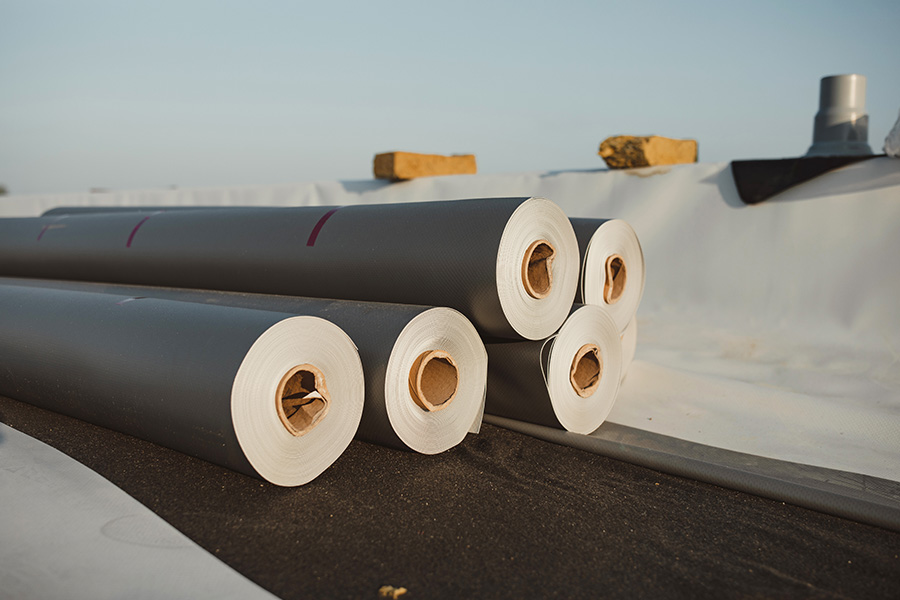
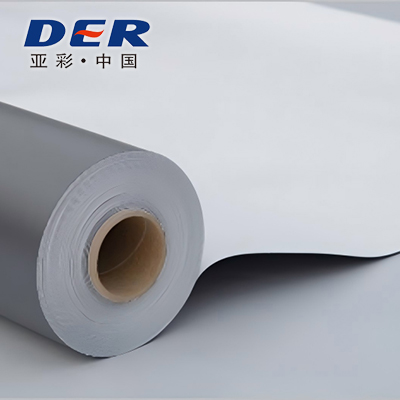
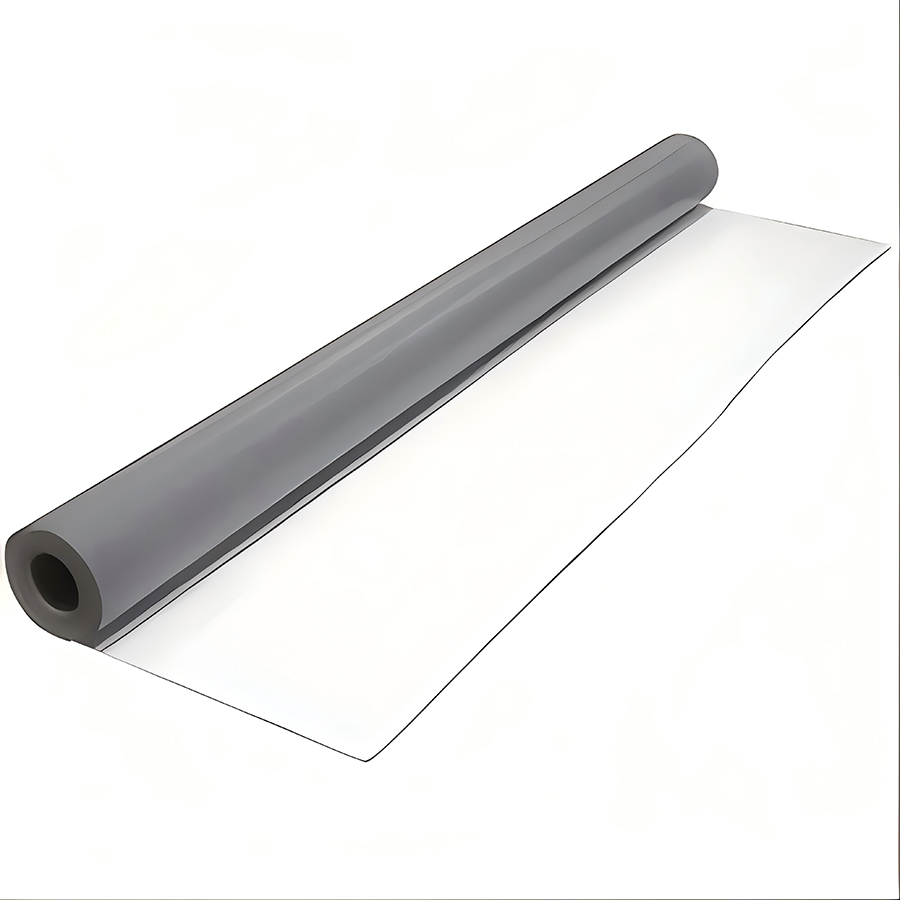
The table below is a decision guide, not a substitute for the complete roof-system specification.
| Project Situation | Color Direction Often Evaluated | Why | Additional Buying Check |
|---|---|---|---|
| Large warehouse / logistics center in a warm climate | White | Reflective roof strategy is often a primary design objective on large exposed roof areas. | Confirm aged SR / SRI, insulation, roof slope, local code and attachment system. |
| Factory or industrial building | White, gray or project color | Color can be selected around energy strategy, rooftop equipment, visual requirements and local specification. | Also review chemicals, exhaust, traffic, penetrations and compatible roof details. |
| Retail / mixed-use building with roof visible from nearby towers | Gray or tan may be considered | Visual integration can matter more than on a roof hidden from public view. | Do not trade away a required cool-roof value without checking the exact product data. |
| School, public or institutional roof | Project specification controls | Public projects often have detailed tender, energy or documentation requirements. | State the exact standard, rating, color sample and submittal documents in the RFQ. |
| OEM / distributor stock program | White plus selected gray/tan SKUs | Standardized color families can support clearer inventory and repeat-order planning. | Define color code, approved sample, batch tolerance, labels, MOQ and repeat-order QC. |
A professional RFQ turns “I need gray TPO” into a controlled product specification that can be compared across suppliers and repeated across bulk orders.
Current DERFLEX TPO pages present white, gray and tan as common surface-color directions and allow project discussion for custom colors. DERFLEX also presents reinforced, self-adhered and other TPO membrane constructions for commercial roofing and waterproofing buyers.
For projects with a required reflectance or SRI target, send the exact requirement before quotation. DERFLEX should confirm the applicable product data and document set for the membrane being offered rather than treating color as proof of compliance.
Project-specific MOQ, lead time, test reports, certifications, reflectance values and custom-color availability should be confirmed for the exact membrane specification before purchase.
Direct answers for contractors, importers, project buyers and roofing-material distributors.
White, gray and tan are widely used standard TPO roofing color families in the commercial roofing market. Current DERFLEX TPO pages also list white, gray and tan as common color directions, with custom color discussion available for project or OEM orders.
White TPO is generally the first standard color evaluated when high solar reflectance is the priority. However, exact reflectance varies by membrane formulation. High-reflectance gray or tan products can perform differently from ordinary gray or tan membranes, so compare the exact product data rather than relying on color names.
It can only be determined from the exact product's tested radiative properties and the applicable code or program. A gray color name alone does not prove compliance. Request the initial/aged solar reflectance, thermal emittance and SRI required by the project.
Solar reflectance is the fraction of incoming solar energy reflected by the roof surface. SRI is a calculated index that combines solar reflectance and thermal emittance to indicate the roof surface's ability to reject solar heat. They are related, but they are not the same metric.
Compare the value required by the project. Many cool-roof codes and rating programs focus on aged performance because roof surfaces change after weather exposure. Initial values are still useful, but they should not replace the aged value when the specification requires aging data.
Not automatically. A reflective roof can reduce solar heat gain and is often valuable in warm, cooling-dominated climates, but whole-building energy impact also depends on insulation, HVAC efficiency, roof construction, climate, heating demand and operating conditions. Evaluate the full building rather than promising a fixed energy-saving percentage from membrane color alone.
DERFLEX currently presents custom color discussion as a project option. Final availability, minimum production quantity, shade tolerance, lead time and any required radiative-property testing should be confirmed for the specific order before the color is approved.
Send the building/roof application, membrane construction, target thickness, roll dimensions, color, quantity, destination, attachment concept, physical-sample requirement and any required solar reflectance, thermal emittance, SRI, CRRC, energy-code or tender documentation. Include private-label and packaging requirements for distributor programs.
Send DERFLEX the roof application and color requirement together with the technical target. For projects where reflectivity matters, include the exact SR / TE / SRI or local-code requirement so the offered membrane and documentation can be reviewed before bulk production.
Current DERFLEX TPO pages present white, gray and tan as common surface-color directions and allow project discussion for custom colors. DERFLEX also presents reinforced, self-adhered and other TPO membrane constructions for commercial roofing and waterproofing buyers.
For projects with a required reflectance or SRI target, send the exact requirement before quotation. DERFLEX should confirm the applicable product data and document set for the membrane being offered rather than treating color as proof of compliance.
Project-specific MOQ, lead time, test reports, certifications, reflectance values and custom-color availability should be confirmed for the exact membrane specification before purchase.
Direct answers for contractors, importers, project buyers and roofing-material distributors.
White, gray and tan are widely used standard TPO roofing color families in the commercial roofing market. Current DERFLEX TPO pages also list white, gray and tan as common color directions, with custom color discussion available for project or OEM orders.
White TPO is generally the first standard color evaluated when high solar reflectance is the priority. However, exact reflectance varies by membrane formulation. High-reflectance gray or tan products can perform differently from ordinary gray or tan membranes, so compare the exact product data rather than relying on color names.
It can only be determined from the exact product's tested radiative properties and the applicable code or program. A gray color name alone does not prove compliance. Request the initial/aged solar reflectance, thermal emittance and SRI required by the project.
Solar reflectance is the fraction of incoming solar energy reflected by the roof surface. SRI is a calculated index that combines solar reflectance and thermal emittance to indicate the roof surface's ability to reject solar heat. They are related, but they are not the same metric.
Compare the value required by the project. Many cool-roof codes and rating programs focus on aged performance because roof surfaces change after weather exposure. Initial values are still useful, but they should not replace the aged value when the specification requires aging data.
Not automatically. A reflective roof can reduce solar heat gain and is often valuable in warm, cooling-dominated climates, but whole-building energy impact also depends on insulation, HVAC efficiency, roof construction, climate, heating demand and operating conditions. Evaluate the full building rather than promising a fixed energy-saving percentage from membrane color alone.
DERFLEX currently presents custom color discussion as a project option. Final availability, minimum production quantity, shade tolerance, lead time and any required radiative-property testing should be confirmed for the specific order before the color is approved.
Send the building/roof application, membrane construction, target thickness, roll dimensions, color, quantity, destination, attachment concept, physical-sample requirement and any required solar reflectance, thermal emittance, SRI, CRRC, energy-code or tender documentation. Include private-label and packaging requirements for distributor programs.
Send DERFLEX the roof application and color requirement together with the technical target. For projects where reflectivity matters, include the exact SR / TE / SRI or local-code requirement so the offered membrane and documentation can be reviewed before bulk production.