News
Industry News

Vinyl Tarp vs Canvas Tarp: Industrial Selectiaon Guide | DERFLEX

Update:2026/7/31 16:53:12 Views:

Industrial tarp material comparison
for B2B sourcing and custom production

Material decision guide

Vinyl Tarp vs Canvas Tarp

Choose vinyl when the cover must block water, tolerate repeated abrasion and support welded fabrication. Choose canvas when airflow, softer contact and condensation control matter more than complete water sealing.

The right answer is not based on material name alone. It depends on exposure time, load sensitivity, temperature, cleaning method, fastening design and the cost of a failure. This page helps distributors, tarp fabricators, fleet operators, contractors and equipment manufacturers turn those conditions into a practical specification.

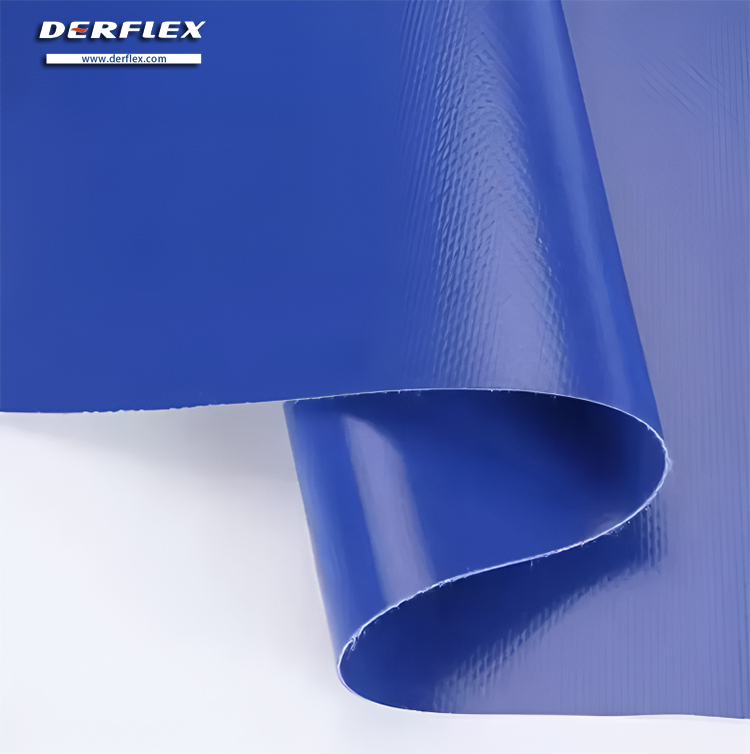
DERFLEX blue 18oz vinyl coated polyester tarp fabric
Vinyl-coated polyester tarp material A waterproof, weldable structure commonly selected for heavy-duty covers, transport protection and industrial fabrication.
The practical answer

Which Tarp Should You Choose?

Start with the type of damage you must prevent, then choose the material and fabrication system that controls that risk.

Choose a vinyl tarp when…

Continuous rain protection, easy cleaning and long-term outdoor exposure are central to the job.

  • The cover needs a waterproof PVC surface.
  • Welded seams are preferred over sewn-only seams.
  • Road dirt, grease, abrasion or repeated washing are expected.
  • The tarp will be used for transport, construction or industrial protection.

Choose a canvas tarp when…

Air movement and a softer textile surface protect the covered item better than a sealed cover would.

  • Condensation under the cover is a serious concern.
  • Machinery, lumber or finished surfaces need breathable protection.
  • Quiet handling and natural drape are useful.
  • Intermittent moisture resistance is sufficient.

Consider a hybrid when…

The project needs better water protection than traditional canvas but cannot ignore ventilation or surface protection.

  • Use a PVC-coated canvas or coated polyester outer layer.
  • Add vents, spacers or a breathable inner liner.
  • Zone the cover: waterproof top panels with breathable side panels.
  • Validate the assembly with a sample before production.
Material architecture

Why Vinyl and Canvas Behave Differently

Two tarps of similar weight can perform very differently because one relies on a continuous coating and the other relies on a breathable woven structure.

Vinyl tarp structure

A commercial vinyl tarp is commonly built from a woven polyester reinforcement with PVC coating or laminated PVC layers. The polyester carries tensile loads; the PVC surface provides the water barrier, cleanability and weldable surface.

Protective PVC surface / optional lacquer
High-strength woven polyester scrim
PVC backing layer

Specification variables: yarn denier, weave density, coating adhesion, total GSM, thickness, UV package, cold flexibility, flame-retardant formulation and surface finish.

Canvas tarp structure

Canvas is a dense woven textile made from cotton, polyester or blended yarns. Treatments can improve water repellency, mildew resistance or flame performance, but traditional canvas remains more vapor-permeable than a continuous PVC surface.

Water-repellent or specialty treatment
Dense cotton, polyester or blended weave
Textile back surface with natural drape

Specification variables: fiber type, fabric weight, weave, shrinkage control, treatment chemistry, colorfastness, stitching, mildew control and finished storage conditions.

Procurement note: “vinyl tarp” usually refers to PVC-coated or PVC-laminated polyester. “Canvas tarp” may mean cotton duck, polyester canvas, blended canvas or coated canvas. Always request the actual construction and test values instead of buying by category name alone.

14-point decision matrix

Canvas vs Vinyl Tarp: Side-by-Side Comparison

Use this table as a screening tool. Final performance still depends on the selected grade, seam construction, reinforcement and working environment.

Decision factor Vinyl tarp Canvas tarp
Rain and water sealing A continuous PVC surface is designed to block water. Compatible panels can be welded to improve seam sealing. Usually stronger Treated canvas sheds intermittent rain, but prolonged ponding and wind-driven moisture can penetrate the weave or sewn seams.
Breathability Low unless the cover includes vents, air gaps or breathable panel zones. Allows more vapor movement and can reduce condensation around machinery, lumber and stored goods. Usually stronger
Abrasion resistance Heavy coated grades can tolerate repeated handling and contact with road dirt or rough jobsite conditions. Dense canvas resists scuffing and has a softer touch, but repeated rubbing at one point can wear through fibers.
Tear and tensile strength High-strength polyester scrim can be engineered for demanding tie-down loads and wind exposure. Performance varies with fiber, yarn and weave. Heavy duck canvas can be strong but should be evaluated for shrinkage and wet strength.
Seam construction Supports hot-air or high-frequency welding on suitable formulations, plus sewing, webbing and reinforcement. Commonly sewn. Needle holes and thread paths can remain moisture entry points unless specially treated or covered.
Cleaning Smooth surfaces are generally easier to wipe or wash after contact with mud, oil film and road residue. Usually easier The weave can hold dust, stains and moisture. Controlled cleaning and complete drying are important.
Mildew and wet storage PVC surfaces do not absorb water like cotton, although trapped organic dirt and wet folding still require attention. Wet storage can create odor, mildew or treatment loss. The tarp should be fully dried before folding.
Condensation risk A tightly sealed vinyl cover can trap heat and humidity unless the design includes ventilation. Breathability generally makes canvas more suitable where trapped vapor may damage the load. Usually lower risk
Surface contact The coated face is easy to clean, but grit trapped under the tarp may mark paint or polished surfaces. A softer textile face can be useful over equipment or finished surfaces, provided the fabric is clean and does not retain abrasive dust.
Heat and hot equipment Service temperature depends on formulation. Direct contact with hot metal should be evaluated because PVC is thermoplastic. Canvas is often considered around warm equipment, but generic canvas should not be treated as a fire barrier. Use a verified grade for heat or flame requirements.
Chemicals, oil and grease Selected PVC formulations provide useful resistance to common dirt, oil and industrial exposure, subject to compatibility testing. Untreated fibers can absorb liquids. Specialty treatments may help, but chemical compatibility must be confirmed.
Handling and noise Heavy grades can feel dense or stiff, especially in low temperatures, and may flap more loudly in wind. Often quieter, softer and easier to drape around irregular shapes. Handling advantage
Branding and fabrication Can support color matching, printing, welding, eyelets, webbing, D-rings and private-label production. Can support dyeing, printing, sewing, eyelets, straps and branded packaging; treatment and shrinkage should be controlled.
Lifecycle economics Often carries a higher initial price, but can reduce replacement frequency in wet, dirty and heavy-duty service. Can be the lower-risk choice when breathability prevents rust, condensation or finish damage. Maintenance and drying must be included in cost planning.
Risk-first selection

Do Not Begin with Price—Begin with the Failure You Cannot Accept

A tarp becomes expensive when it protects against the wrong risk. Define the failure mode before choosing material, weight or hardware.

01

Water reaches the load

Prioritize a waterproof surface, welded seams, overlap design and drainage that prevents ponding.

02

Condensation forms underneath

Prioritize breathability, ventilation, air gaps or a hybrid panel design rather than a fully sealed cover.

03

Edges or tie-down points tear

Increase scrim strength, reinforce hems and corners, and match grommet spacing to the actual load path.

04

The cover damages the surface

Control trapped grit, choose a softer contact layer and prevent wind movement against painted or polished items.

05

Maintenance becomes too costly

Compare cleaning time, drying space, repair method, replacement frequency and downtime—not only unit price.

Application matching

Best Material by Use Case

The same company may need vinyl for one product line and canvas for another. Match each application to its dominant exposure and maintenance routine.

TR

Truck and trailer cargo

Road spray, wind, abrasion and frequent cleaning normally favor reinforced vinyl with welded seams and high-stress edge reinforcement.

Typical direction: vinyl tarp
EQ

Stationary machinery

Canvas can help release humidity around equipment stored under shelter. Outdoor exposure may require a ventilated vinyl design or a soft inner layer.

Typical direction: canvas or ventilated hybrid
CS

Construction site covers

For repeated rain, mud and rough handling, vinyl often provides easier cleaning and better water sealing. Canvas remains useful for breathable tool or material protection under controlled exposure.

Typical direction: vinyl for open weather
LW

Lumber and wood products

Wood needs rain protection without excessive trapped humidity. A vented cover, breathable canvas or zoned design can be safer than tightly sealing damp material.

Typical direction: canvas or engineered hybrid
AG

Agriculture and outdoor storage

Long rain exposure and washability often favor vinyl. Breathable canvas may suit selected equipment or dry goods when condensation control is more important.

Typical direction: application-specific
HW

Warm equipment and hot-work zones

Canvas may be considered where the surface temperature exceeds the comfort range of a PVC coating, but the actual heat and flame rating must be verified.

Typical direction: tested specialty canvas
WH

Warehouse partitions and curtains

Vinyl supports cleanable, weldable curtain panels. Canvas provides softer, quieter separation where full water resistance is unnecessary.

Typical direction: choose by cleaning and airflow
OEM

Retail and private-label tarp programs

The decision includes repeat color, finished size tolerance, packaging, label format, hardware consistency and target market expectations.

Typical direction: validate both material and SKU economics
Lifecycle cost

Compare Total Cost, Not Only Purchase Price

A lower-priced tarp is not economical when it causes load damage, more frequent replacement or excessive maintenance.

A useful cost model

Estimate the full cost per operating cycle. This gives purchasing teams a more accurate basis for comparing a heavy-duty vinyl tarp with a treated canvas tarp.

Initial material and fabrication cost + Cleaning, drying and storage labor + Repair parts and downtime + Replacement frequency + Risk of damage to the protected load

Vinyl may deliver better value when exposure is wet and dirty

Easy-clean surfaces, welded fabrication and resistance to repeated weather can reduce maintenance and replacement frequency in transport and industrial use.

Canvas may deliver better value when condensation is the expensive failure

A breathable cover can protect machinery, wood and metal products from trapped humidity that a fully sealed cover might retain.

Hardware and edge design influence service life

Even a strong material can fail early when grommet spacing, corner reinforcement or tie-down geometry concentrates force in the wrong area.

Sample testing is less costly than correcting a full production run

Confirm drape, fold recovery, seam performance, color, surface contact and cleaning before approving a repeat-order specification.

Buyer specification checklist

Information to Send Before Requesting a Quote

A precise inquiry helps the supplier recommend a material structure instead of guessing from the words “vinyl” or “canvas.”

1

Application and failure risk

,

Describe what is being covered and whether the main risk is water entry, condensation, abrasion, heat, chemicals or wind load.

2

Weather exposure

State rain duration, UV level, temperature range, outdoor service time and whether water can pool on the cover.

3

Material target

Provide preferred GSM or oz/yd², thickness, base fabric, color, surface finish and any reference sample.

4

Finished dimensions

Clarify cut size versus finished size, tolerance, shrinkage allowance and whether drawings or patterns are available.

5

Fabrication and hardware

Specify welded or sewn seams, hems, webbing, rope-in-hem, corner patches, D-rings, grommet material and spacing.

6

Compliance and packaging

List testing needs, flame-retardant direction, labeling, logo, barcode, folded size, carton configuration and order quantity.

DERFLEX manufacturing support

From Material Selection to Repeat-Order Control

DERFLEX supports buyers who need roll material, fabricated covers or an OEM tarp program matched to real service conditions.

One supplier conversation, several material routes

Instead of forcing every project into one material category, DERFLEX can discuss PVC-coated polyester, treated canvas, polyester canvas and coated canvas directions according to waterproofing, airflow, abrasion, fabrication and price targets.

For heavy-duty PVC tarp programs, DERFLEX supplies a broad material range and can discuss custom weight, width, color, finish and functional options. For canvas-based products, buyers can define fiber structure, treatment, finished size, hardware and private-label packing.

Material and GSM matching
Custom width and color
Welding and sewing routes
Hems, webbing and hardware
Sample and color approval
OEM packaging support
Bulk roll or finished cover supply
Repeat-order specification control
01

Share the working conditions

Send application, exposure, load sensitivity, dimensions, target quantity and current pain points.

02

Compare suitable structures

Review vinyl, canvas or hybrid directions with practical trade-offs rather than choosing by material name alone.

03

Approve a sample

Confirm color, weight, surface, drape, seam method, reinforcement and hardware before volume production.

04

Lock the repeat-order specification

Document the approved construction, dimensions, packing and inspection points for future purchasing consistency.

Frequently asked questions

Vinyl Tarp vs Canvas Tarp FAQ

Answers for buyers comparing waterproofing, breathability, service life and custom manufacturing.

Is a vinyl tarp more durable than a canvas tarp?

Vinyl often performs better in persistent rain, road transport, dirty environments and repeated washing because its PVC-coated polyester structure is waterproof, abrasion-resistant and weldable. Canvas can still deliver long service where breathability, softer contact and controlled storage are more important. Grade and application matter more than the category name alone.

Are canvas tarps fully waterproof?

Traditional treated canvas is generally water-resistant or water-repellent rather than fully waterproof. It can shed intermittent rain, but prolonged ponding, pressure or sewn seams may allow moisture through. For full water sealing, buyers usually consider a vinyl tarp, PVC-coated canvas or another coated structure.

Which tarp is better for covering machinery?

Canvas is often suitable for machinery stored in a relatively controlled area because it releases humidity and has a softer textile surface. For machinery exposed to long rain or industrial dirt, vinyl may be safer if the cover includes ventilation, spacing or a protective inner layer to control condensation and surface rubbing.

Does a vinyl tarp cause condensation?

A tightly fitted vinyl cover can trap humidity because the PVC surface has low breathability. Condensation risk can be reduced with vents, air gaps, raised cover geometry, breathable side panels or an absorbent inner layer designed for the application.

Can vinyl tarps and canvas tarps be customized?

Yes. DERFLEX can discuss custom material weight, width, color, surface treatment, finished size, seams, hems, webbing, grommets, D-rings, printing, labels and export packaging. Available options depend on the material route, order quantity and performance requirements.

What information is needed for a bulk tarp quotation?

Send the application, preferred material, target weight or thickness, finished dimensions, color, weather exposure, seam method, edge reinforcement, hardware spacing, testing needs, packaging and estimated quantity. A reference sample or drawing can improve specification accuracy.

Need Help Choosing Vinyl, Canvas or a Hybrid Tarp?

Send DERFLEX your application, exposure conditions, dimensions, fabrication details and order quantity. The team can help you compare practical material routes before sampling.

Custom material and finished-cover discussion OEM color, hardware and packaging options Sample approval before volume production
Request A Quote

Material performance varies by construction, treatment, fabrication and service conditions. Confirm the final specification and required test standards before ordering.

Consulting Services
+86-021-54361792 / 54361798
Email
sales@derflex.com