Starts with the job
A credible supplier asks what the tarp covers, how it is tensioned, how long it stays outdoors, how often it moves and what weather, abrasion or chemical exposure it faces.



The strongest answer is not one brand name. It is the company that can match the tarp’s material, construction and finishing to your actual job.
For a homeowner buying one cover, a broad-stock retailer may be convenient. For a fleet, distributor, fabricator or industrial project, the better fit is often a manufacturer that can control fabric weight, coating, welds, reinforcement, hardware, packaging and repeat production.
No single company makes the best tarp for every use. The right supplier depends on whether you need an inexpensive temporary poly cover, a breathable canvas tarp, a shade mesh, a clear curtain, or a heavy-duty PVC vinyl tarp built for repeated outdoor and industrial service. For custom B2B programs, evaluate the manufacturer’s specification control, fabrication capability, quality verification and repeat-order consistency rather than relying on a general “best” claim.
Leading tarp websites make product variety and customization easy to understand. Professional procurement should go one step further and test whether the supplier can deliver the same agreed specification repeatedly.
A credible supplier asks what the tarp covers, how it is tensioned, how long it stays outdoors, how often it moves and what weather, abrasion or chemical exposure it faces.
Look for clear information about base fabric, yarn density, coating or lamination, weight, thickness, surface finish and optional UV, mildew or flame-retardant treatments.
Edges, seams, corners, grommets, D-rings, webbing and strap locations often decide service life. The “best” fabric can still fail when these details are underspecified.
Ask what can be checked: roll weight, thickness, tensile and tear performance, coating adhesion, waterproofing, color, cold flexibility, FR status or third-party inspection.
Retail buyers may need stocked sizes. Fabricators may need roll goods. OEM brands and industrial users may require finished covers, private labels, batch control and export packaging.
A useful quotation clarifies assumptions, sample expectations, tolerances, documentation, production route and shipment terms instead of presenting only a price per piece.
Search results often group all tarps together, but the material families serve different priorities. A low-cost PE tarp can be appropriate for short-term weather protection. Canvas is useful when breathability and handling are more important than complete waterproofing. Mesh controls shade and airflow. PVC-coated polyester is commonly selected when buyers need a waterproof, weldable and more abrasion-resistant industrial construction.
A broad retail supplier with stocked poly tarp sizes may provide the simplest purchasing route. Compare actual finished size, thickness, weave, UV treatment and grommet spacing rather than relying on color alone.
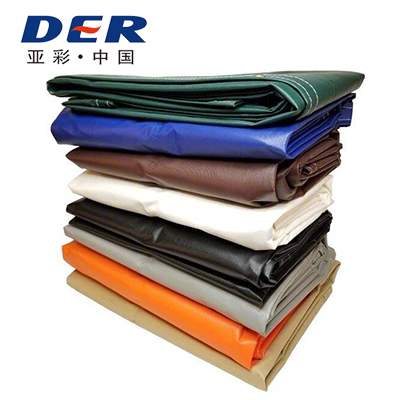
A manufacturing-oriented supplier can be more suitable when the tarp must be made to a controlled GSM, color, width, finish or fabrication layout. DERFLEX focuses on PVC-coated polyester tarp materials, roll goods and finished custom tarp programs for professional buyers.
Review PVC Tarpaulin Material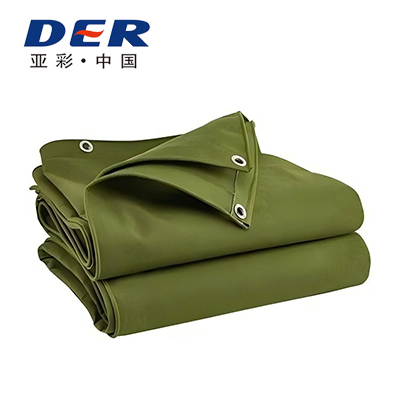
The table below is a practical starting point, not a substitute for a final project specification. Actual performance depends on fabric construction, treatment, fabrication and service conditions.
| Tarp family | Common strengths | Typical limitations | Best suited to | Supplier questions |
|---|---|---|---|---|
| PE / Poly Tarp | Lightweight, economical, waterproof sheet construction, widely stocked | Lower abrasion and repairability than many industrial vinyl constructions; lifespan varies greatly by weave and UV treatment | Temporary covers, short-term storage, emergency weather protection | What is the actual finished size, thickness, weave count, UV treatment and grommet spacing? |
| PVC Vinyl Tarp | Waterproof, weldable, strong, cleanable and configurable for industrial fabrication | Heavier than PE; the correct weight and cold-flex formulation must be selected | Truck covers, machinery covers, construction enclosures, industrial curtains, agriculture and OEM covers | What are the GSM, base cloth, coating method, tensile/tear values, temperature range and finishing options? |
| Canvas Tarp | Breathable, flexible, less prone to condensation, traditional handling feel | Usually water-resistant rather than fully waterproof; can absorb moisture and become heavier | Equipment protection where airflow matters, indoor handling, abrasion-sensitive loads | Is it treated or untreated, what is the finished weight, and are the seams and hems suitable for outdoor exposure? |
| Mesh Tarp | Airflow, shade, reduced wind load and visibility control depending on openness | Does not provide complete rain protection | Dump trucks, shade, fencing, debris containment, privacy screens | What is the shade/open factor, material, edge reinforcement and expected wind-loading method? |
| Clear PVC Tarp | Weather barrier with visibility and light transmission | Clarity, cold flexibility, scratching and yellowing depend on formulation and thickness | Industrial partitions, patio curtains, equipment viewing panels, weather enclosures | What is the thickness, temperature range, UV package, clarity grade and welding method? |
DERFLEX can discuss roll materials, cut panels and fabricated covers around the final use rather than forcing unrelated applications into one standard tarp.
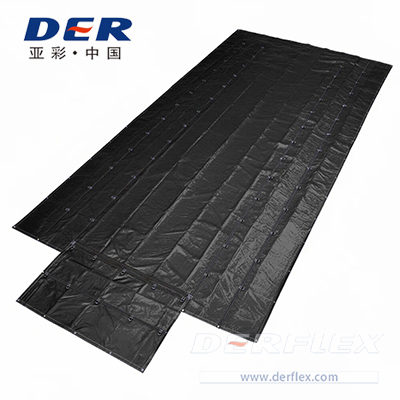
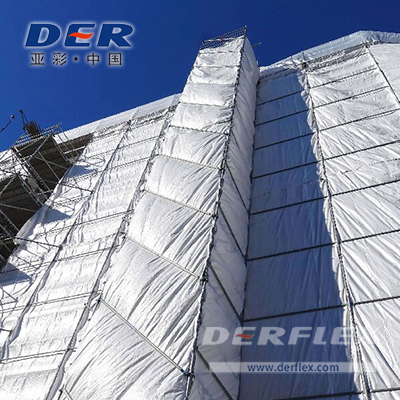
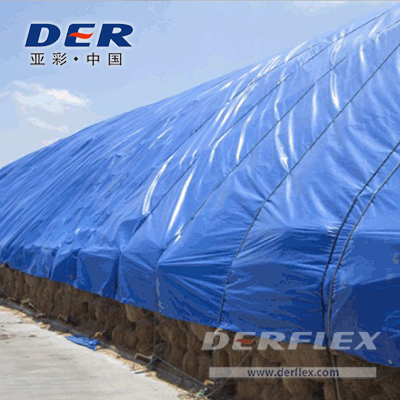
For custom and repeat orders, supplier quality is visible in the process used before mass production—not only in the finished sample.
Confirm application, dimensions, load points, environment, service period, quantity, target market and relevant documentation.
Match PVC coating or lamination, polyester base cloth, GSM, width, surface, color and optional performance treatments.
Review welds, hems, webbing, eyelets, D-rings, straps, rope edges, printing, labeling and packaging on representative samples.
Confirm agreed inspection points, batch identification, roll or finished-size tolerances and export protection before shipment.
A large online tarp seller can be useful when you want immediate access to many stocked materials, colors and standard sizes. Its strength is convenience and fast product comparison.
A factory-based supplier becomes more relevant when the requirement includes custom GSM, roll width, repeated color, welded construction, hardware layout, OEM branding, container quantities or technical documentation. The buying process may require more specification work, but it gives professional buyers greater control over the finished product.
You need a small quantity quickly, the use is straightforward, and a standard size and construction are acceptable.
The tarp affects cargo security, production uptime, project compliance, brand consistency or long-term replacement cost.
Explore Custom Tarpaulin Manufacturing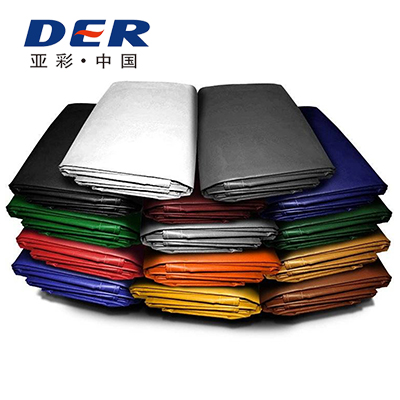
These six internal resources cover material definition, finished tarp supply, customization, wholesale purchasing and sourcing preparation.
Review heavy-duty PVC tarp materials, finished covers, applications and reference specifications.
Material Guide PVC Tarpaulin MaterialUnderstand coated textile structure and the performance features commonly requested for PVC tarps.
Customization Custom Tarpaulin ManufacturerExplore size, color, weight, coating, logo and fabrication options for project-based tarps.
Bulk Supply Wholesale TarpsCompare wholesale PVC tarps, industrial tarps, truck tarps and private-label supply programs.
Knowledge Base What Is Tarpaulin?Compare PVC, PE, canvas and mesh materials and their common protective uses.
Buyer Guide How to Source Custom TarpsPrepare specifications, sampling, packaging and supplier review for a custom import program.
There is no universally best company for every tarp. A strong choice is the company whose material range, fabrication capability, quality controls, order size and service model fit your application. Stock retailers can be convenient for standard sizes, while manufacturers are often better suited to custom industrial, wholesale and OEM programs.
PVC-coated polyester is commonly selected for heavy-duty outdoor and industrial tarps because it can be waterproof, weldable, abrasion-resistant and customizable. However, the correct fabric weight, base cloth, UV package, temperature range and edge construction must be selected for the job.
Compare their written specifications, sample quality, finishing details, testing support, tolerances, repeat-order control, packaging and communication. Ask both suppliers to quote against the same application and construction so the comparison is meaningful.
No. Higher weight can contribute to strength, but service life also depends on base fabric, coating adhesion, UV resistance, abrasion, seam design, reinforcement, installation and maintenance. An unnecessarily heavy tarp can also be harder to handle.
DERFLEX states that it can support coated fabric rolls, cut panels and finished tarps with custom dimensions, colors, hems, grommets, webbing, logos and packaging. Final construction, tolerances and availability should be confirmed for the specific order.
Send the application, finished dimensions, material or target performance, outdoor conditions, attachment method, color, quantity, edge and hardware details, printing or labeling, packaging, destination and any testing or compliance requirements.
Share your application and purchasing plan. DERFLEX can review a suitable PVC tarp material, fabrication route and quotation basis for rolls, panels or finished custom covers.