
Requirement Freeze
Application, dimensions, quantity, material, hardware, printing, packing and destination are consolidated into one RFQ record.



A reliable tarp order is not defined by the shortest promised lead time. It is defined by a written specification, a realistic production slot, a verified loading plan, visible inspection records and an after-sales process that identifies what happens if the delivered product does not match the agreement.

They can be reliable when every stage is measurable. Before paying a deposit, the buyer should be able to see what starts the production clock, which materials are reserved, when the golden sample or pre-production standard is approved, how inspection is recorded, how many rolls or finished tarps fit the shipment, and how a quality claim will be handled.
Vague statements such as “fast delivery,” “large capacity” or “quality guaranteed” are not enough for a custom tarp program. DERFLEX uses a project-based review because a standard PVC tarpaulin roll, a printed truck cover, a large irregular equipment cover and a private-label mixed container do not require the same production route.
The practical objective is to give purchasing teams a schedule they can place into their own inventory, project or launch plan—while making clear which dates are factory-controlled and which depend on vessel space, ports, customs and local delivery.
A usable production lead time begins after specification and commercial conditions are confirmed—not from the first inquiry email. The table below is an RFQ planning reference, not a universal delivery promise.
| Order Type | Illustrative Planning Window | Main Variables | Buyer Should Confirm |
|---|---|---|---|
| Material or Color Sample | Often discussed in working days after material and color direction are available. | Existing stock, laboratory color match, coating formula, courier time. | Sample type, test purpose, charge, dispatch date and whether it becomes the approval standard. |
| Standard PVC Tarpaulin Rolls | Commonly planned in a shorter window than finished custom covers when the construction is already established. | Base fabric, coating line schedule, color, width, GSM, surface treatment and roll packing. | Batch quantity, roll length tolerance, core, labels, packing and inspection method. |
| Finished Rectangular Tarps | Requires additional time for cutting, panel joining, hems, reinforcement, grommets, folding and packing. | Finished size, weld layout, grommet spacing, webbing, logo, quantity and carton limits. | Cut size versus finished size, seam method, hardware, packing unit and golden sample. |
| Complex or Multi-SKU Programs | Usually needs phased scheduling, especially for irregular shapes, multiple colors, private labels or mixed containers. | CAD drawings, component sourcing, print approval, SKU count, inspection level and loading sequence. | Pilot batch, milestone dates, partial shipment option, SKU packing map and change-control rule. |
Planning note: the final production period should be written into the quotation or proforma invoice after DERFLEX reviews the complete specification, confirmed quantity, material availability and current production load. Changes after approval may require a revised schedule.
The most common delays are not caused by sewing or welding alone. They come from incomplete drawings, unapproved artwork, material changes, unclear packing and late inspection decisions.
Application, dimensions, quantity, material, hardware, printing, packing and destination are consolidated into one RFQ record.
Data sheet, drawing, color, artwork and sample status are confirmed before mass production assumptions are locked.
Raw-material status and the relevant coating, lamination or finishing route are checked against the required shipment plan.
In-process checks focus on material consistency, dimensions, welds, hems, hardware positions, print and packing.
Final quantity, package marks, loading photos, packing list and export documents are aligned before dispatch.
Company scale supports supply, but the more important question is whether the required material route, converting resources and inspection time are available for the requested shipment window.
A total factory number does not show how much capacity is available for one exact material, width, color or finished-tarp design. A responsible schedule should therefore connect capacity to the approved specification and production calendar.
Buyers evaluating a tarpaulin factory in China can request a line-specific schedule, pilot-batch plan and repeat-order forecast rather than relying on a broad output claim.
Tarpaulin container loading quantity changes with GSM, width, roll length, core, outer packing, pallets, finished hardware and container type. The final number should be based on the approved package specification.
| Illustrative Product | Example Net Calculation | Illustrative Packed Weight | Weight-Based Quantity at 25,000 kg | Important Limitation |
|---|---|---|---|---|
| 650 gsm Roll, 3.2 m × 50 m | 3.2 × 50 × 0.65 = 104 kg | Approx. 108 kg using an example allowance for core and wrap | Approx. 231 rolls before dimensional and safety checks | Actual roll diameter, stacking orientation, container height and floor load may reduce quantity. |
| 900 gsm Roll, 3.2 m × 50 m | 3.2 × 50 × 0.90 = 144 kg | Approx. 148 kg using an example allowance for core and wrap | Approx. 168 rolls before dimensional and safety checks | Heavier rolls can become payload-limited while leaving unused cubic volume. |
| Finished 4 m × 6 m Tarp | 24 m² × selected GSM, then add hems, webbing, hardware and packaging | Must be measured from the approved finished sample or packing trial | Calculated by carton or bale quantity after fold size is fixed | Grommets, D-rings, straps, reinforced corners and cartons materially change packed density. |
The examples above explain the method only. DERFLEX should issue the commercial loading quantity after confirming actual package dimensions, gross weight, pallet choice and container equipment. Buyers planning PVC tarpaulin wholesale orders can request a roll-by-roll loading worksheet.
“Shipping time” can refer to several different dates. A clear order plan distinguishes the ready date, booking date, estimated departure, estimated arrival and delivered date.
Production, inspection, export packing, commercial documents and cargo-ready notice can be managed against the confirmed order schedule.
Booking acceptance, empty-container release, cut-off, vessel changes, port congestion and transshipment are controlled by logistics conditions.
Customs clearance, duties, terminal handling, examination, local trucking and receiving appointments determine the final delivered date.
| Date / Term | What It Means | Procurement Use |
|---|---|---|
| Cargo Ready Date | Order is completed, inspected and prepared for the agreed handover point. | Use this to compare production performance against the written schedule. |
| ETD | Estimated time of departure; it may change due to vessel or port conditions. | Do not treat ETD as proof that the cargo has sailed; request the on-board bill of lading status. |
| ETA | Estimated time of arrival at the named port, not the customer's warehouse. | Add customs and inland-delivery time before setting a project installation or retail launch date. |
| Incoterm | Defines the agreed responsibility, cost and risk transfer point. | Confirm the named port or place and the specific Incoterms® rule in the contract. |
For bulk or mixed-container programs, a wholesale tarp supply plan should include a cargo-ready target, booking responsibility, document list and contingency for peak-season space or port changes.
Finished size, wind load, fastening direction, repeated opening, abrasion points and hardware layout influence both production time and warranty assessment.
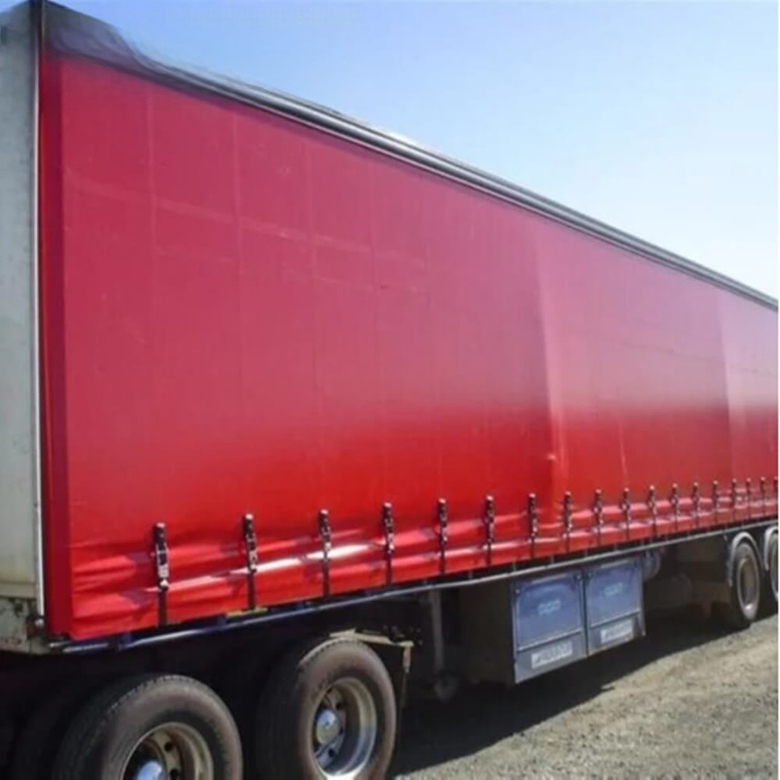

For transport applications, review DERFLEX truck tarpaulin options together with route, cargo, fastening method and expected replacement cycle.
Warranty language should be tied to the agreed product and normal use. The applicable period and remedy need to be written into the quotation, order contract or proforma invoice for the specific tarp program.
A warranty should not be treated as an unlimited service-life promise. Product suitability depends on material grade, fabrication, installation, load, climate, hand, ling and maintenance. Ask DERFLEX to write the project-specific scope, claim period and remedy into the order documents.
These records reduce misunderstandings, support internal approval and give both parties a common reference if the project changes.
DERFLEX supports distributors, converters, fleets, contractors and OEM brands that need material selection, custom fabrication and export coordination in one sourcing process.
Material construction and finished-tarp details can be reviewed together instead of treating the fabric and fabrication as unrelated purchases.
Size, color, logo, hems, grommets, webbing, packaging and private-label requirements can be converted into an approval standard for repeat orders.
Packing, loading, shipping documents and destination information can be reviewed before production is released, helping reduce last-minute changes.
Order references, material details, QC records and shipment documents provide a clearer basis for repeat supply and after-sales investigation.
Complex shapes, new colors, special hardware, high SKU counts and tight launch dates can be identified before a delivery date is confirmed.
Purchasing teams can request a quotation that separates product, packing, lead time, Incoterm and quality responsibilities for internal review.
Use these related DERFLEX pages to review manufacturing, customization, bulk supply and product-specific requirements.
Answers for importers, distributors, project buyers and OEM tarp programs.
It depends on material availability, size, quantity, printing, reinforcement, hardware, packing and current line load. Standard roll goods are usually simpler to schedule than complex finished tarps. DERFLEX confirms the actual lead time after reviewing the complete specification and order quantity.
The start point should be written into the order documents. It commonly follows receipt of the agreed payment and approval of the technical specification, artwork, color, sample or drawing required for production.
Urgent feasibility depends on material status, production route, quantity, inspection needs and current capacity. Options may include an existing material construction, a pilot quantity or a planned partial shipment, subject to written confirmation.
For rolls, calculate net fabric weight from width, length and GSM, then add core and packing weight. Next check roll diameter, package length, pallets, container payload and physical loading pattern. Finished tarps require a folding and packing trial because hardware and cartons change loading density.
No. Dense tarp rolls may reach the payload limit before using all high-cube volume. A 40HQ can be efficient for bulky cartons, finished tarps or mixed SKUs, while a 20GP may suit dense roll goods. The final choice should use actual packed dimensions and weight.
Transit depends on origin, destination, direct or transshipment service, vessel schedule, season, port congestion, customs and inland delivery. Buyers should distinguish cargo-ready date, ETD, ETA and delivered date rather than using one general “shipping time.”
Project warranty terms commonly focus on confirmed defects in materials or workmanship under the agreed use conditions. The exact period, exclusions, evidence and remedy should be written into the quotation or order contract for the specific product.
Provide the order number, SKU, batch or package marks, affected quantity, discovery date, photos, video, dimensions, installation details and operating conditions. Preserve the affected product and representative samples until the review is completed.
Repeatability improves when the order uses an approved technical sheet, color or sample standard, finished drawing, packing specification and batch records. Raw-material changes or specification revisions should be controlled through written approval.
Send DERFLEX the tarp size, material or GSM target, quantity, finishing details, packing preference, destination port and required date. The team can review the production route, loading method and commercial schedule for your project.