News
Industry News

What Tarps Last the Longest? Long-Life Tarp Material Guide | DERFLEX

Update:2026/7/23 23:10:26 Views:
Long-Life Tarp Selection Guide

What Tarps Last the Longest?

For repeated outdoor, transport and industrial use, a properly specified reinforced PVC vinyl tarp generally offers the strongest long-term service potential among common reusable tarp materials. The material name alone is not enough: base-fabric strength, coating quality, UV stabilization, welded seams, edge reinforcement, fit and maintenance all influence how long the finished tarp remains usable.

Buyer takeaway Choose a PVC-coated polyester construction when the cover will face frequent rain, sunlight, abrasion, tie-down tension, road movement or repeated cleaning. Choose heavy-duty polyethylene for lighter or more cost-sensitive coverage, and canvas when breathability matters more than full waterproofing.
DERFLEX PVC coated polyester fabric used for long-lasting heavy duty tarps
DERFLEX PVC-coated polyester tarp material for custom covers, truck tarps, equipment protection, construction enclosures and industrial storage.
Longest service potential Reinforced PVC vinyl tarp with an application-matched coating and high-tenacity polyester base fabric.
Good balance of cost and handling Heavy-duty UV-treated polyethylene tarp for general storage and intermittent outdoor use.
Breathable protection Treated canvas for dry cargo, construction work and applications where condensation control matters.
Open-air protection Vinyl-coated or polymer mesh where airflow, shade or debris containment is required.
The Practical Answer

The longest-lasting tarp is a complete system, not just a thick sheet

A heavy tarp can still fail early if the coating is poorly bonded, the fabric is underspecified, the seams leak, the grommets carry excessive point loads or the cover repeatedly rubs against a sharp edge. Long service life comes from matching every part of the tarp to the actual exposure.

01

Material durability

PVC-coated polyester combines a strong woven reinforcement with a weather-resistant surface. This structure is suitable for repeated folding, welding, cleaning, tie-down use and outdoor exposure when the grade is selected correctly.

02

Fabrication durability

Reinforced hems, webbing, corner patches, welded seams and properly spaced attachment points distribute loads. They help prevent the common failure pattern in which the tarp body remains intact but the perimeter tears first.

03

Use-condition durability

Sun, wind, cold, chemicals, road movement, pooling water and contact with rough surfaces create different stresses. A long-life specification must be based on the strongest of these demands rather than on color or thickness alone.

Why reinforced PVC vinyl usually ranks first for demanding use

A PVC vinyl tarp is commonly built around a polyester scrim that provides tensile and tear strength. The PVC layer supplies a waterproof surface, supports heat-welded fabrication and can be formulated for UV exposure, cold flexibility, abrasion, mildew resistance, flame-retardant directions or specific industrial environments. This combination makes PVC-coated polyester suitable for covers that must be reused rather than treated as temporary protection.

  • Suitable for welded seams and custom large-panel fabrication
  • Available in different yarn constructions, weights and coating levels
  • Can support reinforced edges, webbing, D-rings, buckles and grommets
  • Can be cleaned and repaired when damage is found early
Material Comparison

Which tarp material has the strongest long-term potential?

The following comparison is a selection guide, not a fixed lifespan guarantee. Actual results vary with grade, exposure, fabrication, installation, storage and maintenance.

Tarp type Relative service potential Strongest advantages Main limitations Recommended use
Reinforced PVC vinyl Long-term Waterproof surface, abrasion resistance, weldability, strong base fabric, custom finishing and repair potential. Heavier than PE; the correct coating, cold-flex direction and reinforcement design must be specified. Truck and trailer covers, machinery covers, industrial storage, construction enclosures, agricultural covers and OEM tarp programs.
Heavy-duty polyethylene Medium to long Lightweight, waterproof, economical, easy to handle and available with UV treatment and reinforced hems. Can fatigue sooner under abrasion, sharp edges, high tie-down loads and frequent folding than a comparable heavy-duty PVC construction. General outdoor storage, landscaping, temporary construction protection, emergency coverage and retail tarp ranges.
Treated canvas Medium to long Breathable, reusable, abrasion-tolerant and well suited to dry cargo or surfaces where condensation is a concern. Normally water resistant rather than fully waterproof; can absorb moisture, shrink, stain sensitive surfaces or develop mildew if stored damp. Construction, agriculture, dry cargo, welding-area protection and breathable equipment coverage.
Polyester / specialized coated fabric Application-specific Can be engineered for low weight, dimensional stability, temperature performance or specialized end uses. Performance depends strongly on coating chemistry and fabric construction; not every polyester tarp is waterproof. Technical covers, curtains, shelters, marine or project-specific protective systems.
Mesh tarp Application-specific Reduces wind load, provides shade and contains lightweight debris while allowing airflow. Not a full rain barrier; open structure is unsuitable where complete weather protection is required. Dump-truck loads, fencing, shade, scaffolding, debris containment and wind-sensitive applications.
Light-duty utility poly tarp Short-term Low weight, compact storage and low initial cost. Limited resistance to prolonged UV, repeated flapping, abrasion, puncture and high attachment loads. Temporary household cover, painting, short weather events and low-risk one-time tasks.
Service-Life Engineering

Seven details that determine whether a tarp lasts

The body fabric is only one part of the finished cover. In many real applications, failure begins at an edge, seam, corner or contact point. A professional specification treats those areas as structural components.

1

High-tenacity base fabric

Yarn size, yarn strength and fabric density influence tensile, tear and dimensional stability.

2

Coating formulation and adhesion

The coating must remain bonded through folding, weathering, cleaning and temperature change.

3

UV and weather direction

Outdoor exposure requires an application-appropriate stabilizer package and suitable color or surface treatment.

4

Seam construction

Heat-welded seams can create strong, water-resistant panel joins when process settings match the material.

5

Perimeter reinforcement

Webbing, doubled hems and corner patches spread load away from small, highly stressed areas.

6

Attachment-point spacing

Grommets or D-rings should match wind load, tarp dimensions, installation method and tie-down pattern.

7

Fit and movement control

A cover that repeatedly flaps, pools water or rubs on a sharp edge can fail earlier regardless of material weight.

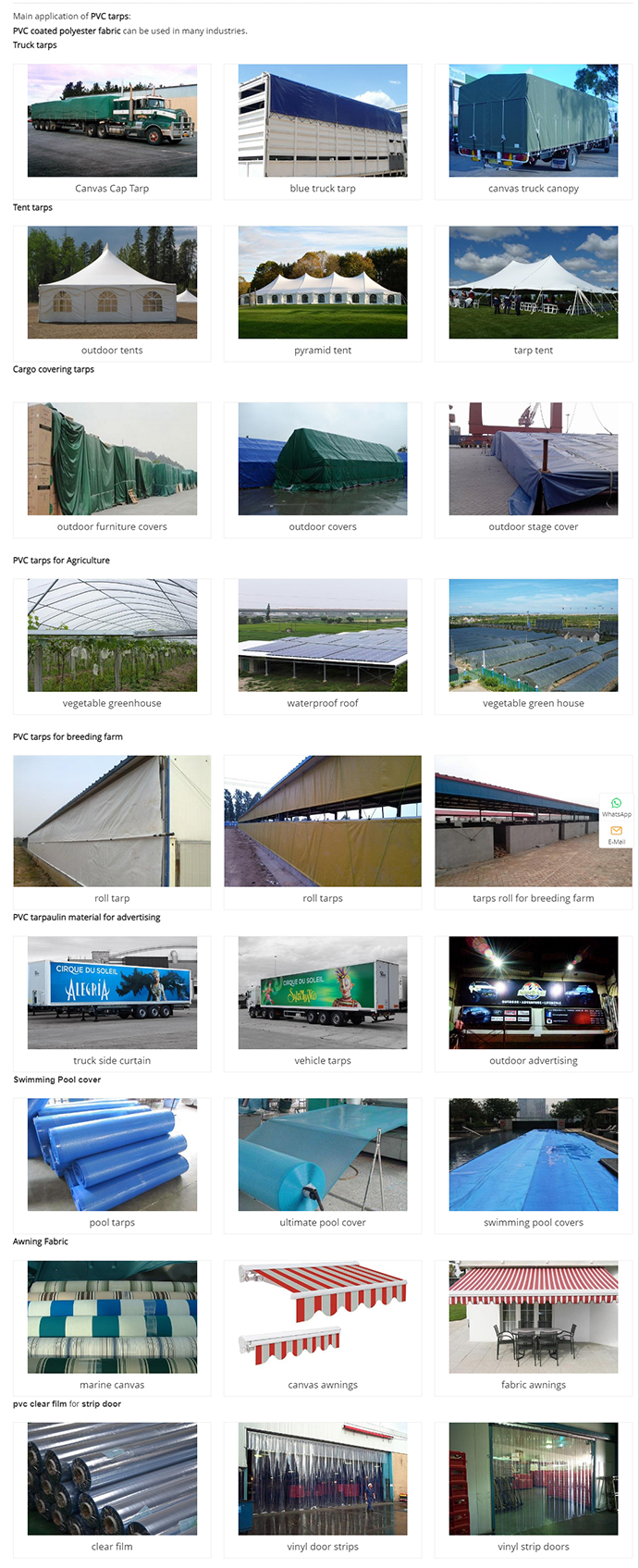
PVC tarpaulin applications for truck covers tents agriculture and industrial protection
Long-life tarp design starts with the application. Truck movement, fixed outdoor storage, construction wind loads and agricultural exposure require different combinations of fabric, coating, reinforcement and attachment design.
Specification Framework

How DERFLEX develops a long-life PVC tarp specification

A durable tarp should be specified from the operating environment backward. DERFLEX can supply PVC-coated polyester in roll form, cut panels or finished custom covers, with the construction adjusted to the end use and confirmed order requirements.

Core material PVC-coated polyester fabric with an application-matched woven base cloth and coating construction.
Indicative weight range Approximately 450–1200 gsm for many heavy-duty cover directions; other constructions may be developed by project.
Surface options Glossy, matte, lacquered, embossed, anti-mildew, UV-stabilized, anti-static, low-wick or application-specific finishes.
Fabrication options Hot-air welding, hot-wedge welding, high-frequency welding, sewing, cutting, printing and custom panel fabrication.
Edge systems Folded hems, rope hems, polyester or polypropylene webbing, corner reinforcement and wear patches.
Attachment options Grommets, D-rings, buckles, straps, hook-and-loop, keder, sleeves, cords or project-specific hardware.
Custom appearance Standard colors, matched colors, two-tone constructions, printed logos, private labels and export packaging.
Quality confirmation Final test items, acceptance values and required reports should be agreed before production according to the application and market.

Application Matching

The longest-lasting choice changes with the job

The most durable tarp is the one designed for the actual failure risks. These examples show how the specification priorities change by application.

Transport

Truck and trailer covers

Prioritize tear strength, abrasion resistance, road-weather stability, cold flexibility, reinforced perimeters and attachment layouts that prevent flapping.

Industrial

Machinery and equipment covers

Confirm fit, access panels, heat sources, sharp corners, oil exposure, cleaning method and whether the cover must remain flexible after long outdoor storage.

Construction

Jobsite protection and enclosures

Consider wind pressure, flame-retardant direction where required, repeated installation, scaffold attachment, tear propagation and safe water drainage.

Agriculture

Hay, grain and farm storage

UV stability, waterproofing, mildew control, ground contact, tensioning and protection from sharp crop stems or equipment edges are key selection factors.

Warehousing

Outdoor stockpile and material covers

Large covers need dimensional stability, welded panel integrity, reinforced anchor zones and a layout that avoids water pockets and uncontrolled wind lift.

OEM / Wholesale

Distributor and private-label tarp programs

Build a controlled product range by use level, material weight, color, size, packaging and target market rather than offering one universal grade for every customer.

Custom Manufacturing

From operating conditions to a repeatable tarp specification

For project buyers, distributors and OEM brands, durability also means consistency between orders. A clear approval process helps control material construction, dimensions, reinforcement, branding and packing.

Define exposure

Confirm climate, movement, abrasion, wind, cleaning, chemical contact and expected reuse pattern.

Select construction

Match base fabric, coating, weight, surface and temperature direction to the application.

Engineer details

Set seams, hems, webbing, corners, hardware, openings, straps and installation tolerances.

Approve sample

Check dimensions, appearance, handling and required test directions before bulk production.

Control repeat orders

Record the approved specification, labeling, packing and inspection requirements for continuity.

Purchase Economics

Compare cost per service cycle, not only price per tarp

A low-priced cover may be appropriate for a short, low-risk task. For a truck fleet, exposed machine, export stockpile or long-running project, replacement frequency and the value of the protected goods can matter more than the initial tarp price.

Initial tarp cost + Installation labor + Replacements + Risk of exposed goods

This approach helps determine whether a heavier custom PVC tarp, a heavy-duty PE tarp or a breathable canvas cover offers the more suitable commercial outcome.

Questions that reveal the real cost

  • How often will the cover be installed, removed or folded?
  • What is the cost of downtime when the tarp fails?
  • Could water entry or UV exposure damage the covered product?
  • Will labor be required for every replacement?
  • Can small damage be repaired before it spreads?
  • Does a custom fit reduce movement and wear?
  • Is lower shipping weight more important than longer reuse?
DERFLEX Capability

Manufacturing support for long-life tarp programs

DERFLEX supplies PVC-coated polyester materials and finished tarp solutions for industrial buyers, converters, distributors and OEM programs. The focus is not to assign one grade to every use, but to align the fabric structure and finished-cover details with the buyer's real operating conditions.

Buyers can discuss roll goods, cut panels, welded covers, custom hardware, private labeling and export packing. Final performance targets, test directions and acceptance criteria should be confirmed in the project specification before production.

Material development

Custom weight, base cloth, coating, surface, color and performance direction according to application.

Finished-cover fabrication

Cutting, welding, sewing, hems, webbing, reinforced corners, hardware and custom openings.

OEM and wholesale support

Product-line planning, private labels, packing design, shipping marks and repeat-order specification control.

Application-based communication

Selection support for transport, construction, agriculture, industrial storage and equipment protection.

Installation & Maintenance

How to extend tarp service life after delivery

Even a strong industrial tarp benefits from correct installation and routine inspection. These practices reduce avoidable wear and help small defects remain repairable.

Pad sharp edges

Use corner protectors or wear patches where the tarp contacts metal, timber, machinery or rough cargo.

Control flapping

Use evenly distributed tie-down points and suitable tension. Repeated uncontrolled movement creates abrasion and fatigue.

Prevent water pooling

Shape the cover to drain. Standing water increases load and may stretch the tarp or stress seams and anchors.

Inspect attachment points

Check hems, webbing, grommets, D-rings and straps before small tears reach the main fabric.

Clean appropriately

Remove dirt, salt, oil or chemicals using a method compatible with the selected coating and finish.

Dry before storage

Store the tarp clean and dry, away from sharp objects, pests, excessive heat and unnecessary compression.

Repair early

Patch small punctures or edge damage promptly using a repair method suitable for the tarp material.

Review recurring damage

If the same area fails repeatedly, adjust the fit, reinforcement or installation rather than replacing with the same design.

FAQ

Frequently asked questions about long-lasting tarps

What tarps last the longest outdoors?

For frequent outdoor and industrial use, reinforced PVC vinyl tarps generally have stronger long-term service potential than common light-duty covers. A durable result still depends on the base fabric, coating, UV direction, seams, edge reinforcement, installation and maintenance.

Do thicker tarps always last longer?

No. Thickness can support abrasion and puncture resistance, but it does not describe yarn strength, fabric density, coating adhesion, UV stability or edge construction. Compare the full specification rather than one thickness or GSM value.

Which lasts longer, a vinyl tarp or a poly tarp?

For repeated heavy-duty use, PVC vinyl tarps commonly provide greater resistance to abrasion, tearing, weather and welded fabrication. Heavy-duty UV-treated polyethylene can still be a suitable choice when lower weight, easier handling and initial cost are more important.

Can canvas tarps last for years?

A suitable canvas tarp can provide long reusable service when used and stored correctly. Canvas is breathable and useful for dry cargo or construction work, but it is normally water resistant rather than fully waterproof and should not be stored damp.

What makes a tarp fail early?

Common causes include uncontrolled flapping, sharp-edge abrasion, poor drainage, excessive point loads on grommets, unsuitable UV or cold-weather performance, incorrect cleaning, damp storage and delayed repair of small tears.

Can DERFLEX make a custom tarp for long-term outdoor use?

DERFLEX can discuss custom PVC-coated polyester material and finished tarp directions including size, weight, color, reinforcement, seams, attachment hardware, branding and packing. Final suitability and performance targets should be confirmed from the actual application and approved specification.

What information is needed for a tarp quotation?

Provide the application, finished dimensions, expected exposure, installation method, material preference, color, reinforcement and hardware requirements, order quantity, destination market and any required test or compliance direction.

Specify a tarp for the full service cycle

Send DERFLEX the application, dimensions, exposure conditions, installation method and target quantity. The team can review suitable PVC-coated polyester directions and custom-fabrication options for your project or product line.

  • PVC tarp roll or finished cover
  • Custom size, GSM, color and surface
  • Welded seams and reinforced edges
  • Grommets, D-rings, straps or custom hardware
  • OEM label and export packaging support
Performance note: Tarp service life cannot be determined from material name, color, thickness or GSM alone. Outdoor duration varies with specification, climate, installation, load, abrasion, maintenance and storage. Product claims, test values, certifications and compliance directions should be confirmed for the final order and intended market.
Consulting Services
+86-021-54361792 / 54361798
Email
sales@derflex.com