Vinyl Tarps vs Poly Tarps: Which Cover Material Should Your Project Use?
Vinyl tarps and poly tarps can both protect goods from rain, dust and sunlight, but they are not designed for the same working life. DERFLEX helps distributors, contractors, fleet operators and OEM tarp buyers compare PVC-coated vinyl tarp materials with polyethylene tarp options before choosing a specification for trucks, construction sites, agriculture, outdoor storage and industrial covers.
A practical answer for buyers: poly saves money first, vinyl protects value longer
For a one-time job, a short rain cover or a lightweight retail tarp, a poly tarp can be the right choice. It is easy to fold, economical to ship and simple to handle. For a truck fleet, machinery cover, exposed construction site, export-grade storage cover or distributor product line where customers expect repeated use, vinyl tarps usually deliver better long-term value because the PVC-coated polyester structure offers stronger tear resistance, abrasion resistance, weldability and weather stability.
Vinyl tarp vs poly tarp comparison for real working conditions
Retail comparisons often stop at “vinyl is stronger and poly is cheaper.” Industrial buyers need a more useful answer: how each material behaves after rain, wind, folding, sun exposure, edge tension and daily handling.
| Buying factor | Vinyl tarps / PVC coated polyester | Poly tarps / polyethylene |
|---|---|---|
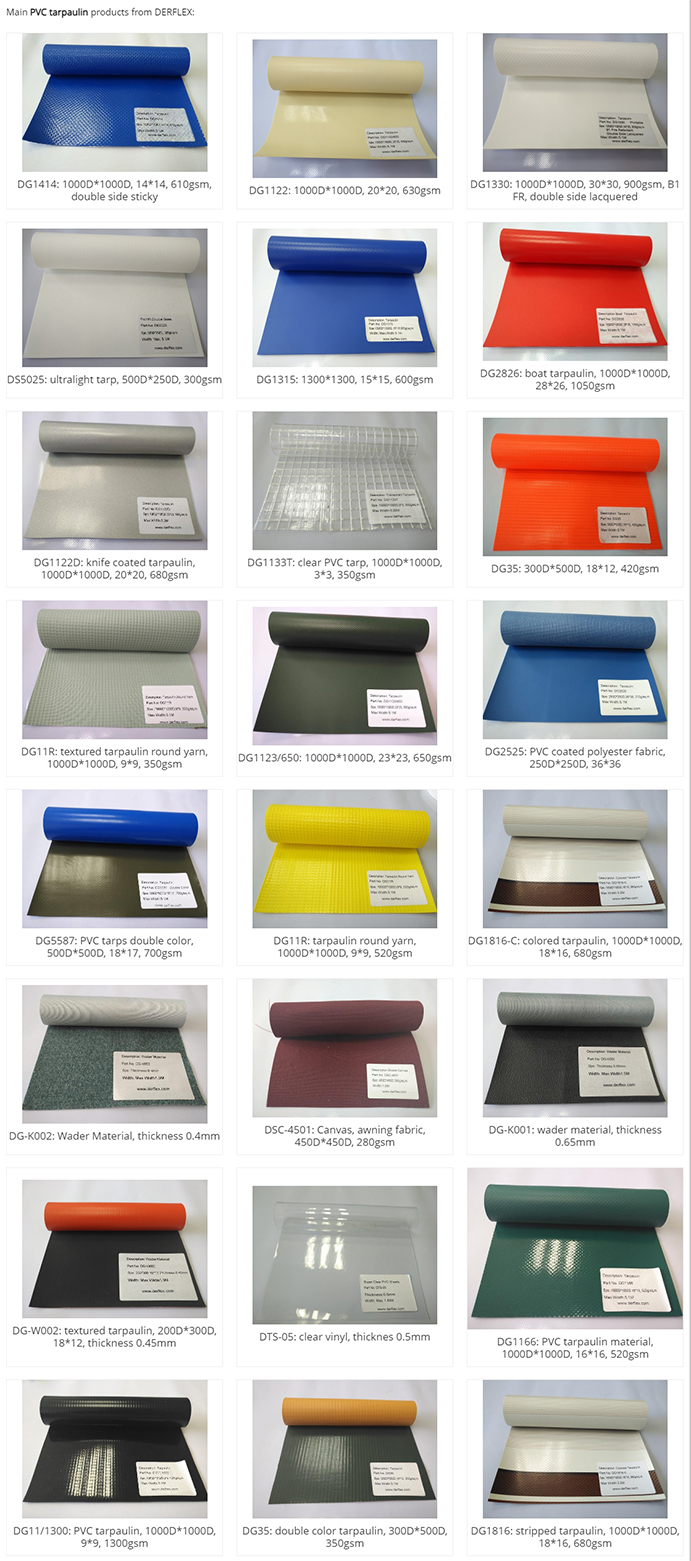
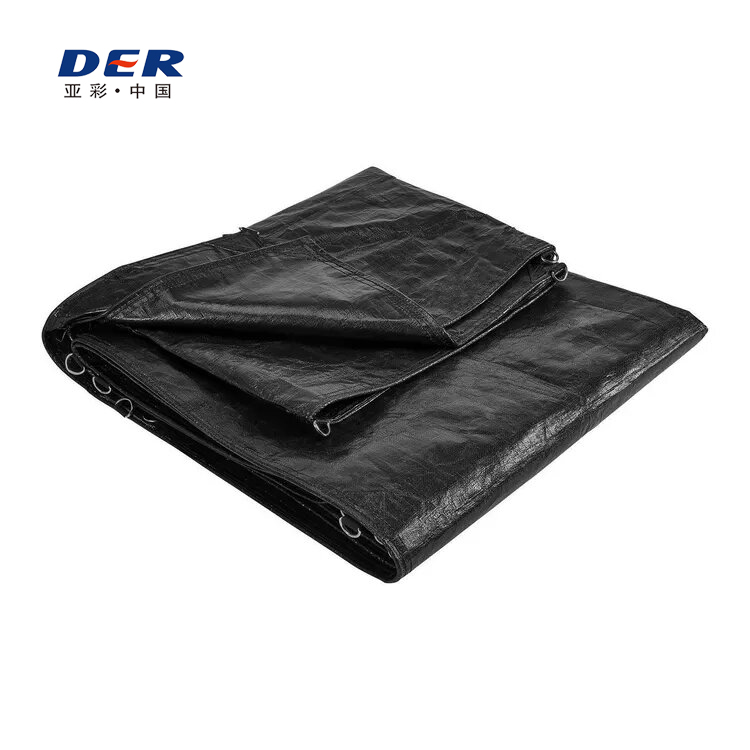
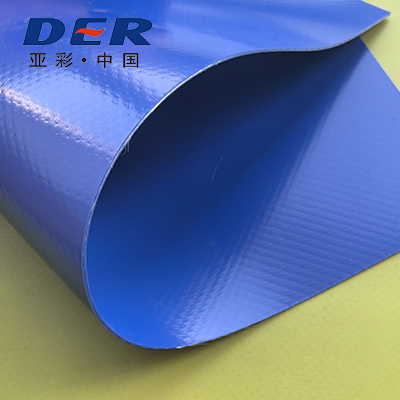
| Core material | Polyester base fabric coated with PVC. The coated structure gives the tarp good dimensional stability, weldability and a tough surface for outdoor work. | Woven polyethylene or laminated PE structure. It is lightweight, flexible and cost-friendly for general coverage. |
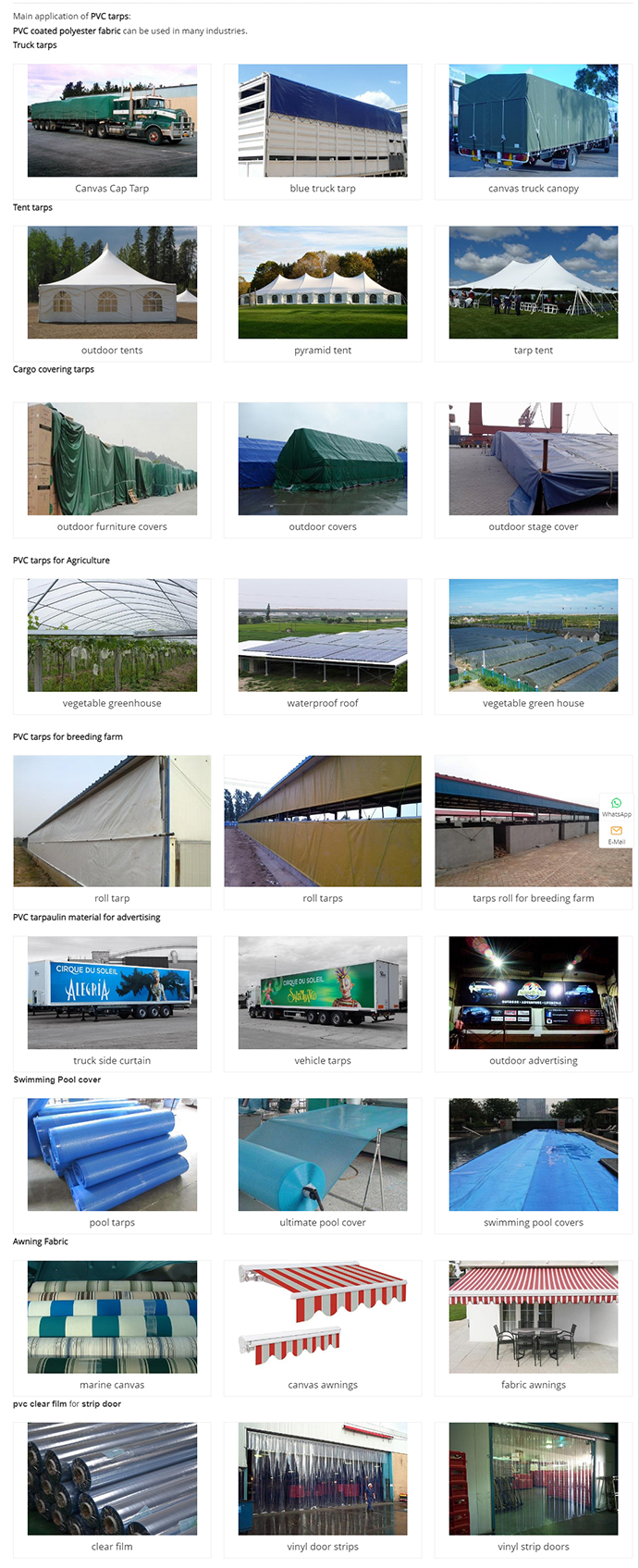
| Best use | Truck tarps, trailer covers, equipment covers, construction tarps, industrial storage, agricultural covers, dock curtains and OEM heavy-duty tarp lines. | Temporary covers, landscaping, household protection, short-term construction cover, emergency roof cover, camping shade and budget retail tarp supply. |
| Waterproofing | Excellent when welded, hemmed and reinforced correctly. PVC coating and heat-welded seams are suitable for repeated rain exposure. | Can be waterproof, especially for new laminated PE tarps, but coating wear and edge stress may shorten useful waterproof life in harsh conditions. |
| Tear and abrasion | Better for repeated friction, rope tension, rough cargo edges, wind whip and heavy outdoor handling. | Suitable for moderate use, but light poly tarps can tear faster when pulled over sharp corners or exposed to continuous wind movement. |
| Weight and handling | Heavier, more substantial and better for covers that stay in place or are handled by trained crews. | Lighter and easier to move, fold and install by one person for temporary jobs. |
| Initial cost | Higher first purchase cost because the fabric, coating and fabrication are stronger. | Lower initial cost, especially for standard stock sizes and short-term use. |
| Long-term value | Often stronger when replacement cost, cargo protection and downtime are included. | Good when the application is temporary, low-risk or price-sensitive. |
| Customization | Excellent for GSM, ounce weight, color, lacquer, flame retardancy, anti-mildew treatment, UV resistance, welded hems, grommets, webbing and printed logos. | Good for common colors, sizes, hemmed edges, grommets and retail packaging when performance demand is moderate. |
Choose vinyl tarps when the cover must survive more than weather
Heavy rain is only one part of tarp failure. Many covers fail because of abrasion against equipment, flapping in wind, stress around eyelets, poor seam construction, repeated folding or a material grade that is too light for the project. This is where PVC vinyl tarp materials usually outperform standard poly tarps.
For transport and fleet covers
Truck covers, flatbed tarps, trailer tarps and side curtains need strength at tie-down points and stable performance during road spray, wind and vibration.
- 610gsm, 680gsm, 900gsm and heavier options
- Welded seams and reinforced edges
- Custom grommet spacing and webbing
For equipment and industrial storage
Machinery, steel, timber, outdoor inventory and warehouse overflow require covers that resist scraping, pooling water and long sun exposure.
- Waterproof PVC coated polyester
- UV-resistant and anti-mildew choices
- Better surface durability for repeated use
For OEM tarp product lines
Distributors need repeatable quality, reliable color, carton planning and material consistency instead of one-off stock tarps with uncertain supply.
- Private label and export packaging
- Roll goods, cut panels or finished tarps
- Stable specifications for repeat orders
Choose poly tarps when the project values lightweight handling and low first cost
Poly tarps are not “bad tarps.” They are simply designed for a different buying logic. A well-made polyethylene tarp is useful when the cover will be used for a limited season, moved often, installed quickly, or sold into markets where price and convenience matter more than long service life.
Choose vinyl / PVC when failure cost is high
Use vinyl tarp materials when the cargo, machine, project schedule or customer reputation is worth more than the difference in tarp price. This includes trucks, contractor equipment, industrial covers, long-term outdoor storage, harsh weather and reusable cover systems.
Choose poly / PE when use is temporary
Use poly tarp materials for short-duration rain protection, garden covers, temporary site work, emergency coverage, lightweight retail SKUs and situations where easy handling and low cost are more important than heavy-duty performance.
DERFLEX specification guide for custom tarp buyers
DERFLEX is not limited to one standard tarp grade. We help buyers select a material system and fabrication plan based on the application, expected outdoor life, market positioning and order quantity.
Glossy, matte, lacquered, anti-scratch, anti-mildew or UV-stabilized surface according to the market and exposure condition.
Base fabric denier, yarn count, tensile strength, tear strength and adhesion can be matched to the project requirement.
Heat welding, stitching, reinforced corners, D-rings, eyelets, straps and logo printing can be designed before mass production.
Flame-retardant, cold-resistant, eco-related and application-specific requirements can be discussed for suitable projects.
Application-based recommendation
The best tarp material depends on where the cover will be used, how often it will be handled and how much risk the buyer accepts. The following recommendations are written for purchasing managers, distributors and project contractors who need a clear starting point.
Trucks, trailers and cargo
Recommended: vinyl tarp / PVC coated polyester. Choose heavier grades with reinforced edges and strong grommets for tie-down use. Poly can be used only for light, temporary cargo cover where wind load is limited.
Construction and jobsite covers
Recommended: vinyl for reusable equipment covers and high-abrasion zones; poly for short-term rain covers, temporary floor protection and low-cost disposable coverage.
Agriculture and outdoor storage
Recommended: vinyl for long-term machinery, hay, silage, pond lining and exposed storage. Poly is practical for seasonal and lightweight farm use.
Industrial equipment
Recommended: PVC vinyl tarp with abrasion resistance, waterproof seams, reinforced corners and UV protection. A poly tarp may not be suitable if sharp metal edges or heavy wind are expected.
Retail and distributor supply
Recommended: offer both. Poly tarps can cover entry-level price points, while vinyl tarps create premium SKUs for contractors, fleets and industrial customers.
Tents, canopies and outdoor shelters
Recommended: PVC coated fabric when long-term performance, welding, flame retardancy or brand consistency is required. Poly can serve simple temporary shelter markets.
How DERFLEX helps you avoid under-specifying the tarp
Many tarp problems begin before production: the buyer selects a low-cost material without considering stress points, then the tarp fails at the corner, seam, grommet or fold line. DERFLEX works backwards from the use environment so the material, coating and fabrication match the job.
Confirm the working environment
We review sun exposure, rain, snow, wind, folding frequency, sharp edges, chemical contact, temperature range and whether the cover will be temporary or reusable.
Select PVC vinyl, poly or a mixed product line
For premium industrial applications, PVC-coated vinyl is often the main choice. For light-duty retail or temporary use, polyethylene tarp options can be considered. Distributors may choose both for different market levels.
Design the fabrication details
We help define welded seams, hem width, grommet spacing, reinforced corners, rope edge, webbing, labels and packaging so the final tarp performs as a complete product, not just a fabric sheet.
Prepare samples and repeatable bulk production
After specification confirmation, DERFLEX can support samples, roll goods, cut panels or finished tarp production for importers, wholesalers and OEM brands.
Related DERFLEX tarp solutions
Explore related pages to compare materials, applications and heavier tarp grades before sending your request.
Frequently asked questions
Are vinyl tarps better than poly tarps?
Vinyl tarps are better for heavy-duty, long-term and reusable applications. They are commonly chosen for trucks, equipment, construction, industrial storage and outdoor covers because PVC-coated polyester provides stronger tear resistance, abrasion resistance and fabrication performance. Poly tarps are better when the buyer needs a lightweight, low-cost and temporary cover.
Are poly tarps waterproof?
Many poly tarps are waterproof when new and properly laminated. However, their long-term waterproof performance depends on material grade, coating quality, UV exposure, wind movement, edge stress and abrasion. For repeated outdoor use, a PVC vinyl tarp with welded seams and reinforced edges is usually a safer specification.
Why are vinyl tarps more expensive?
Vinyl tarps use stronger coated fabric, heavier construction and more durable fabrication. The higher price normally reflects better resistance to tearing, weather, abrasion, mildew and repeated handling. For projects where replacement is expensive or product damage is costly, the long-term value can be better than a cheaper tarp.
Which tarp is better for truck covers?
For truck covers and trailer tarps, vinyl / PVC coated polyester is usually preferred because the material handles road spray, wind, tie-down tension and cargo abrasion better than standard poly tarps. DERFLEX can customize GSM, color, edge reinforcement, grommets, webbing and welding for transport use.
Can DERFLEX supply a product line with both vinyl and poly tarps?
Yes. For distributors and importers, a two-level product line can be effective: poly tarps for economy and temporary coverage, and vinyl tarps for heavy-duty, premium and industrial markets. DERFLEX can help define different weights, colors, sizes, labels and packaging for each level.
What should I send to get a fast quotation?
Please send application, size, quantity, material preference, expected outdoor life, color, weight or thickness target, grommet spacing, hem design, reinforcement details, packaging requirement and destination. If you are not sure whether vinyl or poly is better, describe the use environment and DERFLEX will recommend a practical starting specification.
Need help choosing vinyl tarps or poly tarps for your market?
Send DERFLEX your application, target price level and expected service life. We will help you compare PVC vinyl tarp and polyethylene tarp options, then recommend a custom specification for your project, wholesale program or OEM product line.
DERFLEX | PVC banner, PVC coated fabric, tarpaulin and industrial covering material manufacturer | https://www.derflex.com/