

News
Industry News

Poly vs Vinyl Tarps: Which Is Better? | DERFLEX

Update:2026/7/25 23:05:44 Views:
Material decision guide
for tarp buyers, fabricators and project teams

Which Is Better, Poly or Vinyl Tarps?

Vinyl is usually the more suitable choice for demanding, long-term and repeatedly handled covers. Poly is often the more practical choice for temporary, lightweight and cost-controlled jobs.

The correct answer depends on service duration, weather exposure, abrasion, wind, handling frequency, fastening design and the value of what is being protected. This guide compares those factors so buyers can specify the tarp around the job—not around a material label alone.

The direct answer

Vinyl for higher exposure. Poly for lighter duty.

When a tarp must resist abrasion, road movement, repeated tie-down, sharp cargo edges or extended outdoor exposure, a suitable PVC vinyl tarp generally offers the stronger performance route.

When the cover is temporary, frequently carried by hand, used at low mechanical stress or selected around a limited initial budget, a polyethylene tarp can be entirely appropriate.

Why there is no universal winner

“Better” changes with the consequence of failure.

A garden cover used for one season and a truck tarp moving at road speed are both tarps, but they do not face the same load. The first may prioritize low weight and easy replacement. The second may need abrasion resistance, reinforced seams, dependable attachment points and consistent waterproofing across repeated cycles.

Professional buyers should therefore compare the whole cover system: base fabric, coating or laminate, finished weight, seam method, edge reinforcement, grommet layout, climate and expected maintenance. Material name is only the starting point.

Material anatomy

Poly and vinyl tarps are built differently

The structural difference explains most of the contrast in weight, handling, fabrication and durability.

Polyethylene / PE

Poly Tarps

Usually made from woven polyethylene strands with a polyethylene laminate or coating. Product quality can vary significantly by weave density, finished weight, UV treatment and reinforcement.

  • Lightweight and convenient to carry or deploy
  • Typically lower initial purchasing cost
  • Waterproof grades are widely available
  • Useful for temporary roofs, gardens, ground covers and short storage
  • Heavy-duty PE constructions exist, so “poly” does not always mean light duty
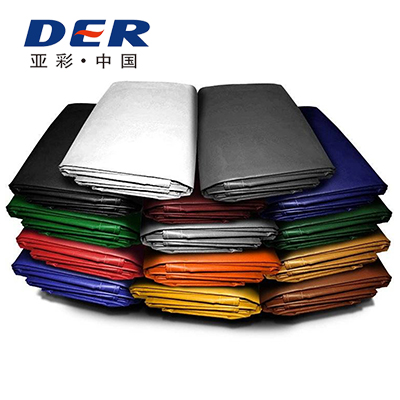
PVC coated polyester

Vinyl Tarps

Usually made from a reinforced polyester scrim coated or laminated with PVC. The scrim contributes tensile and dimensional strength; the PVC surface supports waterproofing, cleanability and fabrication.

  • Often selected for abrasion, tear and repeated handling demands
  • Suitable structures can be heat welded into large panels
  • Supports reinforced hems, webbing, D-rings and custom fastening
  • Common in truck, trailer, construction and industrial covers
  • Available in multiple weights, finishes and performance formulations
Side-by-side comparison

Poly vs vinyl tarps across nine buying factors

These are general purchasing tendencies. Actual performance depends on construction, finished weight, formulation, workmanship and installation.

Decision factor Poly tarp / PE tarp Vinyl tarp / PVC tarp Typical direction
Initial cost Usually lower for standard general-purpose grades. Usually higher because construction is heavier and more fabrication-oriented. Poly advantage
Handling weight Typically lighter and easier for one-person deployment. Heavier; handling plans may matter for large finished covers. Poly advantage
Abrasion resistance Varies by grade; standard light tarps can wear quickly against edges. Suitable heavy-duty grades generally resist rubbing and repeated contact better. Vinyl advantage
Tear & tensile performance Can be strong in engineered heavy-duty constructions, but retail grades vary widely. Reinforced polyester scrim supports stronger heavy-duty configurations. Vinyl for high load
Water protection Waterproof options are common; seams, holes and weathering still require attention. PVC surfaces and heat-welded seams can form a reliable waterproof cover system. Both, grade dependent
Sun & weather exposure UV-stabilized grades exist; lower grades may become brittle or delaminate sooner. Outdoor formulations and top finishes can be specified for extended exposure. Vinyl for long-term use
Wind & movement Low weight helps installation but can also increase flapping when poorly tensioned. Heavier construction and reinforced attachment can suit transport and exposed sites. Vinyl for demanding use
Custom fabrication Can be sewn, welded or reinforced depending on structure and equipment. Well suited to heat welding, hems, webbing, grommets, D-rings and shaped covers. Vinyl flexibility
Best-fit service cycle Temporary, seasonal, portable or lower-risk protection. Repeated, heavy-duty, transport, industrial or longer-term protection. Match the job
Procurement economics

Compare total cover cost, not only price per tarp

The less expensive tarp at checkout is not automatically the lower-cost cover over the complete service period.

A practical total-cost question

How many times will the cover be installed, removed, folded, transported, cleaned and tensioned before replacement?

Then add the consequences of failure: damaged cargo, wet materials, labor for emergency replacement, downtime and disposal. For low-risk short tasks, these costs may be small and poly can remain sensible. For valuable assets or repeated operations, stronger vinyl can justify a higher initial specification.

Purchase cost

Material, size, reinforcement, printing, accessories and packing.

Installation labor

Time, personnel, lifting method, fastening and site access.

Replacement frequency

How often the cover must be repaired, retired or reordered.

Failure exposure

Potential loss if water, wind, abrasion or tie-down stress defeats the cover.

Storage and transport

Weight, folded volume, cleaning, drying and off-season handling.

Application matrix

Which tarp fits the job?

Use these scenarios as a starting direction, then confirm the actual grade and finished construction.

01 Often poly

Temporary roof or emergency cover

Low weight, quick deployment and limited service duration often make PE practical. Reinforce around attachment points and avoid unsupported water pooling.

02 Usually vinyl

Truck, trailer or cargo cover

Road movement, wind, edge contact and frequent tie-down generally favor PVC coated polyester with welded seams and engineered reinforcement.

03 Often poly

Garden, groundsheet or seasonal task

When the cover is moved frequently and failure risk is low, a lightweight UV-treated poly tarp may provide a practical balance.

04 Usually vinyl

Construction materials and equipment

Repeated handling, rough surfaces, wind and longer outdoor exposure often justify abrasion-resistant PVC vinyl and reinforced edges.

05 Depends

Agriculture and farm storage

Short seasonal protection can suit poly; repeated use, large spans, machinery covers or demanding UV exposure may favor vinyl. Mildew and condensation also matter.

06 Usually vinyl

OEM branded tarp program

Where color consistency, surface finish, heat welding, logos, labels and repeat-order control matter, PVC vinyl offers broad manufacturing options.

DERFLEX PVC vinyl tarp product range
DERFLEX PVC vinyl tarp product display. Final appearance, weight and finishing depend on the selected specification.
DERFLEX manufacturing direction

PVC vinyl tarp material configured around the application

DERFLEX supplies PVC coated or laminated polyester tarpaulin materials and supports finished tarp development for transportation, construction, agriculture, industrial storage and OEM programs. Rather than treating every project as one stock tarp, the specification can be discussed around exposure, strength, fabrication and commercial requirements.

Reference weight rangeApprox. 300–1200gsm by duty level
Reference roll widthsApprox. 1.02–5.10m by structure
Surface optionsGlossy, matte, embossed or lacquered
Performance directionsUV, mildew, cold-flex and FR options
Finished cover detailsWelded seams, hems, webbing and grommets
Commercial supportColor, logo, label, packing and repeat orders
Discuss Your Tarp Specification

Reference values are not a universal specification or performance guarantee. Confirm material construction, testing, tolerance and compliance requirements before ordering.

From question to specification

A four-step selection process

A disciplined brief helps avoid both under-specifying a demanding cover and over-specifying a temporary job.

Step 01

Define the environment

Rain, sunlight, wind, temperature, chemicals, dirt and expected outdoor duration.

Step 02

Map mechanical stress

Abrasion points, cargo edges, folding cycles, span, tension and tie-down loads.

Step 03

Choose construction

PE or PVC route, finished weight, scrim, coating, seam and reinforcement design.

Step 04

Confirm the sample

Check color, hand, thickness, welding, hardware, packing and required test evidence.

Buyer preparation

What to send for an efficient quotation

A complete request lets the material and finished-cover recommendation start from real working conditions.

Recommended project information

  • Finished size or roll width
  • Required quantity
  • Target application
  • Outdoor exposure period
  • Climate and temperature
  • Target GSM or thickness
  • Color and surface finish
  • Grommet spacing
  • Hem and reinforcement method
  • Logo and packaging needs
  • Drawing or reference photo
  • Required tests or standards

Not sure whether to specify poly or vinyl?

Describe the working environment and the acceptable replacement cycle. DERFLEX can discuss a PVC vinyl tarp direction and, where relevant, help clarify when a lighter structure may be sufficient.

  • Avoid paying for unnecessary weight
  • Avoid using light-duty construction in high-stress service
  • Align reinforcement with actual attachment loads
  • Build a repeatable specification for future orders
Send Your Requirements
Frequently asked questions

Poly vs vinyl tarp questions

Concise answers for buyers comparing tarp material, service life and fabrication.

Are vinyl tarps better than poly tarps?

Vinyl tarps are generally more suitable for heavy-duty, long-term, transport and repeatedly handled applications. Poly tarps are often more suitable for temporary, lightweight and cost-controlled covering. Actual performance depends on the grade and finished construction.

Which tarp lasts longer outdoors?

A properly specified PVC vinyl tarp commonly offers a longer service route in demanding outdoor use because it can be configured for UV exposure, abrasion and reinforced fabrication. A high-quality UV-treated poly tarp may still perform well in lighter or seasonal service.

Are poly tarps fully waterproof?

Many polyethylene tarps are sold as waterproof. The complete cover still depends on seams, eyelets, punctures, installation angle, pooling and weathering. Water should not be allowed to collect in unsupported pockets.

Why are vinyl tarps heavier?

Vinyl tarps usually combine a polyester reinforcing scrim with PVC coating or lamination. The denser structure and heavier finished weights increase handling weight but also support demanding cover and fabrication requirements.

Which tarp is better for trucks and trailers?

Vinyl is normally the more appropriate starting point for trucks and trailers because road movement, wind, cargo contact and repeated fastening create higher mechanical stress. The exact fabric weight, reinforcement and hardware must match the vehicle and load.

Can DERFLEX customize PVC vinyl tarp material and finished covers?

DERFLEX supports selected PVC tarpaulin weights, widths, colors, finishes and performance directions, together with finished-cover details such as welded seams, reinforced hems, webbing, grommets, D-rings, printing, labels and export packaging. Avail, ability is confirmed against the project specification.

Turn the material comparison into a workable tarp specification

Send the size, application, quantity, exposure, reinforcement and packaging requirements. DERFLEX will review the information and discuss a practical PVC vinyl tarp direction for the project.

Consulting Services
+86-021-54361792 / 54361798
Email
sales@derflex.com