


 Technical Coated Fabric · OEM Roll Supply
Aviation Fuel Bladder Fabric & Jet Fuel Bladder Material
DERFLEX supplies reinforced TPU coated fabric and custom fuel-resistant bladder material for OEM manufacturers of aviation fuel storage bladders, Jet A / Jet A-1 flexible tanks, UAV fuel bladder prototypes, airfield refueling systems and field logistics fuel containers.
The goal is not to sell one generic coated cloth for every fuel project. DERFLEX helps buyers review the fuel type, contact time, seam welding method, tank capacity, folding cycle, fitting design, temperature range and required test program before confirming the material direction.
What Is Aviation Fuel Bladder Fabric?
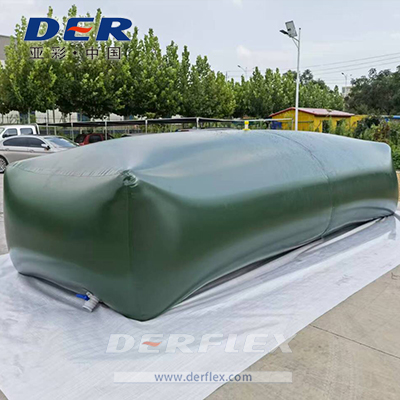
Aviation fuel bladder fabric is a reinforced flexible barrier material used to fabricate collapsible fuel tanks, auxiliary bladders, pillow tanks, removable fuel cells, transportable jet fuel containers and related liquid containment products. It normally combines a strong woven textile base with a fuel-contact coating or laminate system.
For jet fuel bladder material, buyers should look beyond simple waterproof performance. The material must be evaluated for liquid compatibility, low leakage risk, seam weld strength, fitting reinforcement, folding behavior, abrasion resistance, packing recovery and batch consistency. Jet fuel projects also require careful review of the fuel grade, additives, temperature and local approval requirements.
DERFLEX develops aviation fuel bladder fabric as a specification-driven coated textile. We can discuss TPU coated nylon, TPU coated polyester, double-side TPU coating, reinforced laminate directions and heavier reinforcement material for valve zones, welded corners and high-wear surfaces.
Why This Material Is Different from General Fuel Tank Fabric
- Jet fuel and aviation fuel additives require compatibility review, not assumptions.
- Seams, fittings, baffles, ports and corners often decide finished tank reliability.
- Field refueling bladders may be folded, dragged, lifted, filled, emptied and packed repeatedly.
- UAV and auxiliary bladder projects may need lighter weight with controlled barrier performance.
- Certified aircraft use requires formal program approval and cannot rely on raw material claims alone.
Built Around Fuel Contact, Welding and Field Deployment
DERFLEX aviation fuel bladder material is developed for manufacturers who need stable roll goods that can be converted into reliable flexible fuel containment systems.
Fuel-Contact Material Direction
TPU chemistry, coating thickness and laminate construction can be reviewed for Jet A, Jet A-1, JP fuels, kerosene, diesel and selected aviation fuel programs after application-specific immersion testing.
Weldable Tank Construction
Selected grades can be tested for RF / HF welding, hot-air welding, wedge welding or heat sealing so fabricators can build seams, patches, baffles, reinforced edges and fitting areas.
Low-Fold Failure Risk
Portable aviation fuel bladders are often rolled, folded and redeployed. DERFLEX balances coating thickness, base fabric and flexibility to reduce cracking, stiffness and delamination risk.
Abrasion & Puncture Resistance
Ground contact, loading, tie-downs, pallets, air cargo handling and field use can damage weak materials. Reinforced base fabric and surface design help protect the bladder body.
Fitting Zone Support
Ports, flanges, vents, hoses and lifting points create local stress. DERFLEX can discuss compatible reinforcement patches and heavier-grade material for critical areas.
Repeatable OEM Roll Supply
Tank factories need consistent width, thickness, coating adhesion, surface finish and welding behavior. DERFLEX supports custom roll programs for repeat production.
Where Jet Fuel Bladder Material Is Used
Different aviation fuel projects need different fabric structures. DERFLEX starts with the finished product requirement instead of forcing one standard roll into every design.
Airfield Fuel Storage Bladders
Foldable Jet A / Jet A-1 storage bladders for remote airfields, temporary fuel farms, backup airport fuel supply and ground refueling support.
Helicopter Field Refueling Tanks
Material direction for portable refueling bladders used in field camps, rotorcraft support, emergency response, forestry and remote logistics operations.
UAV Fuel Bladder Programs
Lightweight TPU coated textile options for drone fuel bladder prototypes, unmanned aircraft auxiliary tanks and custom-shaped fuel containment projects.
Air Cargo Fuel Containers
Reinforced bladder material for transportable fuel tanks that may require abrasion protection, foldability, tie-down planning and leak observation testing.
Defense & Field Logistics
Heavy-duty collapsible fuel tank material for temporary stations, mobile energy supply, forward operating support and fuel transfer systems after project review.
Emergency Aviation Fuel Reserve
Deployable material direction for disaster relief, rapid airport service recovery, remote generator supply and aviation support zones.
Jet Fuel Containment Liners
Technical coated fabric direction for secondary containment, spill pads, transfer-point liners and fuel handling protection products.
OEM Flexible Tank Factories
Custom roll supply for manufacturers needing stable material, private label packing, repeat color, wide width and controlled welding behavior.
DERFLEX Aviation Fuel Bladder Fabric Guide
The following data is a practical starting point for quotation and sample development. Final values should be confirmed by tank design, fuel type, compliance requirement and testing.
| Product Name | Aviation fuel bladder fabric / Jet fuel bladder material / reinforced TPU fuel tank fabric / custom flexible aviation fuel tank material. |
|---|---|
| Base Textile | High-tenacity polyester or nylon; common directions include 840D, 1000D, 1680D and customized woven structures for higher tank strength. |
| Coating Structure | Double-side TPU coated fabric, TPU laminated fabric or multi-layer barrier direction according to fuel-contact requirement and welding process. |
| Weight Range | Approx. 650–1500 gsm direction or customized. Lightweight UAV projects and heavy-duty field tanks should be evaluated separately. |
| Thickness Direction | Approx. 0.50–1.20 mm or customized. Higher thickness may improve durability but can reduce packability and increase handling weight. |
| Width | Common 1.4 m–3.2 m depending on grade and production arrangement. Wider rolls can reduce seam quantity in large bladder fabrication. |
| Fuel Review | Jet A, Jet A-1, JP-8, kerosene, diesel, fuel oil and selected aviation fuel projects can be reviewed. Final approval requires application-specific testing. |
| Processing | HF / RF welding, hot-air welding, heat sealing, wedge welding, cutting, patching and reinforcement trials according to selected material. |
| Surface Finish | Smooth, matte, glossy, embossed, anti-blocking or customized. Surface should match cleaning, welding, folding and brand requirements. |
| Colors | Military green, black, dark grey, orange, blue, custom color and customer-specified roll marking direction. |
| Customization | Base fabric, coating formula, thickness, hardness, roll width, roll length, surface finish, packaging, label and sample development support. |
Confirm the Fabric Before Building the Tank
Aviation fuel bladder projects require more than visual approval. Before bulk production, DERFLEX recommends a staged evaluation: raw material sample, welding trial, fuel immersion, prototype tank, filling observation and project-specific inspection.
Different Jet A / Jet A-1 sources, anti-static additives, temperature conditions, storage time and cleaning processes may influence the final material behavior. The safest procurement route is to test the same fuel, same welding equipment and same fitting design that will be used in production.
Recommended Validation Items
- Fuel immersion test with actual fuel and planned contact time.
- Weld peel strength test before and after fuel exposure.
- Tensile, tear, puncture and abrasion testing for body fabric.
- Cold fold and repeated packing test for portable tanks.
- Hydrostatic or filling test on prototype bladder.
- Leak test around seams, fittings, corners and reinforcement zones.
- Review of grounding, venting, pressure and operational safety by tank designer.
Choose Material by Aviation Fuel System Type
The same keyword may describe very different products. This guide helps buyers avoid choosing the wrong material route.
DERFLEX Best Fit: OEM Roll Material for Flexible Tank Fabrication
- Jet fuel storage bladder body material.
- Ground refueling pillow tanks and field tanks.
- UAV or prototype fuel bladder material development.
- Fuel transfer containment liners and auxiliary tank fabric.
- Custom thickness, width, color and welding behavior.
Requires Formal Aviation Approval: Aircraft-Installed Fuel Cells
- Certified aircraft replacement fuel bladders.
- Crash-resistant or self-sealing aircraft fuel systems.
- TSO, ETSO, MIL or aircraft-specific approved constructions.
- Flight-critical tank assemblies with fittings, pumps and sensors.
- Programs requiring authority, OEM or airframe approval.
| Project Type | Material Focus | Buyer Checkpoints |
|---|---|---|
| Jet A / Jet A-1 ground storage bladder | Fuel-contact direction, seam strength, abrasion resistance, low folding failure risk. | Fuel immersion, weld peel, hydrostatic filling test, fitting reinforcement and local safety rules. |
| UAV fuel bladder material | Lightweight structure, low diffusion direction, custom shape support, stable weldability. | Weight target, airframe space, baffles, vibration, fuel delivery system and prototype validation. |
| Field refueling pillow tank | Heavy-duty reinforcement, outdoor handling, tie-down zones and repeat deployment. | Ground sheet, lifting method, hose design, valve protection, storage time and cleaning plan. |
| Aircraft-installed fuel cell | Approved aviation construction and full system certification. | Use certified supplier, airframe-approved data and applicable aviation authority requirements. |
Manufacturing Support for Serious Fuel Bladder Programs
DERFLEX is suitable for buyers who need more than a sample roll. We support application review, material customization, repeatable production and export-ready supply.
Years Material Experience
Long-term coated fabric manufacturing experience for tarpaulins, technical textiles, TPU fabrics and flexible containment products.
Custom Roll Supply
Base textile, coating side, color, thickness, width, surface finish and packing can be developed for repeat production.
Batch Consistency
Roll appearance, coating adhesion, width, thickness and processing stability can be checked for long-term tank factory programs.
Export Support
Sample dispatch, roll packing, shipping marks, technical communication and export documents can support international buyers.
Internal Technical Fabric Links
Use these DERFLEX pages to compare aviation fuel bladder fabric with related TPU materials, flexible tank solutions and spill control fabric.
Aviation Fuel Bladder Fabric FAQs
These answers help buyers understand material selection, testing and quotation requirements before ordering.
What is aviation fuel bladder fabric?
It is a reinforced flexible barrier textile used to manufacture fuel bladders, flexible tanks, pillow tanks, auxiliary fuel containers and related aviation fuel storage products. The material normally combines a textile reinforcement layer with a fuel-resistant coating or laminate.
Can DERFLEX material be used for Jet A or Jet A-1 fuel bladders?
DERFLEX can provide TPU coated fabric directions for Jet A, Jet A-1, JP fuel, kerosene and diesel review. Final approval must be based on fuel immersion, welding trials, prototype tank tests and the buyer's project-specific requirements.
Is this material certified for aircraft-installed fuel cells?
No raw material page should be treated as aircraft certification. If the bladder will be installed in an aircraft or used in a flight-critical system, the finished tank and material construction must follow the applicable TSO, ETSO, MIL, OEM or aviation authority approval route.
Which is better for jet fuel bladder material, TPU coated nylon or TPU coated polyester?
TPU coated nylon is often selected when flexibility and tear strength are important. TPU coated polyester can offer dimensional stability and good cost-performance. The correct choice depends on tank size, fuel type, folding cycle, welding method and approval pathway.
What welding methods can be used?
Depending on specification, DERFLEX materials can be tested for RF / HF welding, hot-air welding, wedge welding or heat sealing. Welding parameters should be confirmed with the fabricator's real equipment before mass production.
What tests should be done before bulk order?
Recommended tests include fuel immersion, weld peel strength, tensile and tear strength, puncture and abrasion resistance, cold fold, prototype filling, leak inspection and fitting-zone evaluation.
Can DERFLEX customize thickness, color and width?
Yes. DERFLEX can discuss custom GSM, thickness, base fabric, coating side, TPU formula, color, width, roll length, surface finish, packaging and labeling for OEM fuel bladder manufacturers.
What information should I send for a quotation?
Please send fuel type, expected contact time, tank capacity, drawing or sample photo, target GSM or thickness, base fabric preference, welding method, width, color, order quantity, working temperature and any required test or compliance standard.
Need Custom Jet Fuel Bladder Material?
Send DERFLEX your aviation fuel type, tank design, target specification and testing requirement. Our team will help you review a practical TPU coated fabric direction for sample testing and bulk roll supply.
For faster quotation, include:
- Fuel type: Jet A, Jet A-1, JP-8, kerosene, diesel or other liquid
- Tank capacity, drawing, seam design and fitting details
- Target GSM / thickness, color, width and quantity
- Welding method and required testing standard
- Expected storage time, temperature and working environment