



TPU Coated Fabric for Fuel Tanks
DERFLEX supplies reinforced TPU coated fabric for flexible fuel tanks, collapsible fuel bladders, emergency fuel storage systems and OEM tank fabrication. The material can be customized for fuel-contact review, welded seam performance, repeated folding, abrasion resistance and stable roll-to-roll production.
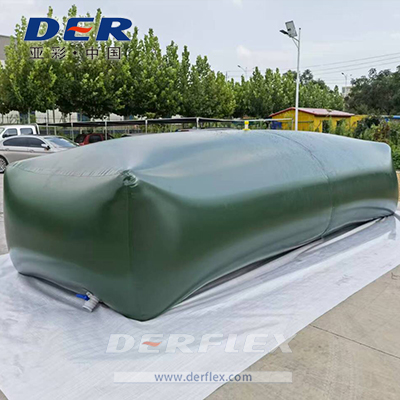
Product image: DERFLEX TPU coated fabric for oil industry fuel tank and flexible liquid storage applications.
What Is TPU Coated Fabric for Fuel Tanks?
TPU coated fabric for fuel tanks is a reinforced composite textile engineered for portable fuel containment. A woven polyester or nylon base provides tensile strength and dimensional stability, while the thermoplastic polyurethane layer creates a weldable, flexible and protective surface for tank fabrication.
Unlike general waterproof fabric, fuel tank fabric must be considered as a system material. The finished tank may be folded, dragged, filled, emptied, lifted, packed for transport and exposed to fittings, valves, flanges, straps, ground contact and fuel-contact conditions. Therefore, buyers should evaluate not only the fabric thickness, but also coating formulation, seam weldability, peel strength, folding performance, puncture resistance and compatibility with the actual fuel or oil used in the project.
DERFLEX helps OEM tank factories, emergency response suppliers, industrial distributors and project contractors select the right TPU coated fabric direction based on the final tank design instead of offering one generic material for all fuel tank applications.
Why fuel tank fabric is different
- Seam reliability: welded seams and corner areas must hold under handling stress and liquid movement.
- Fuel-contact review: fabric must be matched to diesel, gasoline, kerosene, aviation fuel, lubricating oil or other liquids.
- Fitting zones: valve and flange areas need reinforcement planning to reduce stress concentration.
- Foldable storage: portable tanks must remain flexible enough for packing, deployment and repeated use.
- Surface durability: the outside surface may face abrasion, weather, ground friction and loading movement.
Engineered Structure for Flexible Fuel Tank Manufacturing
The right TPU fuel tank fabric is built from the tank function backward. DERFLEX can adjust base textile, coating side, TPU thickness, surface finish and roll format to support different tank capacities, fabrication methods and field conditions.
Reinforced Textile Core
High-strength polyester or nylon fabric can be selected according to dimensional stability, tear resistance, flexibility and finished tank weight. Heavy-duty denier options support larger portable fuel tank structures.
TPU Barrier Surface
Thermoplastic polyurethane coating provides a flexible, weldable and abrasion-resistant surface. For fuel tank programs, the formulation can be reviewed for oil resistance, fuel-contact direction and processing stability.
Weldable Tank Interface
Fabric can be developed for high-frequency welding, hot-air welding, heat sealing or wedge welding trials. The objective is to help fabricators build stable seams, corners, lifting areas and fitting reinforcement zones.
DERFLEX recommendation for fuel tank buyers
For collapsible fuel tanks, we generally recommend beginning with double-side TPU coated fabric or a reinforced TPU laminate direction because both sides of the tank may need sealing, cleaning, folding and abrasion resistance. Final selection should always be confirmed with sample welding and fuel immersion testing before bulk production.
DERFLEX TPU Fuel Tank Fabric Specification Direction
The following table is a practical starting point for quotation discussion. Final specification should be confirmed according to tank capacity, liquid type, welding method, regulatory requirement, expected service life and end-user environment.
| Item | Available Direction | Fuel Tank Selection Notes |
|---|---|---|
| Product Name | TPU coated fabric for fuel tanks / TPU fuel tank fabric / reinforced TPU fuel bladder material | Used as roll material for finished flexible tank fabrication and OEM tank programs. |
| Base Fabric | Polyester or nylon; common directions include 840D, 1000D, 1680D and custom constructions | Nylon can support flexibility and tear strength; polyester can support dimensional stability and cost-performance balance. |
| Coating Structure | Double-side TPU coated fabric; single-side or laminated structure can be reviewed by project | Double-side coating is often preferred for tank sealing, cleaning, welding and liquid containment reliability. |
| Total Weight | Approx. 650–1500 gsm direction or customized | Higher weight can improve mechanical strength, but foldability, packing size and handling weight must also be considered. |
| Thickness | Approx. 0.50–1.20 mm direction or customized | Thickness affects weld window, puncture resistance, flexibility and tank fabrication cost. |
| Width | Approx. 1.4 m–3.2 m depending on grade and production arrangement | Wider rolls can reduce seam quantity in larger tanks and improve fabrication efficiency. |
| Surface Finish | Smooth, matte, glossy, embossed, anti-blocking or customized | Surface should support welding, cleaning, folding and anti-sticking requirements. |
| Processing | HF welding, hot-air welding, heat sealing, wedge welding and cutting trials | Sample welding is necessary because seam strength is influenced by coating, equipment setting and operator process. |
| Customization | Color, roll length, hardness, TPU formula, package, logo label, sample testing direction | OEM programs can be prepared for tank manufacturers, distributors and project suppliers. |
Fuel Tank Fabric Should Be Judged by Real Tank Conditions
A flexible fuel tank works under more complicated conditions than a flat sheet. Liquid movement, folding lines, seam edges, valves, ground contact and transport packing all influence material choice.
Fuel-Contact Material Direction
TPU chemistry and coating thickness can be selected according to diesel, lube oil, gasoline, kerosene or aviation fuel review. Actual immersion testing is recommended before final approval.
Welded Seam Strength
Seam areas often determine the success of a flexible tank. DERFLEX focuses on weldable surface quality, coating consistency and roll stability to support repeatable fabrication.
Fold & Deployment Behavior
Portable tanks need a balance between strength and flexibility. Material that is too stiff may be hard to pack; material that is too light may not suit rough field handling.
Abrasion & Puncture Resistance
Outdoor fuel tanks may face friction from ground sheets, vehicle movement, loading operations and repeated handling. Reinforced base fabric and TPU surface design help improve durability.
Fitting Reinforcement Support
Valves, flanges, vents and lifting points create local stress. DERFLEX can support buyers in selecting heavier grades or reinforcement material directions for these critical areas.
Batch Consistency
Fuel tank manufacturers need repeatable thickness, width, appearance and welding behavior. DERFLEX supports bulk roll supply with quality checks for OEM and distributor programs.
Where TPU Coated Fabric for Fuel Tanks Is Used
TPU fuel tank fabric is selected when a rigid metal or plastic tank is not practical, and the buyer needs a portable, foldable, deployable or space-saving liquid containment solution.
Typical buyers
OEM flexible tank factories, fuel bladder manufacturers, field logistics suppliers, emergency storage equipment companies, marine and outdoor equipment builders, industrial distributors and project contractors can all develop tank products around DERFLEX TPU coated fabric.
Collapsible Fuel Tanks
Pillow tanks and foldable fuel containers for temporary fuel storage, backup supply, field deployment and remote work sites.
Fuel Bladders & Oil Bags
Flexible bladders for diesel, lubricating oil and industrial liquid containment. See DERFLEX flexible fuel bladder tanks for finished product direction.
Emergency Fuel Storage
Deployable fuel storage systems for disaster response, construction sites, mining operations and temporary service points.
Marine & Outdoor Auxiliary Tanks
Foldable or space-saving fuel tank structures for marine support, field camps and mobile equipment where weight and packing volume matter.
Industrial Liquid Containment
Oil-resistant TPU coated textile direction for lubricant, chemical-compatible review and special container development after sample testing.
OEM Tank Roll Programs
Custom roll supply for fabricators who need stable width, weight, color, surface finish and packaging for repeat fuel tank production.
Selection Guide by Fuel Type and Working Condition
Fuel tank fabric selection should begin with the liquid being stored. The same tank design may require a different TPU coating direction if the fuel type, additives, temperature or contact time changes.
| Application Scenario | Material Focus | Buyer Checkpoints |
|---|---|---|
| Diesel fuel storage | Oil resistance, seam strength, abrasion resistance, outdoor handling durability | Confirm immersion behavior, welding trial, valve reinforcement and expected storage time. |
| Lube oil or hydraulic oil containment | Surface compatibility, anti-leak sealing, cleanable inner surface, fold resistance | Review oil grade, additive package, temperature and cleaning method. |
| Gasoline or kerosene review | Fuel-contact formulation, barrier direction, seam stability and safety design | Require application-specific testing and compliance review before any final tank approval. |
| Aviation fuel or field refueling | High-strength reinforcement, stable seams, fitting zones and transport durability | Review relevant project standards, operational pressure, grounding, venting and inspection procedures. |
| Outdoor or cold-area deployment | Low-temperature flexibility, UV resistance, folding line durability and abrasion resistance | Confirm climate conditions, packing method and field handling requirements before material selection. |
Seams, Corners and Fittings Matter More Than Flat Fabric Alone
Many fuel tank failures begin in high-stress zones: welded seams, folded corners, valve patches, filling ports, lifting straps and contact points. DERFLEX supports material selection with these fabrication details in mind.
For a large collapsible tank, the fabric surface must be strong, but the weld interface must also match the fabricator's equipment and production workflow. A material that looks good in roll form may still fail if the welding window is too narrow or if the corner design concentrates stress. That is why DERFLEX encourages sample welding, prototype filling, folding, loading and leak observation before bulk production.
Main Body Fabric
Balanced TPU coated polyester or nylon fabric selected by tank capacity, folding requirement and handling environment.
Reinforcement Zones
Heavier compatible material can be considered around fittings, ports, lifting points and high-wear surfaces.
Welding Parameters
Temperature, pressure, welding speed and overlap width should be tested with the selected fabric before production.
Inspection Plan
Finished tanks should be checked for seam quality, leakage, fitting attachment, appearance and application-specific safety requirements.
TPU Coated Fabric vs PVC Fabric vs Rubber-Type Materials for Fuel Tanks
There is no single material that is best for every tank. The right answer depends on fuel type, budget, weight target, folding requirement, welding equipment and required service conditions.
| Material | Main Strength | When It Is Usually Considered | Procurement Note |
|---|---|---|---|
| TPU Coated Fabric | Flexible, weldable, abrasion-resistant, suitable for premium collapsible tank construction | Portable fuel tanks, bladders, field tanks, foldable liquid containment, OEM tank programs | Best when flexibility, welding reliability and fuel-contact material direction are priorities. |
| PVC Coated Fabric | Cost-effective, heavy-duty waterproof, mature industrial roll supply | Water tanks, agricultural bags, industrial covers and selected oil/water containment uses | Can be economical, but fuel-contact and flexibility requirements must be carefully reviewed. |
| Rubber / Hypalon-Type Fabric | High chemical and weather performance in selected applications | Specialty military, marine or harsh chemical applications depending on grade | Often higher cost and may require different bonding, fabrication or sourcing conditions. |
Testing Points Before Ordering TPU Coated Fabric for Fuel Tanks
For a fuel tank project, early sample testing prevents costly problems in welding, filling, packing and field use. DERFLEX can prepare sample direction for customers to conduct application-specific verification.
Fuel Immersion Test
Place fabric samples in the actual fuel or oil to observe swelling, softening, weight change, coating behavior and surface condition over time.
Weld Peel & Seam Test
Confirm seam strength after welding and after fuel exposure. Test straight seams, corners, patches and overlap areas.
Tensile & Tear Strength
Review whether the base fabric and coating structure can support the required tank size, filling volume and handling method.
Abrasion & Puncture Test
Evaluate the outer surface against ground contact, packing friction, dragging, loading and tool contact during field use.
Cold Fold Test
Check whether the material can be folded and unfolded at the expected operating temperature without cracking or delamination.
Prototype Tank Trial
Build a small prototype or sample tank to check leakage, corner behavior, fitting reinforcement, filling, draining and packing process.
Why Buyers Choose DERFLEX for TPU Fuel Tank Fabric
DERFLEX is not only a material seller. We help buyers convert a fuel tank idea into a repeatable roll material program by reviewing application, base fabric, TPU coating, processing method and bulk supply needs.
Application-Based Recommendation
We ask about fuel type, tank volume, welding method, operating climate and end-use environment before recommending a specification direction.
Custom Roll Development
Base fabric, coating side, total weight, thickness, color, width, hardness and surface finish can be discussed for OEM tank programs.
Coated Fabric Manufacturing
DERFLEX supports stable production planning, roll inspection and repeat-order consistency for manufacturers and distributors.
Global Export Support
Export packing, shipping documents, sample dispatch and project communication can be arranged for customers in international markets.
For fuel tank OEM projects
Send DERFLEX your tank drawing, target capacity, required fuel type, welding method, desired width, color and estimated order quantity. Our team can help you choose between TPU fabric, TPU laminated fabric, TPU coated nylon fabric and double-sided TPU coated nylon fabric according to the final product requirement.
Explore Related DERFLEX Technical Fabric Pages
Use these pages to compare TPU fuel tank fabric with related DERFLEX materials and application-focused product solutions.
TPU Coated Fabric for Fuel Tanks FAQs
What is TPU coated fabric for fuel tanks?
It is a reinforced textile made by coating polyester or nylon base fabric with thermoplastic polyurethane. The fabric is used as roll material for flexible fuel tanks, collapsible fuel bladders, portable liquid containers and welded fuel storage products.
Why is TPU used for flexible fuel tanks?
TPU is valued for flexibility, abrasion resistance, weldability and a strong balance between mechanical strength and foldable handling. For fuel tank projects, TPU formulation and coating structure should be matched to the actual fuel type and fabrication process.
Can TPU coated fabric hold diesel, gasoline or aviation fuel?
TPU coated fabric can be evaluated for diesel, lubricating oil, gasoline, kerosene, aviation fuel and other fuel-contact applications. However, final approval requires application-specific testing because fuels and additives vary by region and project.
Which welding methods can be used for TPU fuel tank fabric?
Depending on the specification, TPU coated fabric can be tested for high-frequency welding, hot-air welding, wedge welding and heat sealing. DERFLEX recommends welding trials before mass production to confirm seam strength and process window.
Should I choose TPU coated polyester or TPU coated nylon?
TPU coated nylon is often selected for flexibility and tear strength, while TPU coated polyester can offer dimensional stability and good cost-performance. The best choice depends on tank size, packing method, expected stress, fuel type and welding process.
What thickness is recommended for TPU coated fuel tank fabric?
Many fuel tank projects begin evaluation in the 0.50–1.20 mm direction, but final thickness should depend on tank capacity, seam design, puncture risk, folding requirement and target service conditions.
Can DERFLEX provide custom color and width?
Yes. DERFLEX can discuss custom width, color, surface finish, roll length, packaging and label requirements according to the customer's OEM production program and order quantity.
What should I send to DERFLEX for a quotation?
Please send fuel type, tank capacity, target thickness or GSM, base fabric preference, coating side, width, color, surface finish, welding method, expected working temperature, application market and quantity. A tank drawing or sample photo is also very helpful.
Need a Custom TPU Coated Fabric for Fuel Tanks?
Tell DERFLEX your fuel type, tank capacity, welding method, material target and order plan. We will help you review the right TPU coated fabric direction for sample testing and bulk production.