


 Marine Cargo Protection · Custom PVC Tarpaulin
Barge Cover Tarp
Custom heavy duty tarpaulin systems for hopper barges, inland-waterway cargo, dockside handling and replacement cover programs.
A barge cover tarp has to do more than block rain. It must shed water, tolerate wind uplift, resist rubbing at coamings and support points, handle repeated folding and loading cycles, and remain practical for crews to deploy. DERFLEX supplies PVC coated polyester materials, fabricated panels and custom barge cover tarp programs built around those operating conditions.
- Waterproof PVC coated polyester
- Reinforced perimeter options
- Welded large-format panels
- Custom tie-down layouts
- Bulk & OEM supply
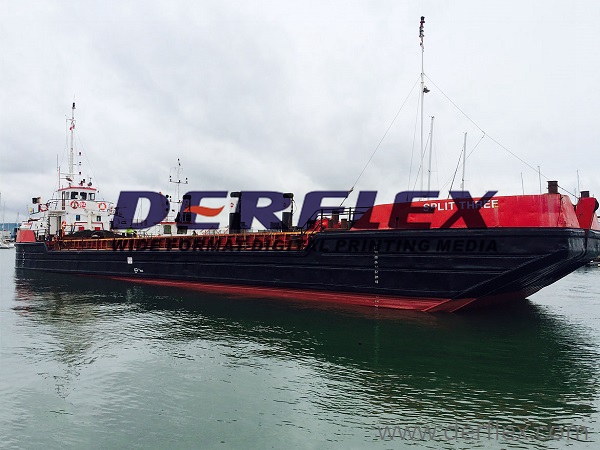
A Flexible Weather Envelope for Barge Cargo
For open or semi-open barge cargo, the cover is part of the operating system. The useful specification starts with the cargo, route, barge geometry and handling cycle—not with a stock tarp size.
What a barge cover tarp is used for
Barge tarps are used to reduce direct exposure of cargo to rain, spray, dust and sunlight during transport, waiting periods and dockside handling. Common projects include grain, feed, fertilizer, packaged cargo, mineral products and weather-sensitive industrial materials.
For bulk cargo, the cover system should also be designed to avoid water pooling and reduce the chance of uncontrolled flapping at speed or in crosswinds.
Who typically buys from a barge cover tarp supplier
- Inland-waterway barge operators and fleet maintenance teams
- Marine logistics companies and terminal operators
- Grain, mineral and bulk commodity transport contractors
- Marine tarp fabricators and replacement-cover workshops
- Industrial distributors requiring barge cover tarp wholesale supply
- OEM buyers developing repeat size programs or private-label covers
Six Loads a Heavy Duty Barge Cover Tarp Must Manage
These are the conditions that usually determine whether a cover remains practical after repeated voyages and loading cycles.
The support profile and finished shape should encourage drainage rather than allow standing water to load the panel and seams.
Perimeter tension, attachment spacing and reinforcement should be planned together to control billowing and edge loading.
Contact points at steel edges, corners and supports can require wear strips, additional layers or local patches.
Flexibility, coating quality and seam placement matter when covers are opened, stacked, folded or rolled frequently.
Grommets, D-rings and straps perform as a system with the hem, webbing and local patch—not as isolated components.
Easy-clean surfaces and maintenance routines can help reduce residue buildup and abrasive contamination between voyages.
Why PVC Coated Polyester Is a Practical Barge-Cover Material
For a waterproof barge cover tarp that will be handled repeatedly, PVC coated polyester offers a useful combination of weather protection, strength, cleanability and fabrication flexibility. Panels can be joined by compatible welding methods, which is especially useful when a finished cover is much wider than a fabric roll.
- Material weight can be adjusted to handling frequency and exposure.
- Welded panel construction supports large custom dimensions.
- UV, anti-mildew, cold-resistance and flame-retardant directions can be discussed where the project requires them.
- Surface, color and reinforcement details can be standardized for replacement and fleet programs.
Typical Barge Cover Tarp Material & Fabrication Options
The table below is a selection framework rather than a fixed universal specification. Final values should be confirmed against barge size, cargo, route climate, handling method and required service conditions.
| Specification Item | Typical Direction | Procurement Note |
|---|---|---|
| Material | PVC coated polyester fabric | Common choice for heavy duty waterproof marine and cargo-cover use. |
| Finished Weight | Approx. 550–900 gsm; other constructions by project | Balance handling weight against wind, abrasion and service-cycle demands. |
| Base Fabric | 500D / 1000D / 1300D directions depending on grade | Denier alone does not define performance; weave, coating and test values should be reviewed together. |
| Roll Width | Common production widths up to approx. 3.2 m depending on material | Finished large covers are normally panelized and welded. |
| Surface | Matte, gloss, lacquered or project-specific finish | Consider cleaning, marking, abrasion and appearance requirements. |
| Weather Options | UV-resistant, anti-mildew, cold-resistant directions available by specification | State route climate and expected exposure period during inquiry. |
| Seam Construction | Hot-air or HF welded construction where compatible | Seam method should be matched to the selected fabric and panel layout. |
| Perimeter Reinforcement | Folded / welded hems, webbing, rope edge, local wear patches | Reinforcement should correspond to tie-down forces and steel contact zones. |
| Hardware | Grommets, D-rings, straps, buckles or custom attachment details | Confirm spacing, material and attachment method from the actual barge layout. |
| Color / Branding | Blue, green, grey, black and custom project colors | Logo, identification marking and fleet coding can be discussed for OEM programs. |
| Supply Format | Roll goods, cut panels, semi-finished sets or finished custom tarps | Useful for operators, fabricators, distributors and barge cover tarp wholesale programs. |
Note: Specific test values, certifications, flame classifications, service-life expectations and chemical compatibility should be confirmed on the approved product specification before ordering.
Design the Cover Around the Barge—Not the Other Way Around
A custom barge cover tarp is easier to approve when dimensions, support geometry, cargo operation and tie-down details are resolved before fabrication begins.
Confirm hopper length, width, coaming profile, crown height, support spacing and required side drop.
Document loading equipment, cover removal method, crew handling, storage method and access / inspection points.
Identify wind exposure, rainfall, abrasion zones, sharp edges, high-tension corners and expected cleaning conditions.
Approve fabric grade, seam map, reinforcement, hardware layout, color, marking and packaging before batch production.
Where Barge Cover Tarps Are Commonly Specified
The same barge can experience different loads depending on cargo density, route, unloading system and how often the cover is handled. Application detail should guide material and fabrication choices.
Grain & Feed Barges
Weather protection for bulk agricultural cargo where rain ingress and contamination control are key concerns.
Coal, Ore & Mineral Cargo
Heavy duty cover directions for abrasive environments, terminal dust and repeated industrial handling.
Fertilizer & Bagged Products
Cover systems for moisture-sensitive cargo, palletized loads and temporary dockside protection.
Project & Industrial Cargo
Custom panels for machinery, steel components, fabricated parts and mixed loads transported by barge.
Port Waiting & Dockside Storage
Flexible covers for cargo that may remain exposed during staging, transfer or weather delays.
Replacement Cover Programs
Standardized color, hardware and reinforcement for operators replacing worn tarps across multiple barges.
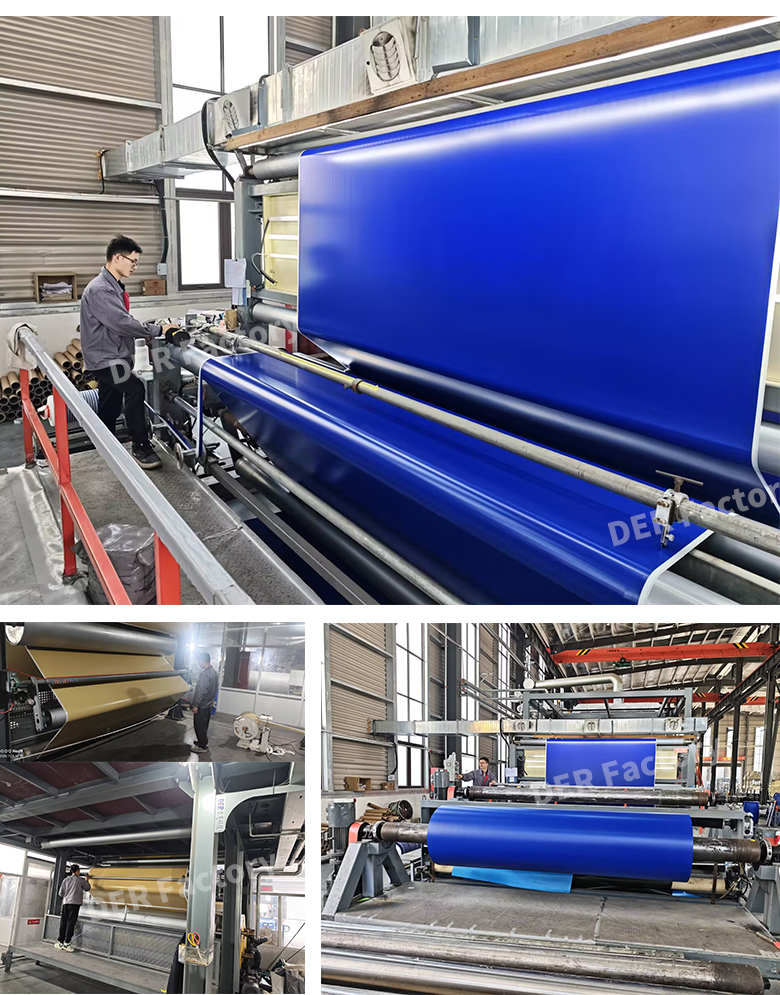
Marine Application and Coated-Fabric Production References
DERFLEX supplies coated textile materials for marine and heavy-duty outdoor applications. Final barge-cover construction is customized to the approved specification.
From Barge Cover Tarp Wholesale to Custom Finished Covers
Different buyers need different levels of fabrication. DERFLEX can discuss supply formats around the buyer’s conversion capability and repeat-order plan.
Finished Barge Tarps
For fleet operators, marine contractors and distributors needing ready-to-use covers made to an approved drawing.
Welded Panel Sets
For local workshops that install hardware or complete final fitting near the vessel.
PVC Fabric Rolls
For tarp fabricators that cut, weld, sew and install their own marine cover systems.
OEM / Private Label
For barge cover tarp wholesale buyers requiring repeat sizes, markings, packaging and market-specific product programs.
What to Send for a Useful Barge Cover Tarp Quote
The fastest path to a workable specification is to provide the geometry and operating details that influence material and reinforcement. Photos and a marked drawing are especially helpful.
- Barge / hopper length and width
- Coaming and support profile
- Required cover drop and overlap
- Cargo type and route climate
- Cover removal / storage method
- Tie-down points and spacing
- Known abrasion / sharp-edge zones
- Quantity and replacement schedule
- Color and identification marking
- Packaging and destination port
What to Evaluate in a Barge Cover Tarp Manufacturer
For recurring B2B supply, a supplier should be able to connect material selection with fabrication and repeat-order control. Comparing only the finished GSM can miss the details that influence field performance.
Material-to-Fabrication Matching
Fabric weight, coating, weld behavior, seam design, webbing and hardware should be treated as one cover system rather than unrelated line items.
Drawing & Reinforcement Review
Custom projects benefit from a clear seam map, corner reinforcement plan, wear zones and attachment layout before production.
Repeat-Order Consistency
For fleets and wholesale programs, approved color, material code, reinforcement, markings and packing details should be recorded for subsequent batches.
Roll and Finished Supply
DERFLEX works with PVC coated fabric and custom tarp formats, allowing buyers to choose local conversion or more complete fabrication.
Project-Based Options
Outdoor treatments, cold-weather directions, anti-mildew options and flame-retardant requirements can be discussed where the application calls for them.
Pre-Production Confirmation
Samples, drawings, test requirements and packaging details should be confirmed before a bulk barge cover tarp order is released.
Continue Your Marine & Heavy-Duty Tarp Selection
These six DERFLEX pages are closely related to barge cover material selection, marine exposure, dock cargo protection and custom fabrication.
Frequently Asked Questions About Barge Cover Tarps
Practical answers for barge operators, marine contractors, distributors and tarp fabricators preparing a specification or quotation request.
What material is commonly used for a heavy duty barge cover tarp?
PVC coated polyester is commonly selected when the project needs waterproof protection, tear resistance, weldability and repeat outdoor handling. The suitable fabric weight and base construction depend on barge geometry, wind exposure, abrasion and handling frequency.
Can DERFLEX make a custom barge cover tarp to a drawing?
DERFLEX can discuss custom dimensions, panel layout, edge reinforcement, grommet or D-ring positions, straps, color, markings and packing from a buyer drawing or measurement sheet. Final construction should be confirmed before production.
How should a waterproof barge cover tarp be designed to avoid water pooling?
The cover should have a support profile and tension layout that promotes drainage. Crown height, support spacing, cover slack, seam direction and edge tension all influence whether rainwater sheds or collects on the tarp.
Can barge cover tarps be supplied in wholesale quantities?
Yes. Bulk programs can be discussed as fabric rolls, welded panel sets, finished tarps or repeat OEM size programs. Quantity, specification, packaging and shipping method should be confirmed for the project.
What reinforcement is useful around a barge tarp perimeter?
Common options include folded or welded hems, webbing, rope edges, corner patches, local wear strips and reinforced hardware zones. The correct layout depends on tie-down loads and where the cover contacts steel edges or supports.
What information should I provide to a barge cover tarp manufacturer?
Provide barge or hopper dimensions, support profile, required drop, cargo type, climate, cover handling method, tie-down points, known abrasion zones, preferred fabric weight, quantity, color, marking and destination. Photos and drawings improve specification accuracy.
Need a Barge Cover Tarp Built Around Your Vessel?
Send DERFLEX the barge dimensions, cover profile, cargo, route conditions, fastening layout and quantity. The discussion can then focus on a practical PVC tarp structure, reinforcement plan and supply format for your project.