


 Outdoor Tarp Material Guide
Canvas Tarp vs Vinyl Tarp: Which Is Better for Outdoor Use?
For outdoor protection, the right tarp is not decided by one word like “heavy duty.” Canvas and vinyl solve different problems. Canvas helps covered items breathe. Vinyl PVC tarp material is normally chosen when waterproof protection, abrasion resistance, welded seams and repeated outdoor handling are more important.
DERFLEX helps importers, tarp fabricators, distributors, construction suppliers, agriculture buyers and OEM cover brands compare real working conditions before choosing breathable canvas tarps, waterproof vinyl tarps or customized PVC coated tarp materials.
Fast Answer for Buyers
Vinyl is usually the stronger outdoor choice when rain, UV exposure, cargo movement, abrasion and long service cycles are the main risks. Canvas is useful when ventilation and condensation control are more important than complete waterproof sealing.
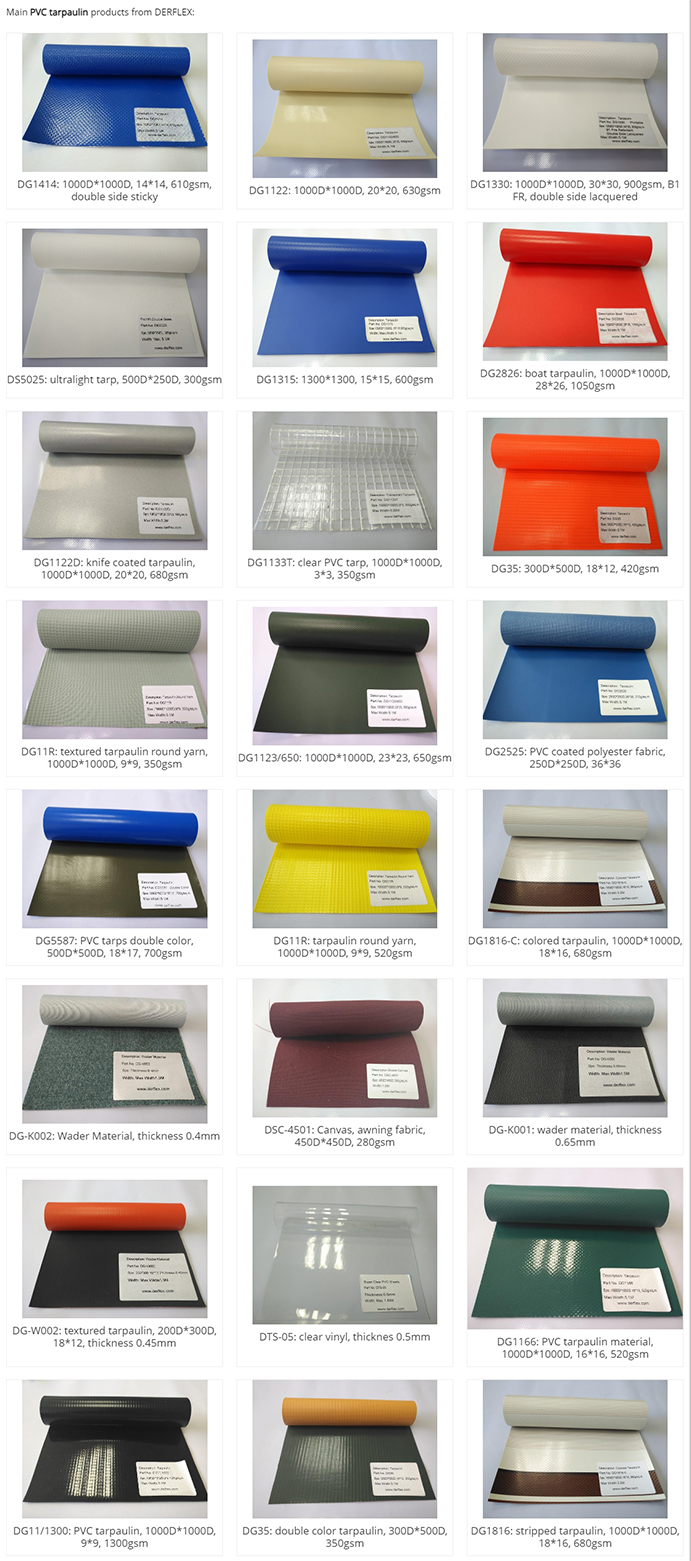
DERFLEX PVC Vinyl Tarp and Coated Tarpaulin Material
For outdoor industrial use, DERFLEX can supply roll goods, panels and custom finished tarp directions based on material structure and application requirements.
Canvas and Vinyl Are Not Competing for the Same Job
Search results often compare price, waterproof level, durability and breathability. A better B2B decision starts with the exposure environment and the value of the goods being protected.
Canvas Tarp
Canvas tarps are woven textile covers, commonly cotton canvas, polyester canvas or blended canvas. After treatment, they can resist light moisture and mildew while allowing a degree of air movement.
- Useful when the covered item may release moisture
- Helps reduce heat and condensation under the cover
- Often selected for machinery, wood, tools and storage covers
- Not normally the safest choice for standing water or long wet exposure
Vinyl PVC Tarp
Vinyl tarps are normally made from reinforced polyester fabric coated or laminated with PVC. The structure gives buyers a waterproof surface, stronger tear performance and better fabrication flexibility for heavy-duty outdoor covers.
- Commonly selected for rain, snow, road spray and outdoor storage
- Suitable for welded seams, reinforced edges and grommet systems
- Available in different weights, colors, finishes and treatment options
- Less breathable than canvas, so ventilation should be considered when needed
Canvas Tarp vs Vinyl Tarp for Outdoor Use
This comparison is written for procurement teams and product developers who need a practical material direction before requesting samples or a quotation.
| Buyer Concern | Canvas Tarp | Vinyl PVC Tarp | DERFLEX Purchasing Advice |
|---|---|---|---|
| Rain Protection | Usually water-resistant or water-repellent after treatment, but prolonged rain or water pooling may become a risk. | Designed as a waterproof barrier when PVC coating, seams and finishing are correctly specified. | For heavy rain, outdoor storage and truck covers, start with vinyl PVC tarp material. |
| Breathability | Better airflow helps reduce trapped heat and condensation under the cover. | Low breathability; moisture may be trapped if the covered goods release humidity. | For lumber, machinery or moisture-sensitive goods, consider canvas or add ventilation design. |
| Outdoor Durability | Good for many covers, but performance depends heavily on fabric weight, treatment and maintenance. | Stronger direction for abrasion, UV exposure, wind movement and repeated industrial handling. | Match GSM, base fabric density, coating and edge design to expected service conditions. |
| Fabrication Method | Commonly sewn; reinforcement and seam design are important for stress points. | Can be hot-air welded, high-frequency welded or sewn depending on structure and project needs. | For waterproof seams and repeatable OEM covers, vinyl PVC has stronger fabrication flexibility. |
| Cleaning and Maintenance | May hold dust, stains or moisture in the textile surface; drying before storage is important. | Smooth PVC surface is easier to wipe, wash and maintain in many industrial environments. | For rental covers, truck fleets and dusty sites, cleanability may reduce long-term complaints. |
| Cost Logic | Can look attractive for breathable or lighter-duty jobs. | Initial cost is often higher, but replacement frequency may be lower in harsh outdoor use. | Compare cost per service cycle, not only price per square meter. |
Which Material Fits Your Outdoor Project?
Outdoor use includes many different working conditions. The same tarp material may perform differently on a truck, a farm, a construction site or a storage yard.
Truck, Trailer and Cargo Covers
Vinyl PVC tarp material is usually preferred because it can be waterproof, reinforced, welded and designed for repeated tie-down handling.
Machinery and Equipment Storage
Canvas can help reduce condensation for stored equipment. Vinyl is better when the equipment must stay dry under rain, snow and road splash.
Construction and Jobsite Covers
Vinyl tarps are practical for exposed materials, temporary roofing, scaffold covers and rough handling where abrasion and waterproofing matter.
Agriculture and Outdoor Storage
Canvas may suit breathable shade or dry goods storage. Vinyl helps protect feed, machinery and supplies from moisture and frequent outdoor exposure.
Marine and Wet Environments
Vinyl PVC tarps are often chosen for water exposure, salt-air conditions, splash protection and wipe-clean surface requirements.
OEM and Distributor Programs
DERFLEX can keep repeat specifications for weight, color, surface, edge reinforcement, roll packing, labels and export documentation.
Why DERFLEX Is Different from a Standard Online Tarp Seller
Retail comparison pages often help users choose from fixed stock items. DERFLEX supports B2B buyers who need material structure, roll supply, custom fabrication and repeatable specifications.
| Procurement Need | Standard Stock Tarp Seller | DERFLEX Factory Supply Direction |
|---|---|---|
| Material Choice | Usually limited to listed sizes, colors and standard products. | Canvas, vinyl PVC tarp, PVC coated polyester, PVC coated canvas and project-specific coated fabrics can be discussed. |
| Specification Control | Product information may focus on size and general weight. | GSM, base fabric, coating structure, width, finish, flame-retardant options and welding behavior can be reviewed. |
| Custom Processing | Often limited to finished stock items or simple custom sizes. | Support for roll goods, cut panels, finished covers, hems, grommets, D-rings, webbing, logo printing and private-label packaging. |
| Repeat Orders | Repeat consistency may depend on available inventory. | Project specification records support repeat purchasing, distributor programs and OEM product line consistency. |
| Export Buyers | May not focus on container packing, export marks or B2B documentation. | DERFLEX supports export communication, packing confirmation, carton marks, roll labels and shipment planning. |
How DERFLEX Helps You Choose the Right Outdoor Tarp Material
A clear selection process reduces the risk of choosing canvas when waterproofing is required, or choosing vinyl when airflow is the main requirement.
Confirm Environment
Rain, snow, UV exposure, wind, dust, road splash, chemical contact, temperature and outdoor exposure time.
Review Covered Goods
Moisture release, surface sensitivity, value of goods, abrasion risk and whether the cover needs ventilation.
Match Material
Compare canvas, vinyl PVC tarp, PVC coated canvas or other coated fabric directions according to application priority.
Finalize Fabrication
Confirm size, seams, welding or sewing, edge reinforcement, eyelets, webbing, labels, roll packing and repeat specification.
What to Send Before Asking for a Quotation
A clear request helps DERFLEX avoid vague recommendations and prepare a more useful outdoor tarp material proposal.
- Finished use or product category
- Canvas or vinyl preference if known
- Target GSM, thickness or service level
- Finished size or roll width
- Outdoor exposure time and climate
- Waterproof or breathable requirement
- Welding, sewing or reinforcement method
- Color, surface finish and logo needs
- Quantity and repeat-order plan
- Packing, label and destination market
Outdoor Tarp Failures Often Start at Specification Stage
Many tarp problems are not caused by the material name alone. They come from missing details in the purchase request.
- Choosing by price only
- Ignoring water pooling risk
- Using canvas where full waterproof sealing is needed
- Using vinyl where ventilation is required
- Not confirming seam and edge stress
- Overlooking UV and mildew treatment
- Buying by photo instead of structure
- Forgetting packing marks for export resale
Continue from Material Comparison to Tarp Specification
These related pages help buyers move from canvas vs vinyl selection to real product specification and sourcing.
Need Canvas or Vinyl Tarp Material for Outdoor Use?
Send DERFLEX your application, size, quantity, exposure environment and finishing requirements. We will help compare breathable canvas, waterproof vinyl PVC tarp and coated tarpaulin directions for a practical quotation.
Canvas Tarp vs Vinyl Tarp FAQs
Short answers for buyers comparing outdoor tarp materials before confirming samples or production.
Which is better for outdoor use, canvas tarp or vinyl tarp?
For fully exposed outdoor use where rain, snow, road spray, UV exposure and abrasion are expected, vinyl PVC tarp is usually the stronger direction. Canvas tarp is better when airflow and condensation reduction are more important than full waterproof sealing.
Are canvas tarps waterproof?
Most treated canvas tarps are water-resistant or water-repellent, not fully waterproof. They can handle light moisture, but prolonged rain, seams or standing water may allow moisture to pass through.
Are vinyl tarps breathable?
Vinyl PVC tarps are not normally selected for breathability. They are selected for waterproof protection, surface durability and reinforced fabrication. If ventilation is needed, the cover design should include airflow planning.
Which tarp material is better for truck covers?
PVC vinyl tarp material is commonly preferred for truck covers because it can be waterproof, weldable, reinforced and designed for repeated tie-down stress.
Can DERFLEX customize canvas or vinyl tarps?
Yes. DERFLEX can discuss roll goods, cut panels and custom finished tarp directions including material weight, color, edge reinforcement, grommets, webbing, logo printing, label and export packaging.
How should I choose between breathability and waterproofing?
Start with the covered item. If trapped moisture could damage the goods, breathable canvas may help. If external water is the bigger risk, vinyl PVC tarp material is usually a safer waterproof direction.