


 Coated fabrics · Custom covers · OEM supply
Tarp Storage Bags and Carry Bags for OEM Cover Programs
Tarp storage bags should fit the cover your team actually folds, rolls and carries. Specify usable inside dimensions, a clear loading opening, reinforced handles, ventilation and labels. Discuss bag-only supply, replacement bags or coordinated OEM cover-and-bag sets with DERFLEX. Send packed dimensions and loaded weight, then approve a representative sample before bulk production.
Send a bundle photo, packed dimensions, total loaded mass and quantity.
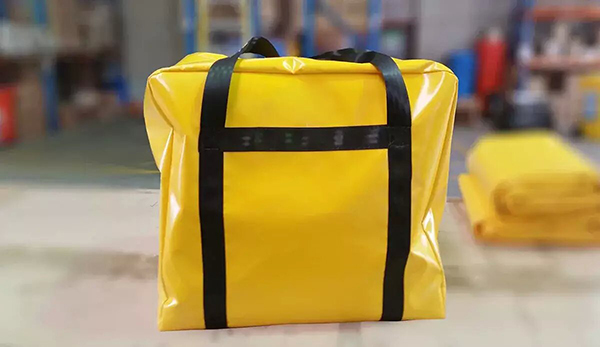
Measure the bundle, hardware and loading opening.
Match handles to loaded mass and carrying method.
Give it its own drawing, label and reorder identity.
A reusable accessory with its own specification
A tarp storage bag is a reusable container for keeping a folded or rolled cover together between uses. A carry bag adds a handling function that needs its own construction review. Order the bag as a defined finished item, with the cover and any accessories separately identified in the bill of materials.
| Program or application | Bag concept to discuss | What decides the fit | Check on the sample |
|---|---|---|---|
| Facilities: folded equipment covers | Rectangular bag with a broad zip opening | Largest folded length, width and thickness | The reinforced corners pass through without forcing the zipper. |
| Rolled curtains and cover panels | Long sleeve or cylindrical carry bag | Roll length, maximum diameter and access direction | The end opening clears the roll and protected fittings. |
| Event or shelter sidewall sets | Wide-opening bag with a separate hardware pouch | Complete set size and number of panels | Hooks and grommets cannot rub against clear sections. |
| Multiple models on a shared storage rack | Size-coded bag with visible part identification | Largest approved bundle in that bag family | The label can be read when the filled bag is shelved. |
| Replacement bag procurement | Bag-only part matched to the existing cover | Current bundle measurements and user access | The replacement accepts the used cover, not just a factory-tight fold. |
For a new cover-and-bag set, define the cover on the custom tarp specification first. For an existing cover, send its current packed form; a new folding pattern may change the bag size.
Size the inside and the opening separately
The open tarp size does not determine its storage bag size. Fold or roll the complete cover as an operator normally would, include fixed straps and reinforced edges, and measure the largest envelope without vacuum compression. Repeat the packing exercise to capture variation.
Folded cover: L × W × H
Measure the longest dimension, the width across the fold and the thickest point. Include protruding grommets and any accessories that will travel in the same compartment.
Target usable inside size = measured bundle + total loading allowance on each axis. Allowance is added once per axis, not once per side.
Rolled cover: length × diameter
Measure the roll after it has relaxed into its normal storage condition. Record the largest diameter and any end fittings; specify whether the roll slides in from one end or loads through a long opening.
Target usable inside = roll length + end allowance; roll diameter + diameter allowance. Do not use a flat sleeve width as its diameter.
Bag sizing worksheet
Illustrative millimetre calculation. Edit the measurements and total allowances for your own bundle. This is a drawing starting point; opening geometry and a physical fit trial still govern approval.
Example only: 620 × 400 × 180 mm + total allowances of 60 / 40 / 40 mm. These allowances are chosen for the example, not a standard recommendation. Seam allowances, lining, reinforcement and zipper take-up belong in the production pattern and are additional to the usable inside dimensions.
A bag can have enough internal volume while its zipper mouth is too short or too narrow. Mark the minimum usable opening and show the insertion direction on the drawing. Confirm fit with the actual cover, including its stiffest corners.
Different tarp and cover constructions pack differently. Use the actual fabric and finished details for the final fit trial.
The handle attachment matters as much as the shell
Start with the maximum total loaded mass: cover, bag, fixed accessories and any separate pouch. Then describe how staff pick it up, carry it, set it down and store it. A thick shell alone cannot define the carrying capacity of the finished bag.
Handle layout
Choose paired top handles, end grips or a multi-person handling layout according to reach and balance. Check the grip with normal work gloves and keep loose webbing away from snag points.
Load transfer
Discuss webbing that continues around or beneath the bag, local reinforcement and attachment seams. The complete load path must be reviewed; a visible patch alone does not establish strength.
Prototype validation
Agree the test mass, support points, load direction, hold time and handling cycles. Inspect stitching, coating, webbing, closure and permanent deformation after the agreed trial.
Ordinary storage bags are not crane slings, forklift lifting bags or personnel equipment. Heavy cover bundles may need several smaller bags or a trolley. Establish the handling method before approving the bag.
Use fabrication and reinforcement planning to review handle attachments together with the shell and closure, rather than selecting each component in isolation.
Match fabric, base and closure to repeated use
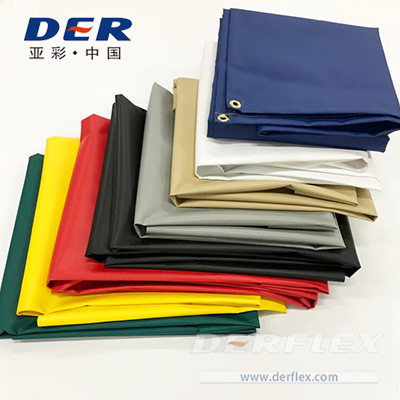
For PVC carry bags, agree the coated-fabric grade, finished flexibility, surface, colour and seam method together. Heavier fabric increases the empty bag weight and may make a narrow opening harder to load. Select from the expected handling and storage duty, then compare physical samples.

| Component | What the buyer should define | Acceptance point |
|---|---|---|
| Shell | Material identity, nominal mass or thickness where required, colour and cleaning routine | Matches the approved material sample; can fold and close at the intended storage temperature. |
| Base and corners | Floor contact, abrasion zones and any reinforcement or removable liner | No exposed sharp fittings pressing directly against the shell or clear cover sections. |
| Opening and closure | Top zipper, wide U-shaped opening, drawcord or flap arrangement | Usable opening clears the bundle; the closure operates without compressing the cover by force. |
| Seams and attachments | Sewn or welded construction where compatible; location of penetrations | Finished seams and handle attachments meet the agreed inspection and handling checks. |
| Accessories | Separate pouch, divider, retaining strap or document pocket if required | Each included item is shown in the drawing and bill of materials. |
Review PVC coated fabric choices for material selection. Where water exclusion is critical, discuss the complete construction separately from fabric used for sealed dry bags: a conventional storage bag does not inherit dry-bag performance.
Balance airflow, dust protection and identification
Ventilation follows the storage duty
For clean, dry covers on sheltered racks, a mesh zone or vent arrangement may help air exchange. Open ventilation also creates a route for dust, splashes and pests; define what the bag must exclude before adding it.
In dusty facilities, consider a more enclosed shell and a separate drying routine. In damp service, unload and dry the cover before long-term storage. A bag is not a drying cabinet, and vents do not guarantee a dry bundle.
Record the actual conditions
Indoor or outdoor storage, humidity, cleaning residues, cold conditions and contact with oils or solvents all influence material and closure selection. Identify chemicals by name rather than requesting a universal chemical-resistant bag.
A label should identify the correct cover
- Cover model or application and packed orientation
- Bag part number and drawing revision
- Contents and accessory count, where relevant
- Batch or traceability field if the program requires it
- Care instruction: clean and dry before storage
Specify printed branding, a sewn label or a document pocket as appropriate. Place identification where staff can read it on the shelf and when carrying the bag; check both locations with a filled sample.
Keep bag-only procurement clear from the first inquiry
Specify the reusable bag as its own line item, even when it ships with a cover. This makes independent purchasing, replacement supply and revision control easier to define. DERFLEX's coated-fabric and custom-cover supply provides the starting point for discussing material, fabrication and brand requirements together.
Bag-only or paired supply
State whether the quotation is for empty bags, bags plus an accessory pouch, or a cover-and-bag set. Show the cover, bag and other items separately; do not assume that a photo defines the quoted contents.
Sample, drawing and retained reference
Approve usable inside dimensions, opening, material, handle layout, seam details, ventilation and artwork on the same revision. Keep a representative packed cover or equivalent agreed reference for fit checks.
Repeat orders and replacement bags
Record the bag part number against the cover model. If the cover fabric, reinforcement or packing method changes, recheck the bag fit before keeping the previous part unchanged.
For multiple models, connect this accessory specification to your OEM tarp supply program. Ask for MOQ, sample arrangements and production timing against the confirmed design and order quantity.
A practical RFQ and sample approval checklist
A bundle photo, sketch and quantity are enough to start the discussion. Add the following details as the design becomes clearer.
- 01 · Contents and usable sizeCover model, folding or rolling method, largest packed dimensions, accessories and agreed loading allowance.
- 02 · Carrying and storageMaximum total loaded mass, carrying method, distance, floor contact and shelf or vehicle-space limits.
- 03 · Construction and environmentMaterial preference, opening, handles, reinforcement, ventilation, cleaning conditions and water-exposure requirement.
- 04 · Order and identificationBag-only or set supply, quantity by size, artwork, label fields, destination, needed documents and target date.
| Check | Practical trial | Record to retain |
|---|---|---|
| Fit and access | Load and remove the actual cover using the normal packing method. | Bundle measurements, usable opening and fit photos. |
| Handling | Use the agreed loaded mass and handling sequence; inspect every attachment. | Defined conditions, acceptance criteria and trial outcome. |
| Closure and surface | Operate the closure repeatedly and inspect abrasion-prone contact points. | Approved closure identity, seam details and observed condition. |
| Labels and contents | Read the label on a filled, shelved bag and verify the accessory count. | Artwork revision, part numbers and agreed bill of materials. |
What changes the quote? Material area and grade, size and panel layout, handle reinforcement, closure length, vents, pockets, branding, quantity by size and packing requirements. Compare quotations against the same drawing revision and included contents. Request any required tests specifically; a proposed trial is not an existing certification.
Tarp storage bag FAQ
Can I order tarp storage bags separately from the covers?
Send a bag-only inquiry with the required quantity, packed-cover dimensions, loaded weight and label artwork. Identify whether you need a replacement bag or a new OEM accessory. Cover contents, straps, hardware pouches and any retail packing should be listed separately so the quotation defines exactly what is included.
Can bag size be calculated from the open tarp size?
Open tarp dimensions alone are insufficient. Material stiffness, reinforced edges, grommets and the folding or rolling method change the packed size. Measure the complete bundle in its normal storage condition, add an agreed loading allowance and confirm the usable opening with a physical sample.
Are PVC tarp carry bags waterproof?
PVC coated fabric can provide a water-resistant shell, but the finished bag also includes seams, a closure, handle attachments and possibly vents. A sewn zipper bag should not be treated as a sealed dry bag. Define the intended exposure and verify the complete construction if water exclusion is required.
Should a tarp storage bag include ventilation?
Ventilation can be useful for clean, dry covers stored in sheltered conditions. Open mesh or vents also admit dust and water, so their size and location must match the storage environment. A ventilated bag does not make it acceptable to store a wet tarp; dry the cover before long-term storage.
How should I specify carry-handle strength?
Provide the maximum total loaded mass, including the cover, bag and accessories, together with the normal carrying method. Agree the handle layout, reinforcement, load direction and repeat-handling test with the supplier. Fabric tensile data alone does not establish a finished bag carrying capacity, and ordinary carry handles are not lifting slings.
Can OEM bags carry model numbers, logos and replacement-part labels?
Specify the artwork, print location, reading direction and required label fields. Useful fields include the cover model, bag part number, revision, contents and care instructions. Check label legibility on the loaded sample and keep the approved label and bag drawing under the same revision control.
Make the next bag quote easier to compare
Send DERFLEX your packed cover photo, dimensions, loaded weight, preferred opening and quantity. Add your label artwork and confirm whether you need empty storage bags or a coordinated cover-and-bag set.
Final bag specifications, included items and commercial terms are defined in the confirmed quotation and approved sample.